
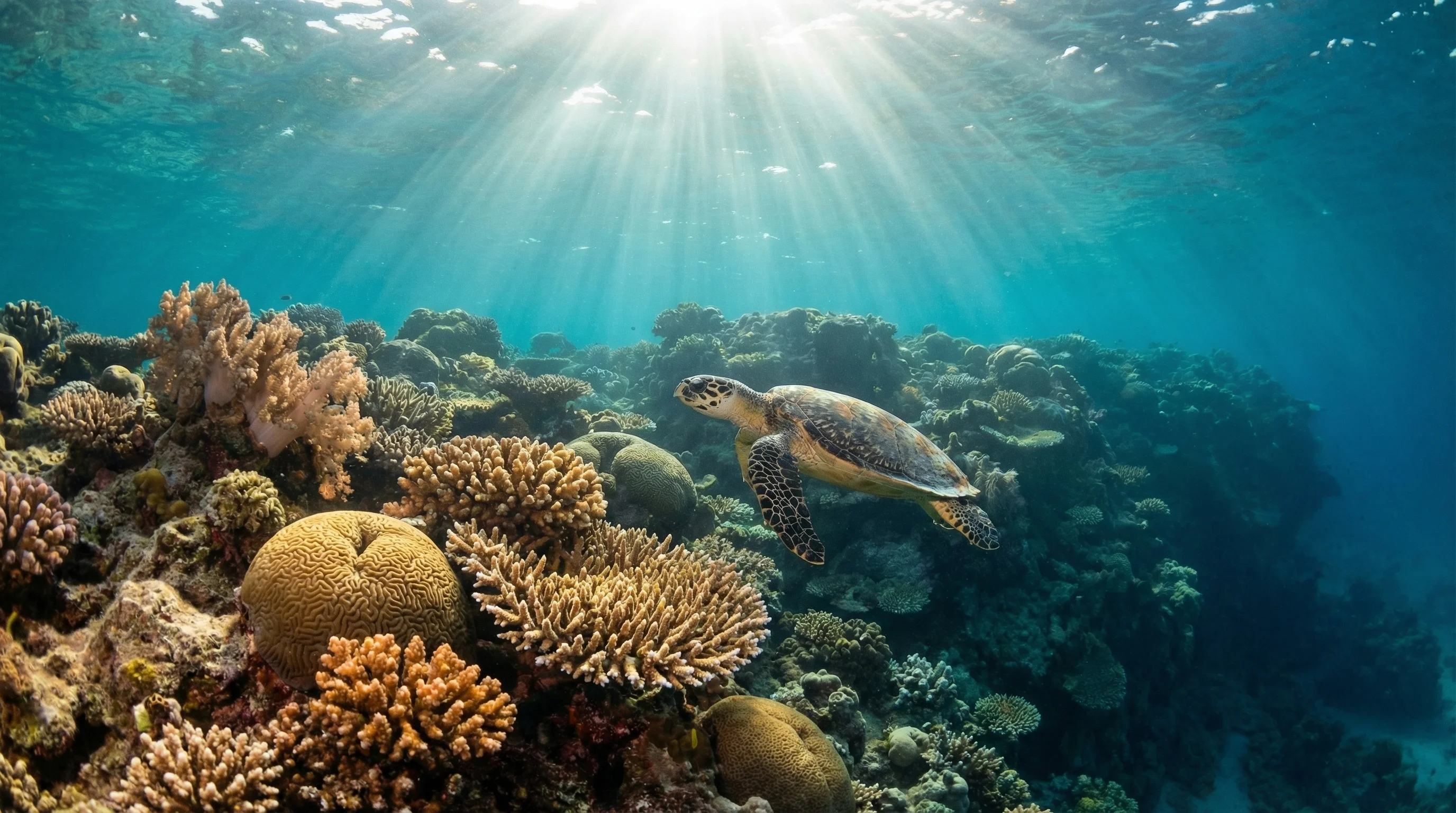
Chilcot Islet offers a gentle introduction to reef diving in Queensland, combining a shallow wall and reef in easy conditions. Depths run from 3 to 10 metres, so you stay well within comfortable range as a newer diver, and visibility of 15 to 30 metres means you can see clearly across the reef without any strain. Mild current keeps things relaxed. Look along the wall for nudibranchs, which reward slow, close inspection, while schooling reef fish move through the shallower sections. Marine turtles appear regularly, and reef sharks patrol the edges without concern for divers. Access is by boat only, so confirm facilities locally before you go.
-16.93330, 149.99850
The best months to visit run from September through February, when conditions tend to be most favourable. Bring a macro lens or underwater magnifier if you have one, as the nudibranchs here are worth a close look.
Access is via liveaboard vessel only due to the remote location, approximately 200km or more from the mainland.
This is a remote and exposed location. Weather and sea conditions can be unpredictable and change quickly. Access to emergency services is extremely limited.
Depth
3-10m
Visibility
15-30m
Skill Level
Beginner
Entry
Boat
Boat required
Water Temp
24-30°C
Current
Mild
Best Time
Jan, Feb, Sep, Oct, Nov, Dec
No nearby dive sites found within 50km.
Chilcot Islet in the Coral Sea, Queensland, is accessible only by boat, as there is no shore access to this remote reef location. Liveaboard dive vessels operate from mainland ports and typically require multiple days to reach the Coral Sea Reefs region. The site has no facilities, so all equipment, air fills and supplies must come from your vessel.
Chilcot Islet offers shallow diving from 3 metres to 10 metres depth, making it an ideal site for relaxed exploration and extended bottom times. The shallow profile allows divers to comfortably observe the reef structure and marine life without deep diving concerns. This depth range is suitable for all certification levels and provides excellent conditions for underwater photography.
Chilcot Islet features diverse marine life including nudibranchs, reef sharks, marine turtles and large schools of reef fish. The shallow reef environment between 3 and 10 metres creates ideal habitat for macro photography subjects like nudibranchs whilst also attracting larger pelagic species. The combination of excellent visibility (15 to 30 metres) and abundant marine life makes this site particularly rewarding for wildlife observation.
The best months to dive Chilcot Islet are September through February, covering late winter through the summer season. This period offers the most stable weather conditions for liveaboard operations in the Coral Sea Reefs area. Water temperatures peak during these months, reaching up to 30 degrees Celsius with visibility consistently between 15 and 30 metres.
Night diving is available at Chilcot Islet, offering opportunities to observe nocturnal marine life and hunting reef sharks. The shallow depth range of 3 to 10 metres creates a safe environment for night dives with easy navigation. Liveaboard vessels anchored at the site can provide convenient night dive access directly from the boat.
There is no entry fee required to dive Chilcot Islet in the Coral Sea. However, accessing this remote Queensland reef location requires booking onto a liveaboard dive vessel, which will include the cost of transport, accommodation and diving services. The site itself has no facilities or management fees.
Chilcot Islet in Coral Sea Reefs is well-suited for beginner divers and snorkellers. Conditions are typically calm with easy entry and shallow depths.
A 3mm wetsuit is recommended for diving at Chilcot Islet in Coral Sea Reefs. Water temperatures range from 24°C to 30°C.