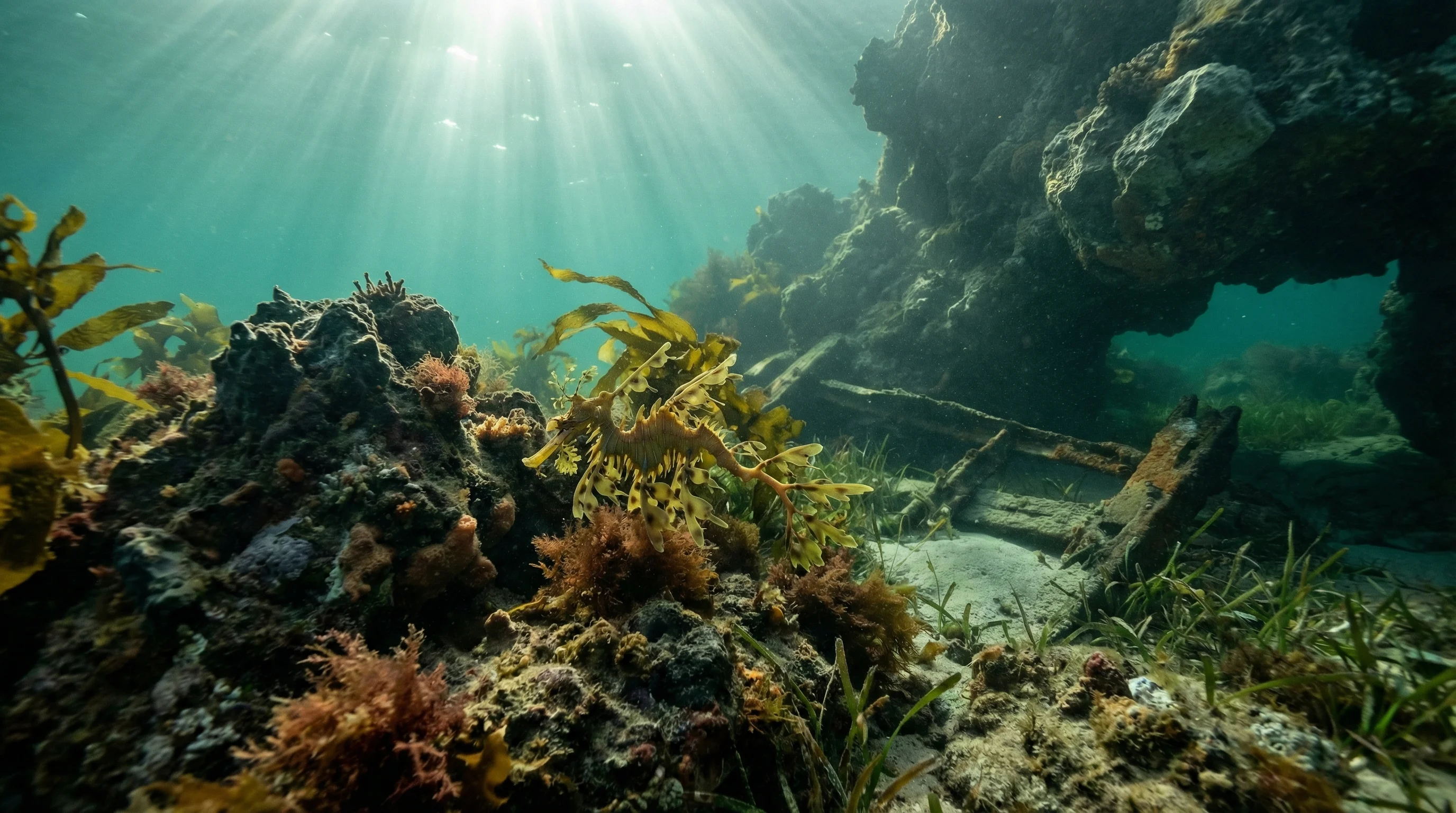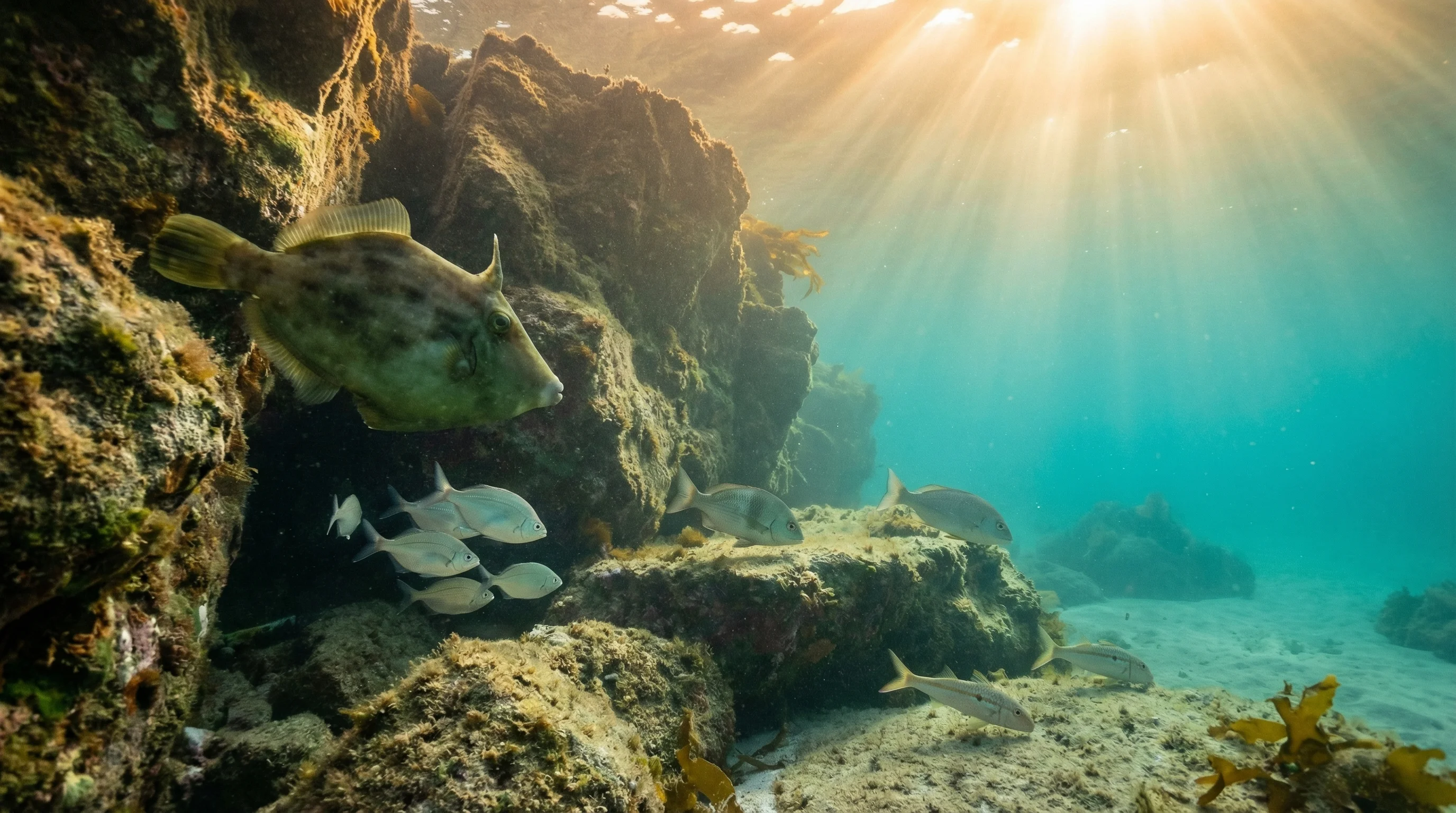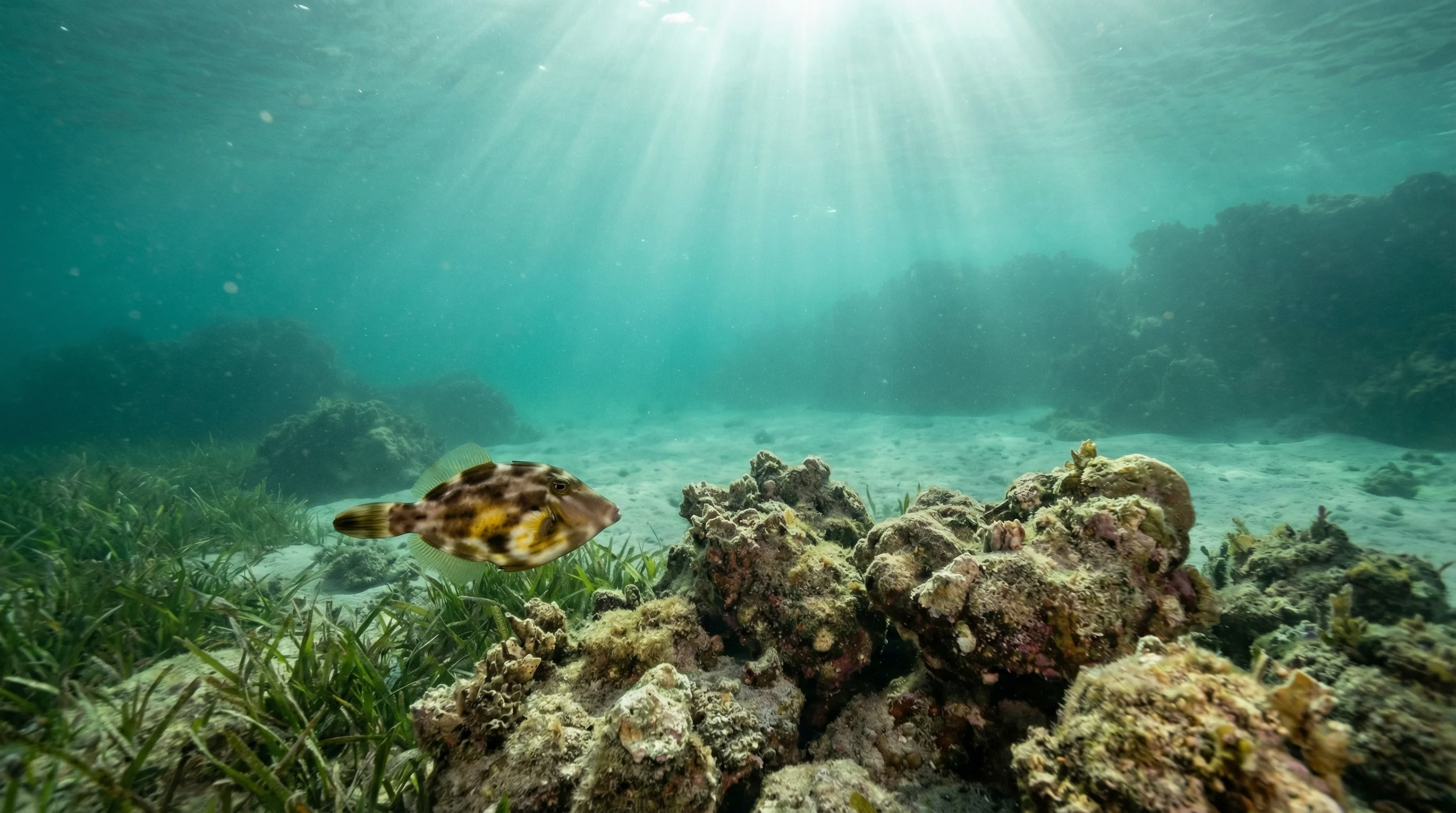
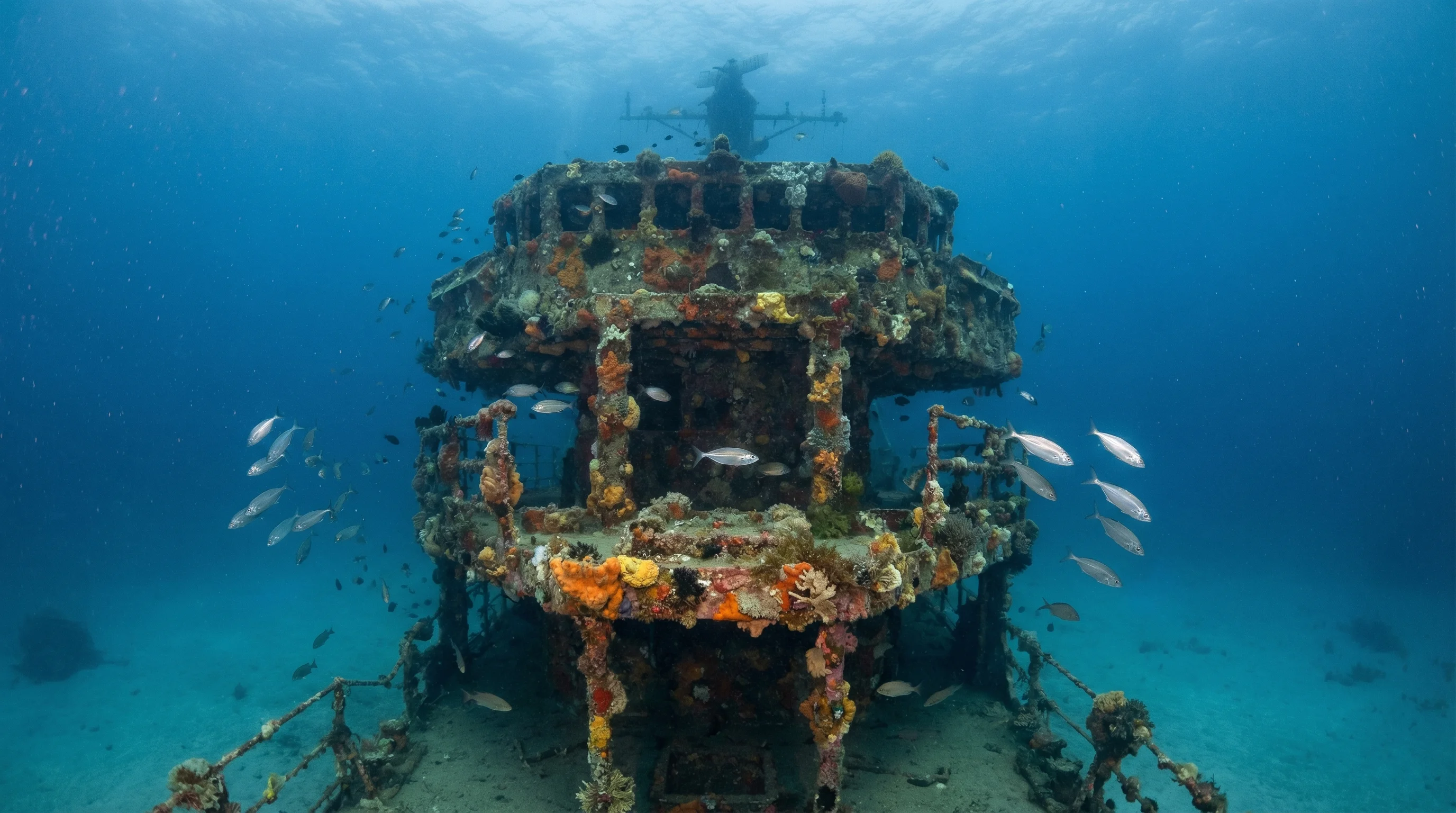
The HMAS Hobart sits upright on the seabed at 5 to 30 metres, deliberately scuttled in 2002 to create South Australia's premier artificial reef. This 133-metre destroyer offers genuine wreck penetration opportunities, with access through multiple entry points along the superstructure. Strong currents sweep the site regularly, feeding the sponges and algae that now colonise the hull and creating hunting grounds for flathead that patrol the sand around the wreck. Visibility ranges from 5 to 20 metres depending on conditions and your position relative to the current. The overhead environments require proper training and equipment. You'll find various fish species sheltering in the intact sections, whilst the open deck areas provide orientation points during your dive. Plan your penetration routes before descending and carry redundant lighting. The current dictates your approach, so discuss the entry strategy with your charter operator on the day. Multiple dives reveal different aspects of the wreck, from the bridge structure to the engine room passages. This is technical diving territory where experience with wrecks, currents and limited visibility proves essential.
-35.48167, 138.15833
Time your dive around slack water to manage the strong currents, and confirm conditions with your charter operator before committing to a penetration dive. A torch and a surface marker buoy are essential, not optional.
Access is via boat from Marina St. Vincent (Wirrina Cove), which is approximately 4.2 nautical miles (about 7.8 km) from the wreck site. A permit is required to dive the wreck.
Requires boat access and a permit.
Strong tidal currents are a major hazard; diving should be planned for slack tide. Penetration of the wreck carries risks of silt-out and disorientation and should only be attempted by certified and experienced wreck divers.
Depth
5-30m
Visibility
0-20m
Skill Level
Advanced
Entry
Boat
Boat required
Water Temp
13-23°C
Current
Strong
Typical Dive
40 min
Best Time
Jan, Feb, Mar, Apr, Oct, Nov, Dec
Yes, HMAS Hobart (D 39) in Normanville is a boat-access-only dive site. You will need to book with a local dive operator or charter a boat to reach it.
Yes, parking is available near HMAS Hobart (D 39). Arrive early during peak seasons as spaces can fill up quickly.
HMAS Hobart (D 39) in Normanville requires advanced diving skills. Expect deeper depths, currents, or challenging conditions that are not suitable for newly certified divers.
Diving at HMAS Hobart (D 39) in Normanville requires the following certifications: Open Water, Advanced, Wreck. Always dive within your training limits.
A 7mm wetsuit or semi-dry is recommended for diving at HMAS Hobart (D 39) in Normanville. Water temperatures range from 13°C to 23°C.
HMAS Hobart (D 39) in Normanville is home to sponges, algae, various fish species, flathead, and colourful sponges. Marine life sightings vary by season and conditions.
The best months to visit HMAS Hobart (D 39) in Normanville are October, November, December, January, February, March, and April. Conditions outside these months can still be good but are less predictable.
HMAS Hobart (D 39) in Normanville has depths ranging from 5 metres to 30 metres.
A typical dive at HMAS Hobart (D 39) in Normanville lasts approximately 40 minutes. Actual dive time depends on depth, air consumption, and conditions.
HMAS Hobart (D 39) in Normanville can have strong currents. Advanced experience with drift diving and current navigation is recommended.
Visibility at HMAS Hobart (D 39) in Normanville can reach up to 20 metres. Conditions vary with weather, tides, and seasons.