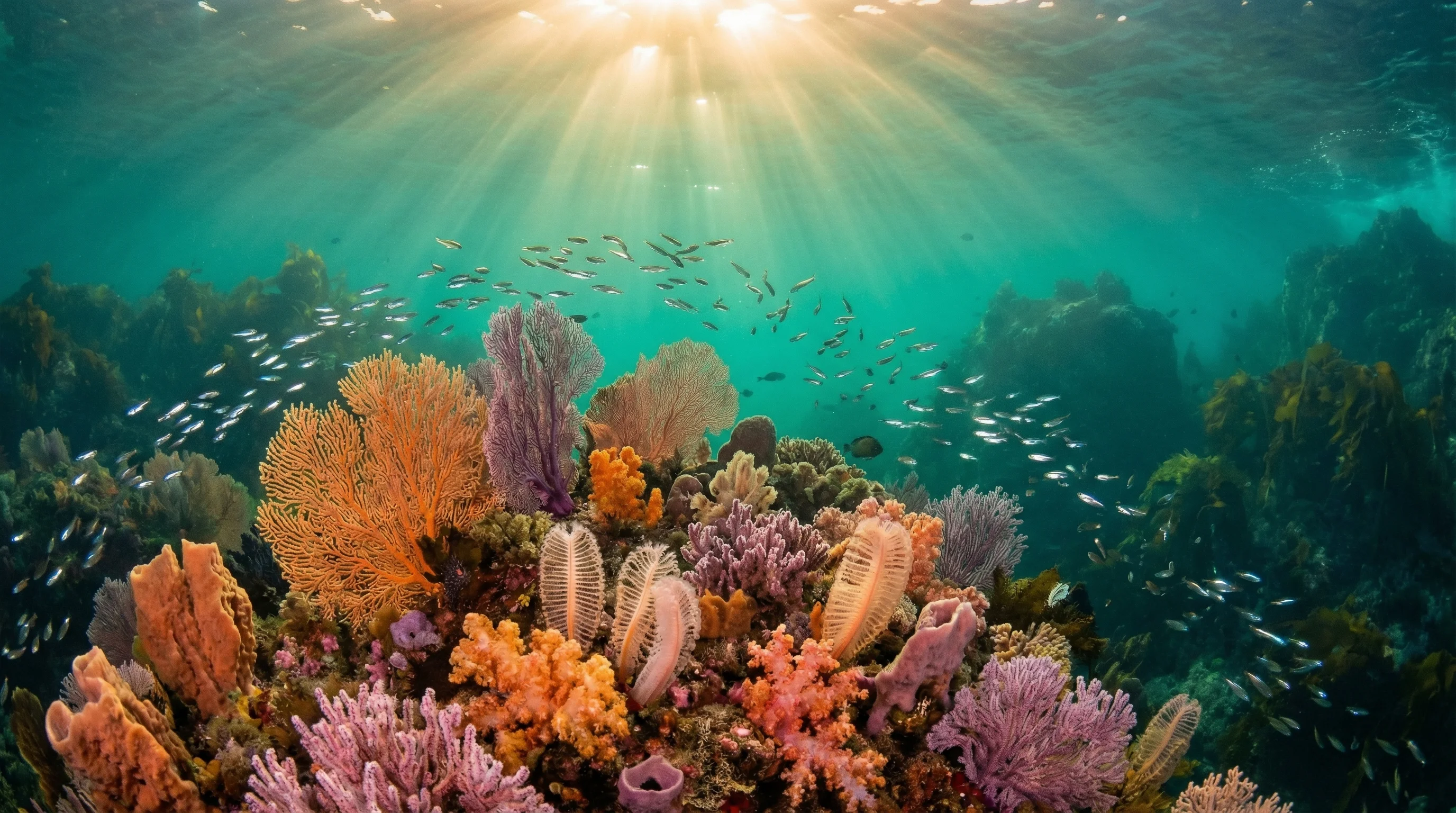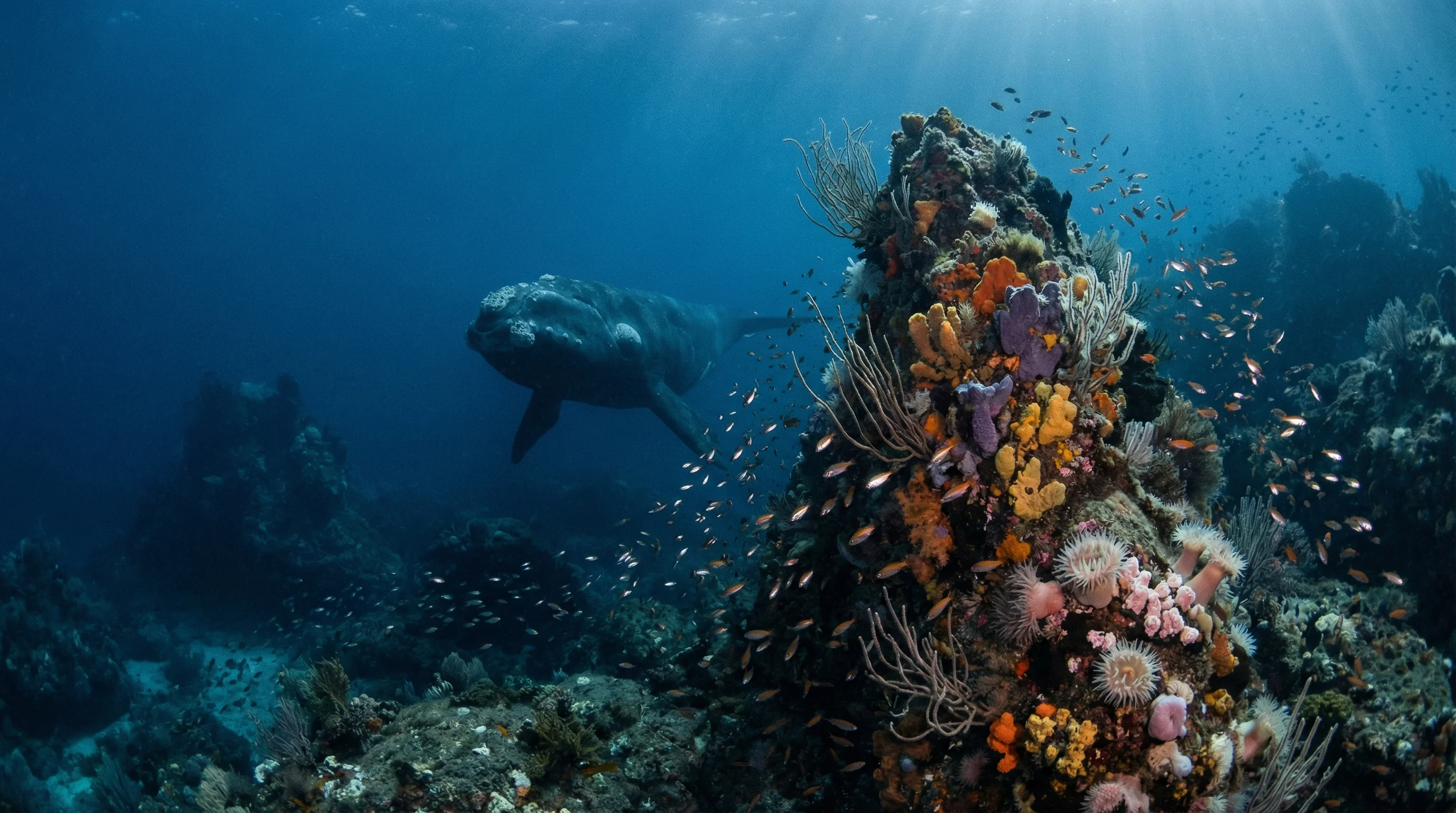
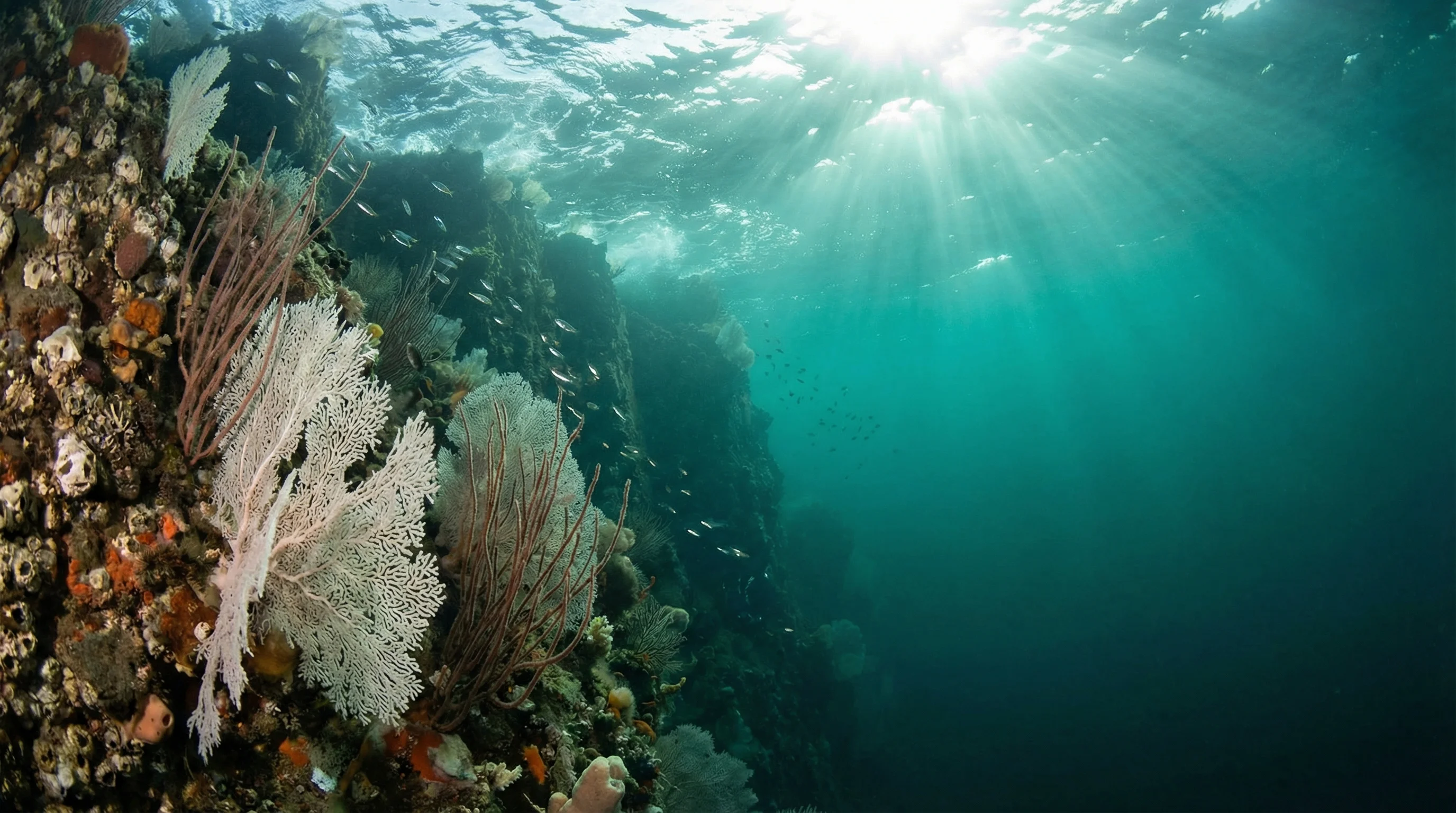
Bathurst Channel earns its nickname through a paradox: shallow, tannin-stained waters that behave nothing like their depth suggests. Strong tidal currents funnel through the channel, creating conditions that demand solid buoyancy control and drift experience. Visibility varies considerably, and the overhead environment adds a layer of complexity that keeps this squarely in advanced territory. What rewards that commitment are walls draped in sea whips, delicate lace bryozoans, and sea pens - cold-water filter feeders that thrive precisely because of the nutrient-rich flow. Boat entry only. Best dived from December through May.
-43.33983, 146.02131
Time your entry around slack water if you want any control over your drift, and come prepared for genuinely cold Tasmanian water regardless of the season. Check locally for current predictions and any updated access conditions before heading out.
The site is in the remote Southwest National Park within the Port Davey Marine Reserve. Access is only possible by boat, typically as part of a multi-day expedition cruise or private charter.
This is a remote and challenging site. The combination of dark, cold water and strong currents requires a high level of skill and preparation. The tannin layer creates a dark environment akin to an overhead environment.
Depth
4-40m
Visibility
0-12m
Skill Level
Advanced
Entry
Boat
Boat required
Water Temp
15-22°C
Current
Strong
Best Time
Jan, Feb, Mar, Apr, May, Dec
Bathurst Channel (The Deep Shallows) features rare deep-water species found in shallow conditions, including sea whips, intricate lace bryozoans, and sea pens. These organisms typically inhabit much deeper waters but thrive here due to the channel's unique tannin-stained freshwater layer that blocks light. The site offers snorkellers a rare opportunity to observe deep-sea fauna without requiring technical diving certifications.
The optimal months for snorkelling Bathurst Channel (The Deep Shallows) are December through May, spanning the Tasmanian summer and early autumn. During these months, water temperatures reach their warmest range of 12-18°C, though a quality wetsuit remains essential. Weather conditions are generally more stable during this period, improving boat access to this remote West Coast Tasmania location.
Bathurst Channel (The Deep Shallows) requires boat access only, with no shore entry available from the West Coast Tasmania area. The remote location necessitates organised charter trips, as private navigation through this wilderness area demands local knowledge of the strong currents and channel systems. No facilities exist at the site, so snorkellers must be completely self-sufficient.
Snorkelling Bathurst Channel (The Deep Shallows) requires advanced and deep certifications due to the site's challenging conditions. These qualifications ensure participants can safely manage the strong currents, overhead environment risks, cold water exposure, and limited visibility. The certification requirements reflect the technical nature of this world-class snorkelling location despite its shallow depths.
Bathurst Channel (The Deep Shallows) presents multiple significant hazards including overhead environment conditions, strong currents, cold water temperatures of 12-18°C, and limited visibility. The combination of these factors requires constant environmental awareness and proper thermal protection. Snorkellers must maintain buddy contact and follow strict safety protocols due to the remote West Coast Tasmania location and absence of emergency facilities.
Bathurst Channel (The Deep Shallows) has no entry fee for the snorkelling site itself. However, costs will include chartered boat transport from the West Coast, as this remote Tasmanian location is inaccessible by other means. Snorkellers should budget for multi-day expedition costs including accommodation and specialised cold-water equipment rental.
The Deep Shallows section of Bathurst Channel experiences strong currents and limited visibility caused by the tannin-rich freshwater layer floating above denser seawater. Water temperatures range from 12-18°C year-round, requiring at least 7mm wetsuits or drysuits. The unique stratified water column creates the site's famous phenomenon where deep-water species thrive in darkness despite shallow depths.
Bathurst Channel in West Coast requires advanced diving skills. Expect deeper depths, currents, or challenging conditions that are not suitable for newly certified divers.
A 7mm wetsuit or semi-dry is recommended for diving at Bathurst Channel in West Coast. Water temperatures range from 15°C to 22°C.
Bathurst Channel in West Coast has depths ranging from 4 metres to 40 metres.