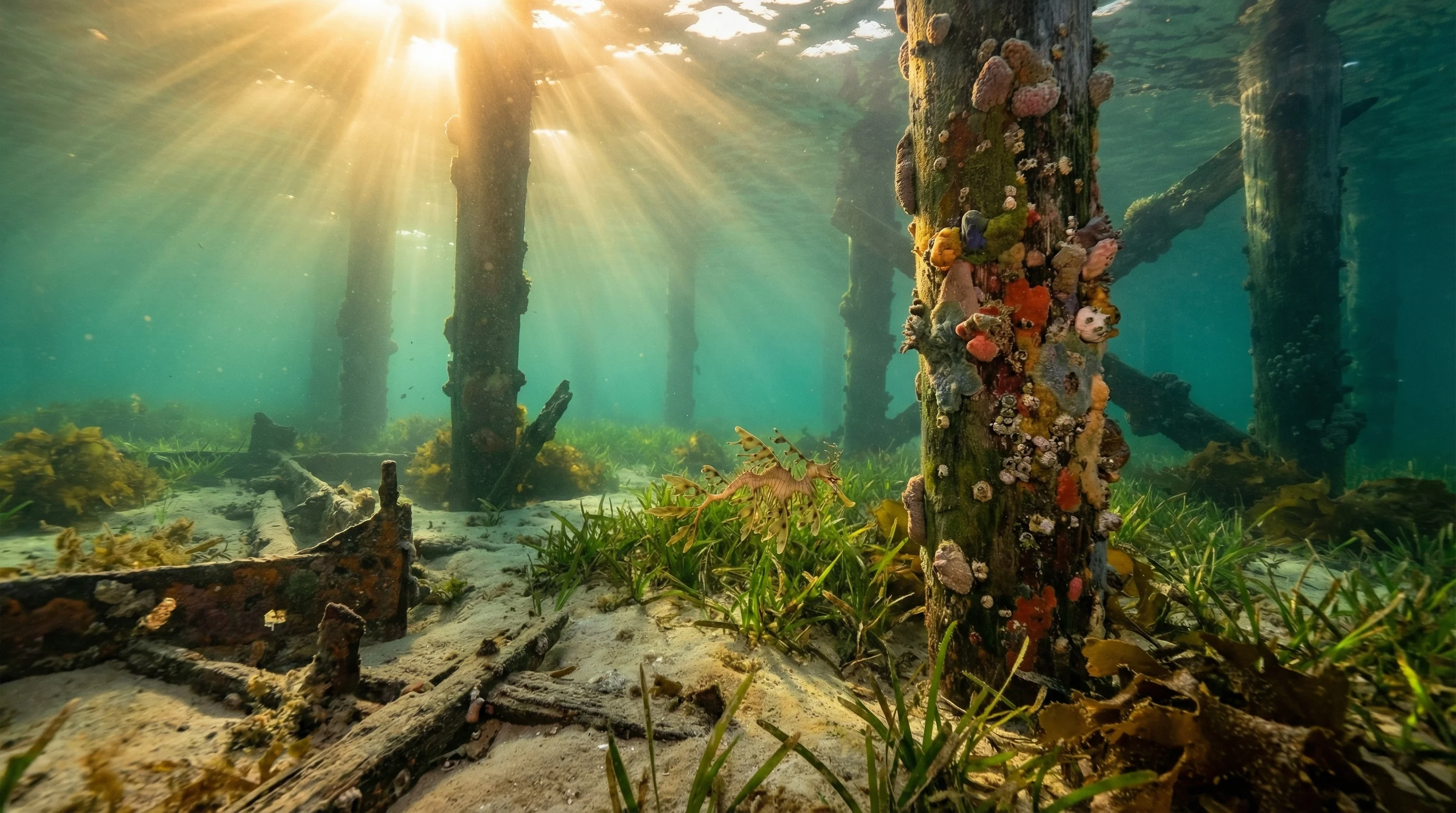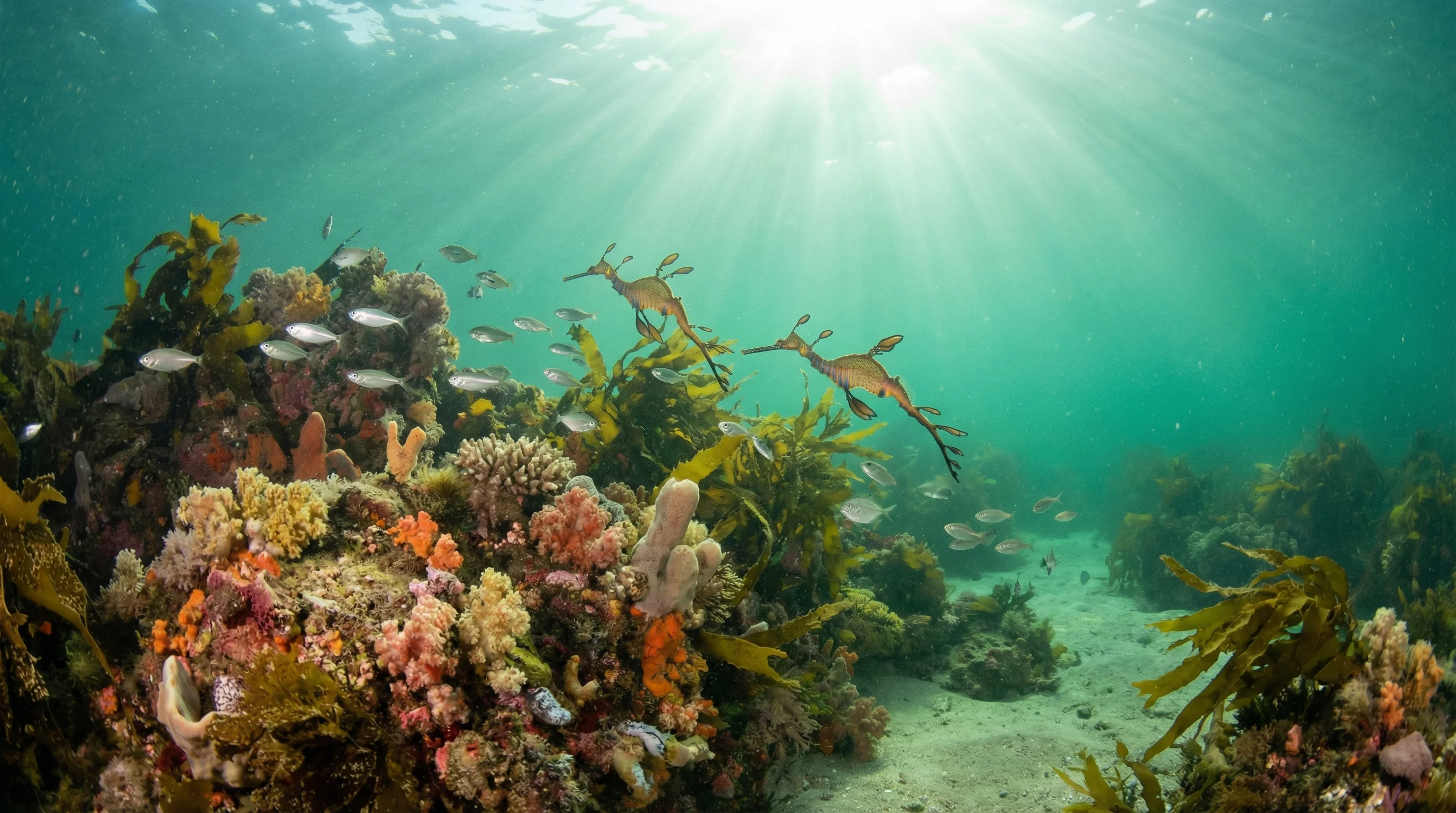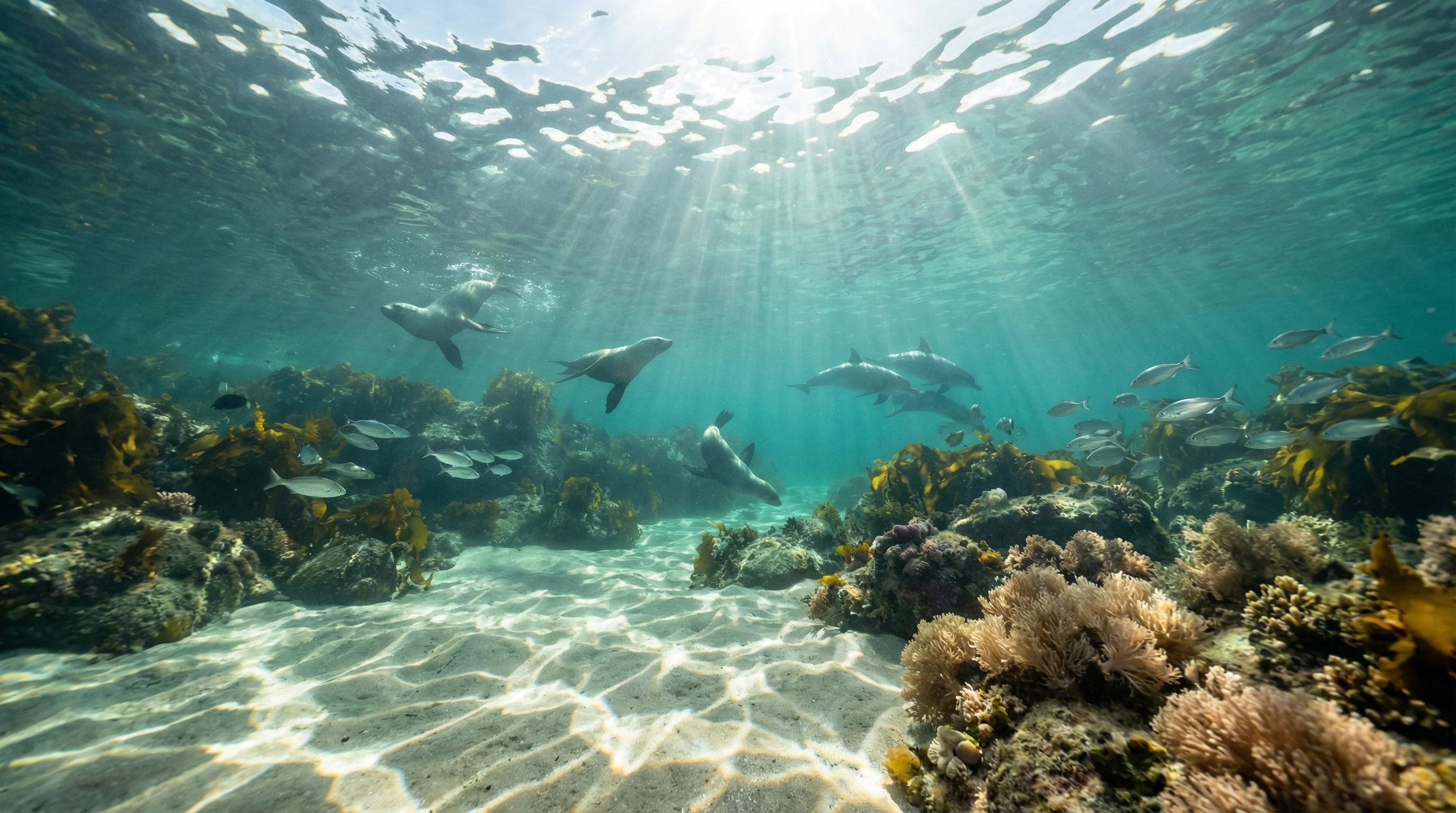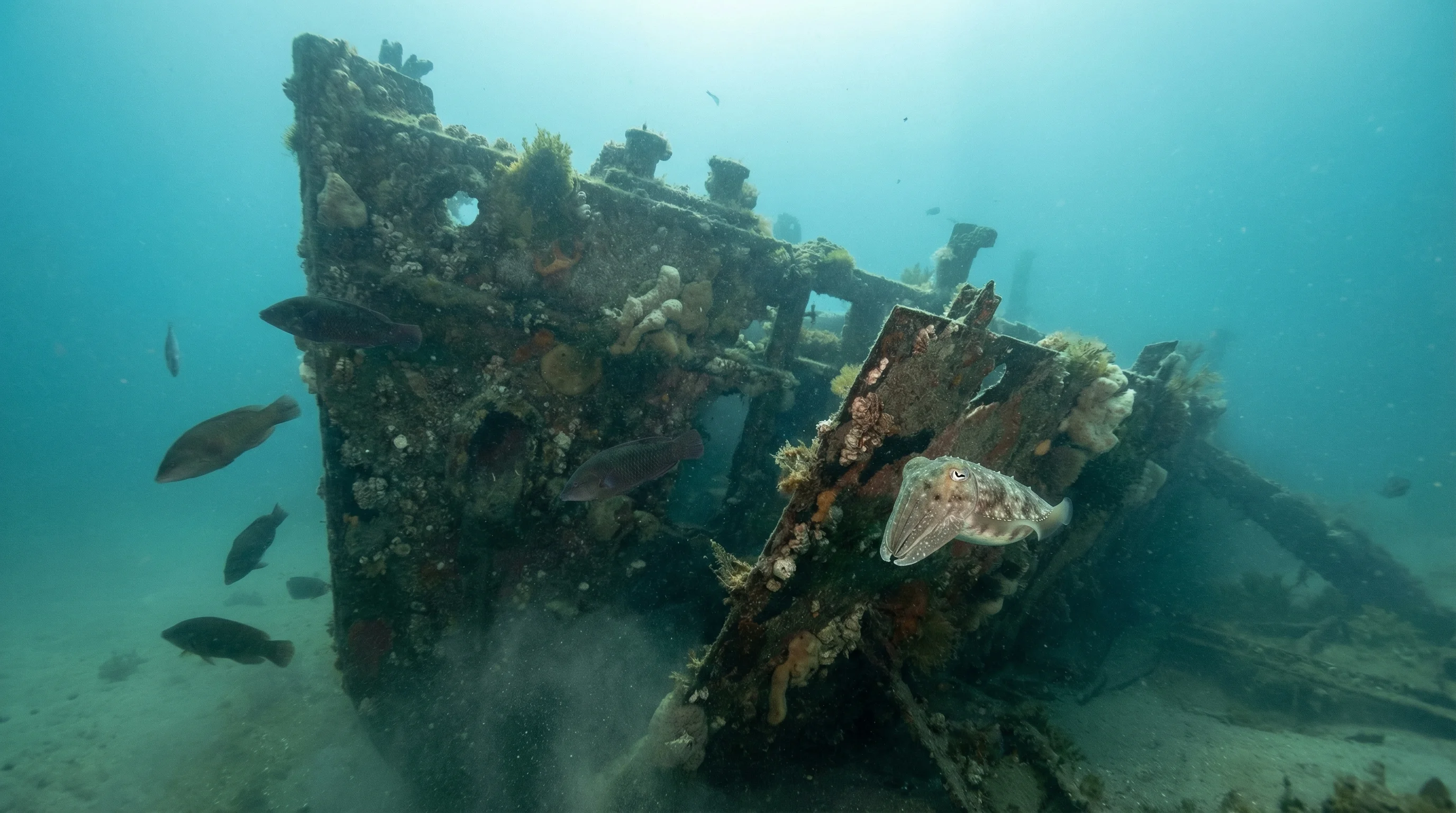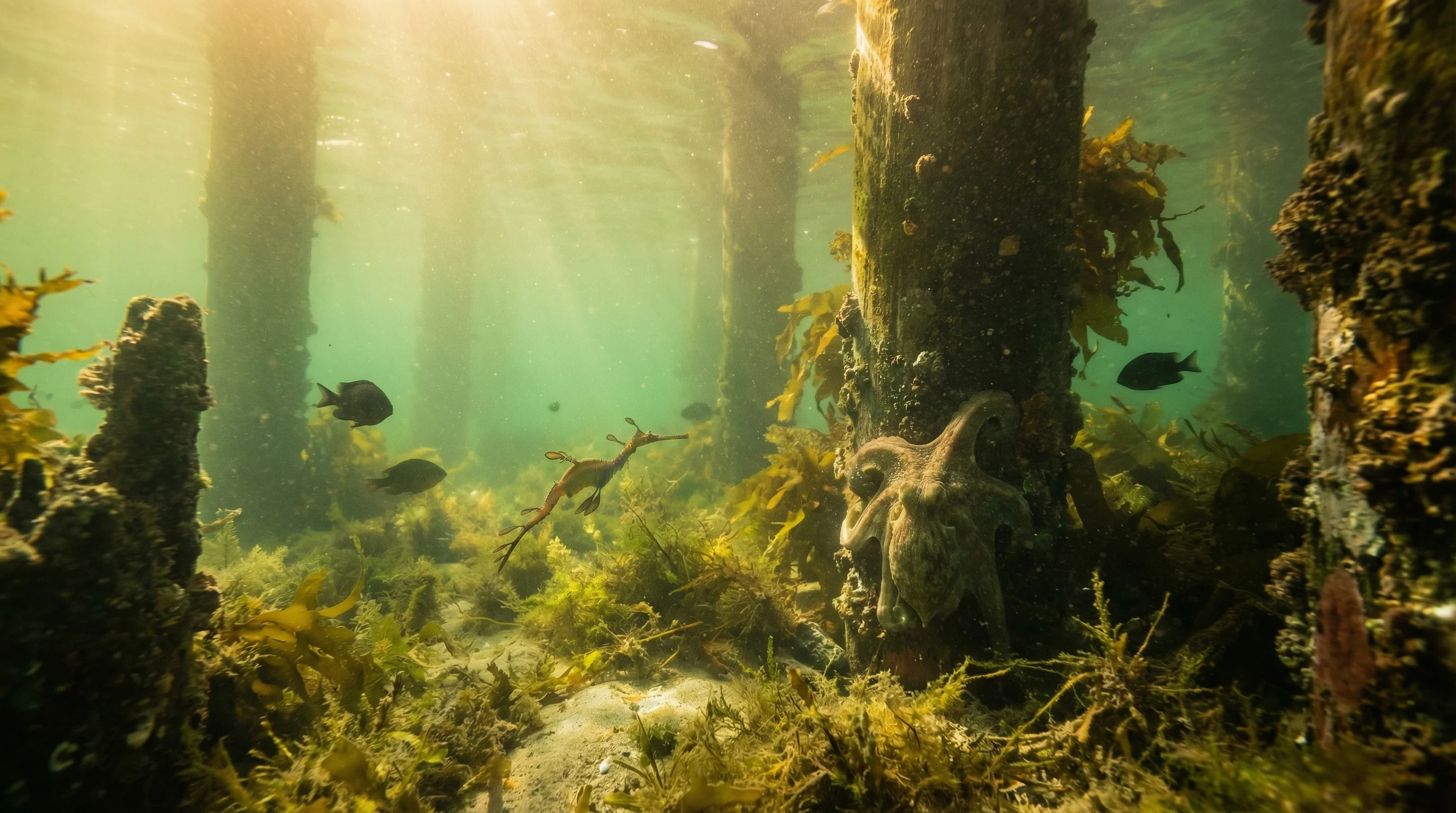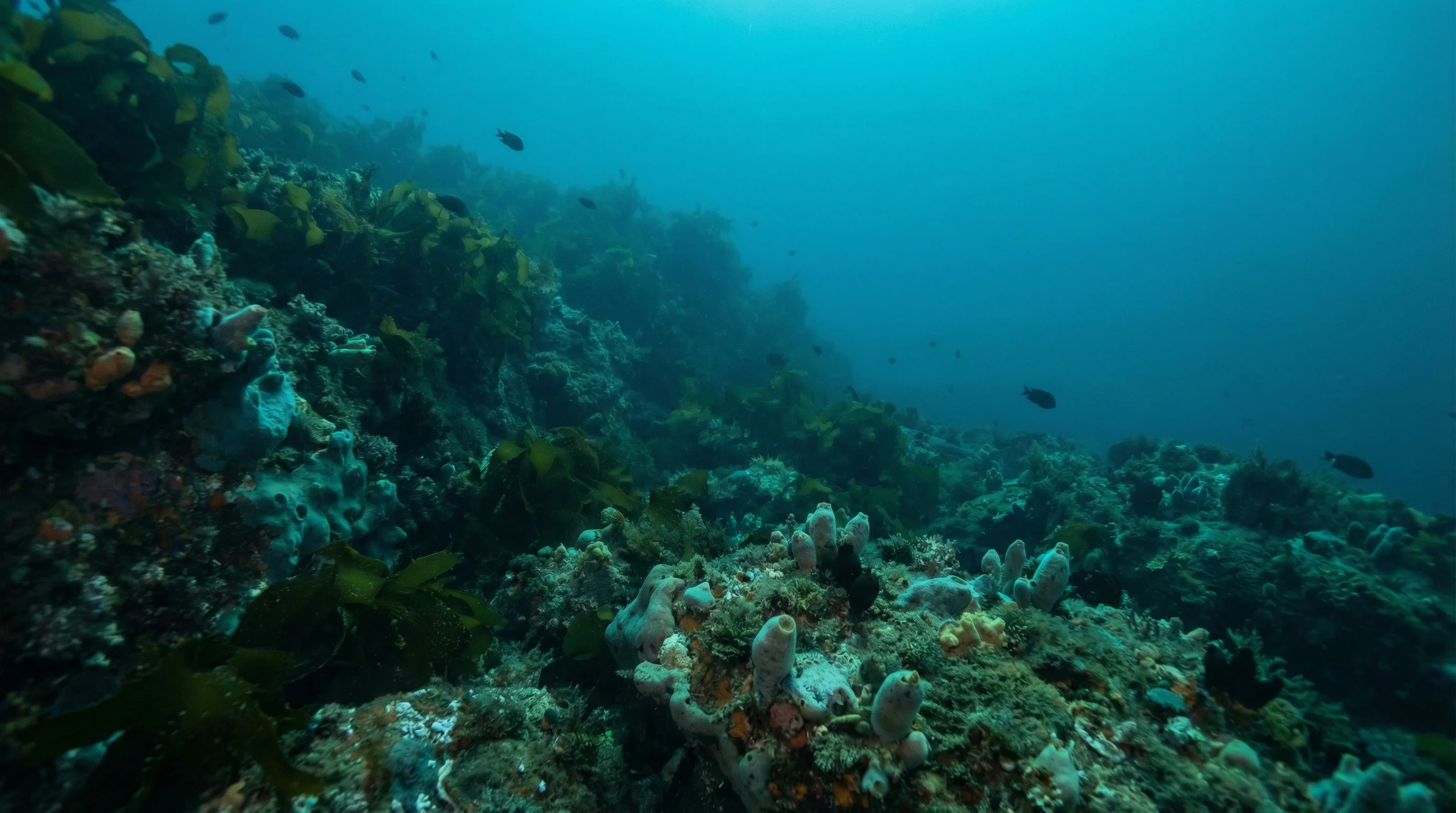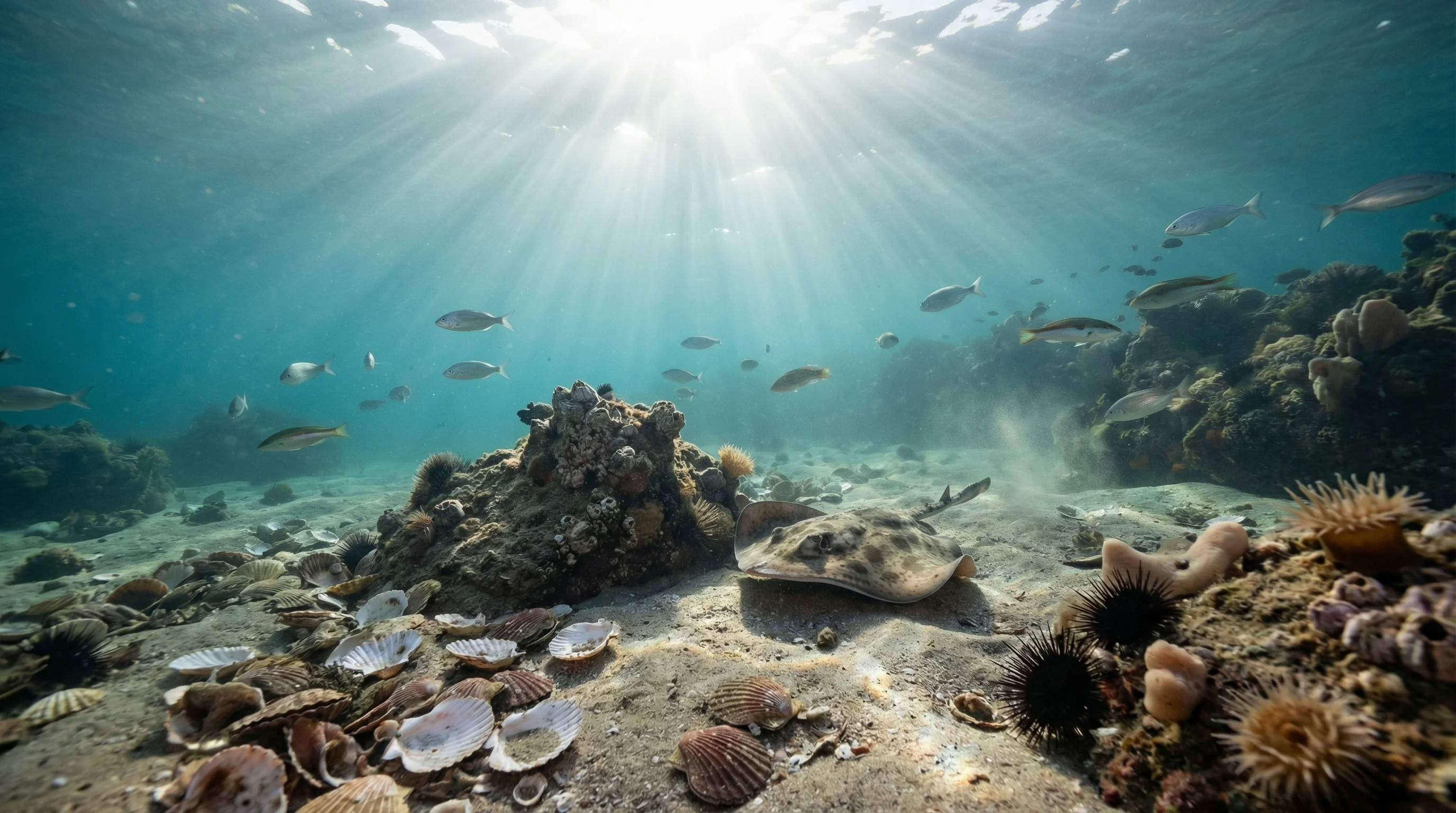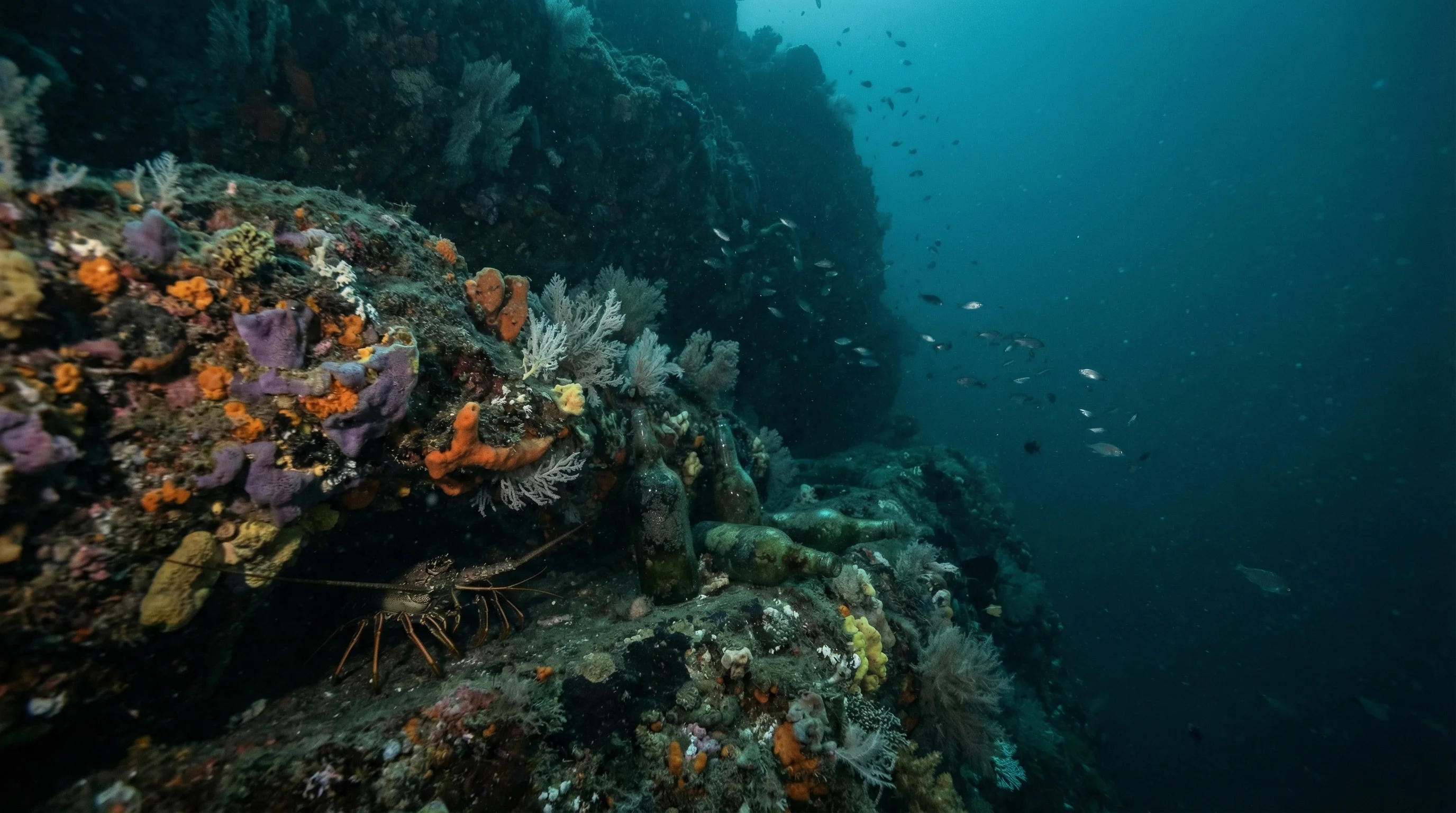
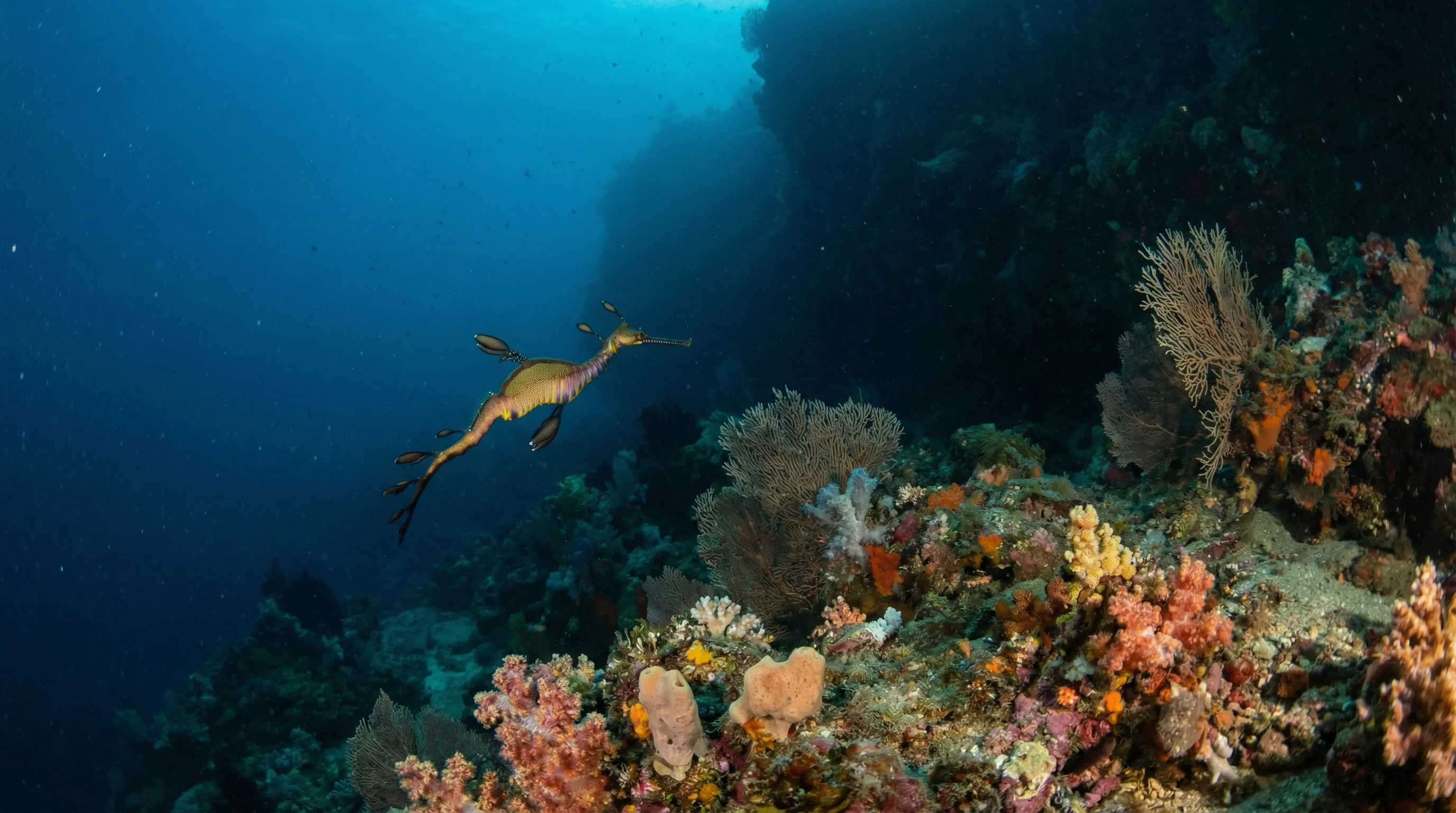
Port Phillip Heads Marine National Park sits at the entrance to Port Phillip Bay, where the natural reef and artificial structures create sheltered pockets worth exploring at depths of 1 to 14 metres. Visibility varies considerably, so conditions on the day will shape your experience. Mild currents are typical, though stronger flows can develop, so stay close to your guide or buddy. Look for weedy sea dragons drifting near the kelp, cuttlefish hovering over the reef, and octopus tucked into crevices. Gorgonian corals and feather stars decorate the structure, and seals occasionally pass through. Blue devil fish are a local highlight worth watching for.
-38.27700, 144.69900
Dive during the calmer morning hours when boat traffic through the Heads is lighter and currents tend to be more predictable. Check conditions locally before heading out, as visibility and current strength can change quickly at this site.
Access to Popes Eye is by boat only, with charter boats operating from Queenscliff and Portsea/Sorrento on the Mornington Peninsula.
string
Strong currents are a significant hazard outside of sheltered areas, particularly in 'The Rip'. Boat traffic is also a consideration. Parks Victoria advises to be aware of sudden weather changes.
Depth
1-60m
Visibility
10-20m
Skill Level
Intermediate
Entry
Boat
Boat required
Water Temp
14-20°C
Current
Strong
Typical Dive
20 min
Best Time
Jan, Feb, Mar, Apr, May, Jun, Jul, Dec
Yes, The Rip in Mornington Peninsula is a boat-access-only dive site. You will need to book with a local dive operator or charter a boat to reach it.
The Rip in Mornington Peninsula is best suited for divers with some experience. You should be comfortable with your buoyancy and have logged at least 10 to 20 dives.
Diving at The Rip in Mornington Peninsula requires the following certifications: Open Water, Advanced. Always dive within your training limits.
A 7mm wetsuit or semi-dry is recommended for diving at The Rip in Mornington Peninsula. Water temperatures range from 14°C to 20°C.
The Rip in Mornington Peninsula is home to feather stars, seals, octopus, weedy sea dragons, blue devil fish, and kelp. Marine life sightings vary by season and conditions.
The best months to visit The Rip in Mornington Peninsula are January, February, March, April, May, June, July, and December. Conditions outside these months can still be good but are less predictable.
The Rip in Mornington Peninsula has depths ranging from 1 metres to 60 metres.
The Rip in Mornington Peninsula offers snorkelling with a rating of 1 out of 5. Shallow areas start from 1 metres, making it accessible for snorkellers.
A typical dive at The Rip in Mornington Peninsula lasts approximately 20 minutes. Actual dive time depends on depth, air consumption, and conditions.
Yes, night diving is available at The Rip in Mornington Peninsula. Night dives often reveal different marine life including nocturnal creatures. Always dive with proper lighting and a buddy.
Divers at The Rip in Mornington Peninsula should be aware of sharks, jellyfish. These encounters are generally rare and avoidable with proper awareness. Follow local safety guidance and maintain a respectful distance from all marine life.
The Rip in Mornington Peninsula can have strong currents. Advanced experience with drift diving and current navigation is recommended.
Visibility at The Rip in Mornington Peninsula typically ranges from 10 metres to 20 metres. Conditions vary with weather, tides, and seasons.