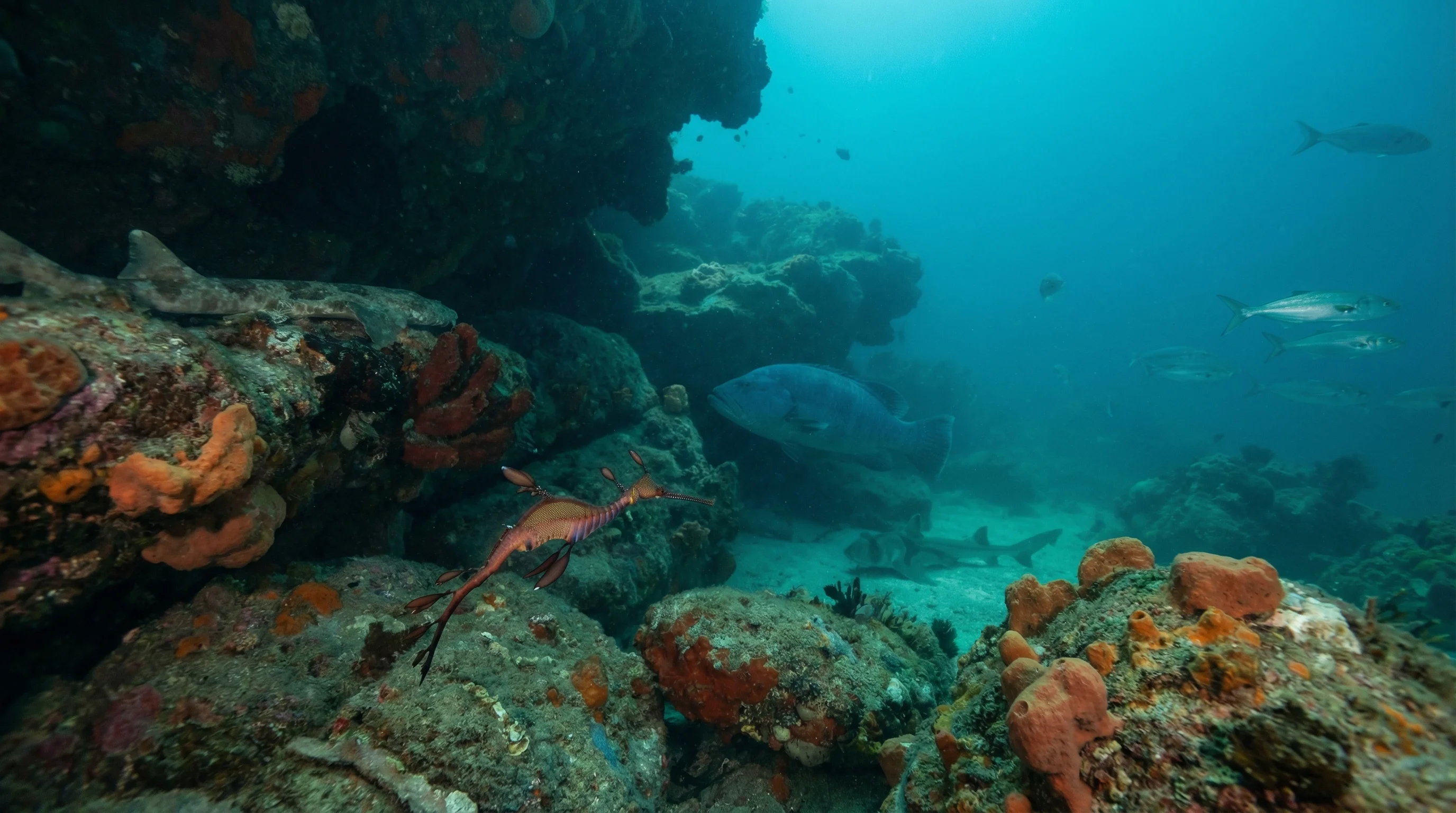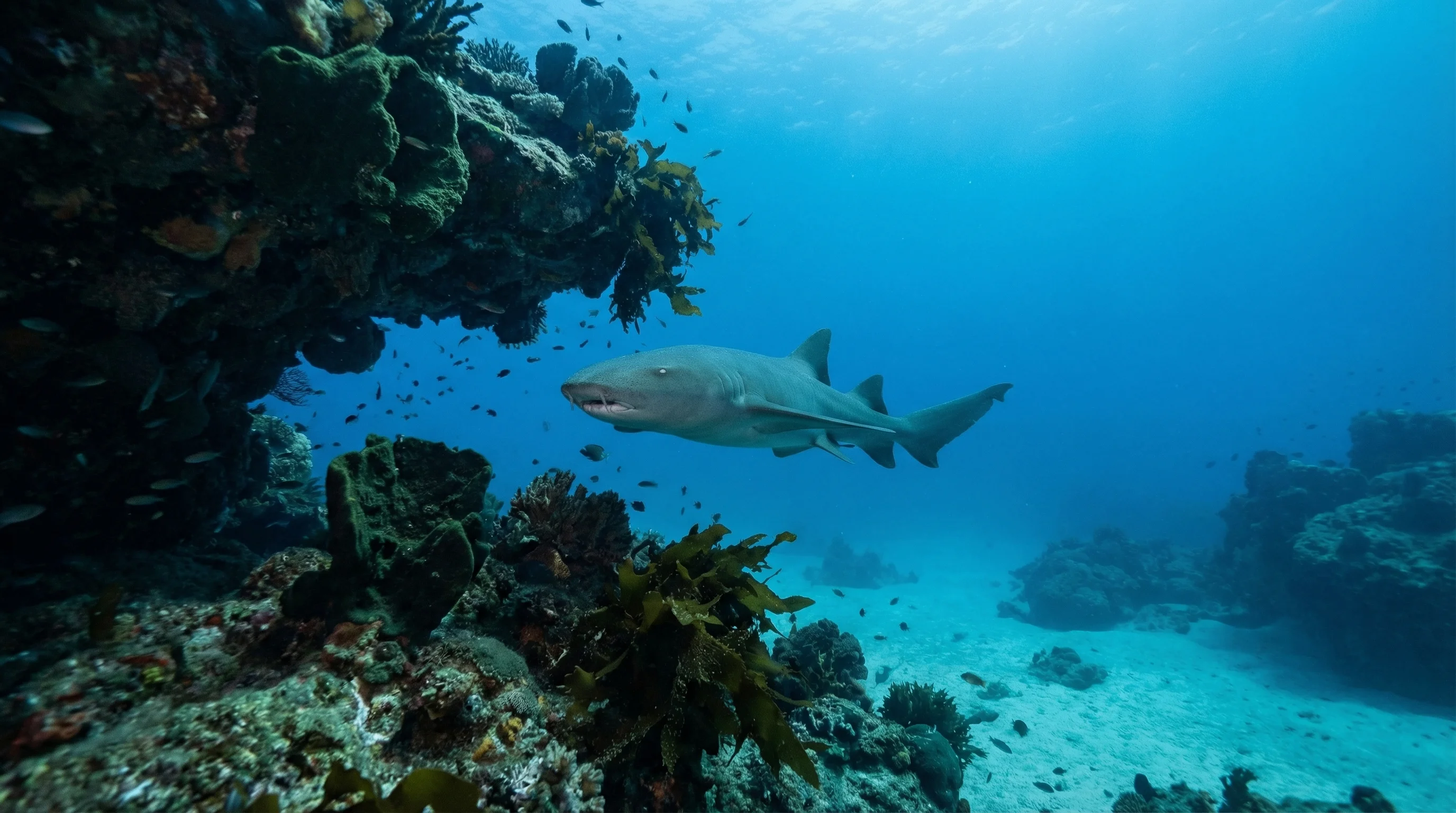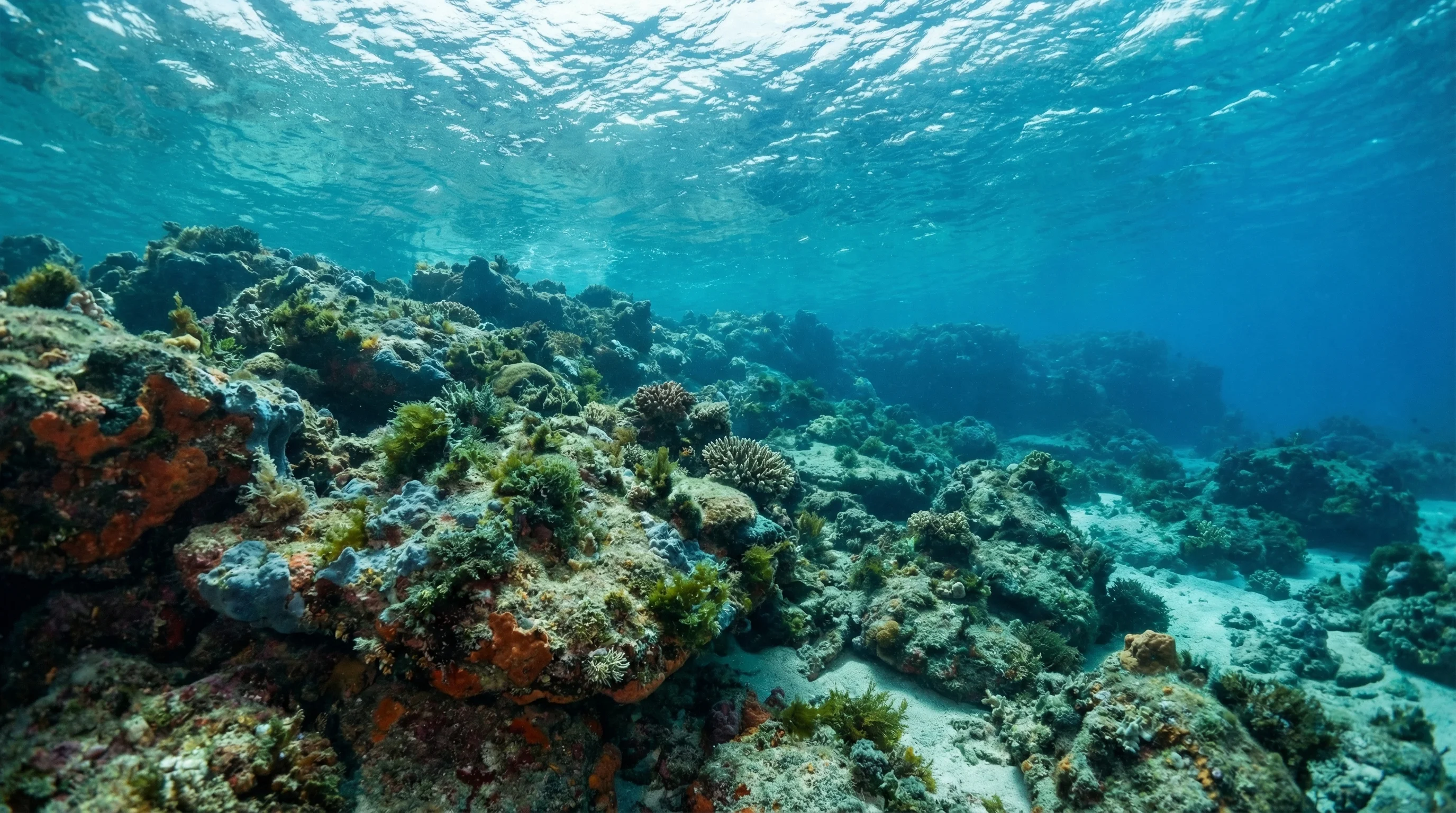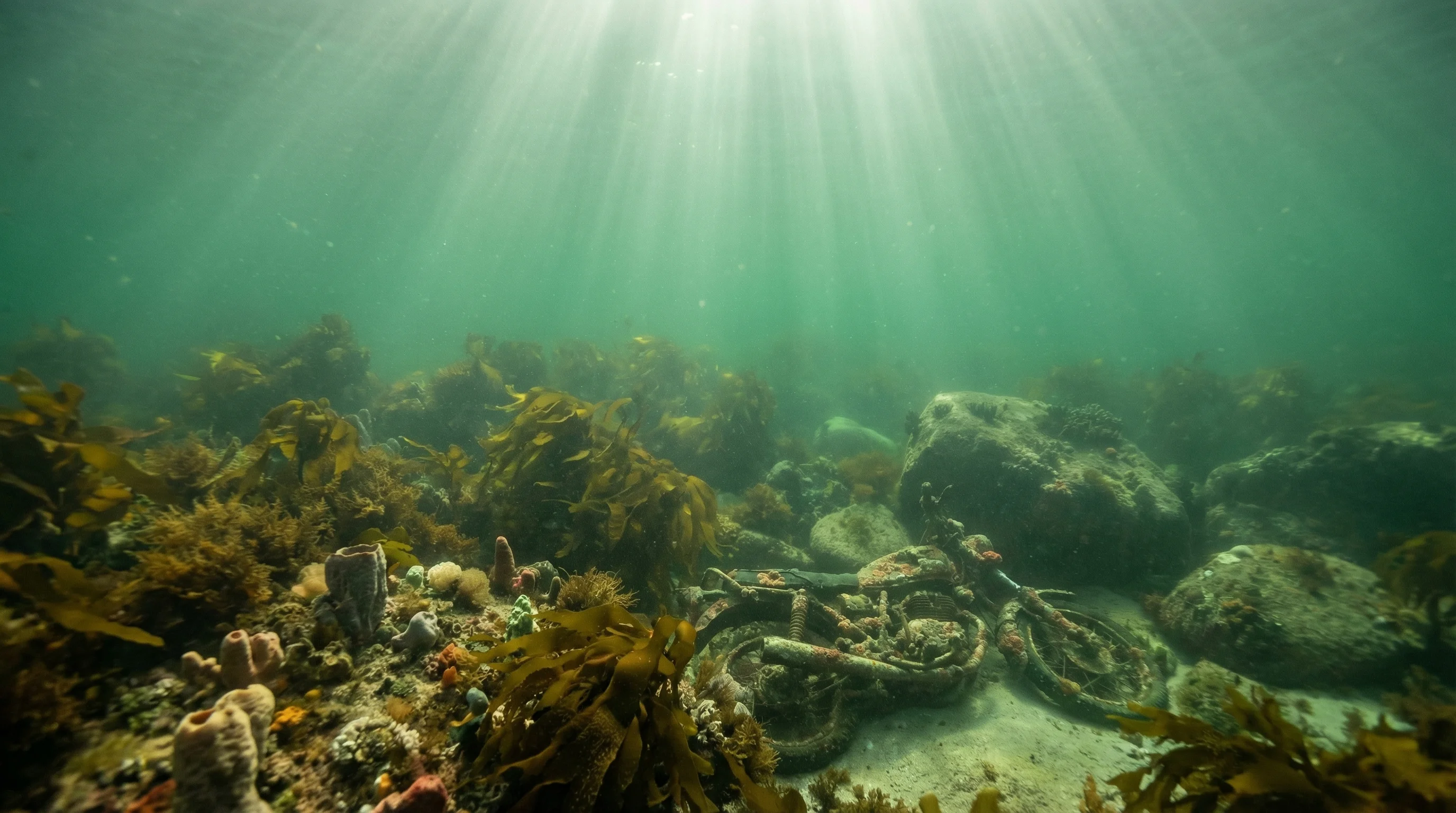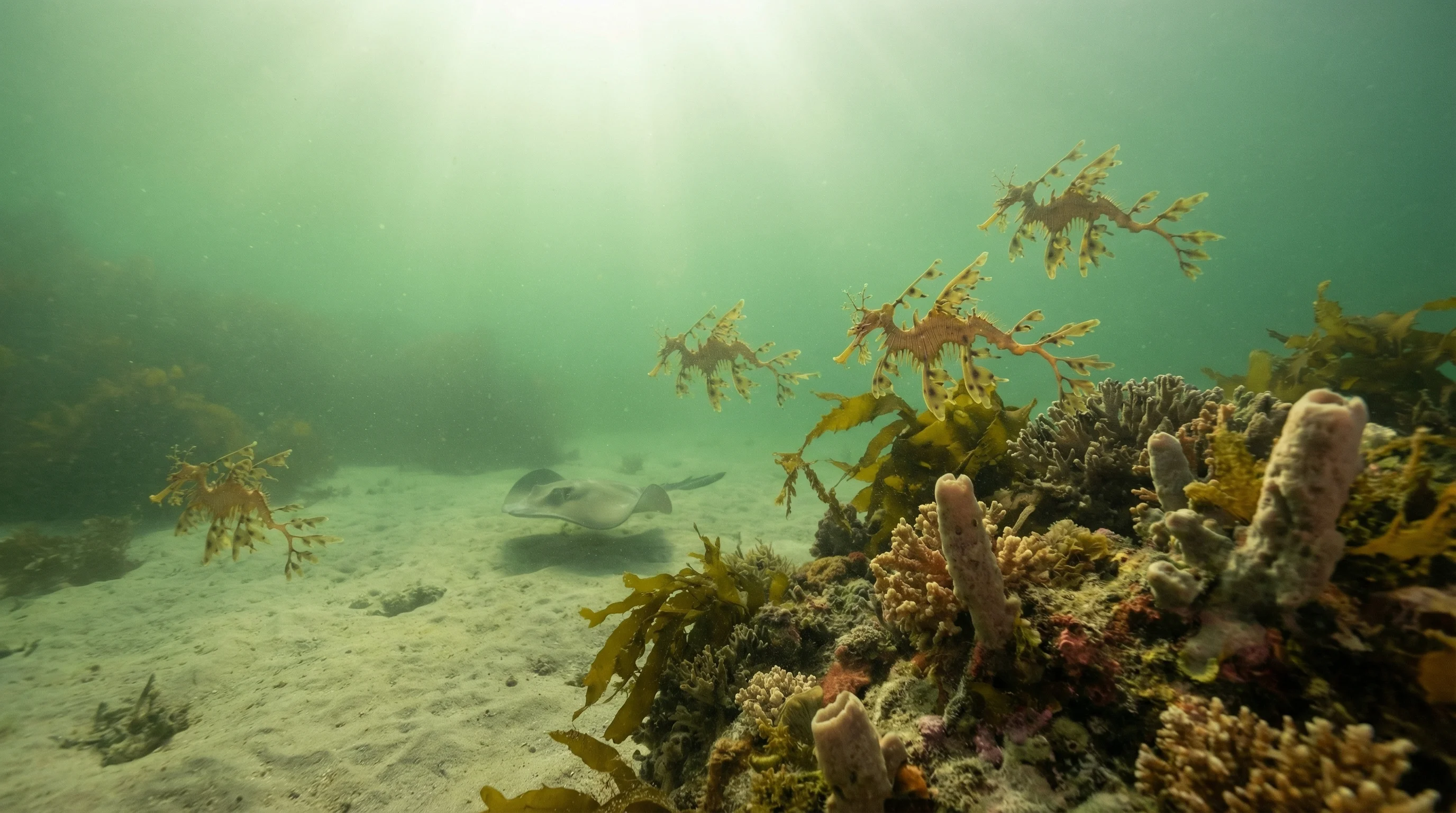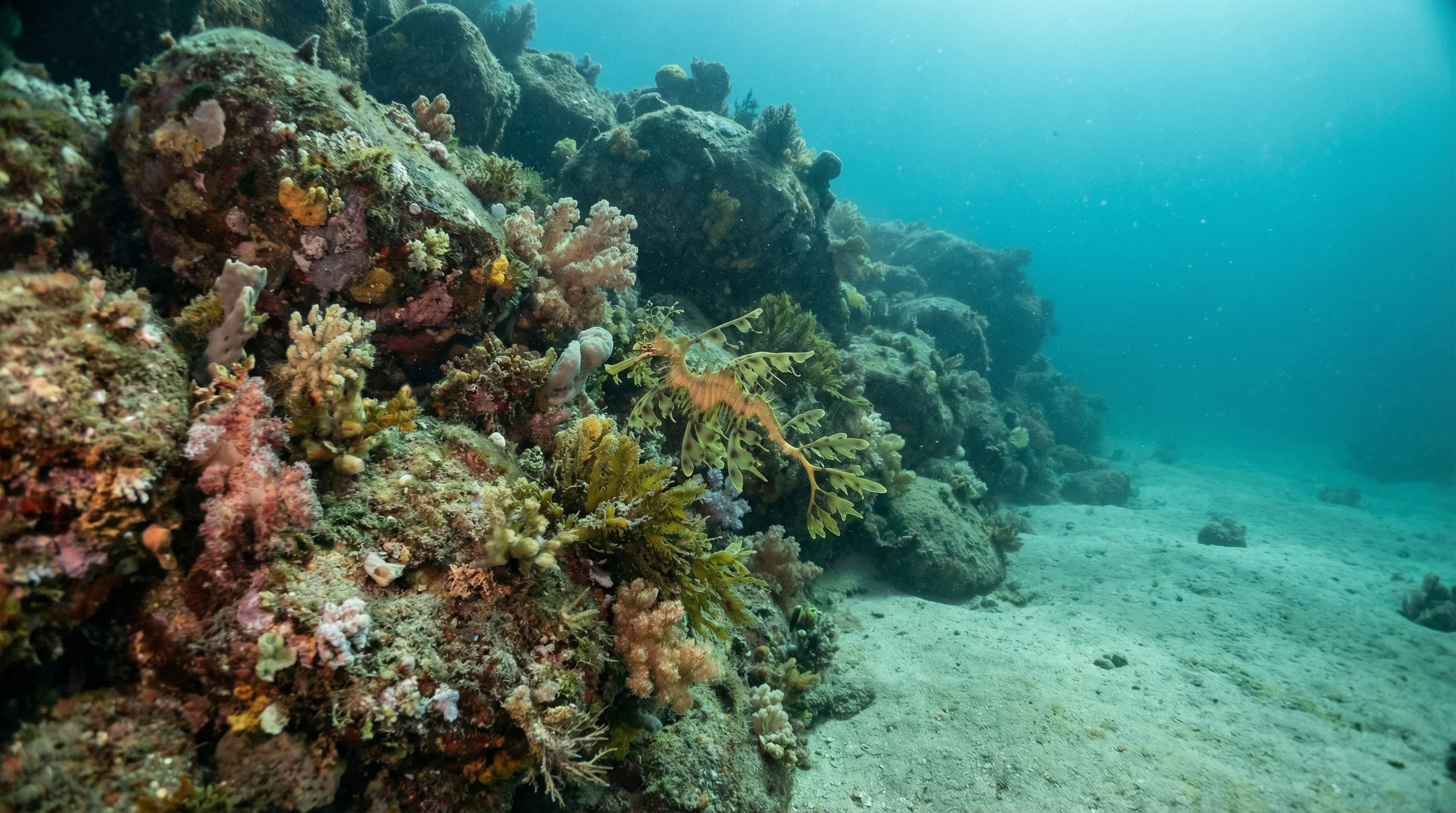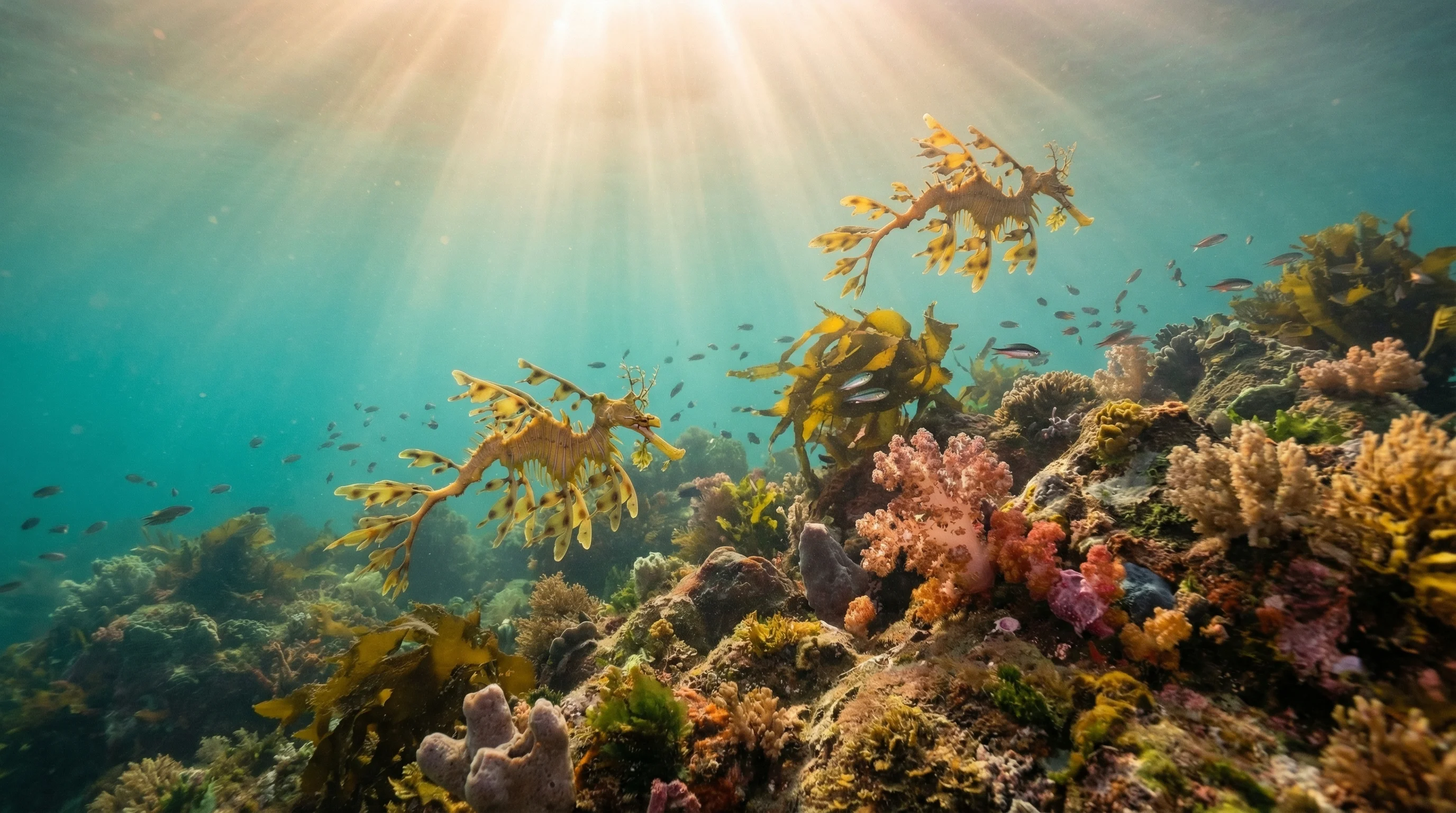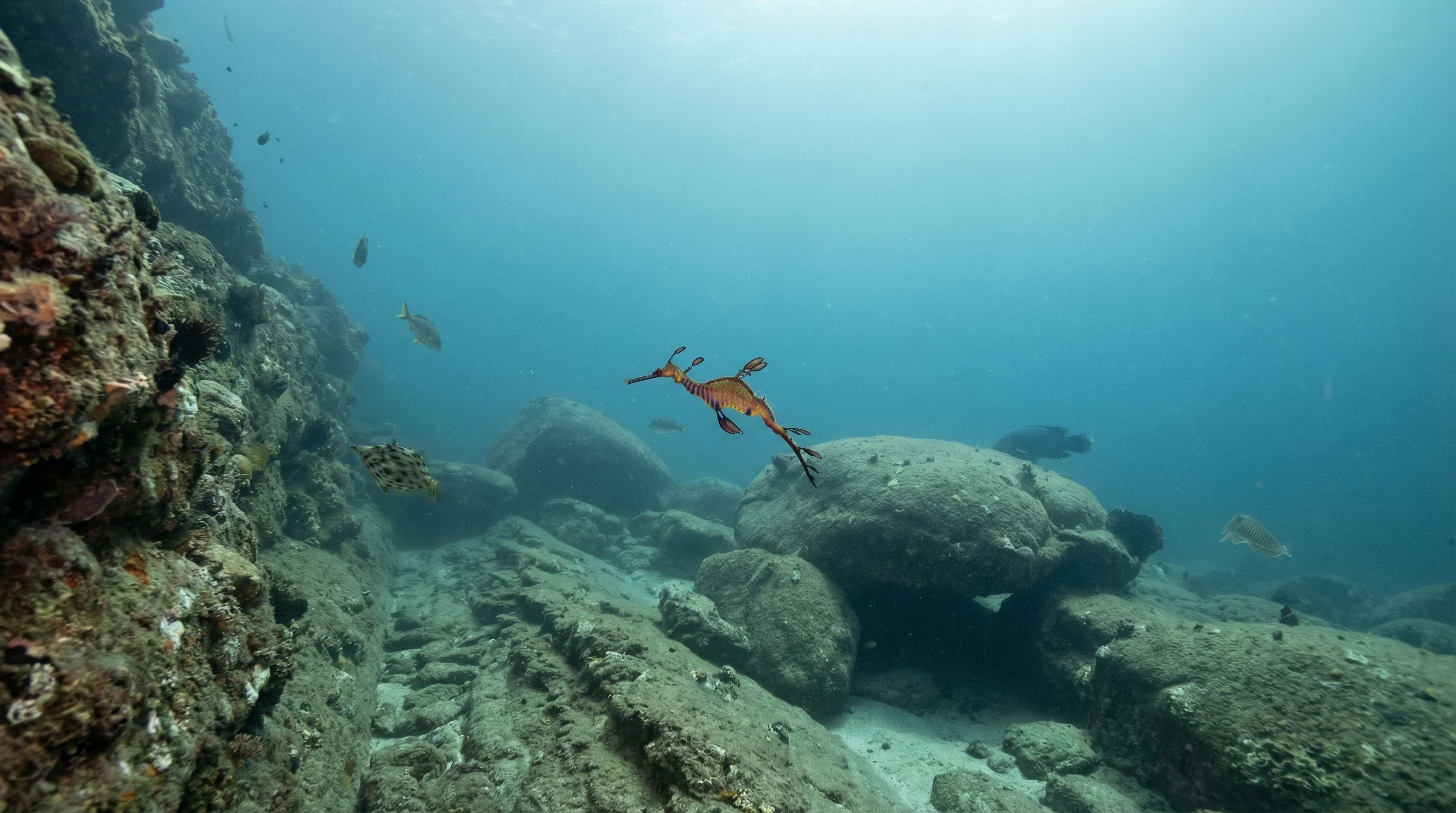
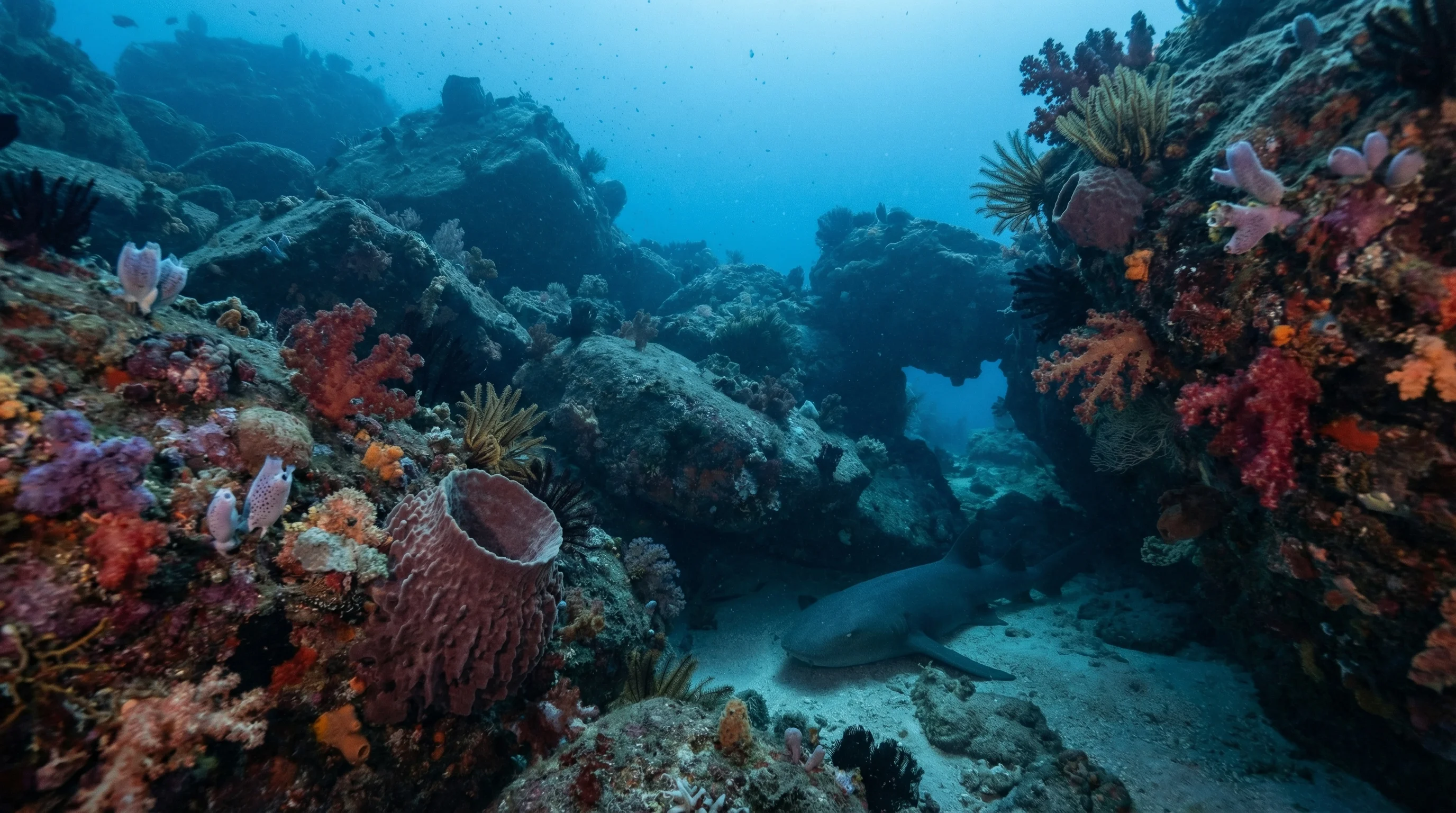
Dee Why Wide sits at the outer edge of the Sydney Northern Beaches dive circuit, where depths run from 20 to 37 metres and the site earns its advanced rating through a combination of depth, moderate current, surge, and regular boat traffic overhead. Visibility swings considerably, from 5 metres on rougher days to a clean 30 metres when conditions align, so timing matters. The marine life rewards the effort: eastern blue devilfish and giant cuttlefish are the standout finds, while wobbegong and Port Jackson sharks are reliably present. Kingfish, morwong, sergeant bakers, groupers, seapike, and red rock cod round out a solid temperate assemblage. Boat charter is the only access point.
-33.76961, 151.32192
April through September delivers the best conditions here, with cleaner visibility and more active marine life as water temperatures drop. Brief your skipper on your planned bottom time before descent, as boat traffic at this site warrants strict surface marker buoy discipline on ascent.
The site is accessible only by boat. Dive charters typically depart from boat ramps in Sydney Harbour, such as Roseville or Long Reef.
This is a deep dive site requiring an advanced certification. Divers should carry a surface marker buoy (SMB) as ascents are often in open water away from the anchor line. The site is exposed to ocean conditions.
Depth
20-37m
Visibility
5-30m
Skill Level
Advanced
Entry
Boat
Boat required
Water Temp
18-24°C
Current
Moderate
Typical Dive
25 min
Best Time
Apr, May, Jun, Jul, Aug, Sep
Dee Why Wide in New South Wales requires an Advanced Open Water certification and Deep Diver speciality to dive safely. The site reaches depths of 20 to 37 metres, placing it well beyond recreational limits and necessitating advanced training. Divers must be comfortable with deep diving procedures and nitrogen narcosis management.
Dee Why Wide is accessed exclusively by boat charter from Sydney, New South Wales. The site requires a boat due to its offshore location and depth range of 20 to 37 metres. Several boat charter operators service this dive site from Sydney harbour and nearby marinas.
Dee Why Wide hosts diverse Sydney temperate marine species including eastern blue devilfish, giant cuttlefish, and schooling kingfish. The rocky reef also shelters wobbegong sharks, Port Jackson sharks, groupers, seapike, and red rock cod. This marine life diversity makes it one of the premier advanced dive sites near Sydney.
Visibility at Dee Why Wide ranges from 5 to 30 metres depending on conditions and recent weather patterns. The best visibility typically occurs during the cooler months from April to September when water clarity improves. Divers should expect variable conditions and plan dives according to recent visibility reports.
The optimal diving season for Dee Why Wide runs from April through September during the Australian autumn and winter months. Water temperatures during this period range from 18 to 24 degrees Celsius, with clearer water and calmer conditions. These cooler months also offer better visibility and increased marine life activity.
Dee Why Wide is not suitable for beginners and requires advanced certification with deep diving experience. The site's depths of 20 to 37 metres, combined with moderate currents, surge, and boat traffic hazards, demand experienced divers. Only those holding Advanced Open Water and Deep Diver certifications should attempt this challenging New South Wales dive site.
Dee Why Wide presents several significant hazards including deep depths to 37 metres, strong currents, surge conditions, and active boat traffic. Divers must manage nitrogen narcosis at depth, maintain proper buoyancy control in current, and deploy surface marker buoys for safety. The combination of these factors makes this an advanced dive requiring careful planning and execution.
A 5mm wetsuit is recommended for diving at Dee Why Wide in Sydney. Water temperatures range from 18°C to 24°C.
Dee Why Wide in Sydney has depths ranging from 20 metres to 37 metres.
A typical dive at Dee Why Wide in Sydney lasts approximately 25 minutes. Actual dive time depends on depth, air consumption, and conditions.