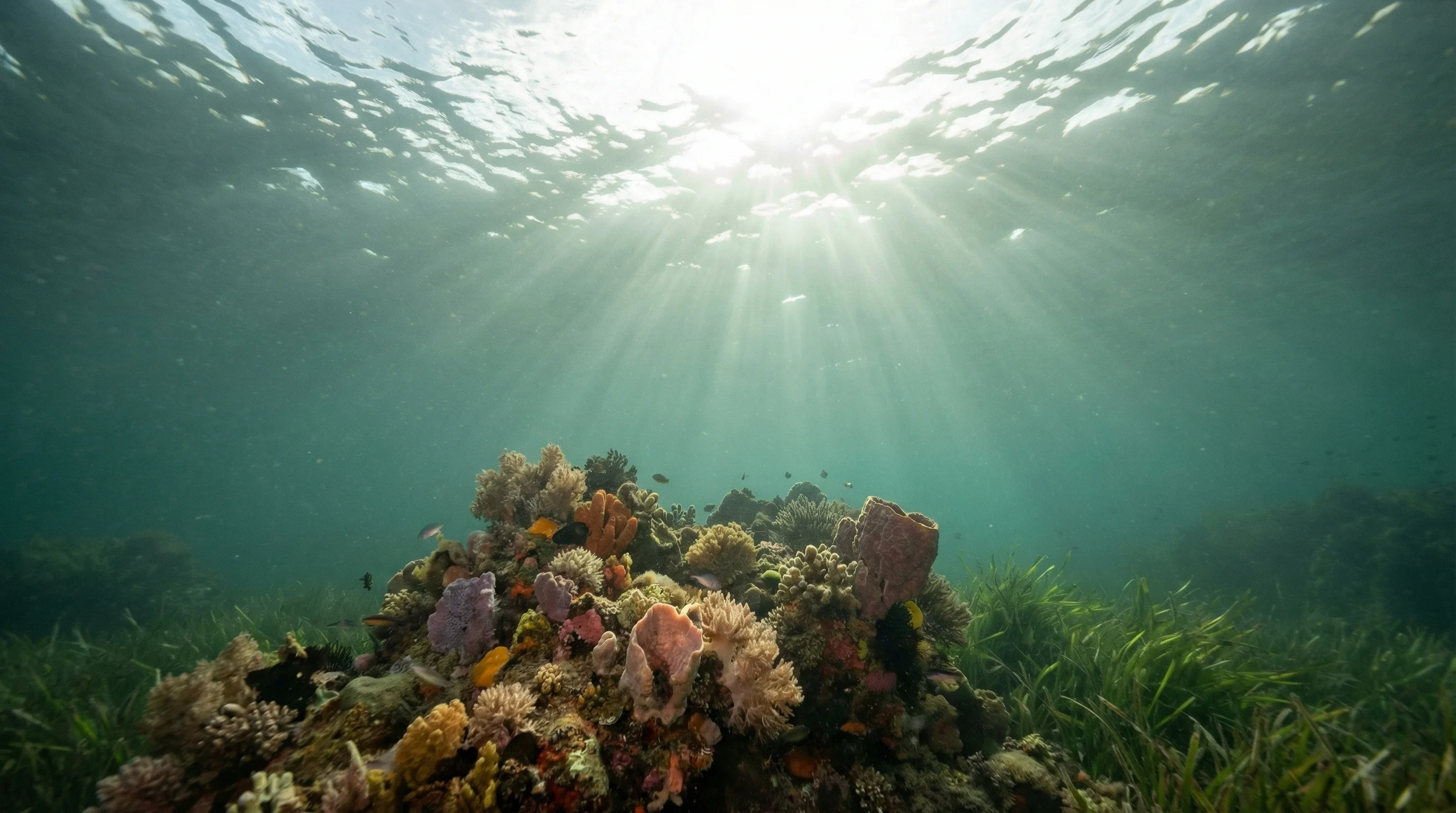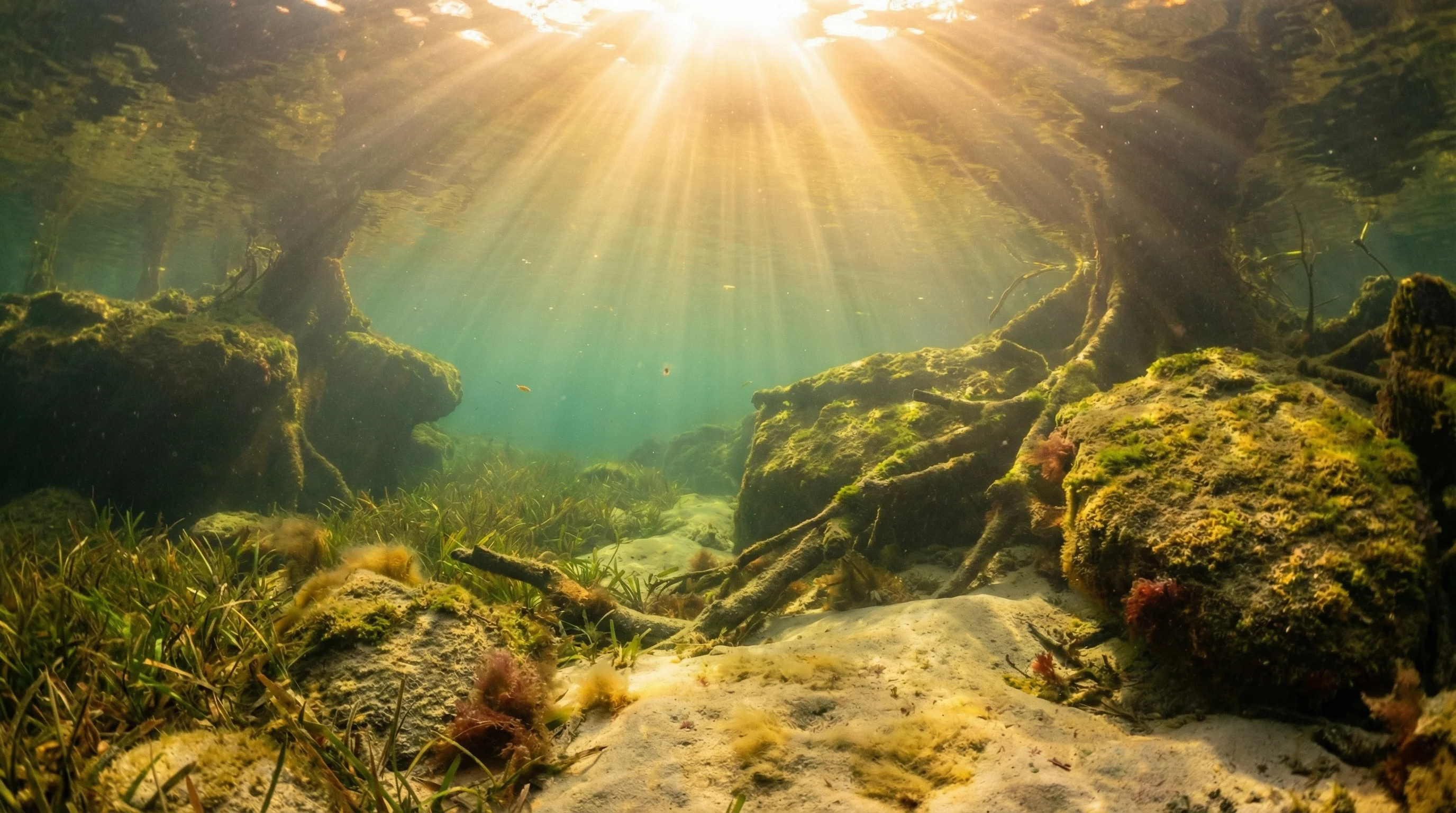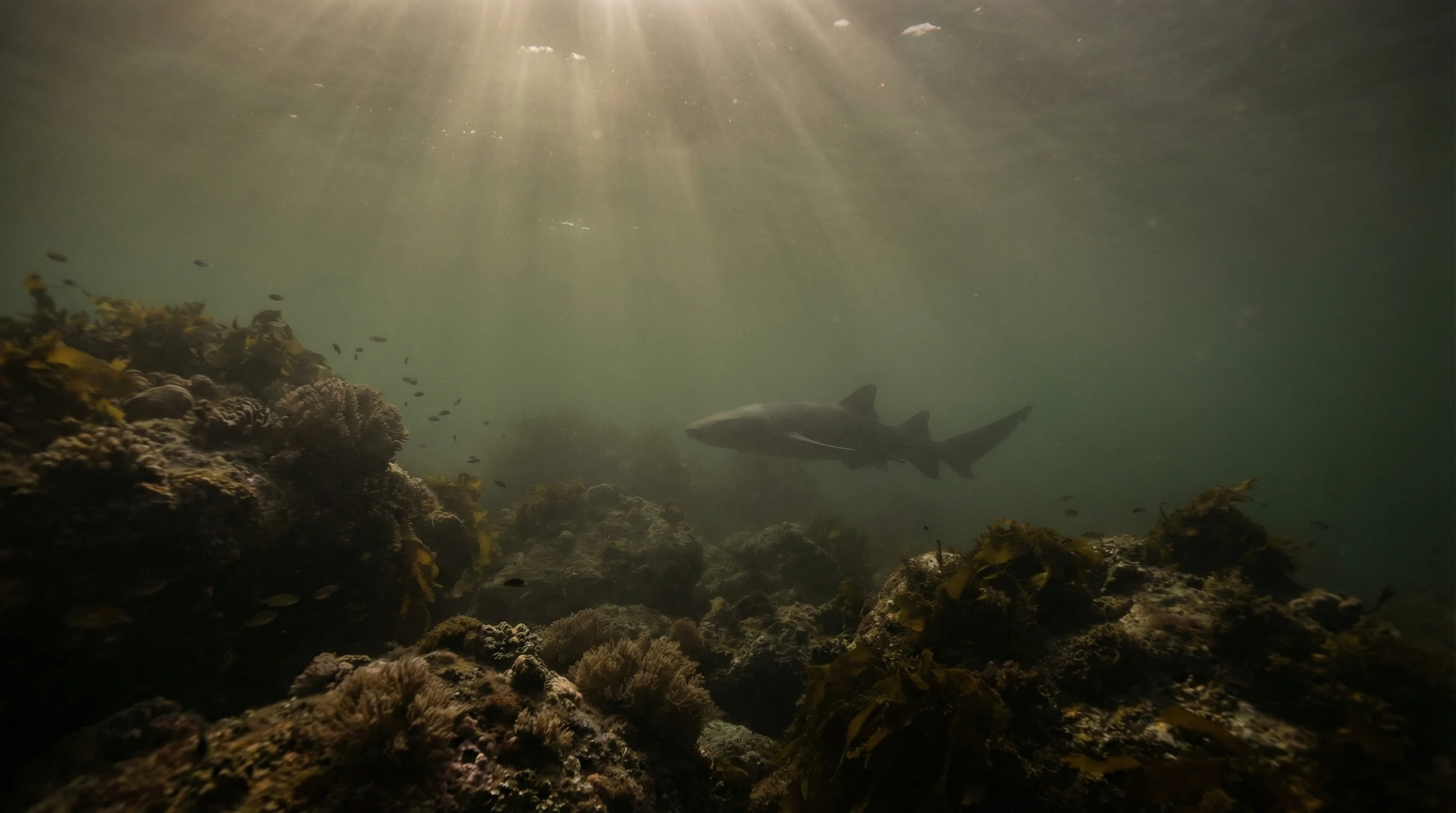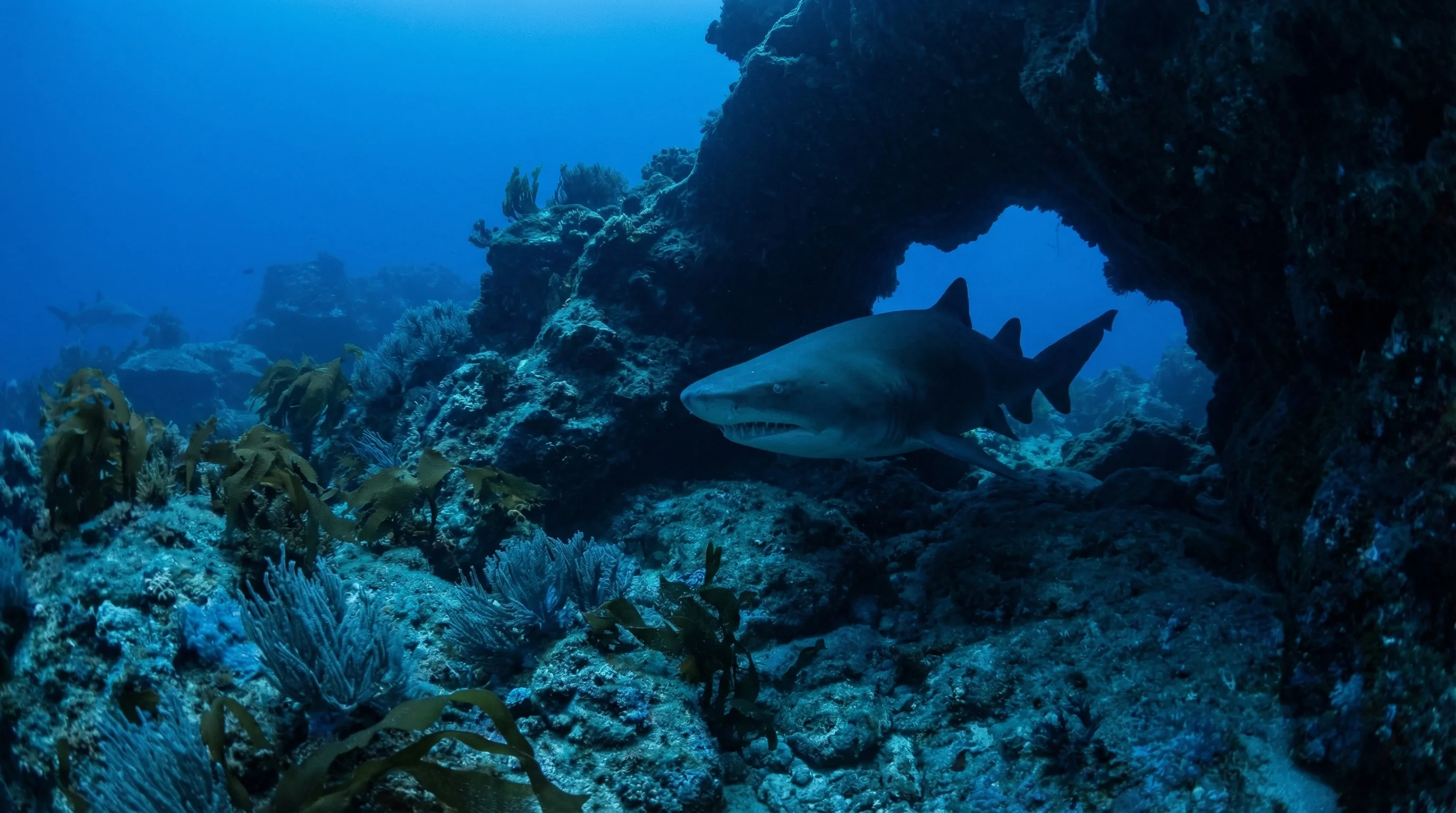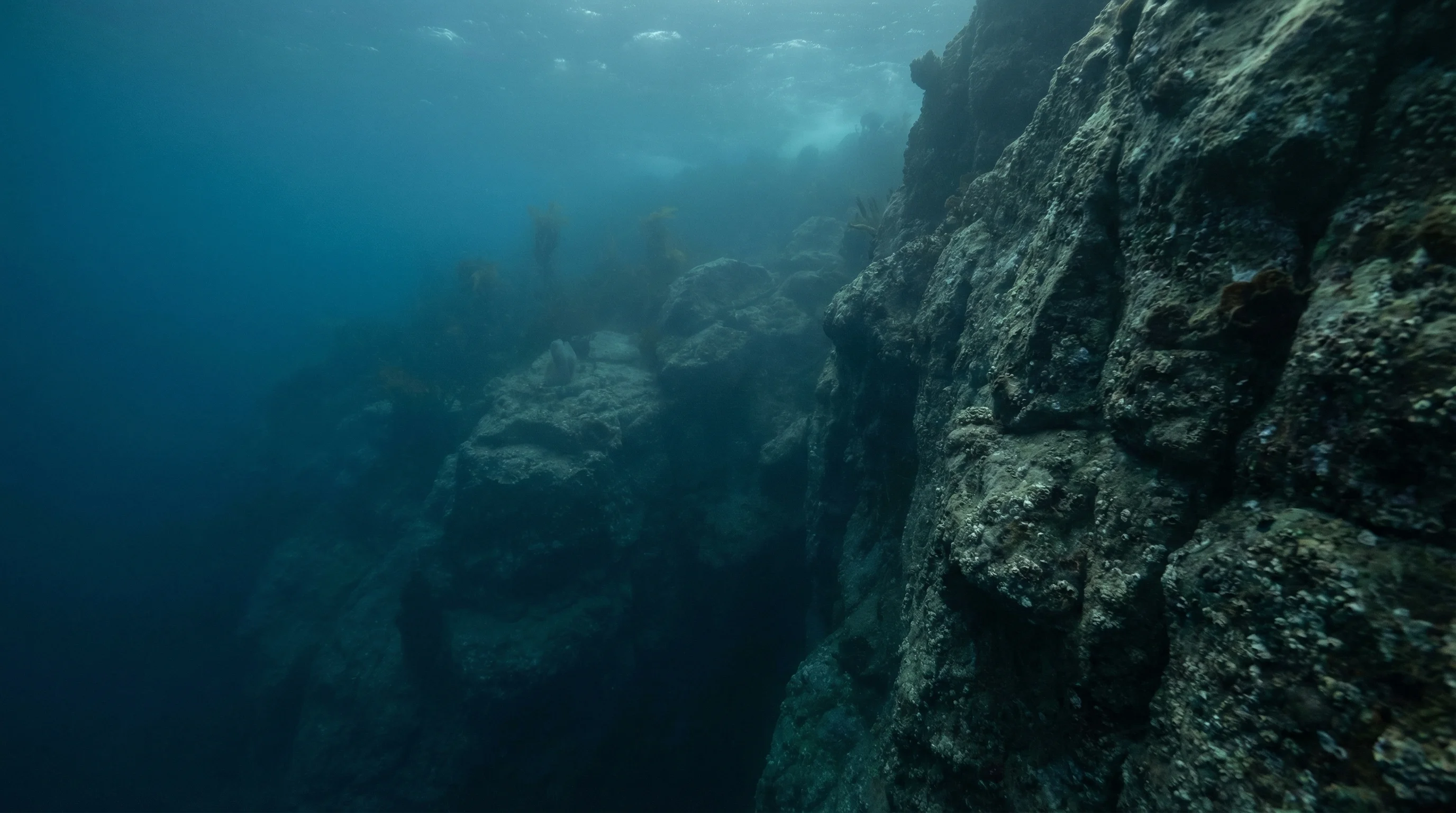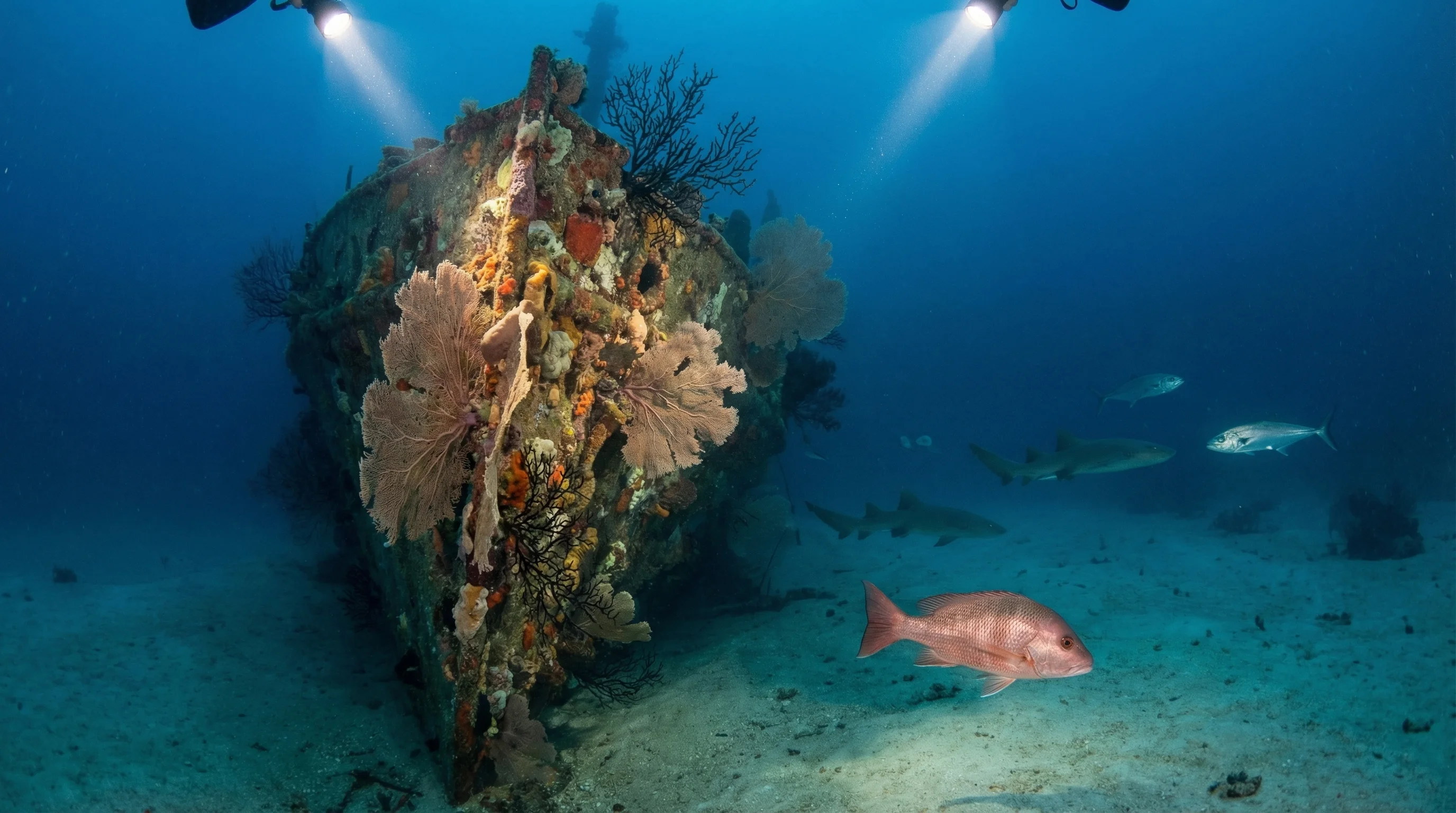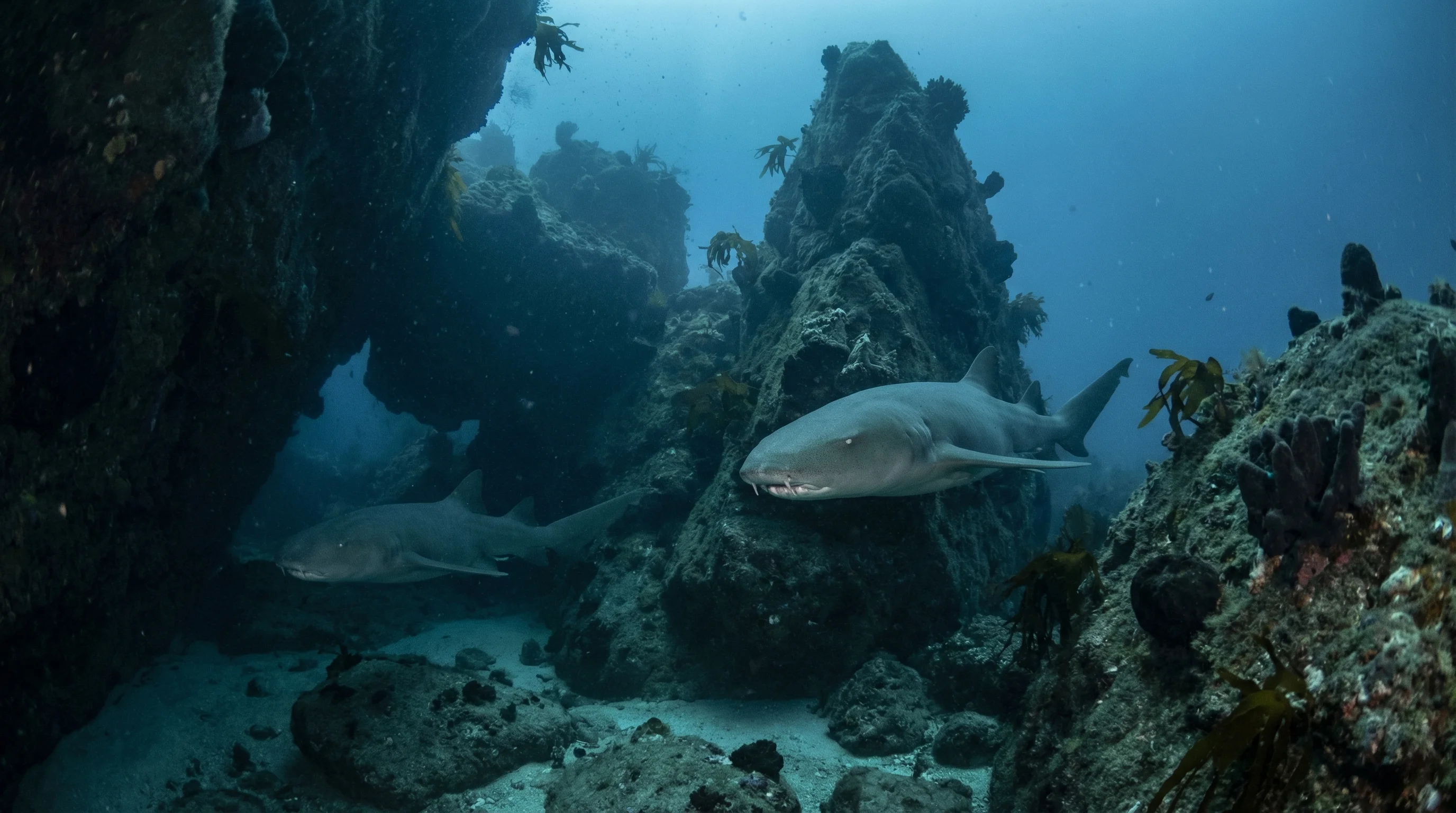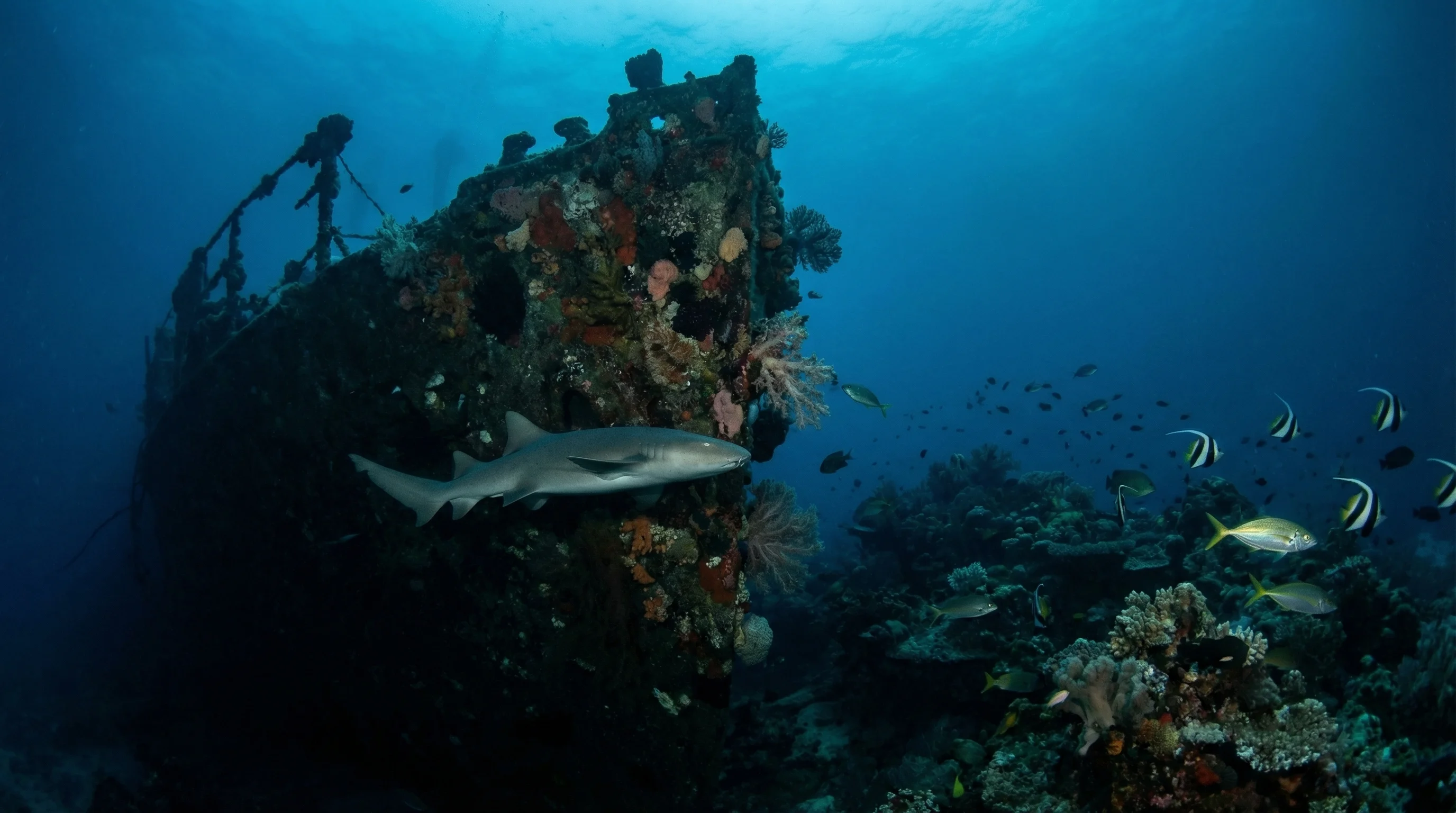
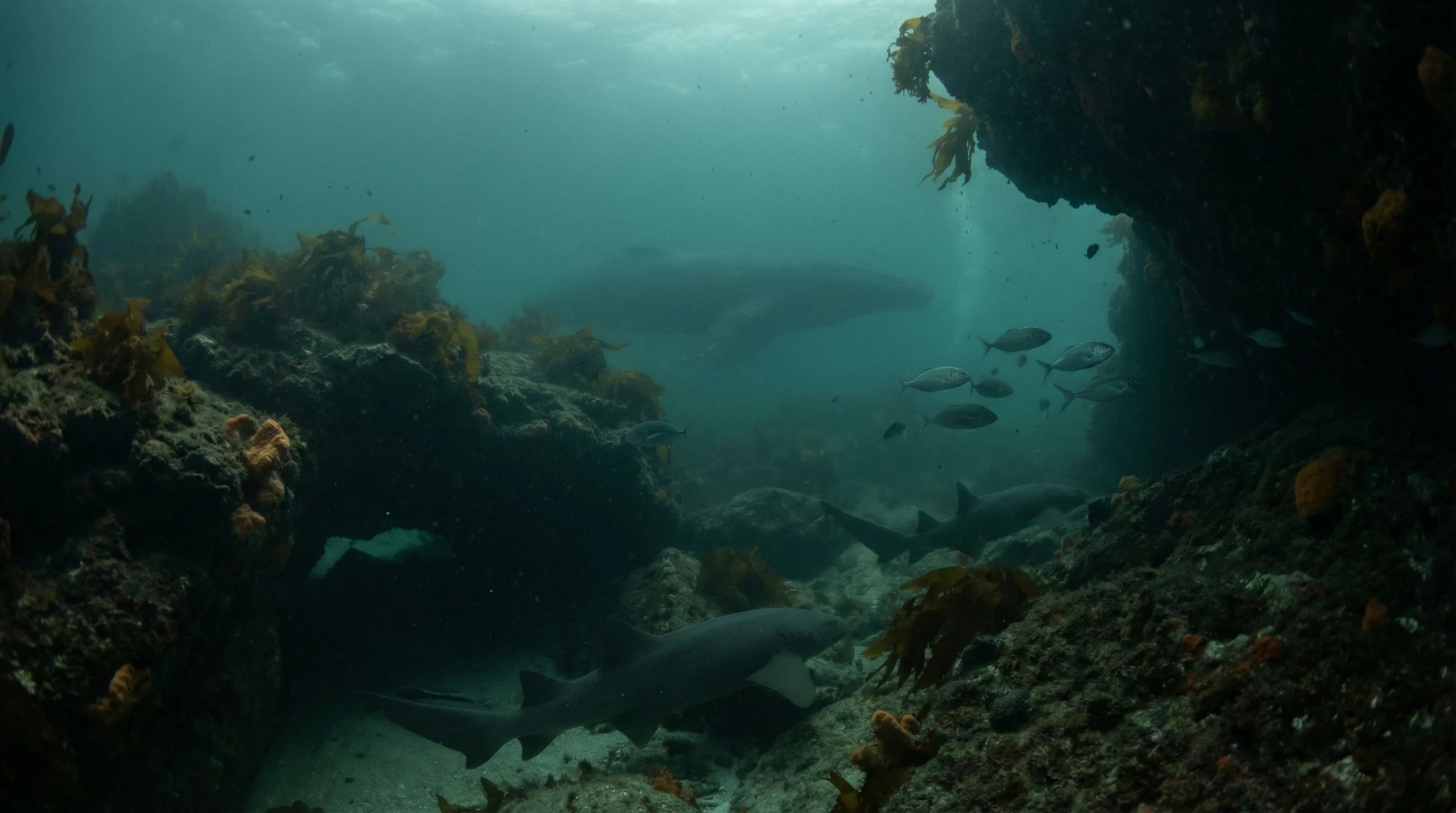
Seal Rocks combines reef, wreck and drift diving in a single location, with depths pushing to 30 metres and visibility ranging from 4 to 10 metres depending on swell and season. Strong currents run through here regularly, so situational awareness matters from the moment you enter off the boat. Those currents do the work of bringing life to you: southern eagle rays and kingfish cruise the water column, wobbegong and nurse sharks hold position on the bottom, and Australian giant cuttlefish are a consistent presence. Eastern blue devilfish tuck into reef structure, blue groper patrol the shallower sections, and loggerhead turtles pass through. Humpback whales transit the area seasonally. The overhead environment of the wreck section adds another layer of planning for penetration dives.
-32.43305, 152.53240
May and November offer the most reliable conditions, with calmer seas and better visibility than the summer swell period. Check the current direction before you commit to your entry point, as it significantly affects how the drift portion of the dive plays out.
Access info coming soon
Boat entry is essential due to surf. Expect strong currents; use a reef hook if needed. Navigate the wreck carefully, especially in overhead sections. Ascend slowly due to the significant depth.
Depth
10-30m
Visibility
4-10m
Skill Level
Advanced
Entry
Boat
Boat required
Current
Strong
Best Time
May, Nov
Yes, Seal Rocks in New South Wales is a boat-access-only dive site. You will need to book with a local dive operator or charter a boat to reach it.
Yes, parking is available near Seal Rocks. Arrive early during peak seasons as spaces can fill up quickly.
Seal Rocks in New South Wales requires advanced diving skills. Expect deeper depths, currents, or challenging conditions that are not suitable for newly certified divers.
Diving at Seal Rocks in New South Wales requires the following certifications: Advanced, Deep. Always dive within your training limits.
Seal Rocks in New South Wales is home to Southern Eagle Ray, Australian Giant Cuttlefish, Nurse Shark, Wobbegong Shark, Loggerhead Turtle, and Humpback Whale. Marine life sightings vary by season and conditions.
The best months to visit Seal Rocks in New South Wales are May and November. Conditions outside these months can still be good but are less predictable.
Seal Rocks in New South Wales has depths ranging from 10 metres to 30 metres.
Seal Rocks in New South Wales can have strong currents. Advanced experience with drift diving and current navigation is recommended.
Visibility at Seal Rocks in New South Wales typically ranges from 4 metres to 10 metres. Conditions vary with weather, tides, and seasons.