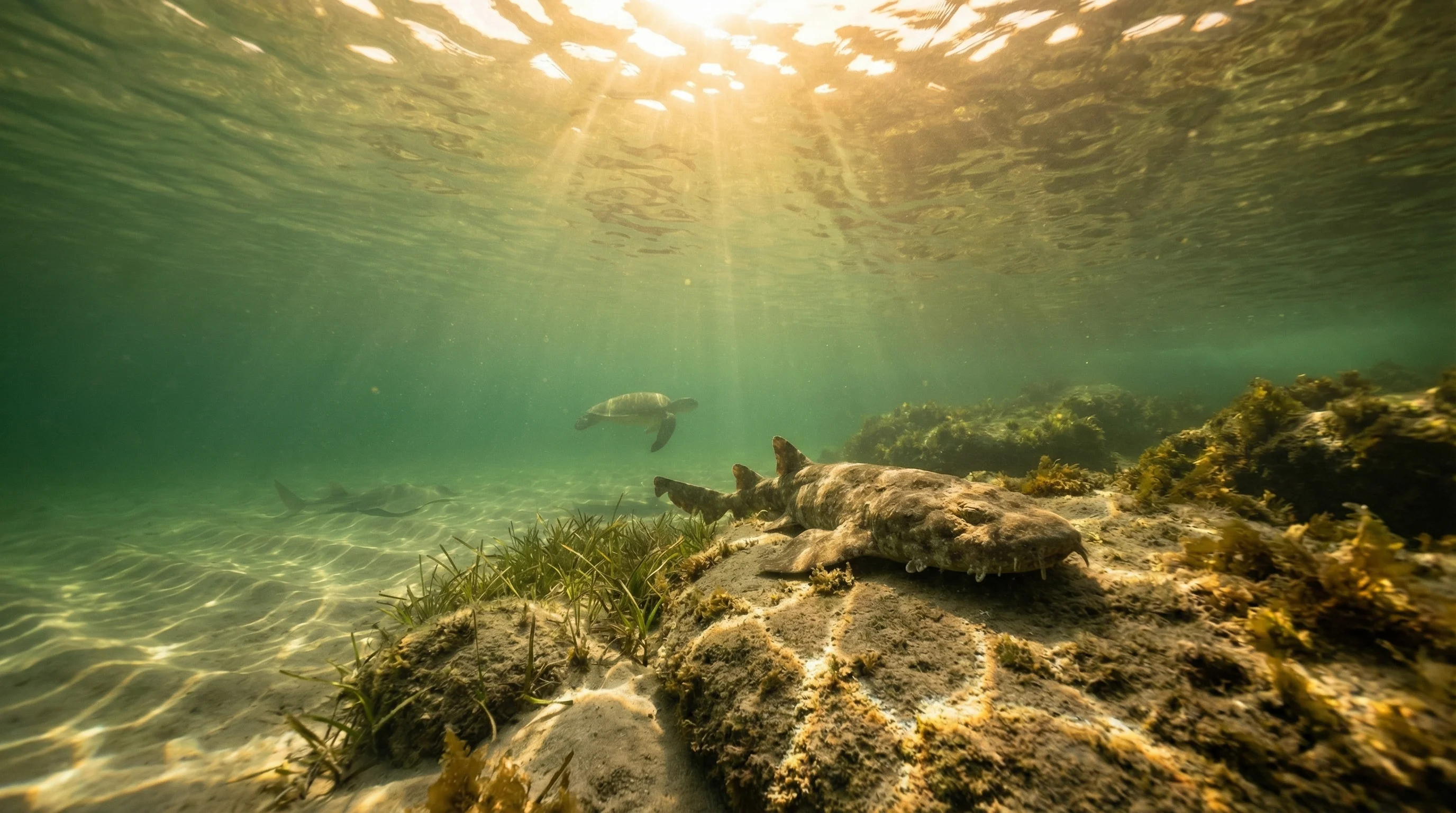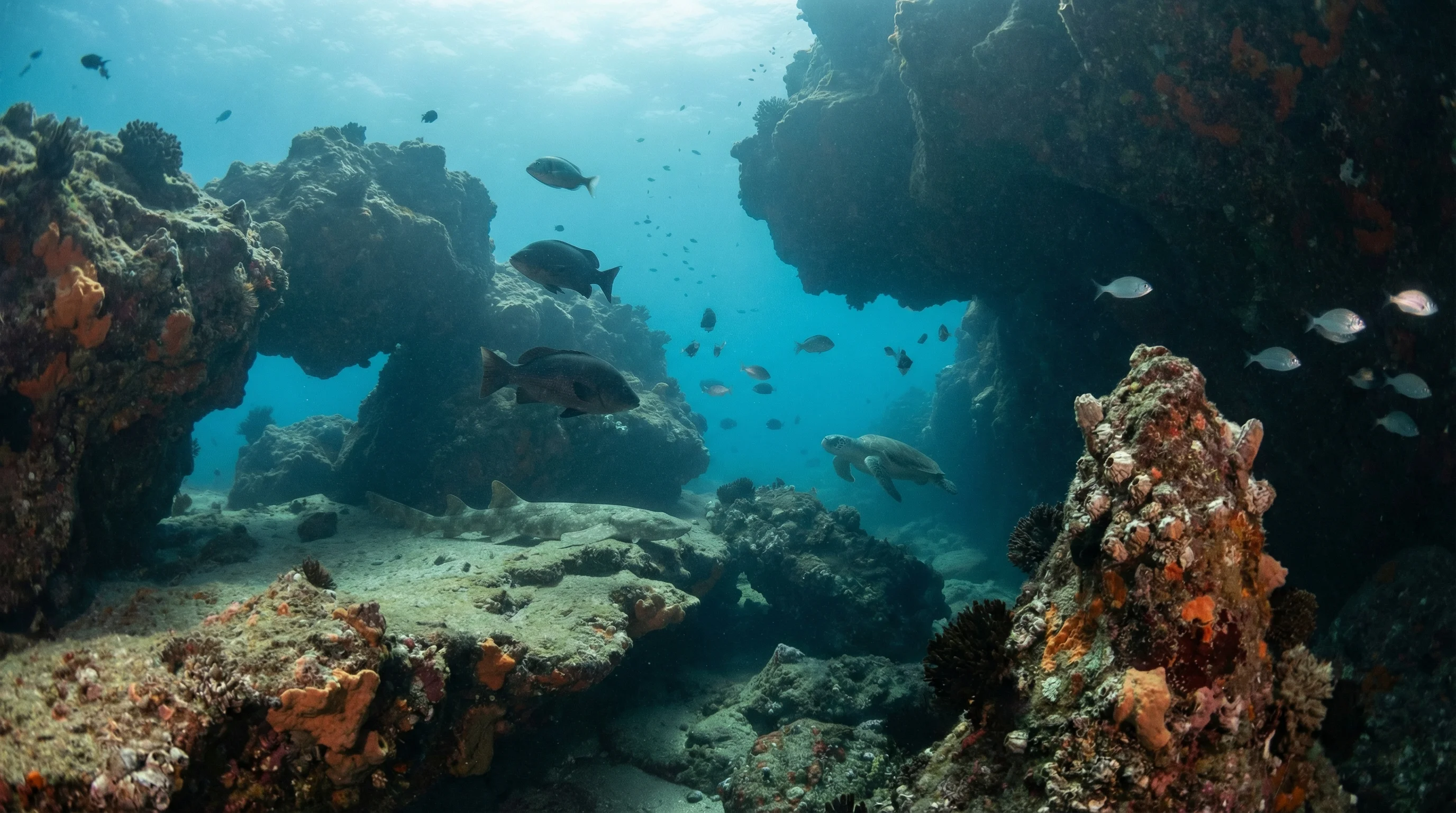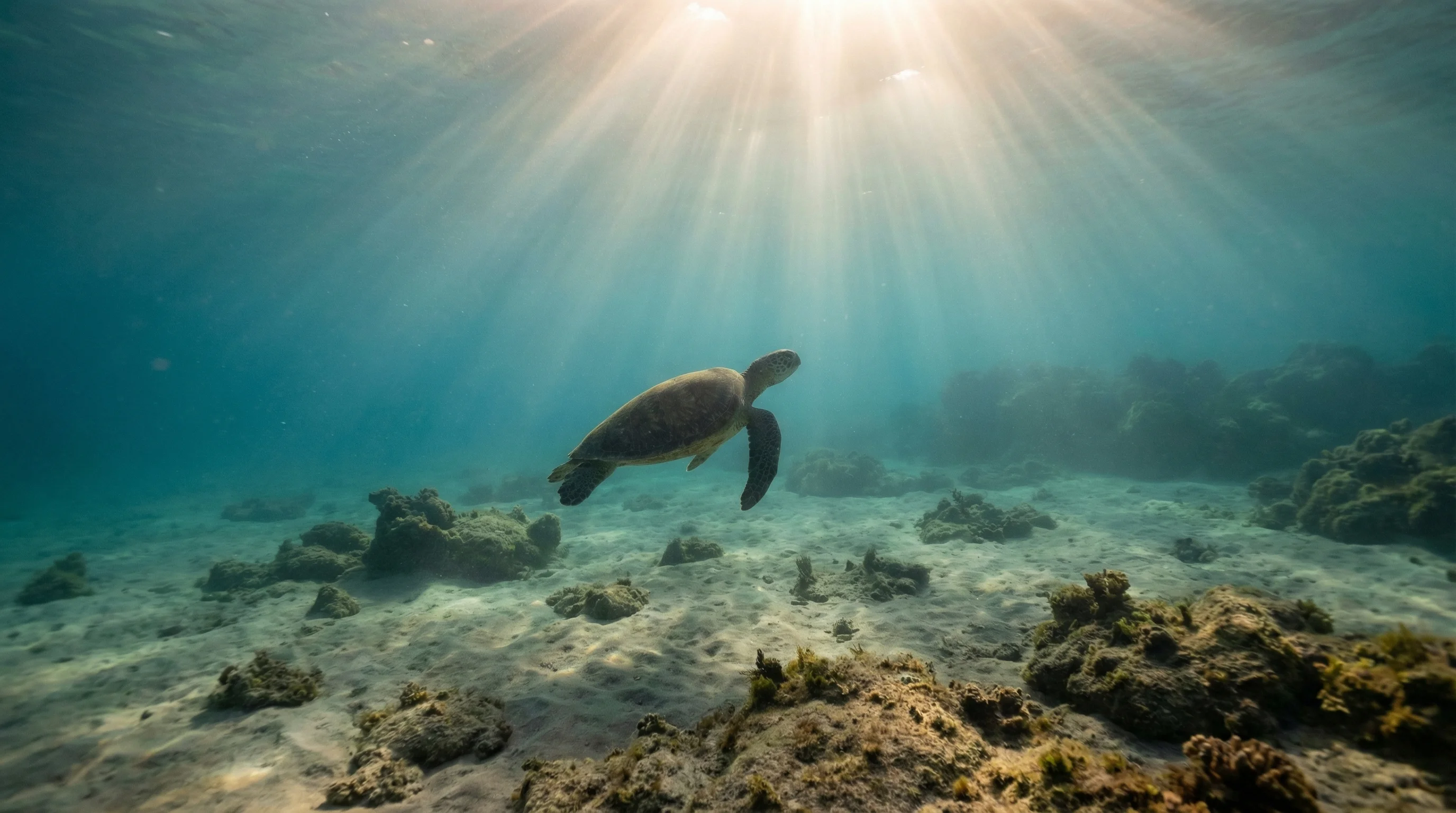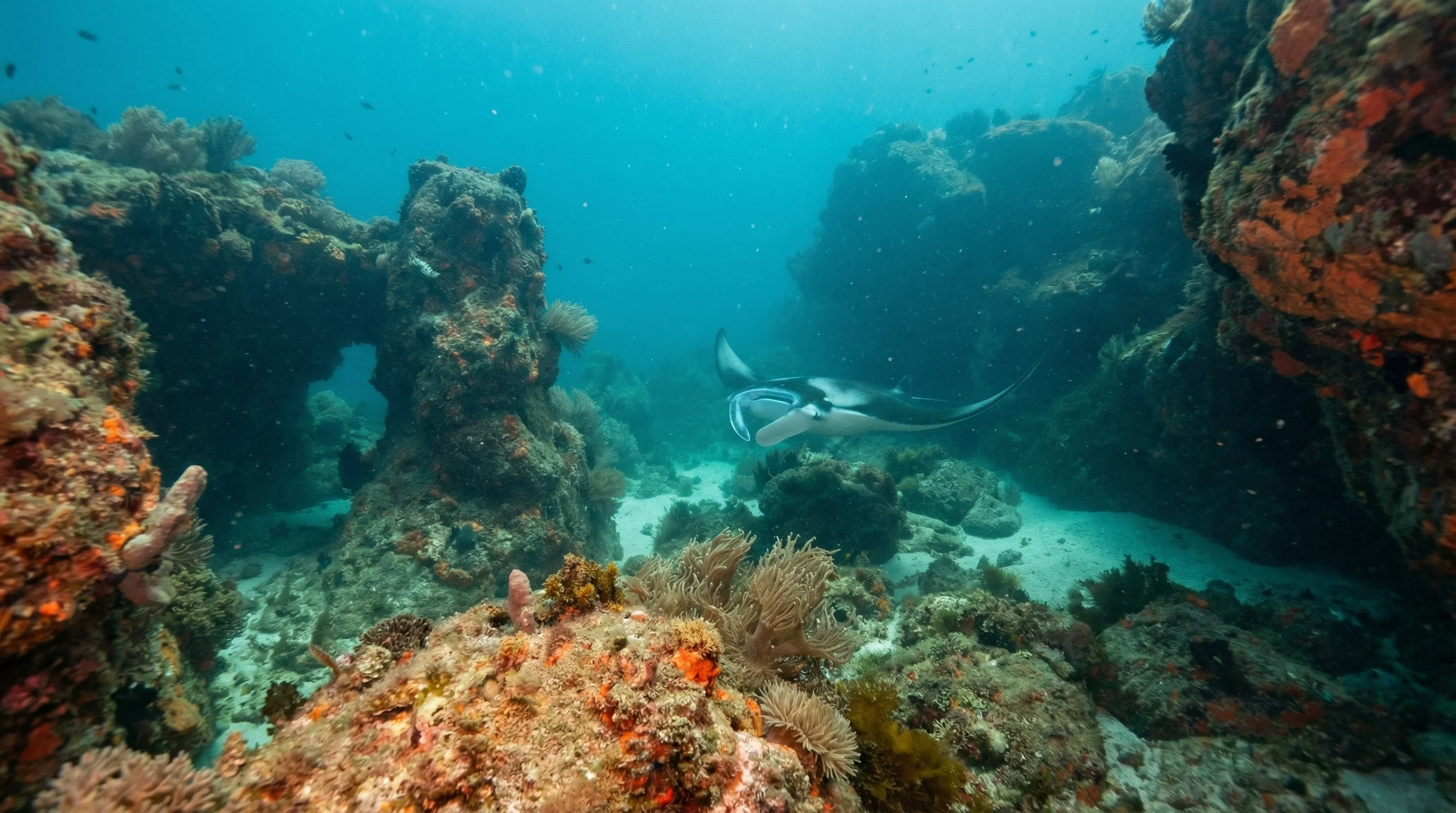
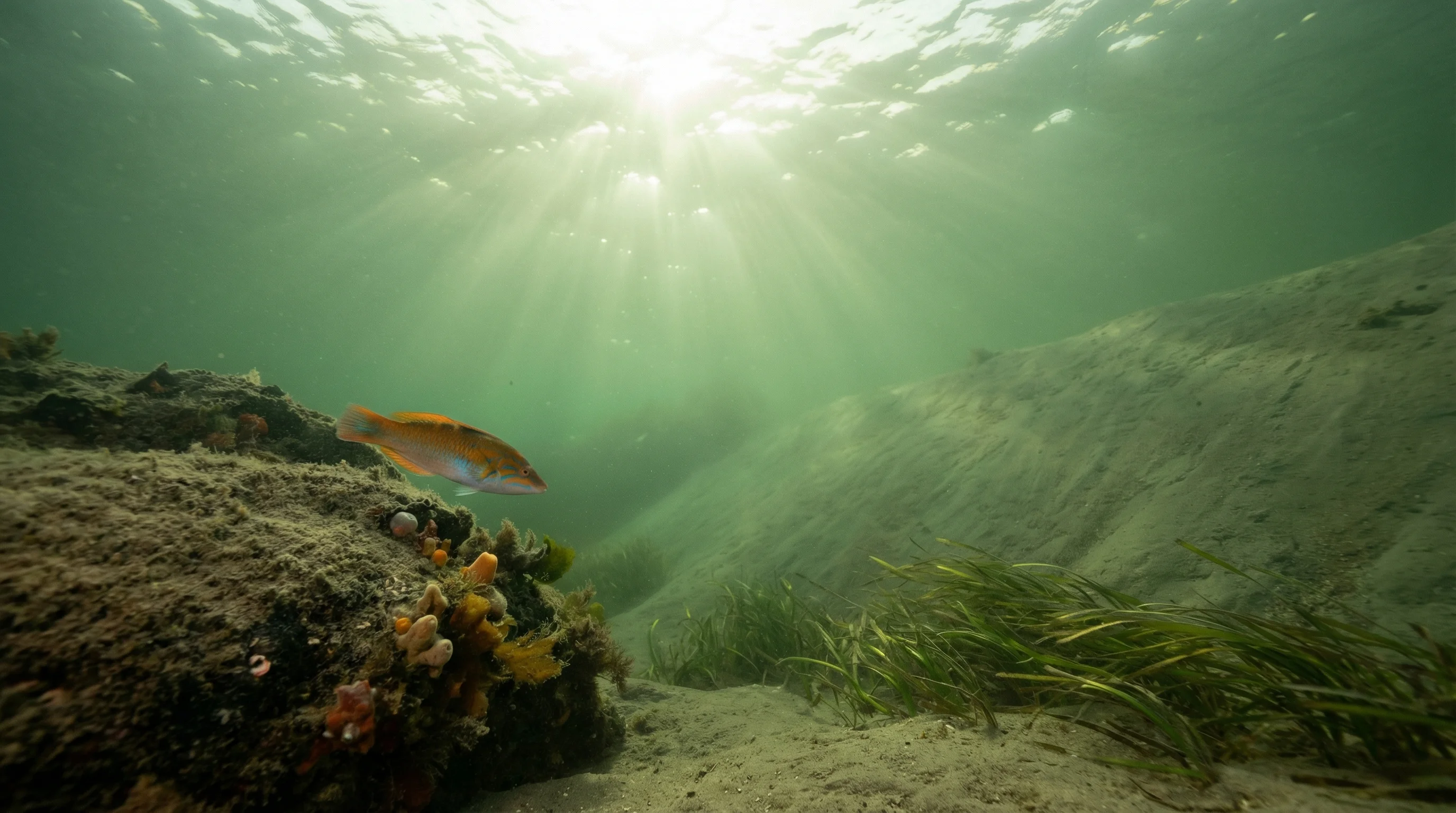
Shaws Bay (North Wall Entry) is a gentle shore entry site in New South Wales suited to beginners and those new to snorkelling. The shallow, calm waters sit over seagrass beds, which attract colourful fish and make for relaxed, unhurried exploration. Visibility is variable, so conditions can change between visits, and low visibility is the main hazard to be aware of before you get in. Current is mild, which keeps things manageable. Facilities at the site include parking, toilets, and showers, making it a comfortable choice for a first outing. The site is best visited between December and May.
-28.86580, 153.58650
Visit on a calm morning when the water has had time to settle overnight, as visibility tends to be at its best before any wind picks up. The shower and toilet facilities make this a practical spot for families or those wanting a comfortable post-dive routine.
Access is from Pop Denison Park off Compton Drive in East Ballina. The park has parking and a path leading to a sandy beach entry.
Water quality can be poor, particularly after rainfall, due to pollution from stormwater.
Depth
1-8m
Visibility
3-10m
Skill Level
Beginner
Entry
Shore
Water Temp
18-26°C
Current
Mild
Typical Dive
30 min
Best Time
Jan, Feb, Mar, Apr, May, Dec
Shaws Bay North Wall Entry in New South Wales offers direct shore access from the beach, with parking, toilets and showers available on site. No boat is required, making it convenient for snorkellers arriving by car. The north wall entry point provides easy water access for exploring the seagrass beds and shallow areas.
Shaws Bay North Wall Entry is classified as a beginner-level snorkelling site with shore entry and mild currents. No certifications are required, and the calm conditions make it ideal for those new to snorkelling. The shallow protected waters near the north wall provide a safe environment for learning basic snorkelling skills.
Shaws Bay North Wall Entry features colourful fish species that inhabit the extensive seagrass meadows. The seagrass beds create an important nursery habitat attracting various reef fish and small marine creatures. Snorkellers can observe fish feeding and sheltering amongst the underwater vegetation throughout the bay.
Water temperatures at Shaws Bay North Wall Entry range from 18°C in winter to 26°C during summer months. The warmest conditions occur between December and May, when temperatures typically exceed 22°C. A 3mm wetsuit provides adequate thermal protection during the cooler months, whilst summer snorkelling is comfortable in a rashguard or shortie.
The best months for snorkelling at Shaws Bay North Wall Entry are December through May, covering the Australian summer and early autumn. During this period, water temperatures are warmest and conditions are generally most stable. Summer months offer the most comfortable snorkelling experience with water temperatures reaching 24-26°C.
There is no entry fee to snorkel at Shaws Bay North Wall Entry in New South Wales. The site offers free access with complimentary parking, making it an affordable option for budget-conscious snorkellers. All facilities including toilets and showers are provided without charge.
The primary hazard at Shaws Bay North Wall Entry is low visibility, which can occur after heavy rainfall or strong winds that stir up sediment. The mild currents present minimal risk for snorkellers staying near the shore. Checking recent weather conditions before your visit helps ensure optimal visibility for observing the seagrass and fish life.
Diving at Shaws Bay in North Coast requires the following certifications: Open Water. Always dive within your training limits.
A 5mm wetsuit is recommended for diving at Shaws Bay in North Coast. Water temperatures range from 18°C to 26°C.
Shaws Bay in North Coast has depths ranging from 1 metres to 8 metres.
Shaws Bay in North Coast is excellent for snorkelling with a rating of 3 out of 5. Shallow areas start from 1 metres, making it accessible for snorkellers.
A typical dive at Shaws Bay in North Coast lasts approximately 30 minutes. Actual dive time depends on depth, air consumption, and conditions.