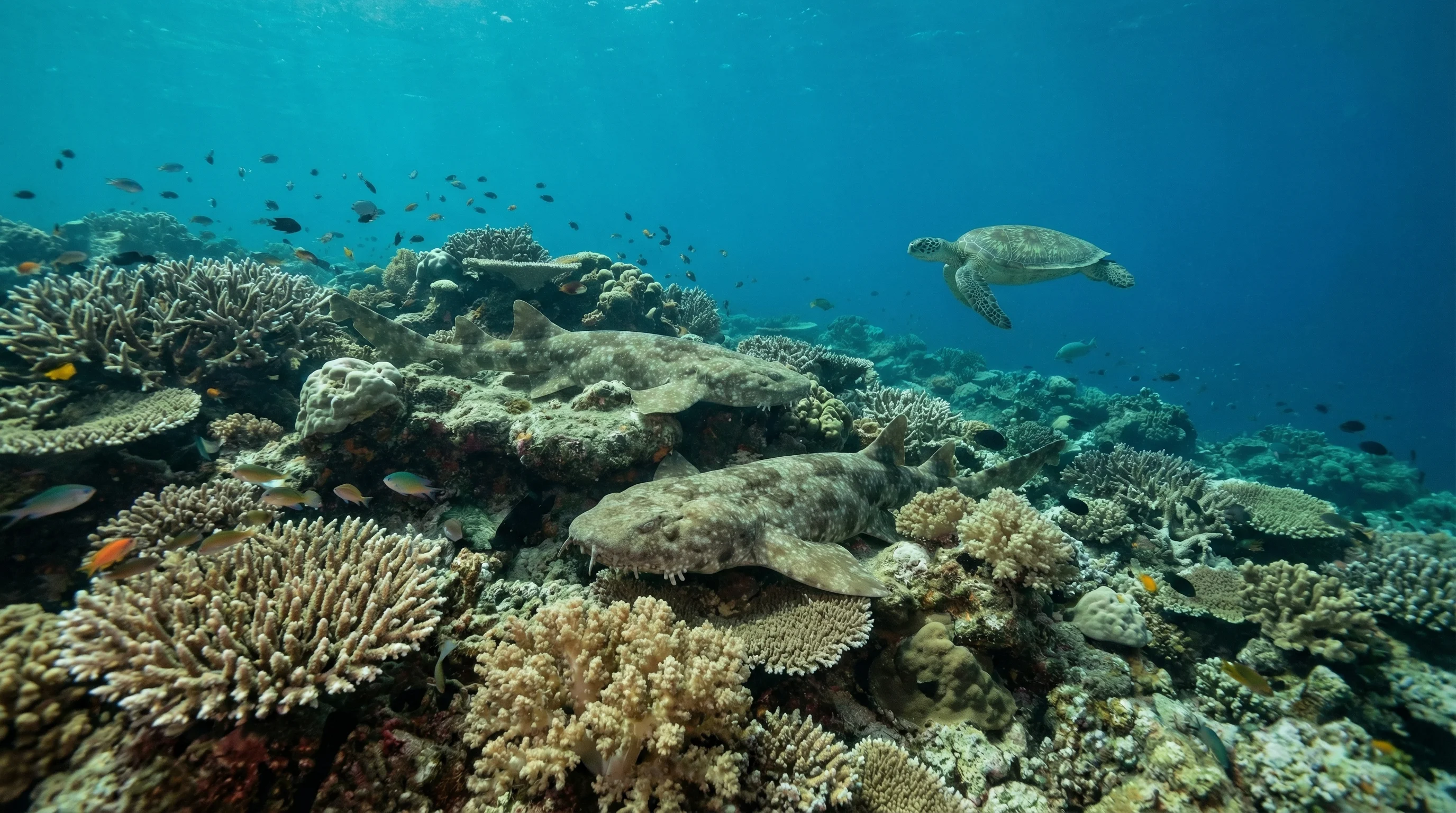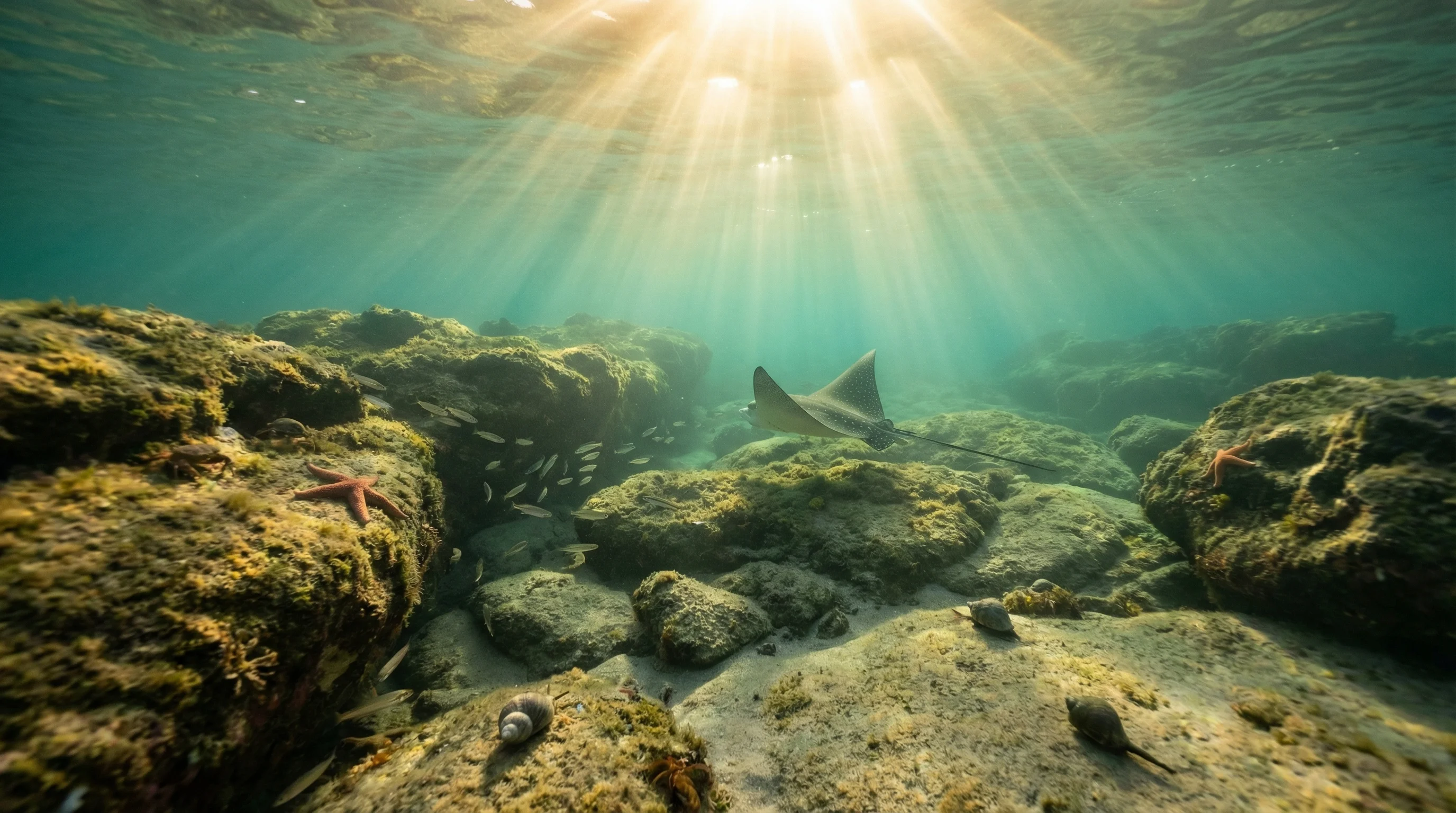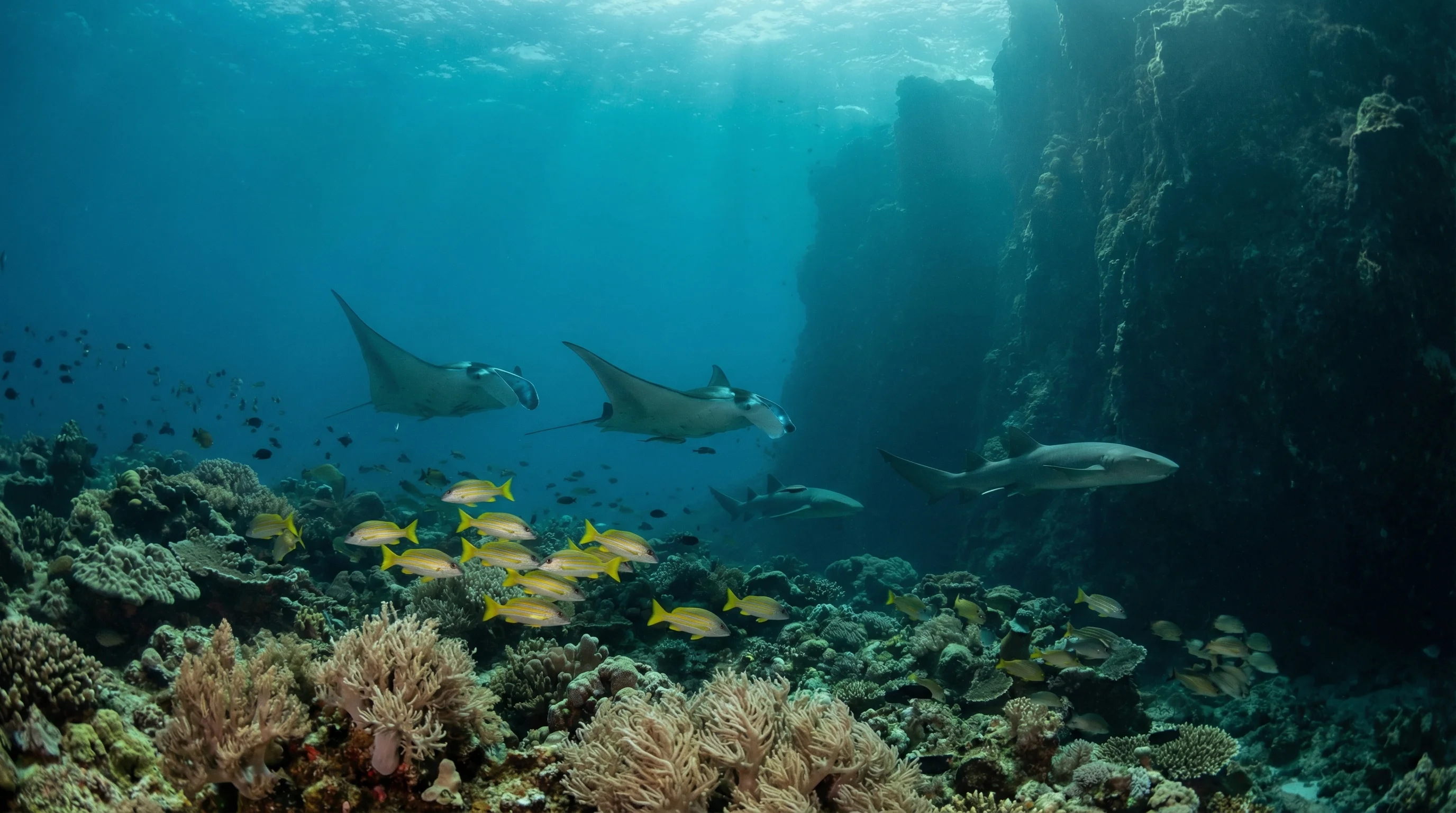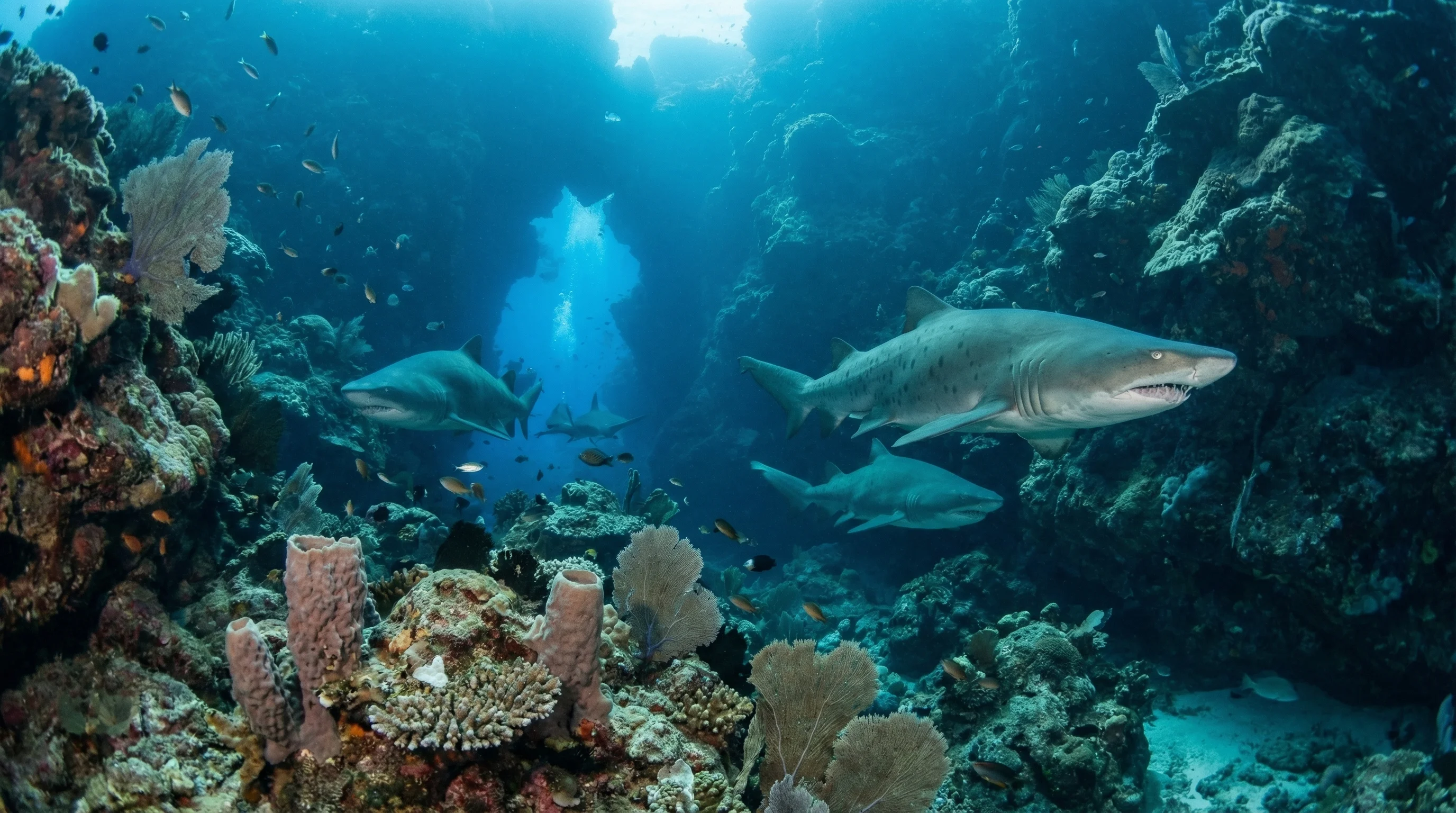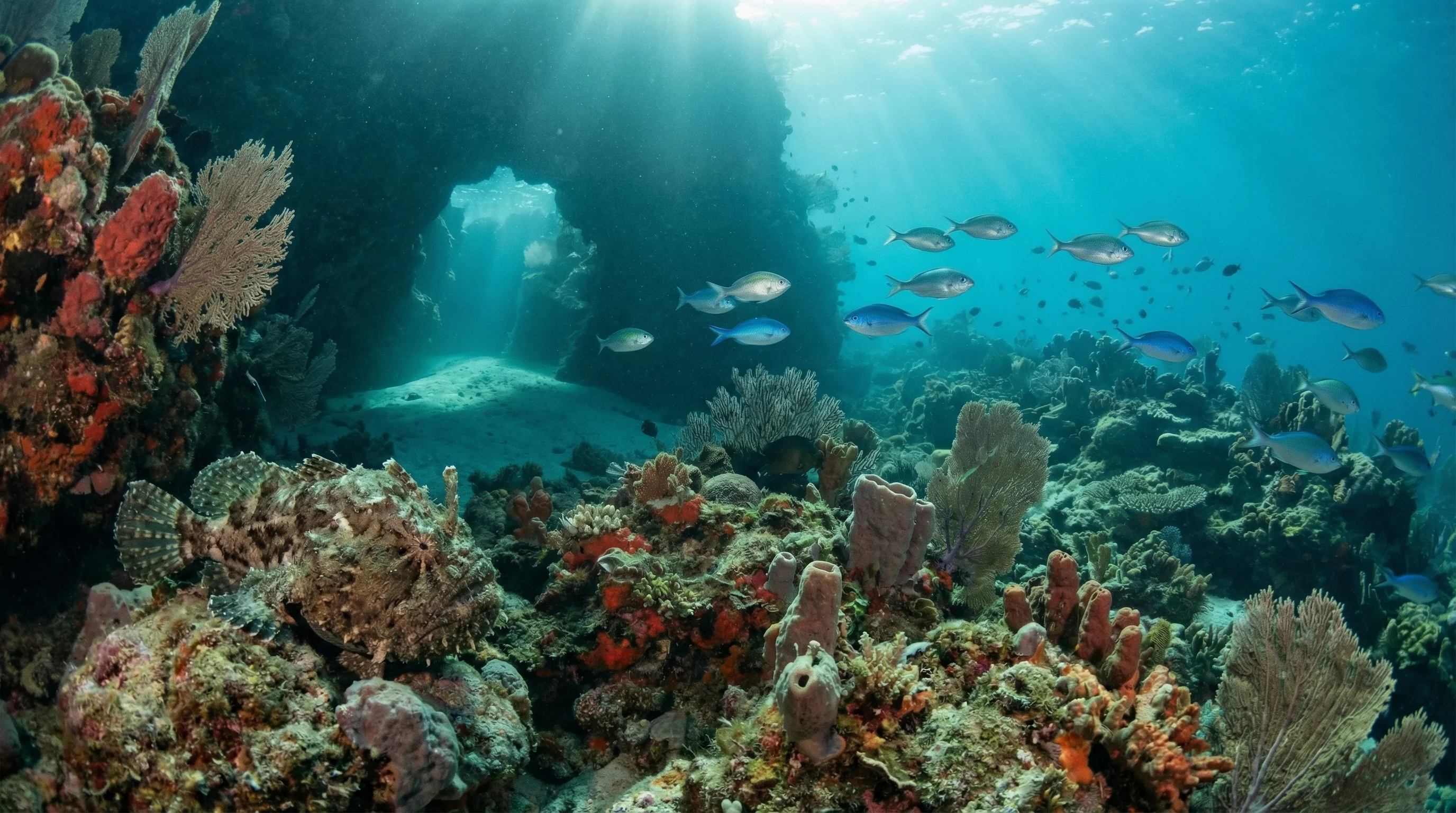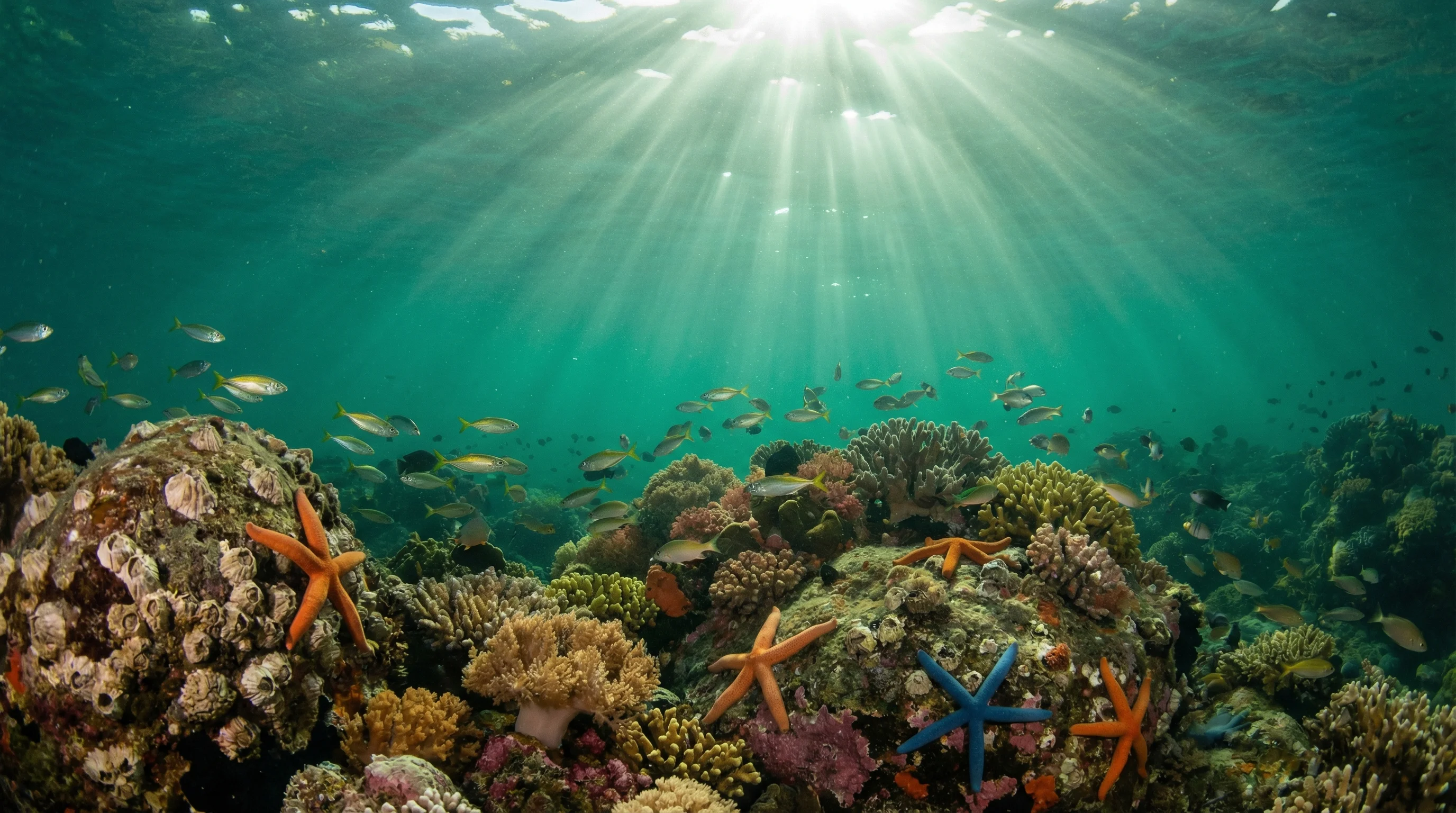
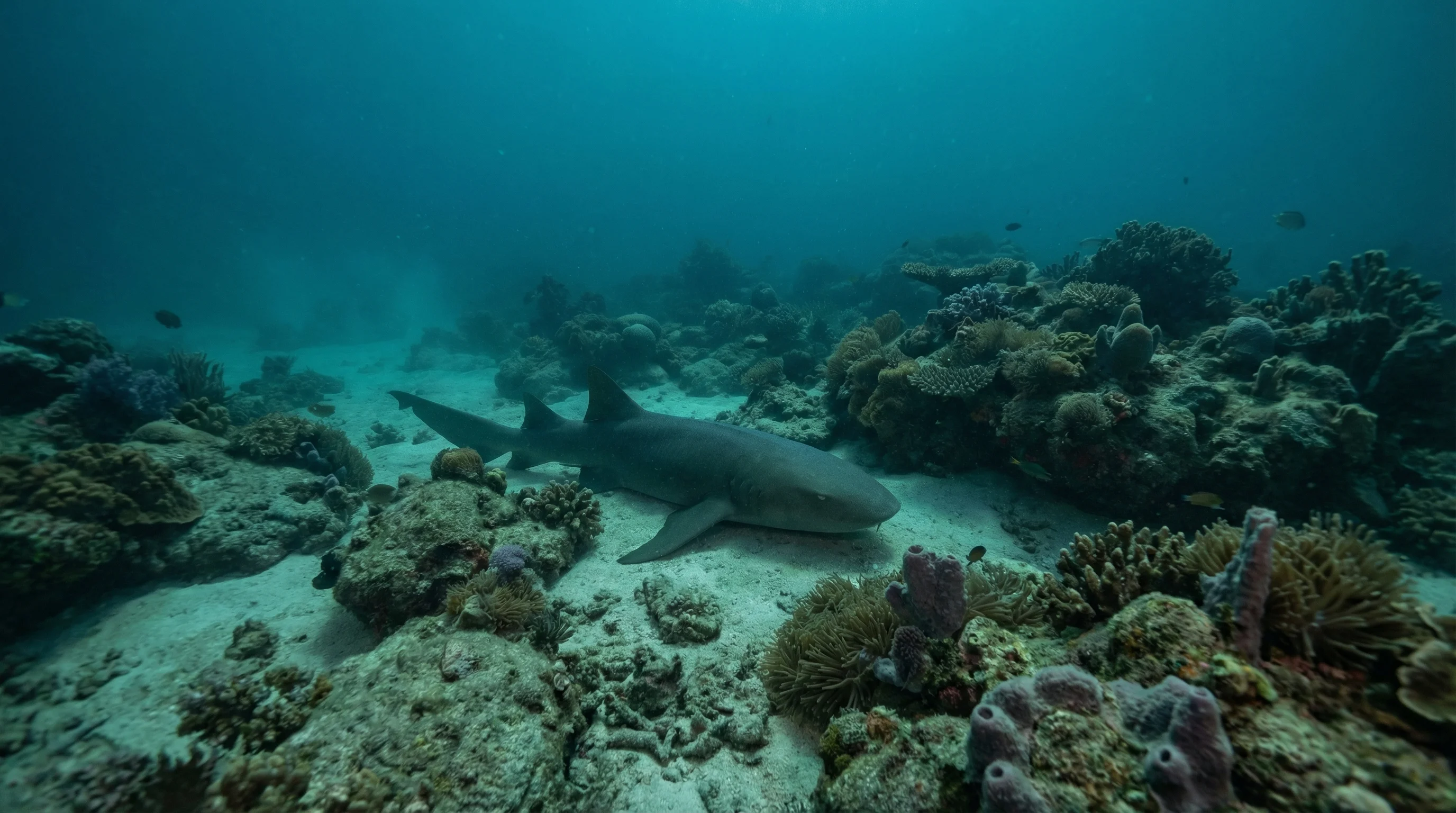
Split Solitary Island sits off the New South Wales coast and offers beginner divers a genuine reef experience from a boat entry. The site runs from shallow reef terrain down to 21 metres in its deeper sections, so you can comfortably explore at 10 metres or so while more confident beginners push a little deeper with a guide. Visibility ranges from 5 to 15 metres depending on conditions, and the current stays mild, which makes it far easier to move around without fighting the water. The reef supports a variety of local reef species, giving you plenty to look at as you get comfortable underwater.
-30.23330, 153.18000
The best months to visit run from December through to April, when conditions tend to be at their most settled and visibility leans toward the better end of the range. Keep an eye on the deeper sections of the reef, as 21 metres is approaching the limit for beginners, so stay within your comfort zone and let your guide know if you want to stick shallower.
Access info coming soon
Visibility can change quickly here. Keep close to your buddy and ascend slowly if it drops. Watch for sharp coral and rocks, especially near the reef edge.
Depth
10-21m
Visibility
5-15m
Skill Level
Beginner
Entry
Boat
Boat required
Current
Mild
Typical Dive
60 min
Best Time
Jan, Feb, Mar, Apr, Dec
Split Solitary Island in New South Wales is suitable for beginner divers. The site reaches depths between 10 and 21 metres with mild currents, making it accessible for those with basic open water certification. The relatively shallow maximum depth and manageable conditions provide a comfortable environment for divers still building their skills.
Split Solitary Island is accessed exclusively by boat from Coffs Harbour. The dive site is located offshore within the Solitary Islands Marine Park, requiring charter vessels to reach the location. Local dive operators regularly run trips to this site throughout the peak diving months.
Visibility at Split Solitary Island ranges from 5 to 15 metres depending on conditions. The water clarity varies with weather patterns, tides and seasonal influences affecting the New South Wales coast. Divers should expect moderate visibility that may change throughout the dive season.
The best months for diving Split Solitary Island are January, February, March, April and December. These summer and early autumn months typically offer the most favourable diving conditions along the New South Wales coast. The warmer months coincide with calmer seas and better underwater visibility at this offshore site.
Split Solitary Island offers diving between 10 and 21 metres depth. The site provides multi-level diving opportunities suitable for beginners, with the shallower sections at 10 metres and deeper areas reaching 21 metres. Divers should monitor their depth throughout the dive to manage bottom time appropriately.
The primary hazard at Split Solitary Island is the maximum depth of 21 metres, which requires proper dive planning and depth monitoring. Divers should maintain good buoyancy control to avoid descending beyond their planned depth limits. Standard safety procedures including pre-dive planning and buddy checks help manage depth-related risks at this site.
Diving at Split Solitary Island in Coffs Harbour requires the following certifications: Open Water. Always dive within your training limits.
Yes, equipment rental is available at or near Split Solitary Island in Coffs Harbour. Contact local dive operators for specific gear availability and prices.
Split Solitary Island in Coffs Harbour is home to Anemonefish, Nurse Shark, Blue Groper, Sea Turtle, Soft Gingerbread Hem Star, and Kelp. Marine life sightings vary by season and conditions.
Split Solitary Island in Coffs Harbour has depths ranging from 10 metres to 21 metres.
Yes, Split Solitary Island in Coffs Harbour is suitable for snorkelling.
A typical dive at Split Solitary Island in Coffs Harbour lasts approximately 60 minutes. Actual dive time depends on depth, air consumption, and conditions.
Yes, night diving is available at Split Solitary Island in Coffs Harbour. Night dives often reveal different marine life including nocturnal creatures. Always dive with proper lighting and a buddy.