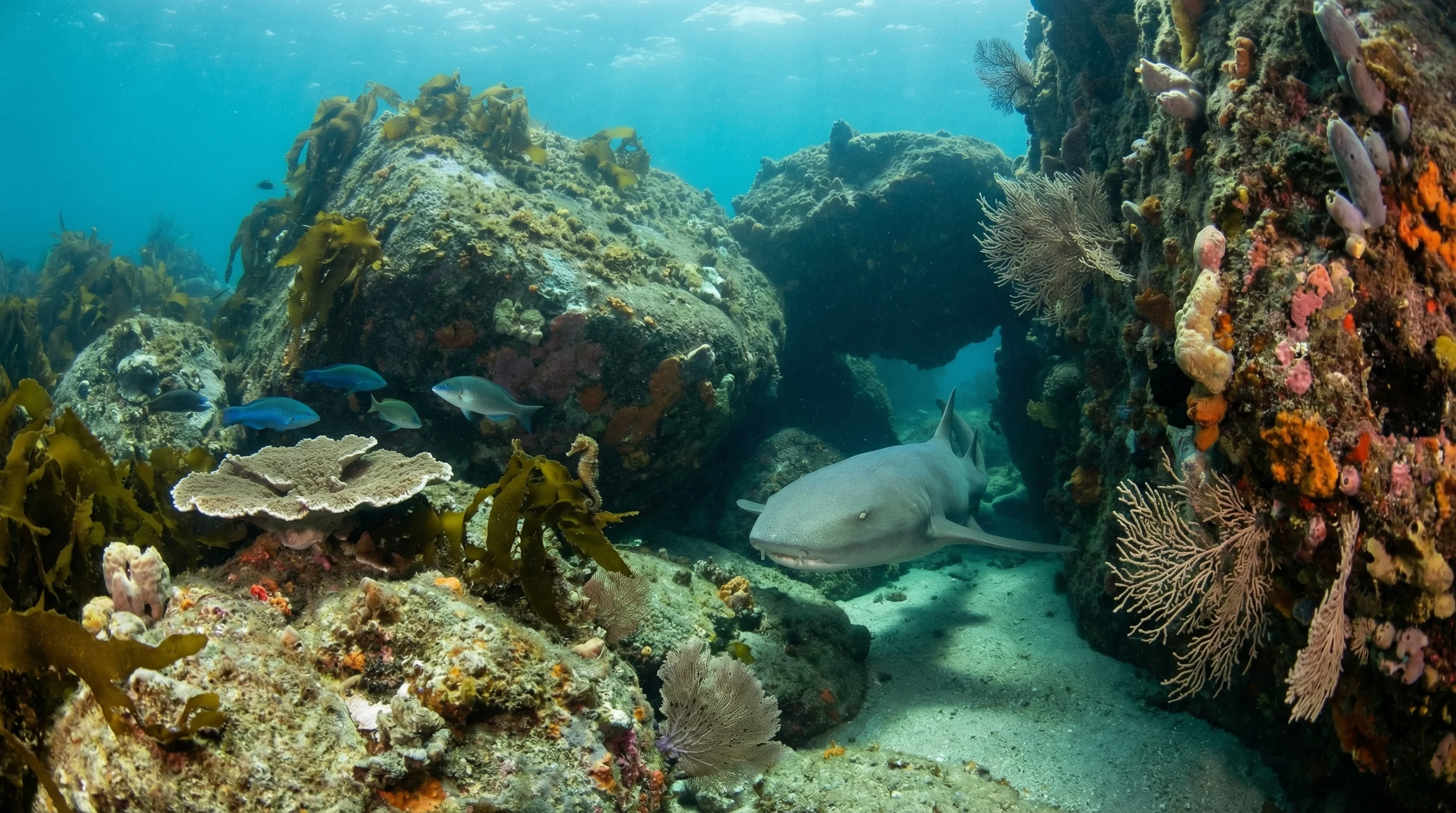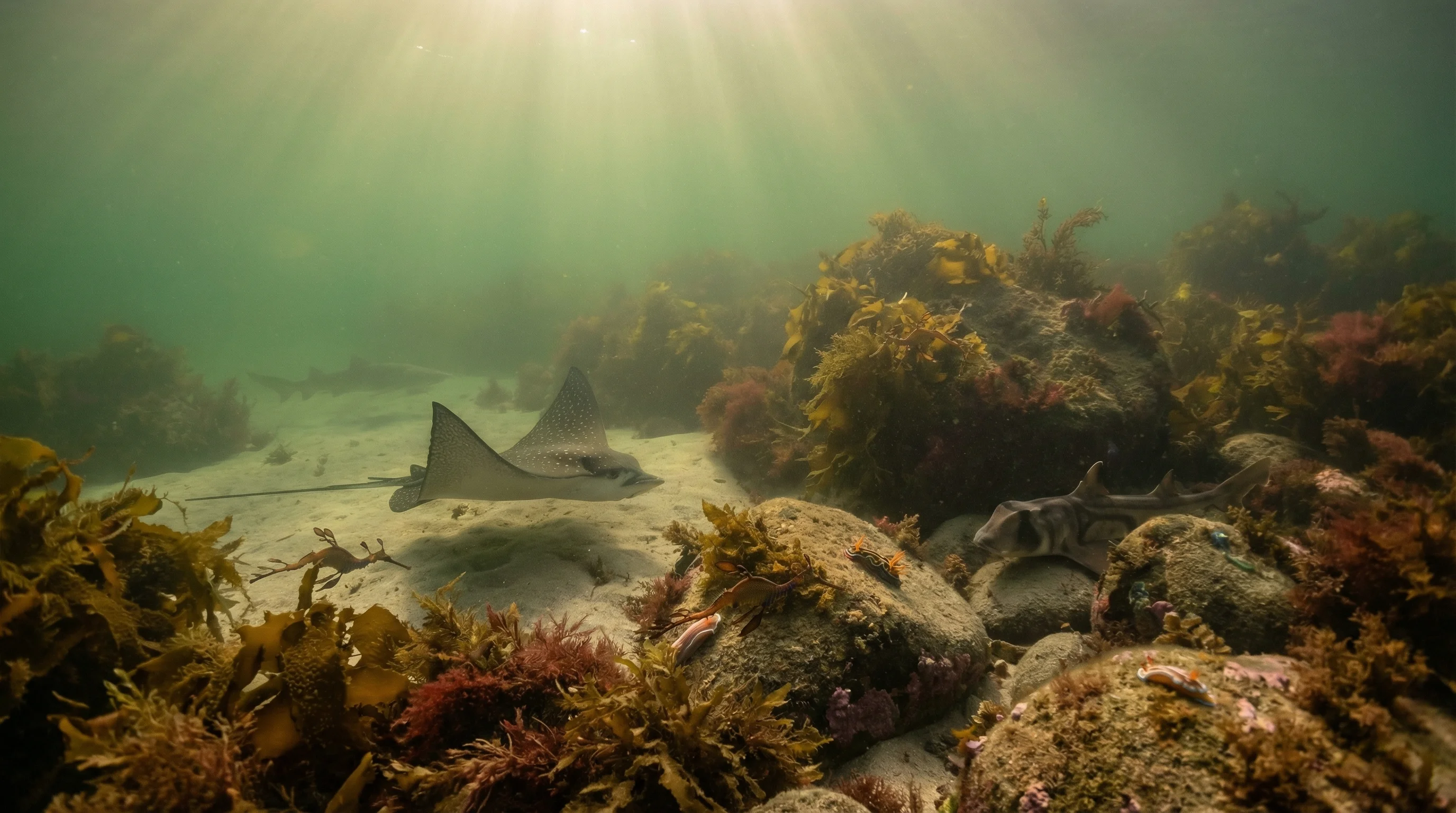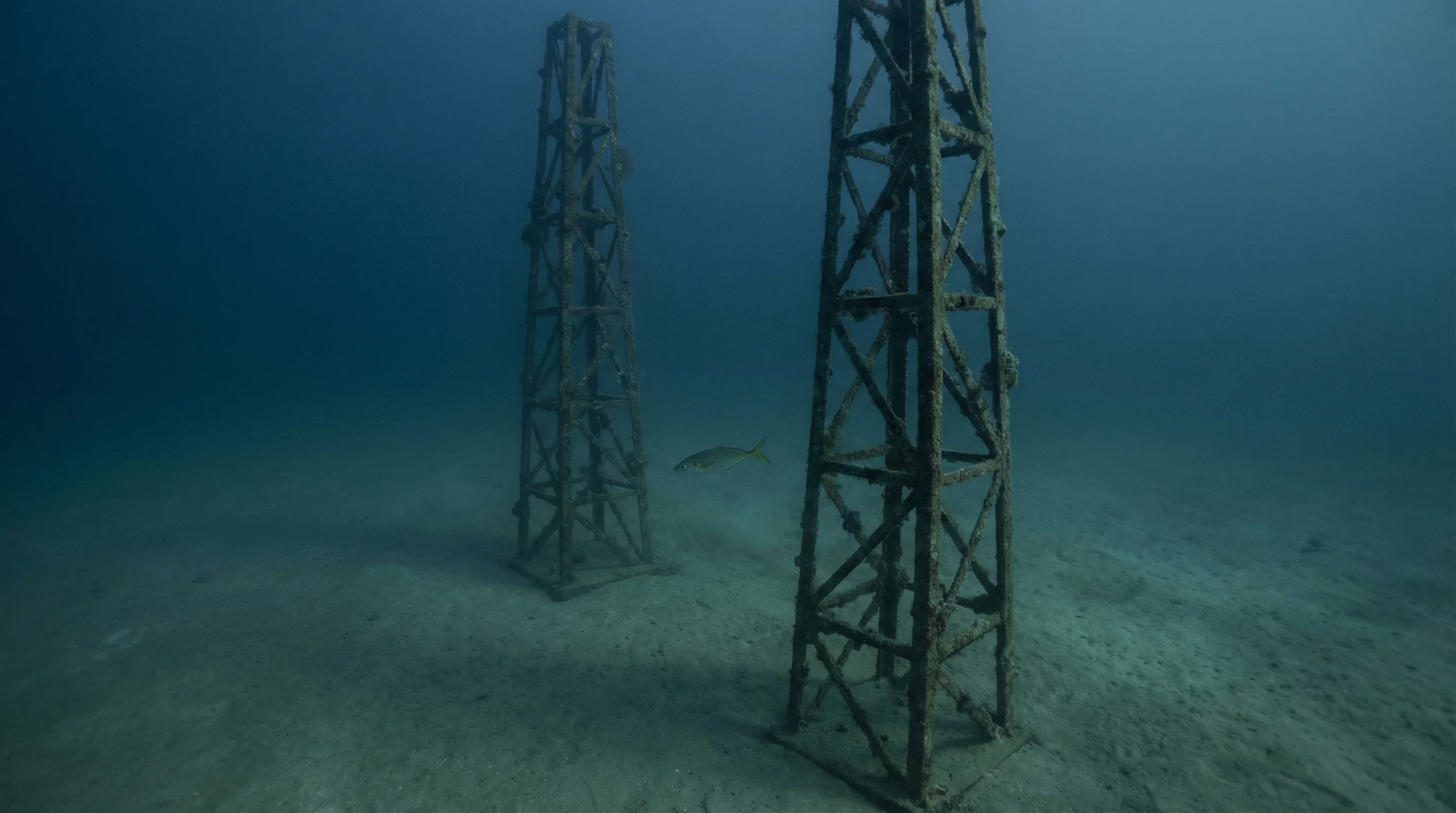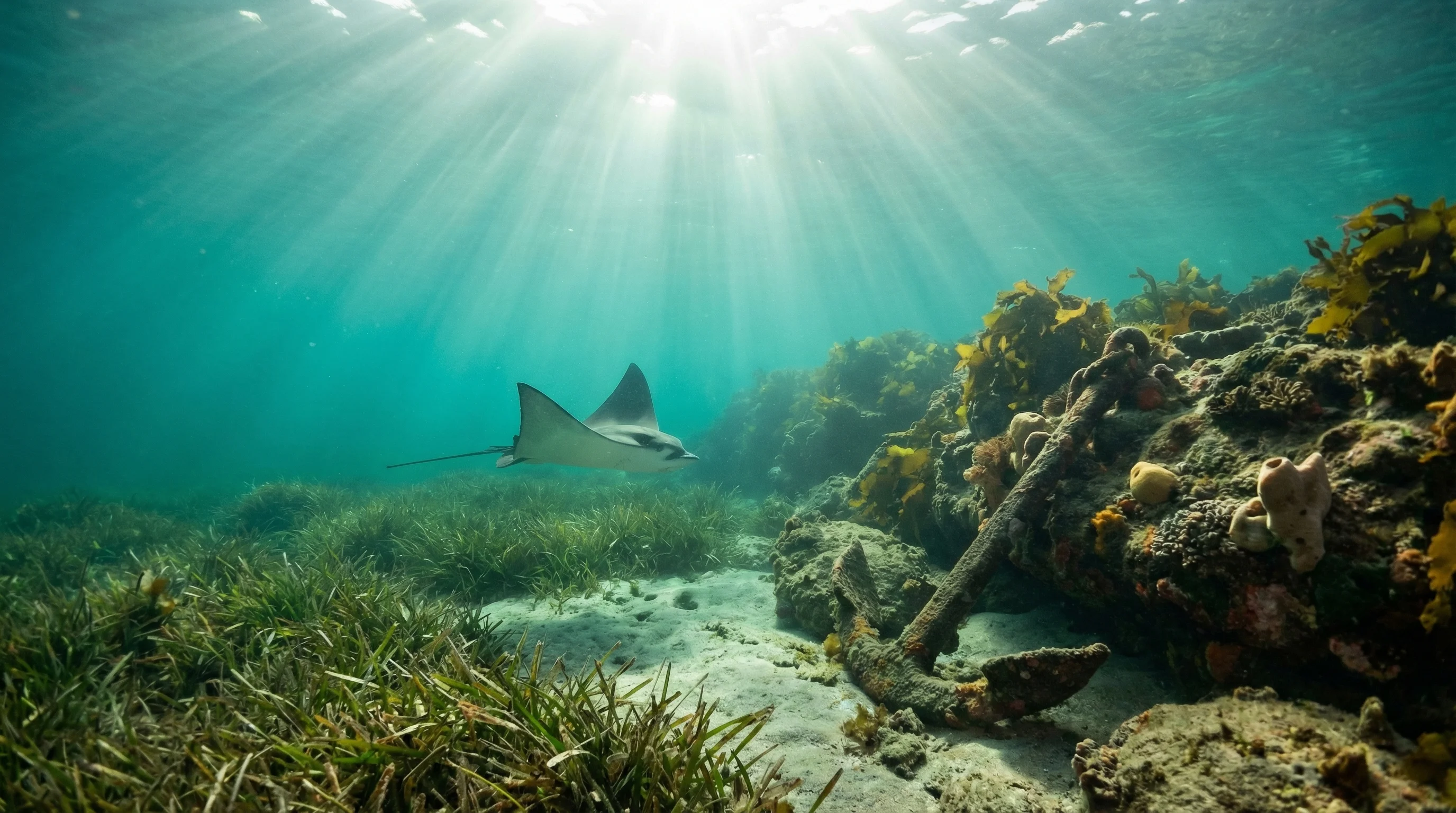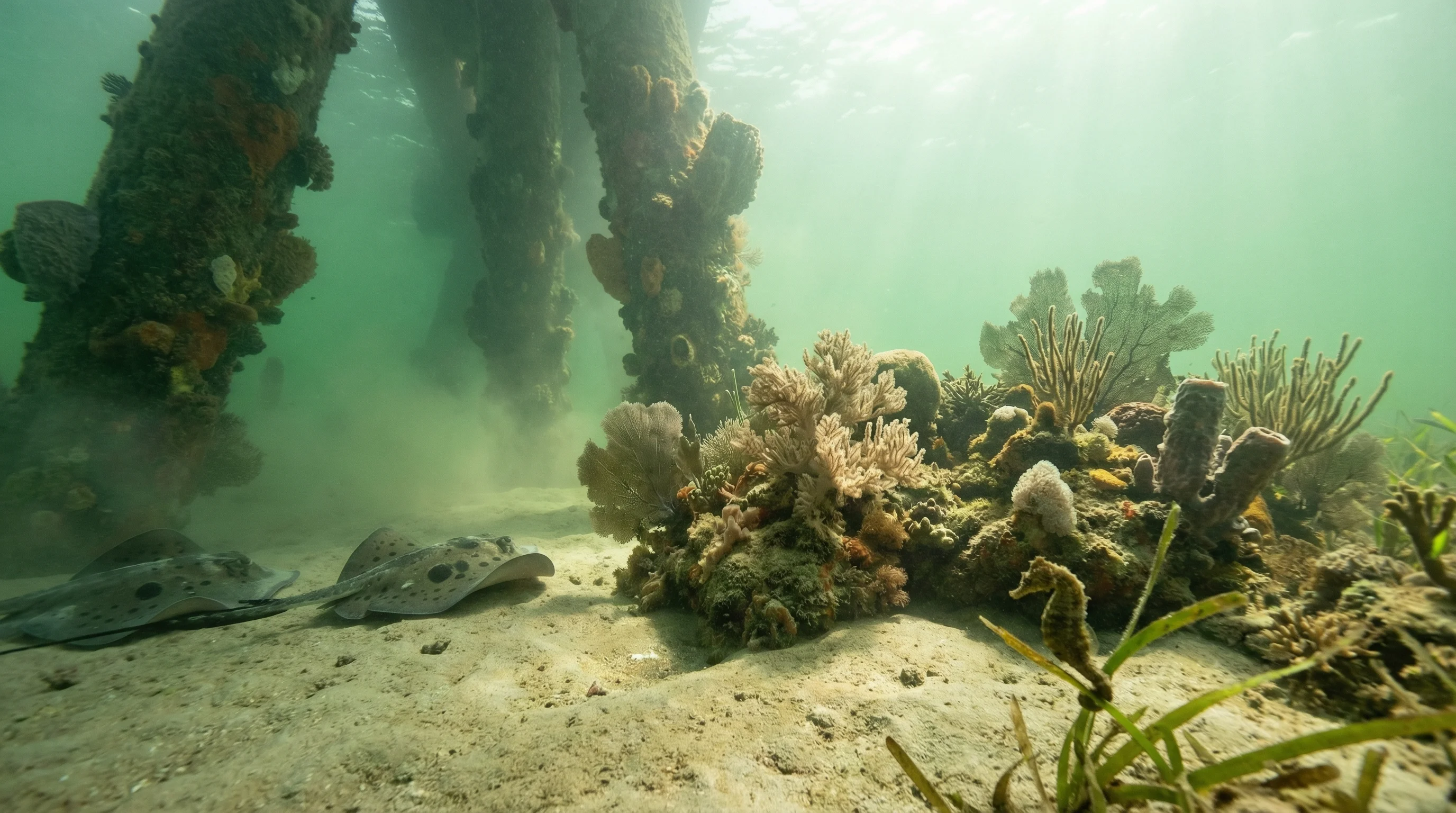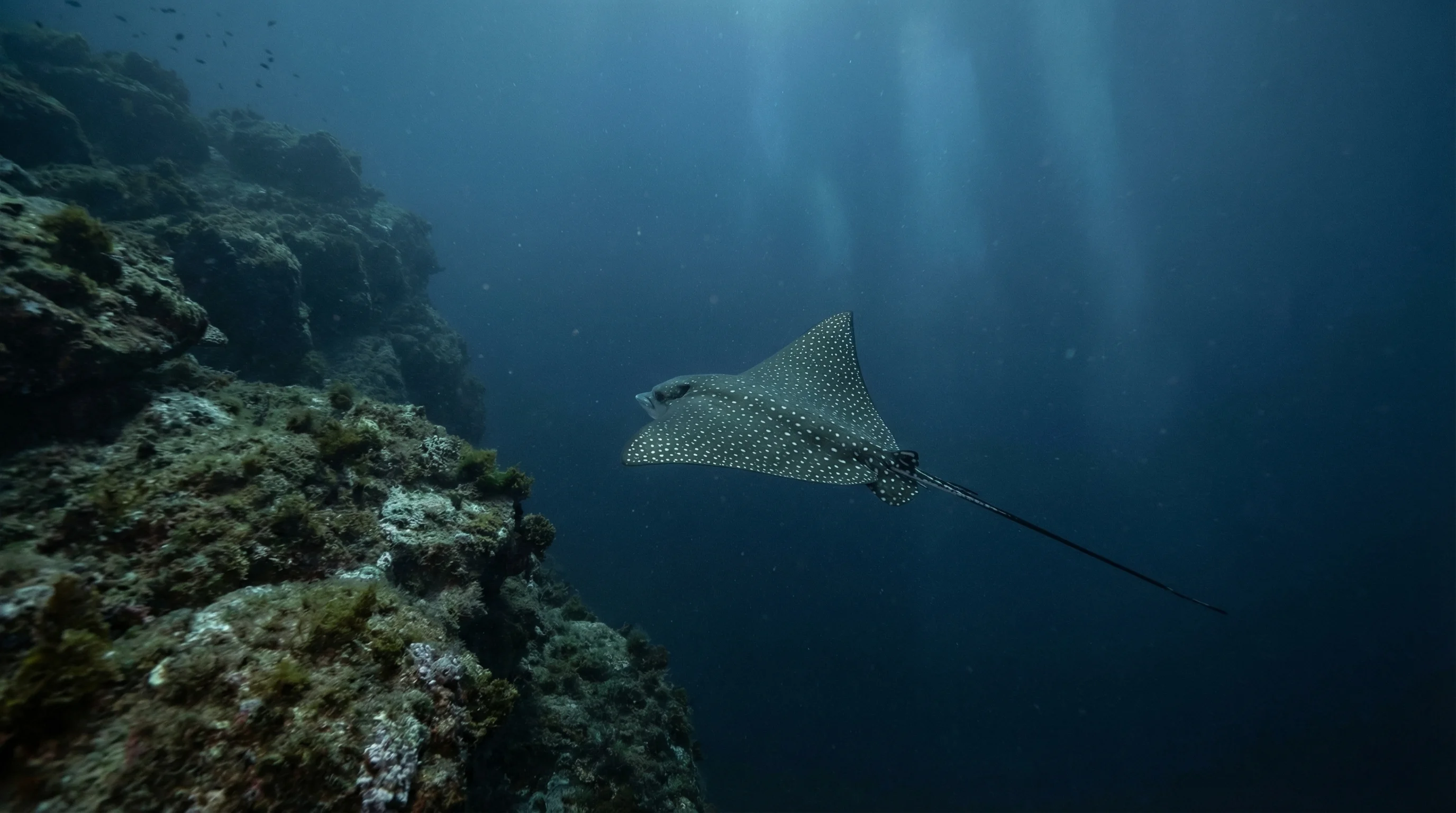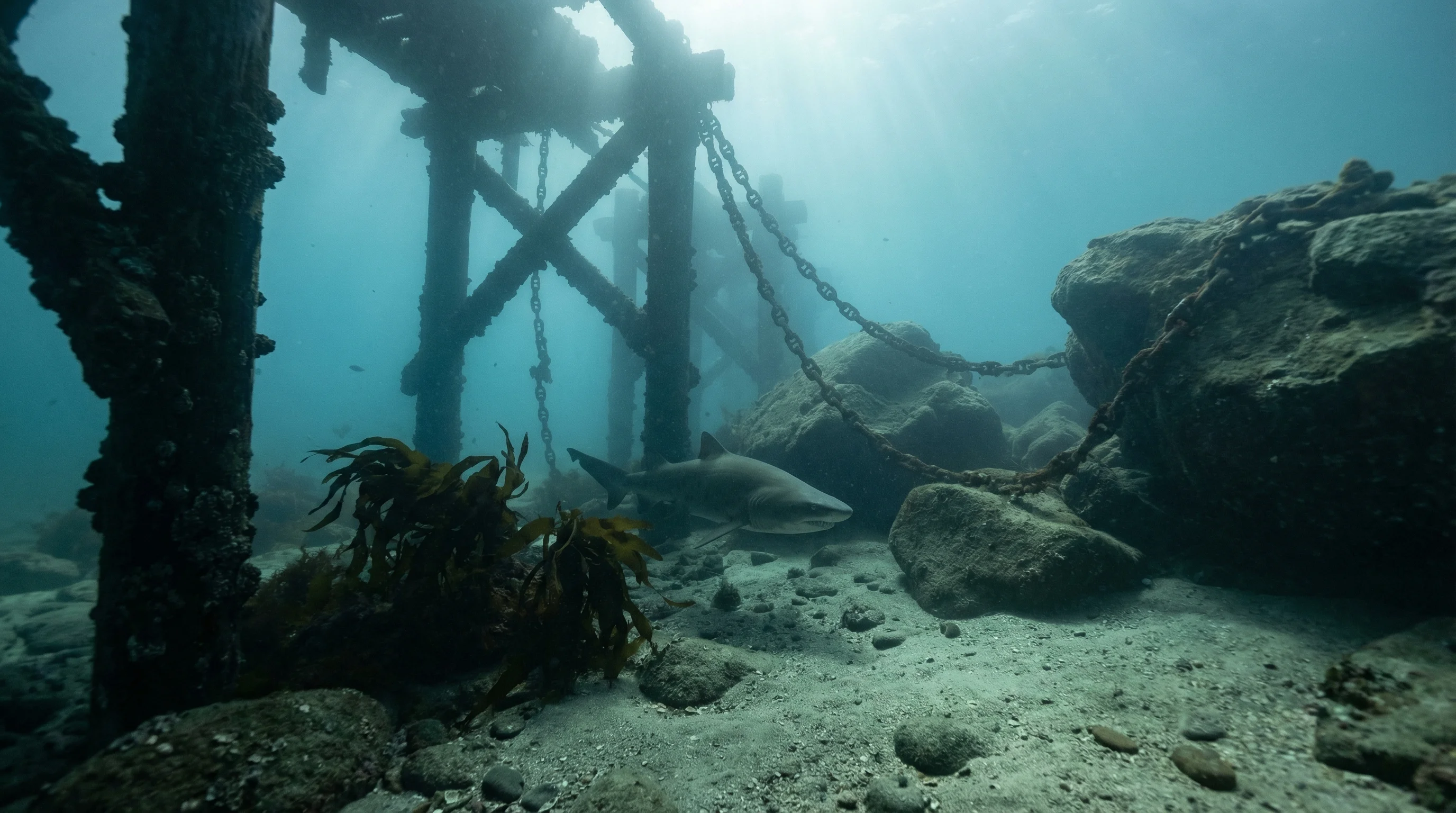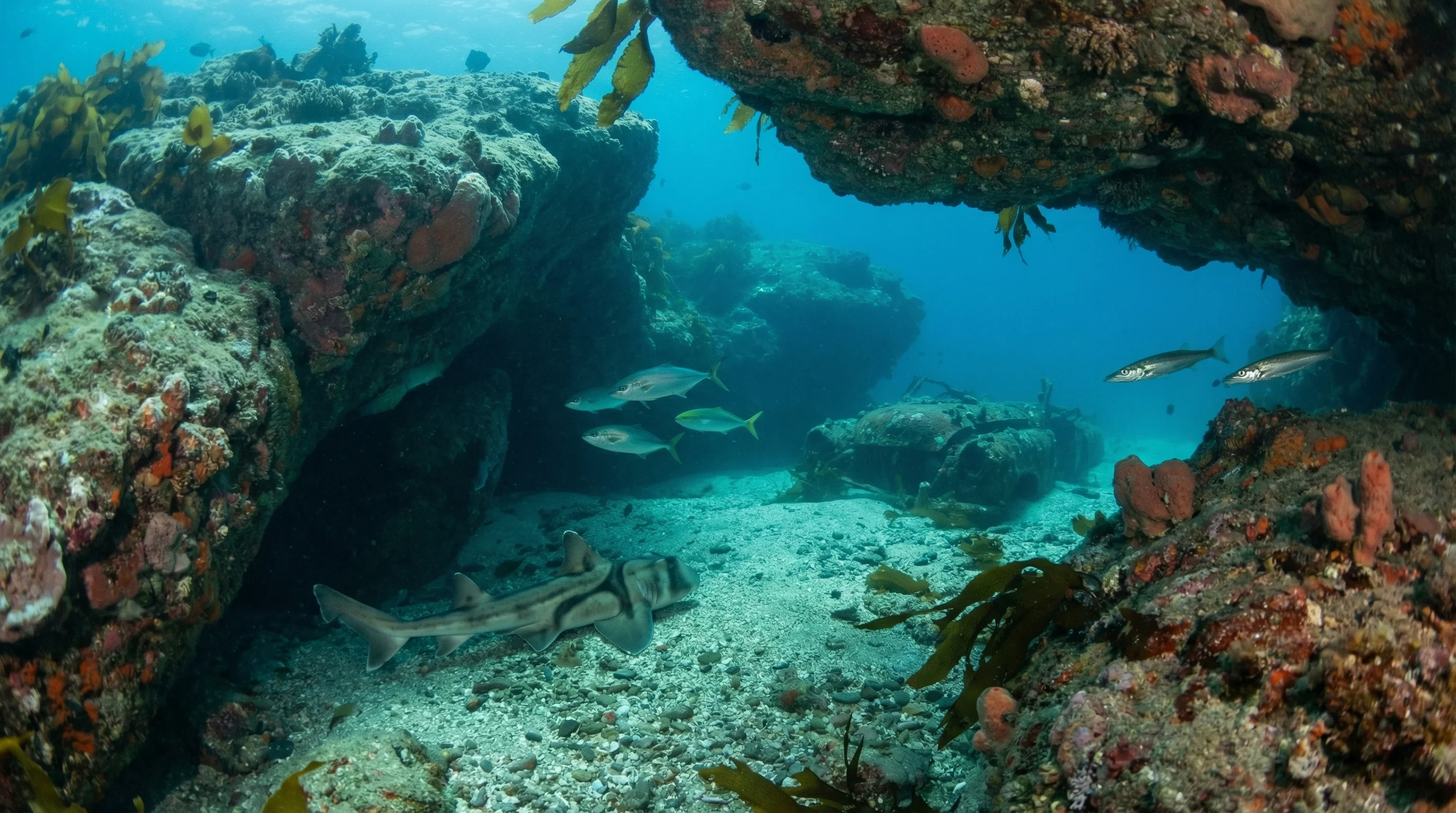
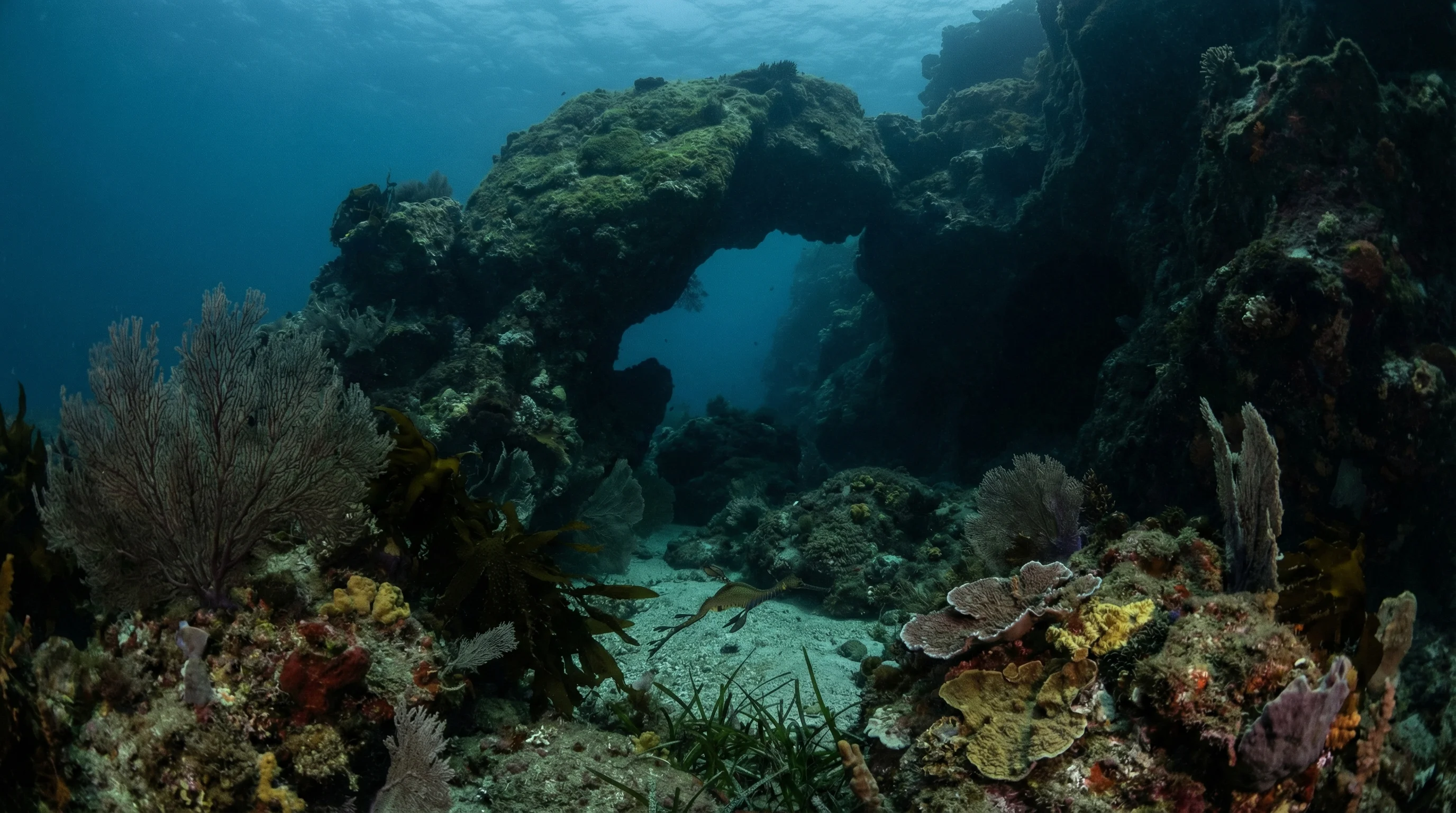
The Arch at Moon Island is built around a cavern system that draws intermediate divers looking for something beyond a standard reef dive. The arch itself creates a natural swim-through at depths of 16 to 21 metres, with visibility regularly reaching 10 to 30 metres depending on conditions. Mild currents keep the experience manageable. Grey nurse sharks and wobbegongs are the headline residents, but the site also holds eastern blue devilfish, giant cuttlefish, weedy seadragons, and morays tucked into the reef structure. Yellowtail, seapike, and blue wrasse move through in schools, while sea turtles make occasional appearances.
-33.08800, 151.67400
Keep your torch handy for the cavern sections where the overhead environment limits ambient light, and stay aware of boat traffic when ascending as this is a popular charter destination. A safety sausage is strongly recommended for your ascent.
The site is located off the south-eastern side of Moon Island and is accessible only by boat. Dive charters operate from nearby Swansea, such as Grey Nurse Charters which departs from a wharf near Swansea RSL. The boat ride is just a few minutes from Swansea Channel.
Grey Nurse Sharks are known to visit the area, particularly in winter. While generally docile, divers should maintain a safe distance and not provoke them. As it is a boat dive site, be aware of boat traffic on the surface.
Depth
16-28m
Visibility
10-30m
Skill Level
Intermediate
Entry
Boat
Boat required
Water Temp
17-26°C
Current
Mild
Typical Dive
50 min
Best Time
Year-round
The Arch Moon Island in New South Wales is home to grey nurse sharks, giant cuttlefish, eastern blue devilfish, and wobbegongs. Divers also regularly encounter sea turtles, the iconic weedy seadragon, yellowtail, and seapike. This diverse marine ecosystem makes it one of the region's most rewarding intermediate dive sites.
The Arch Moon Island near Swansea reaches depths between 16 and 21 metres. This depth range makes it suitable for Open Water certified divers with some experience. The site features an overhead environment, so divers should be comfortable with the depth and conditions before exploring.
You need an Open Water certification to dive The Arch Moon Island. The site is rated for intermediate skill level due to its depth of 16 to 21 metres, mild currents, and overhead environment features. Divers should have experience with boat diving and be comfortable managing buoyancy in confined spaces.
The best months to dive The Arch Moon Island are June through January, covering late autumn through summer. Water temperatures during this period range from 17 to 26 degrees Celsius, with visibility typically between 10 and 30 metres. These months offer the most consistent diving conditions off the New South Wales coast.
The Arch Moon Island is accessed exclusively by boat from Swansea, New South Wales. Boat charters are available in the area, along with dive shops offering guided tours to the site. No shore access is available, so divers must arrange boat transport in advance.
The Arch Moon Island presents two main hazards: boat traffic in the area and an overhead environment within the dive site structure. Divers should maintain awareness of boat activity during ascent and descent, and only enter the overhead sections if they have appropriate experience and training. The mild current is generally manageable for intermediate divers.
There is no entry fee to dive The Arch Moon Island. However, divers must budget for boat charter costs, as the site requires boat access from Swansea. Local dive shops and charter operators offer various packages including guided tours to the site.
The Arch in Swansea is best suited for divers with some experience. You should be comfortable with your buoyancy and have logged at least 10 to 20 dives.
A 5mm wetsuit is recommended for diving at The Arch in Swansea. Water temperatures range from 17°C to 26°C.
The Arch in Swansea has depths ranging from 16 metres to 28 metres.
A typical dive at The Arch in Swansea lasts approximately 50 minutes. Actual dive time depends on depth, air consumption, and conditions.