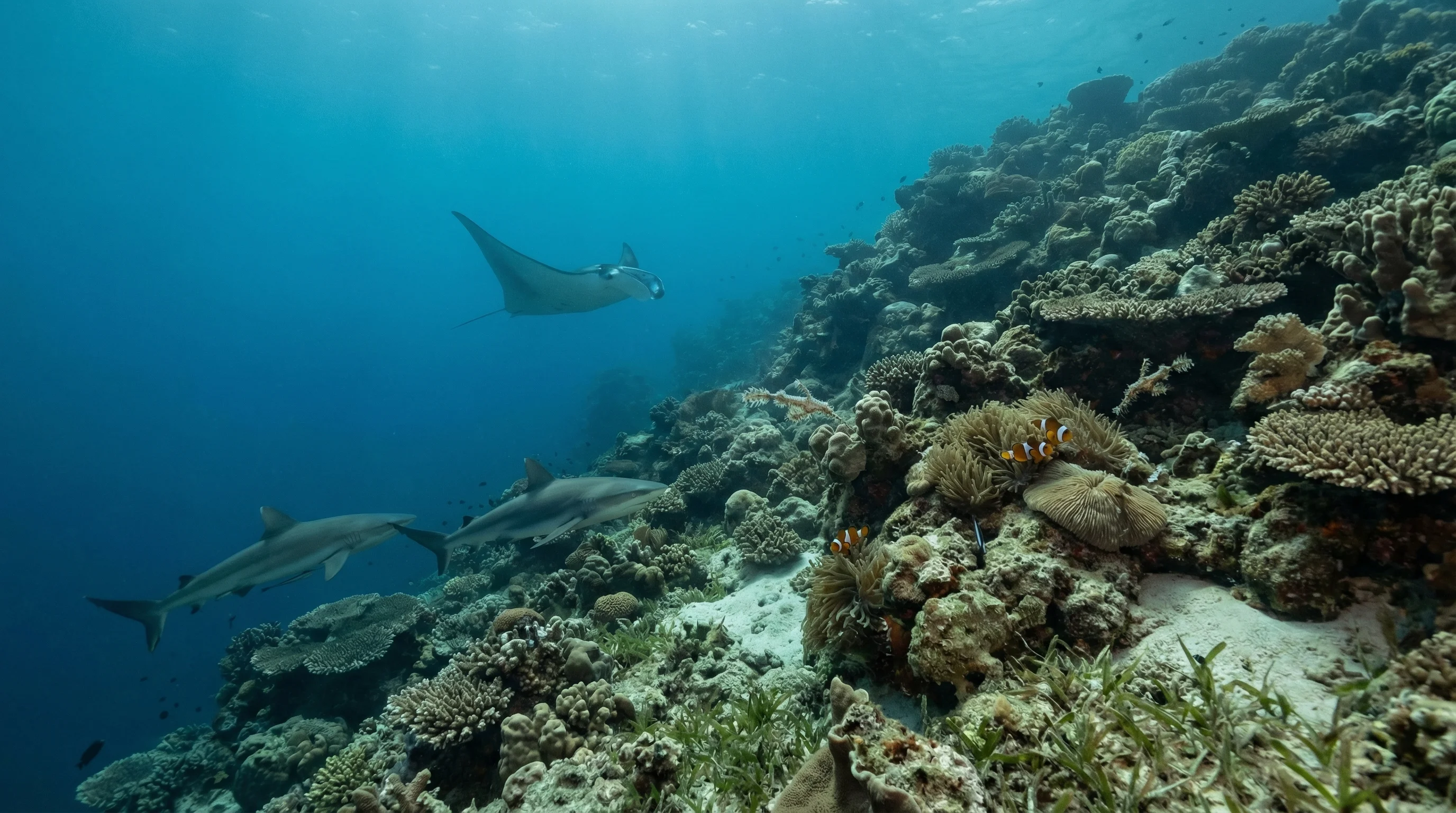
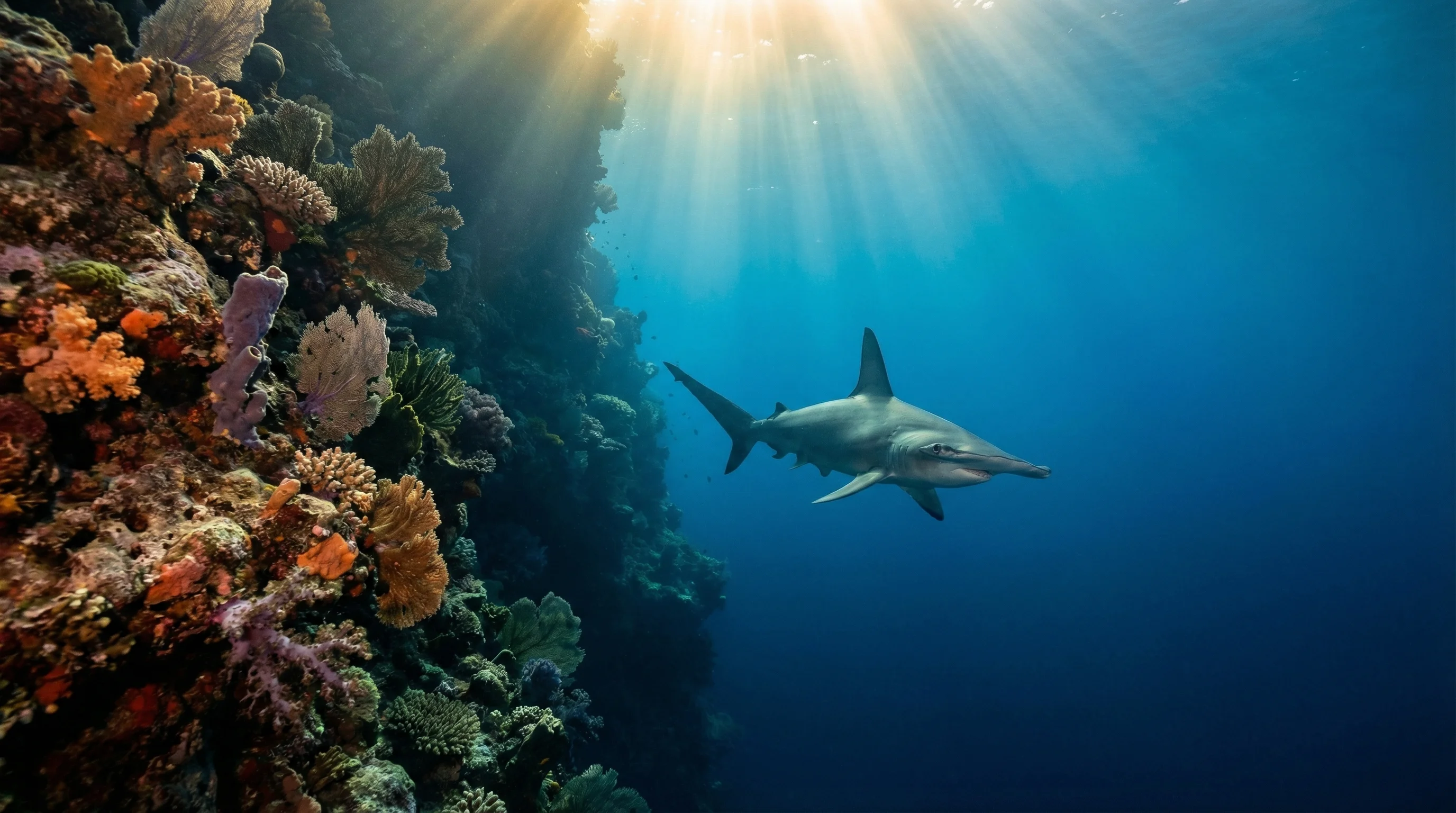
Abington Reef sits in remote Queensland waters and rewards experienced divers with visibility stretching from 30 to 100 metres across its walls, caves, and reef structures. Moderate to strong currents run through the site regularly, so solid buoyancy control and current-reading skills are essential before you drop in. Those currents do the work of aggregating pelagics: grey reef sharks, whitetip reef sharks, hammerhead sharks, manta rays, tuna, barracuda, and trevally all move through here. The caves and deeper wall sections are worth exploring for nautilus and gorgonian fans, while sea turtles appear throughout the reef. Boat entry only, with hazards including depth, strong current, boat traffic, and jellyfish.
-18.06670, 148.05000
September through January brings the most reliable conditions and the best pelagic activity, so plan your trip within that window. Always confirm current strength with your skipper before descending, as conditions can shift significantly between dives.
Access is by boat only, typically via a multi-day liveaboard charter departing from ports in Queensland such as Cairns or Port Douglas. The reef is located in the remote Coral Sea Marine Park.
The site is remote and deep, requiring advanced diving skills. Strong currents can be present. Surface marker buoys are essential due to the offshore location and potential for boat traffic. Box jellyfish and Irukandji jellyfish can be present, particularly during the warmer months (November-April).
Depth
0m
Visibility
30-100m
Skill Level
Advanced
Entry
Boat
Boat required
Water Temp
24-29°C
Current
Moderate
Best Time
Jan, Sep, Oct, Nov, Dec
Abington Reef in the Coral Sea requires an Advanced Open Water certification and Deep Diver specialty. The site is classified as advanced level due to its remote offshore location, moderate currents, and deep water conditions. Both certifications are mandatory before diving this challenging reef system.
Abington Reef is home to grey reef sharks, whitetip reef sharks, and hammerhead sharks. The site's remote Coral Sea location and strong currents attract these pelagic species, along with schooling tuna, barracuda, and trevally. Manta rays and sea turtles are also frequently encountered on dives here.
Abington Reef offers exceptional visibility ranging from 30 to 100 metres throughout the year. The site's offshore location in the Coral Sea ensures pristine water clarity, with visibility frequently exceeding 50 metres. These conditions make it ideal for photographing pelagic species and reef formations.
The best months to dive Abington Reef are September through January, when conditions are most favourable. Water temperatures during this period range from 24 to 29 degrees Celsius, and visibility is at its peak. This timing coincides with calmer seas and increased pelagic activity in the Coral Sea.
Abington Reef is accessible only by liveaboard boat due to its remote Coral Sea location off Queensland. The site is approximately 450 kilometres from the nearest town and requires multi-day vessel charters. No shore access or day boat trips are available to this offshore reef system.
Abington Reef presents several hazards including moderate to strong currents, deep water, boat traffic, and jellyfish. The remote Coral Sea location means divers must be experienced in drift diving and deep profiles. Advanced certification and proper safety training are essential for managing these conditions.
Abington Reef is classified as advanced due to its remote offshore location, moderate currents, and deep diving conditions in the Coral Sea. The site requires both Advanced Open Water and Deep Diver certifications because of these challenging environmental factors. The absence of facilities and distance from emergency services also contributes to its advanced rating.
A 3mm wetsuit is recommended for diving at Abington Reef in Coral Sea Reefs. Water temperatures range from 24°C to 29°C.