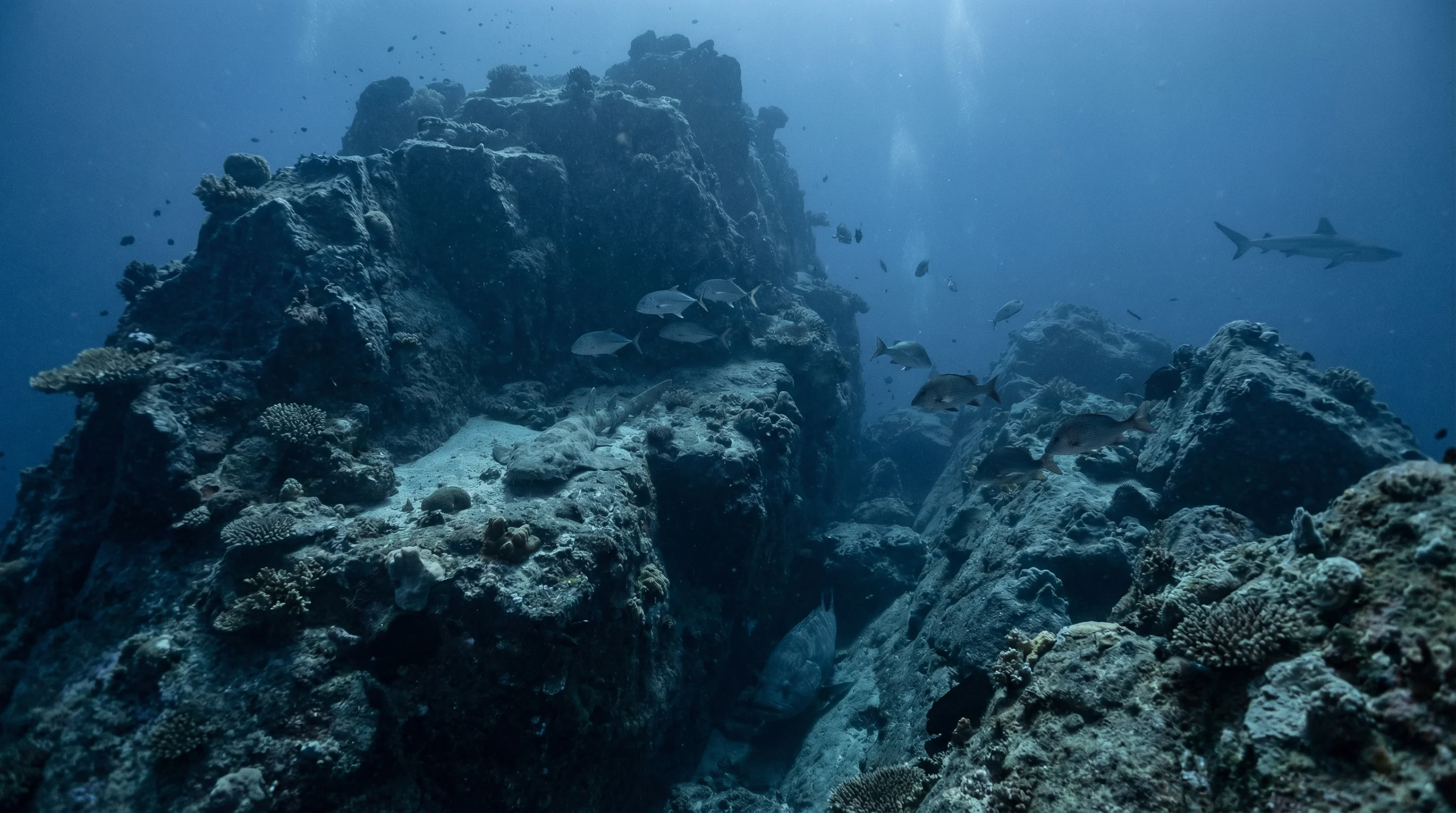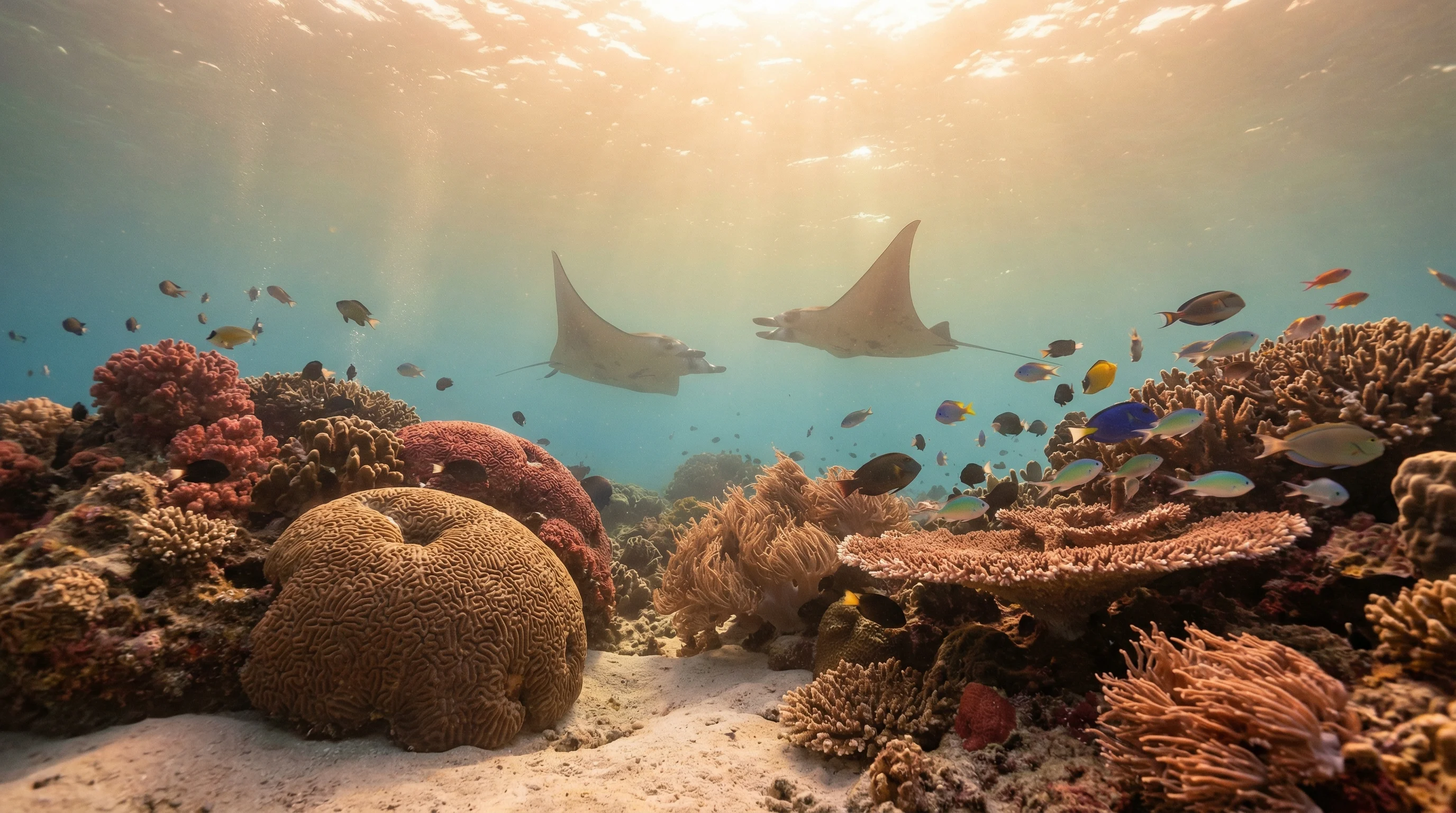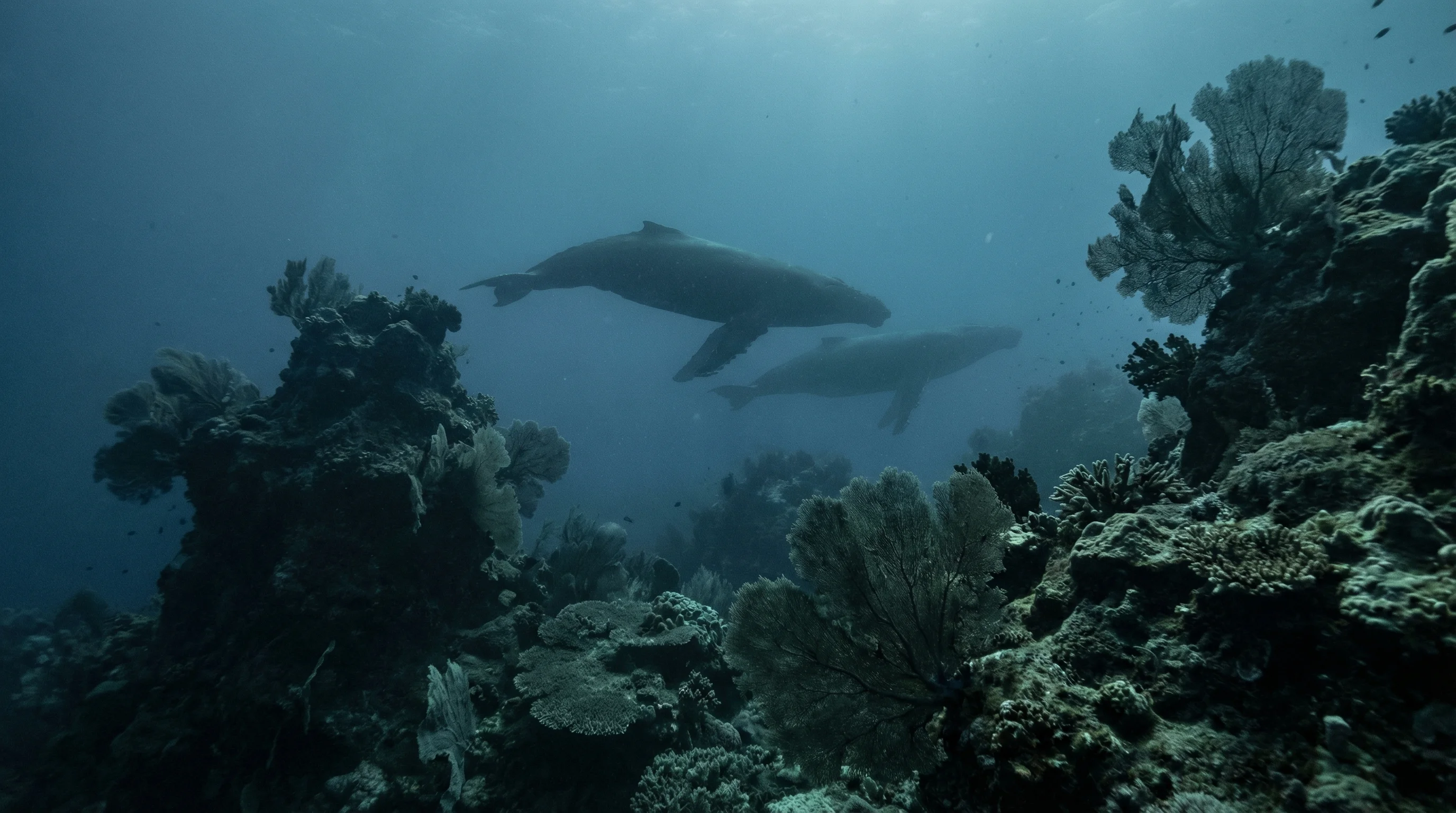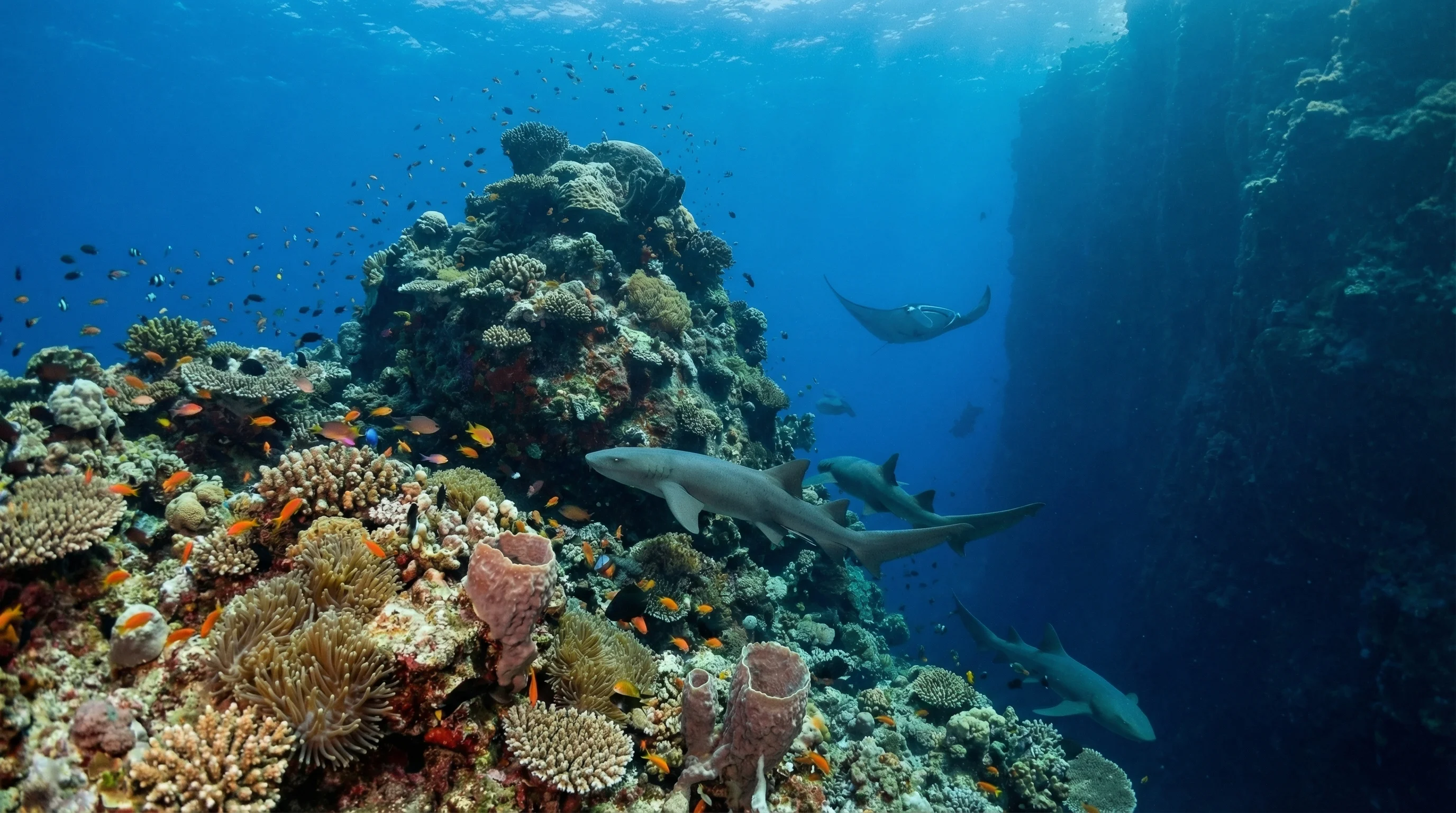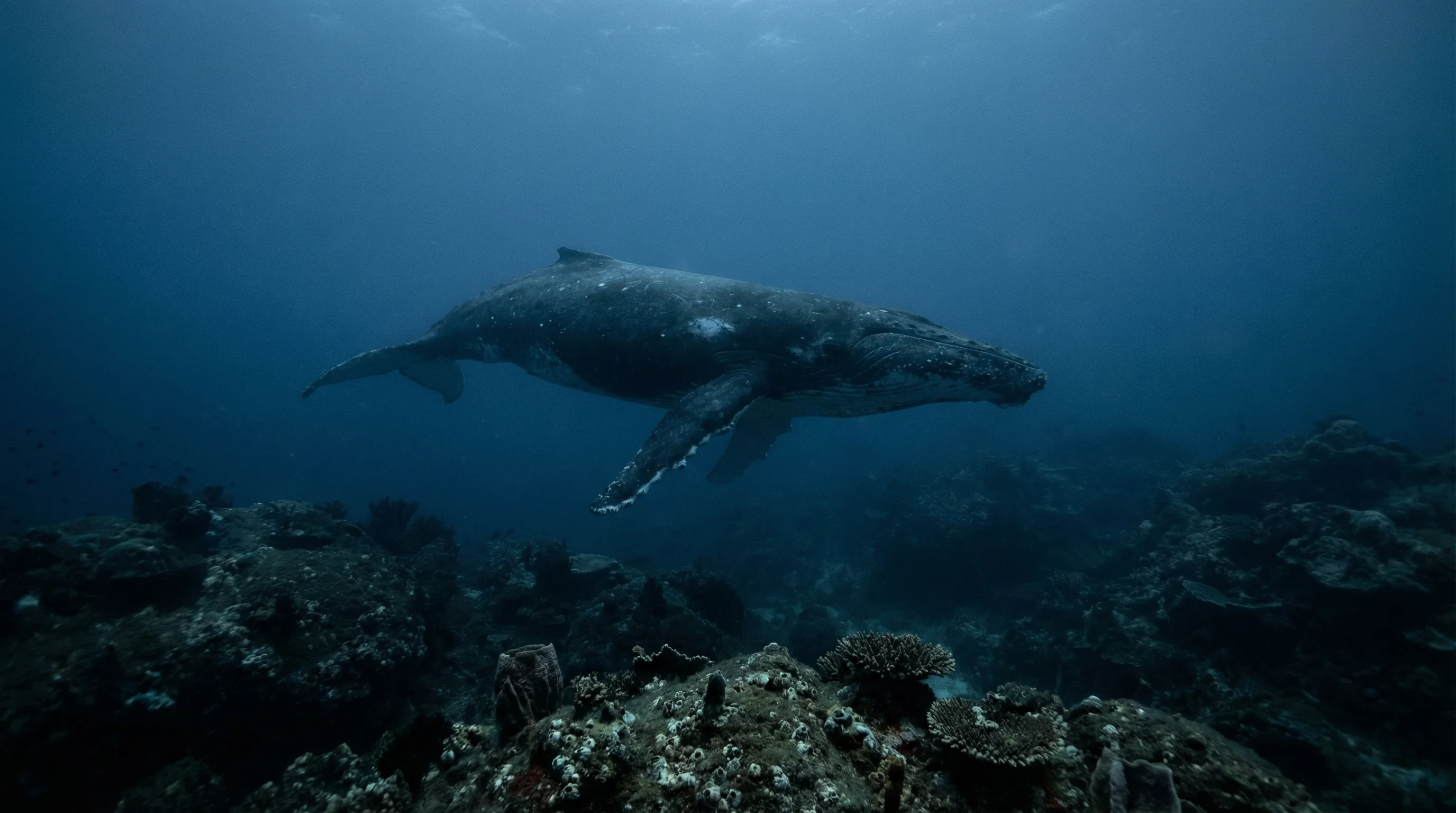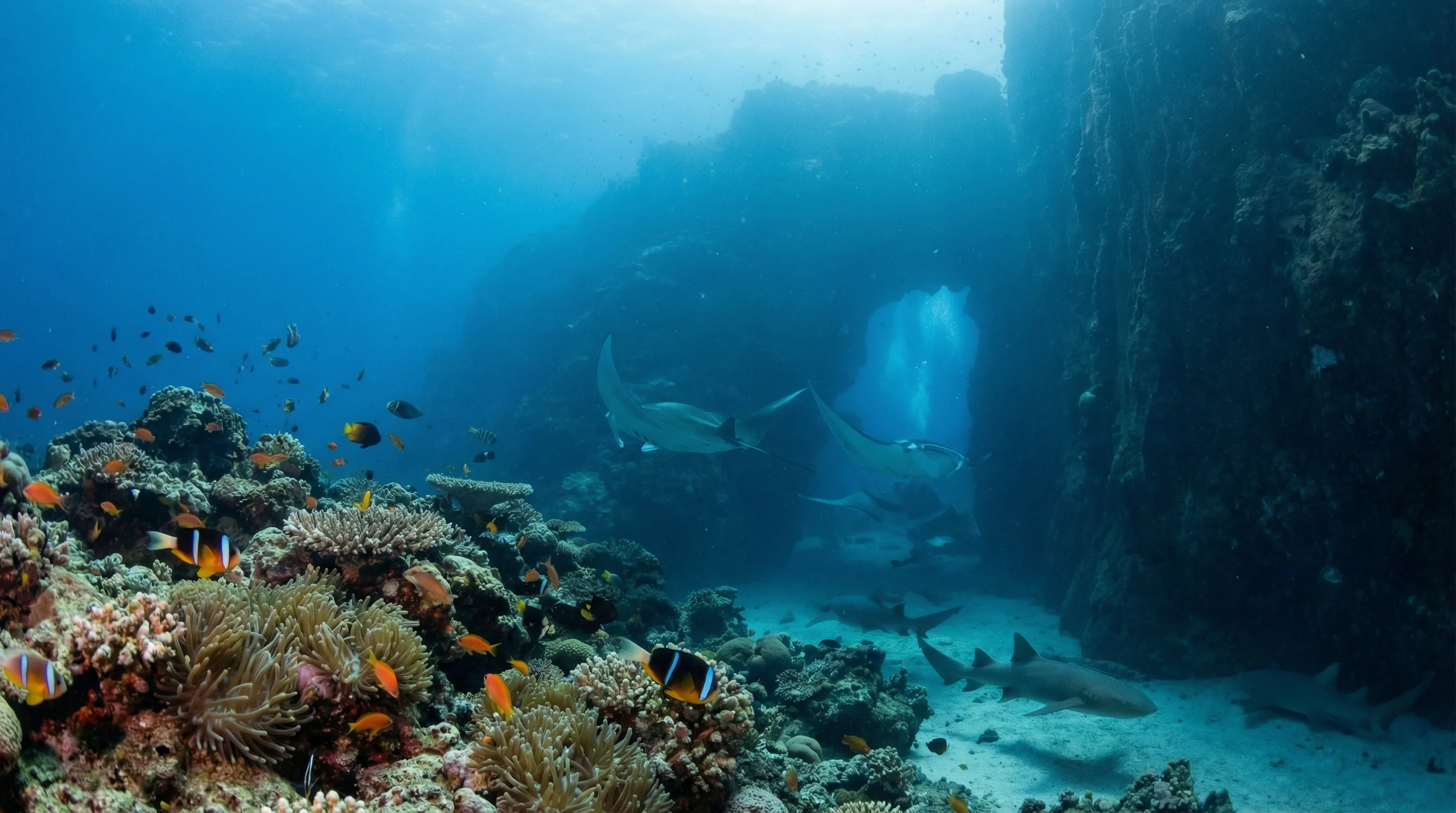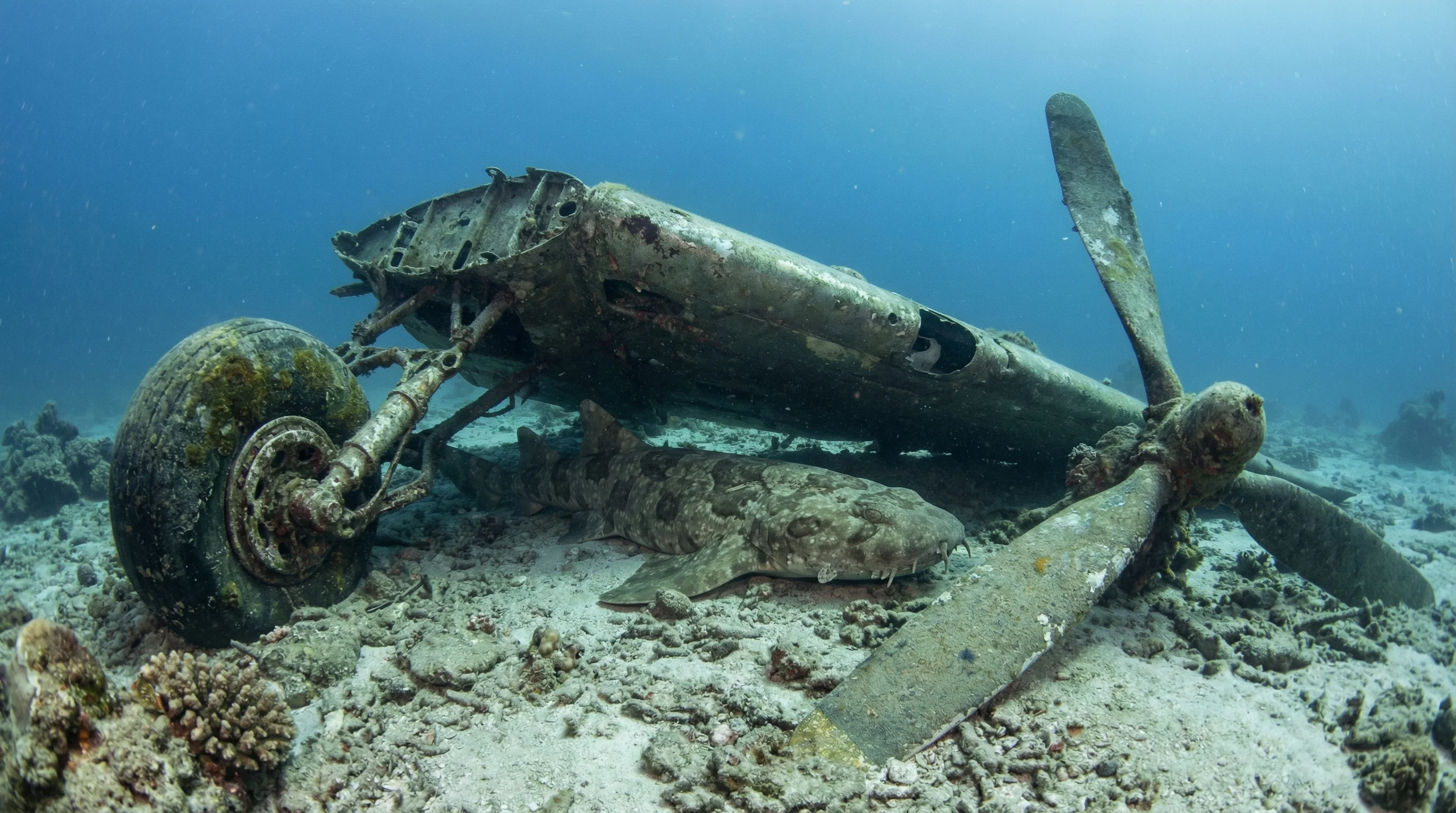
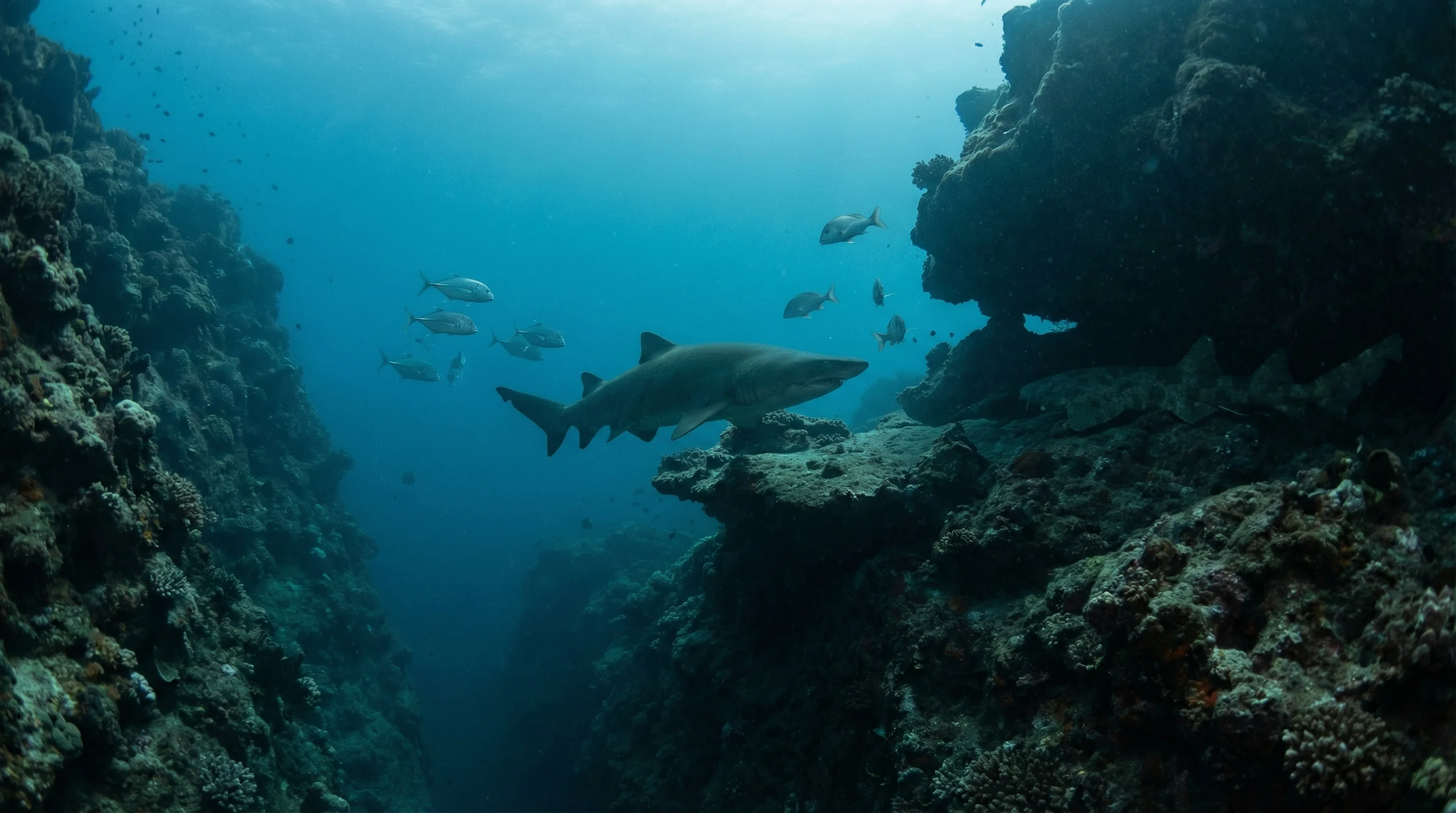
Boat Rock is a pinnacle dive where strong currents do most of the work, pushing you past reef fish that have adapted to life in the flow and delivering pelagic encounters you simply won't get at slack-water sites. Visibility runs from 8 to 20 metres depending on conditions, and depths reach 25 metres in the deeper sections. Whaler sharks and barracuda are regular visitors, while grey nurse sharks use the structure for shelter. During migration season, whales pass through the blue beyond the reef. The current here is the defining variable, and you need to read it carefully before descending.
-27.41410, 153.55800
Time your dive around the tidal cycle rather than the clock, as the current at Boat Rock can run hard enough to make the dive unworkable at peak flow. Confirm conditions with your operator on the day, as they shift considerably between seasons.
Access info coming soon
Drift dive here means the current does the work. Stay close to your guide and be ready to surface if the current becomes too strong.
Depth
10-25m
Visibility
8-20m
Skill Level
Advanced
Entry
Boat
Boat required
Current
Strong
Yes, Boat Rock in South Australia is a boat-access-only dive site. You will need to book with a local dive operator or charter a boat to reach it.
Boat Rock in South Australia requires advanced diving skills. Expect deeper depths, currents, or challenging conditions that are not suitable for newly certified divers.
Diving at Boat Rock in South Australia requires the following certifications: Advanced. Always dive within your training limits.
Boat Rock in South Australia is home to Pelagic Fish, Whaler Shark, Reef Fish (Current Adapted), Barracuda, Grey Nurse Shark, and Migrating Whale. Marine life sightings vary by season and conditions.
Boat Rock in South Australia has depths ranging from 10 metres to 25 metres.
Boat Rock in South Australia can have strong currents. Advanced experience with drift diving and current navigation is recommended.
Visibility at Boat Rock in South Australia typically ranges from 8 metres to 20 metres. Conditions vary with weather, tides, and seasons.