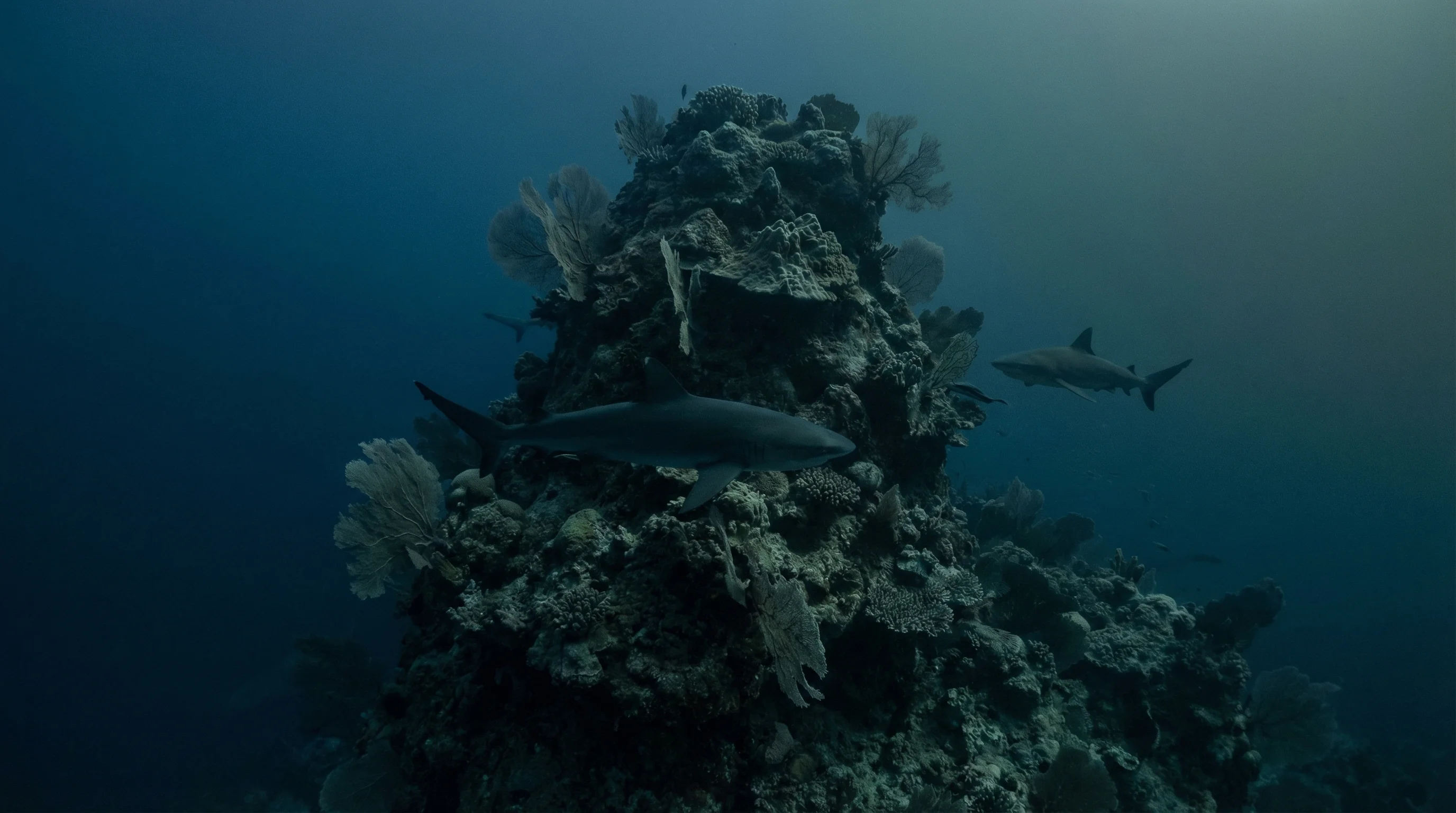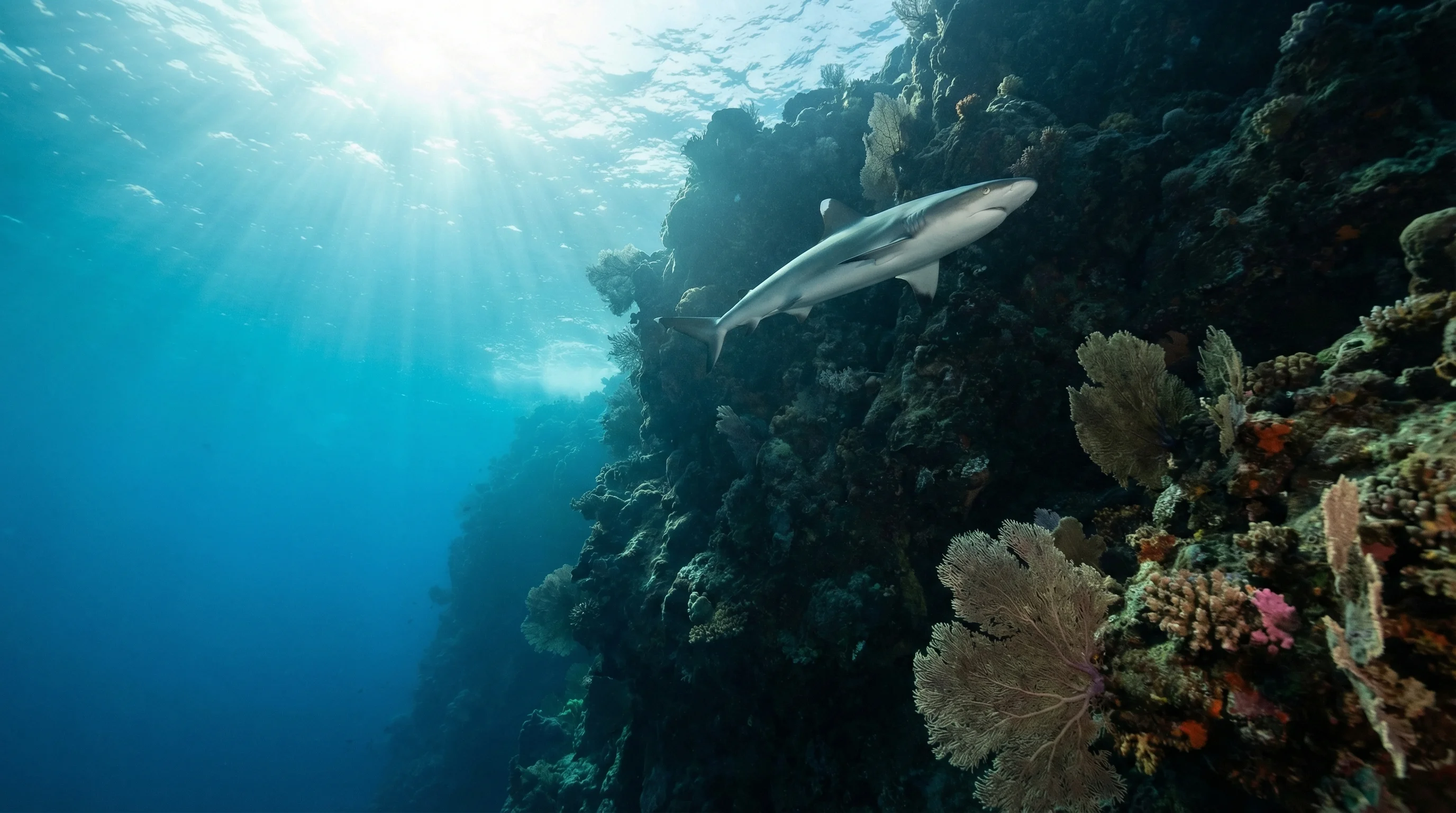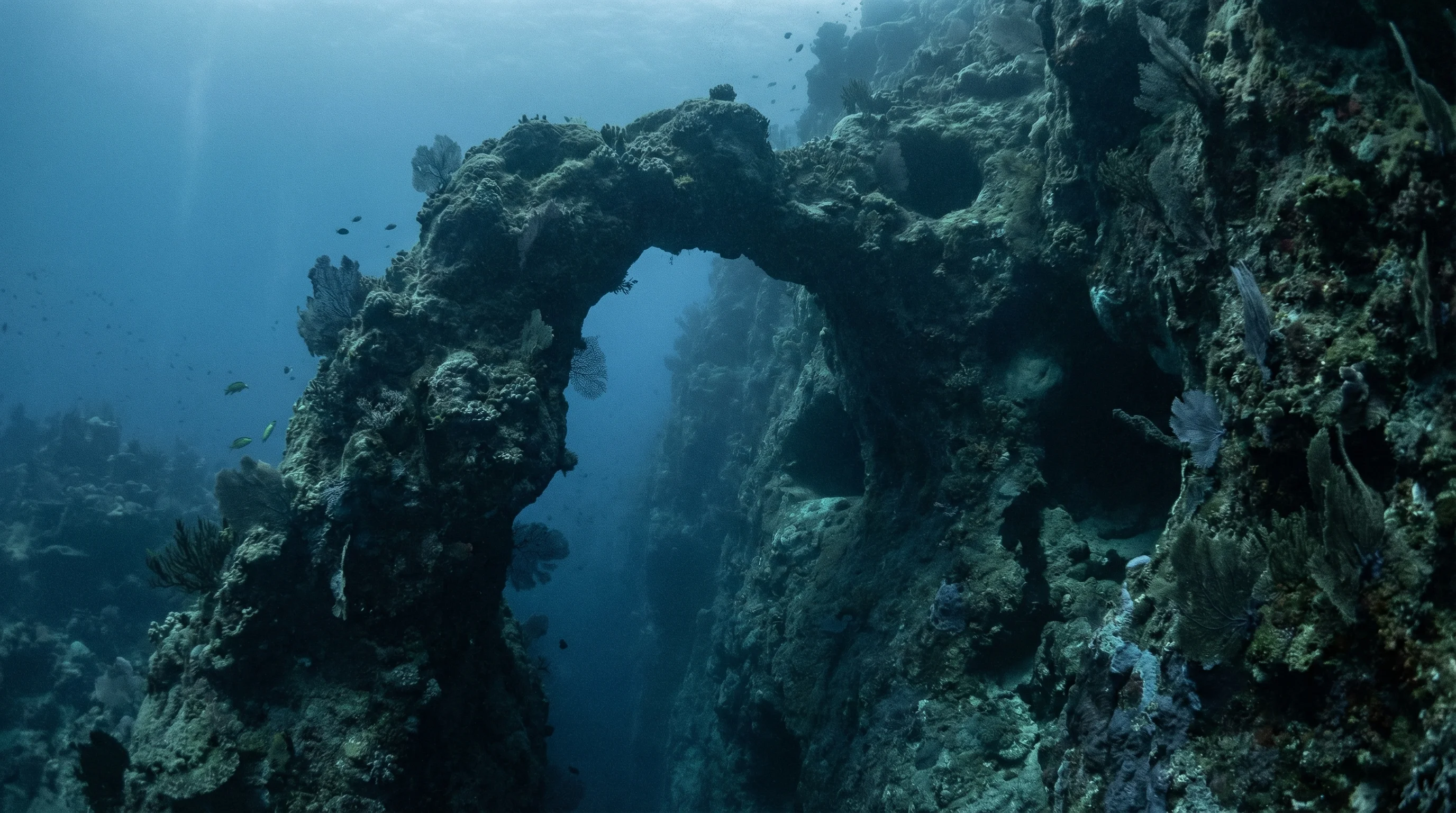
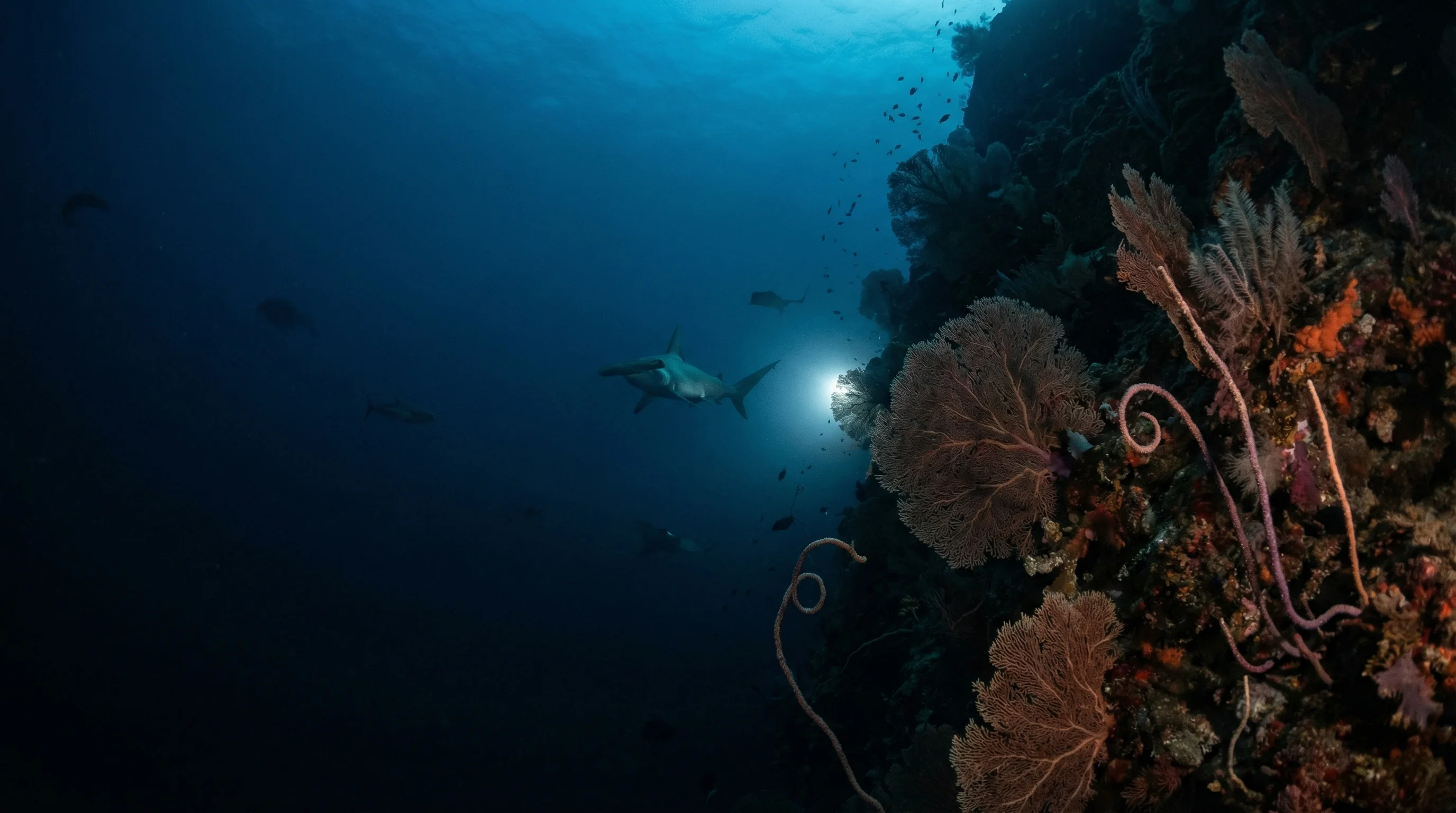
Dart Reef drops off a dramatic wall that plunges from 25 metres into depths well beyond 400 metres, making this serious deep diving territory in Queensland's offshore waters. Visibility regularly stretches to 30 to 100 metres, giving you a genuine sense of the void below. Currents run mild on most dives, but conditions can shift, and nitrogen narcosis becomes a real consideration at depth. The pelagic action is the main draw here: grey reef sharks, white tip reef sharks, and hammerhead sharks patrol the wall alongside large schools of tuna and barracuda. Manta rays, potato cod, and humphead parrotfish round out a strong cast of big-water species. Decompression planning is essential before you splash.
-17.41667, 148.18333
September through January brings the most reliable visibility and the best chance of hammerhead and manta ray encounters, so plan your trip accordingly. Always dive Dart Reef with a surface marker buoy and a redundant dive computer given the decompression obligations at depth.
Access to Dart Reef is only possible via liveaboard vessel from ports in Queensland such as Cairns. It is a remote oceanic reef system far from the mainland.
As a remote oceanic reef, divers can expect strong currents and deep walls. Encounters with large pelagic species, including various sharks, are common.
Depth
25-400m
Visibility
30-100m
Skill Level
Advanced
Entry
Boat
Boat required
Water Temp
22-29°C
Current
Mild
Best Time
Jan, Sep, Oct, Nov, Dec
Dart Reef in the Coral Sea requires both Advanced Open Water and Deep Diver certifications. The dive site reaches depths between 25 and 400 metres, making advanced training essential for safe diving. The remote offshore location and technical nature of the site make these certifications mandatory rather than recommended.
Dart Reef in Queensland's Coral Sea is renowned for pelagic shark encounters, including grey reef sharks, white tip reef sharks, and hammerhead sharks. Divers regularly observe schools of tuna and barracuda, manta rays, and large species such as potato cod and humphead parrotfish. The exceptional visibility of 30 to 100 metres provides excellent opportunities for photographing these species in open water.
Dart Reef is strictly an advanced dive site and is not suitable for beginners. The depths of 25 to 400 metres require decompression diving skills, and divers face risks including nitrogen narcosis and strong currents. Only experienced divers with Advanced and Deep Diver certifications should attempt this Coral Sea location.
The optimal diving months at Dart Reef are September through January, covering spring and early summer in Australia. During this period, water temperatures range from 22 to 29 degrees Celsius and visibility reaches up to 100 metres. These months offer the most stable conditions for accessing this remote Coral Sea reef system.
Dart Reef is accessible only by liveaboard boat due to its remote location in the Coral Sea, far offshore from Queensland. The site has no shore access or facilities, requiring multi-day dive expeditions from departure points such as Cairns or Port Douglas. Boat access is mandatory for all diving operations at this location.
Dart Reef presents several serious hazards including extreme depths requiring decompression stops and significant nitrogen narcosis risk. Divers may encounter strong currents despite typically mild conditions, and the remote Coral Sea location limits emergency assistance options. Proper technical diving training and equipment are essential for managing these risks safely.
Dart Reef offers exceptional underwater visibility ranging from 30 to 100 metres, among the best in Australian waters. The remote Coral Sea location ensures pristine water clarity, ideal for spotting large pelagic species like hammerhead sharks and manta rays at distance. This outstanding visibility makes the site particularly popular with underwater photographers.
A 3mm wetsuit is recommended for diving at Dart Reef in Coral Sea Reefs. Water temperatures range from 22°C to 29°C.
Dart Reef in Coral Sea Reefs has depths ranging from 25 metres to 400 metres.