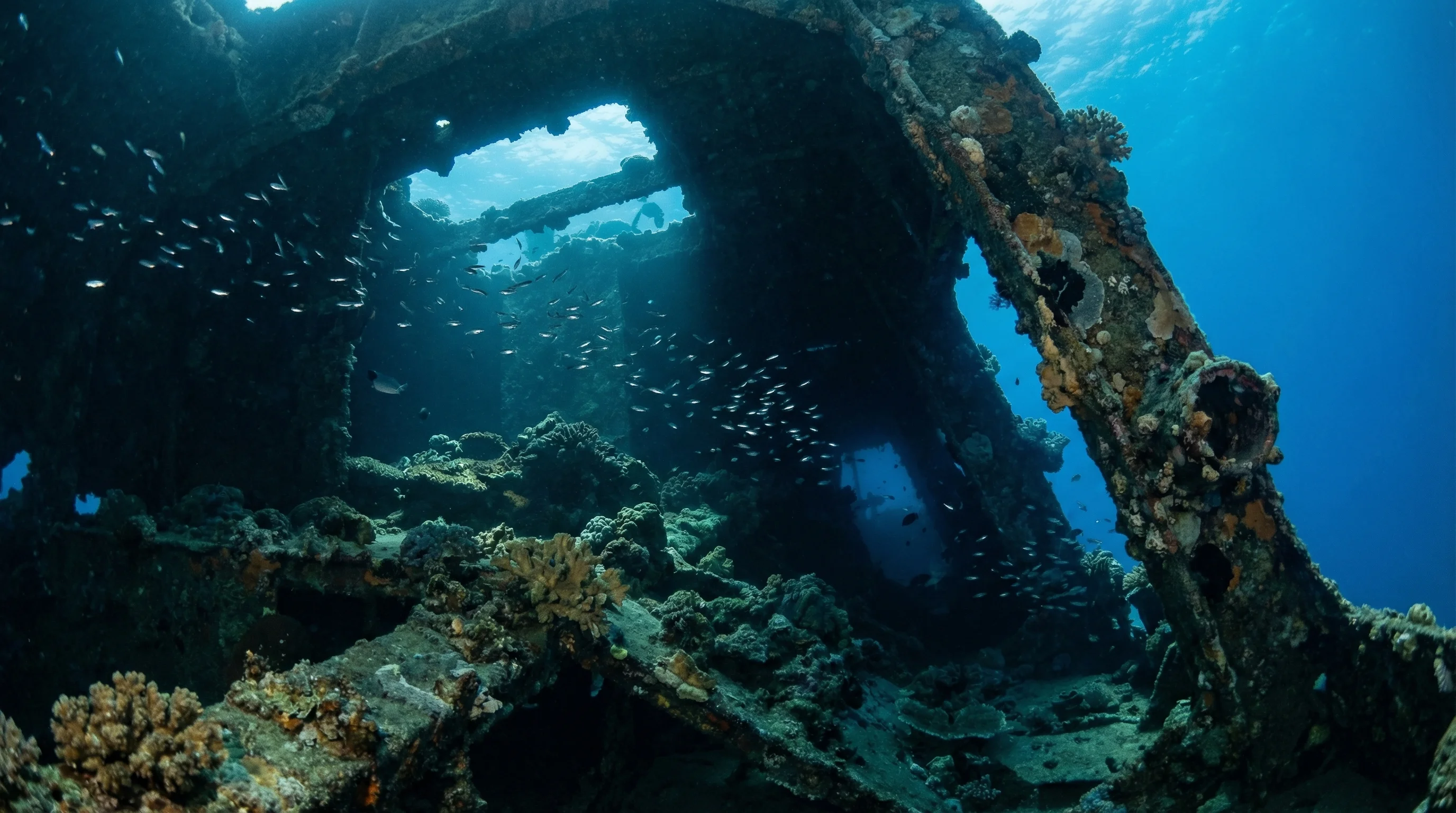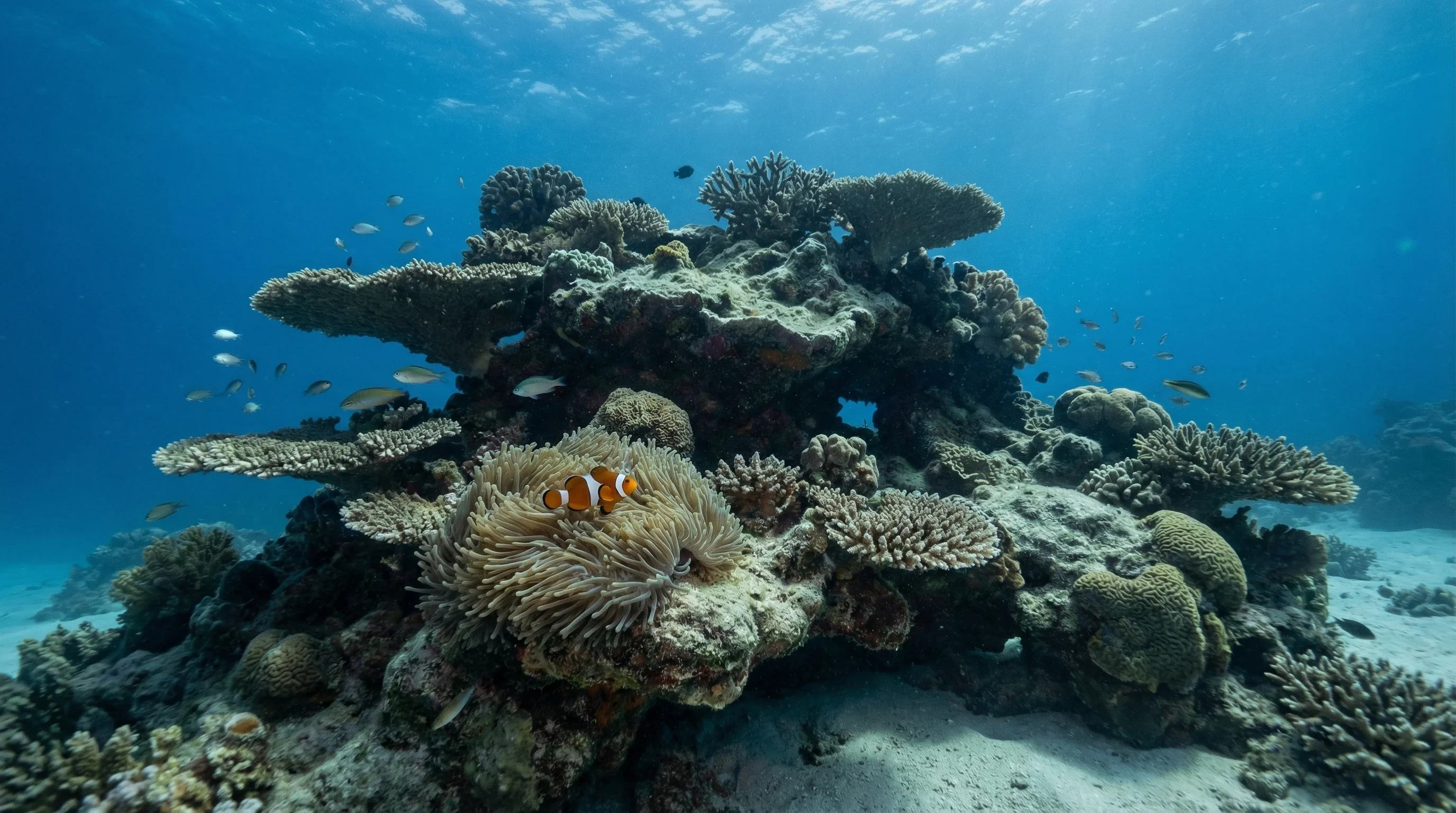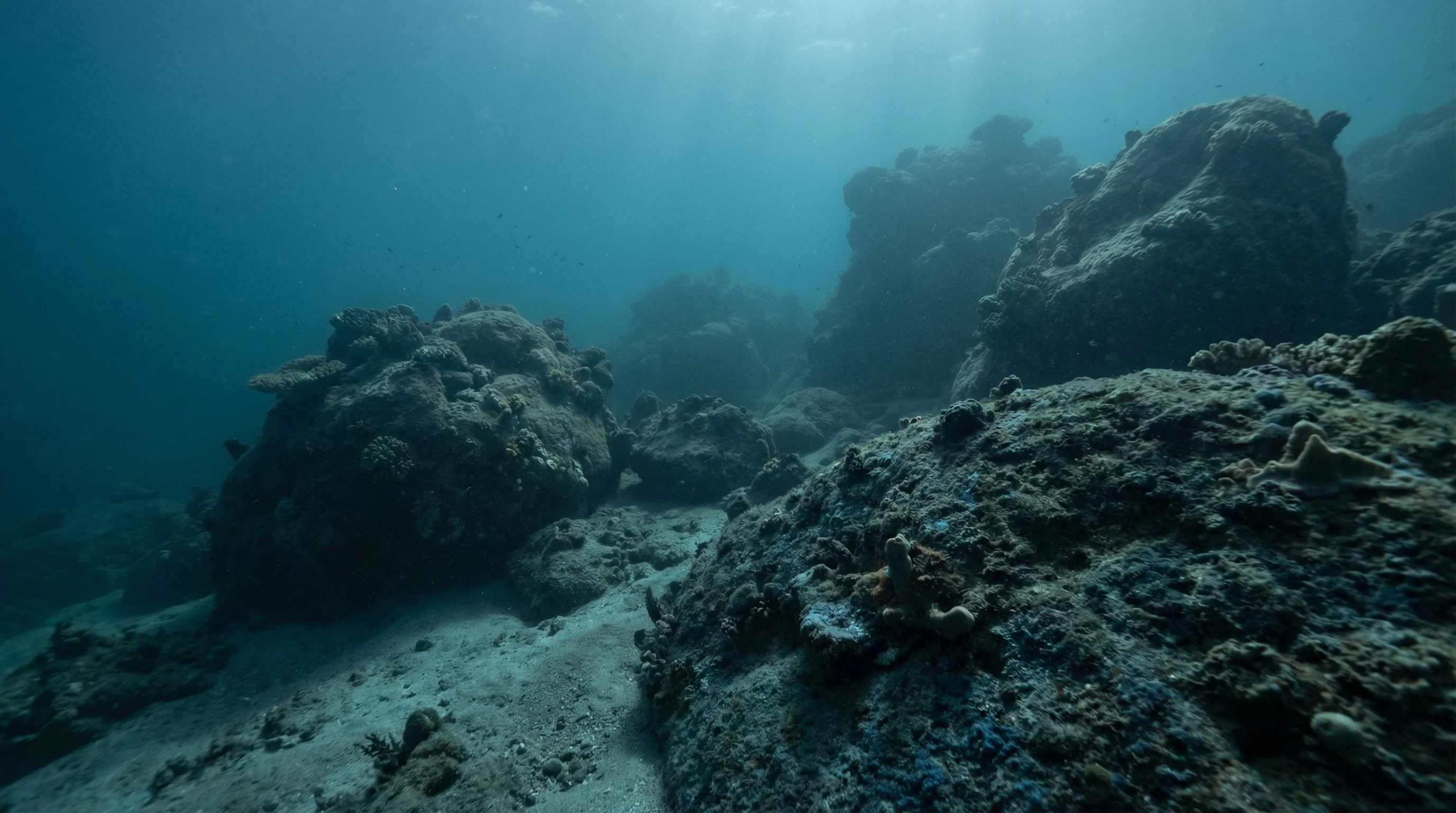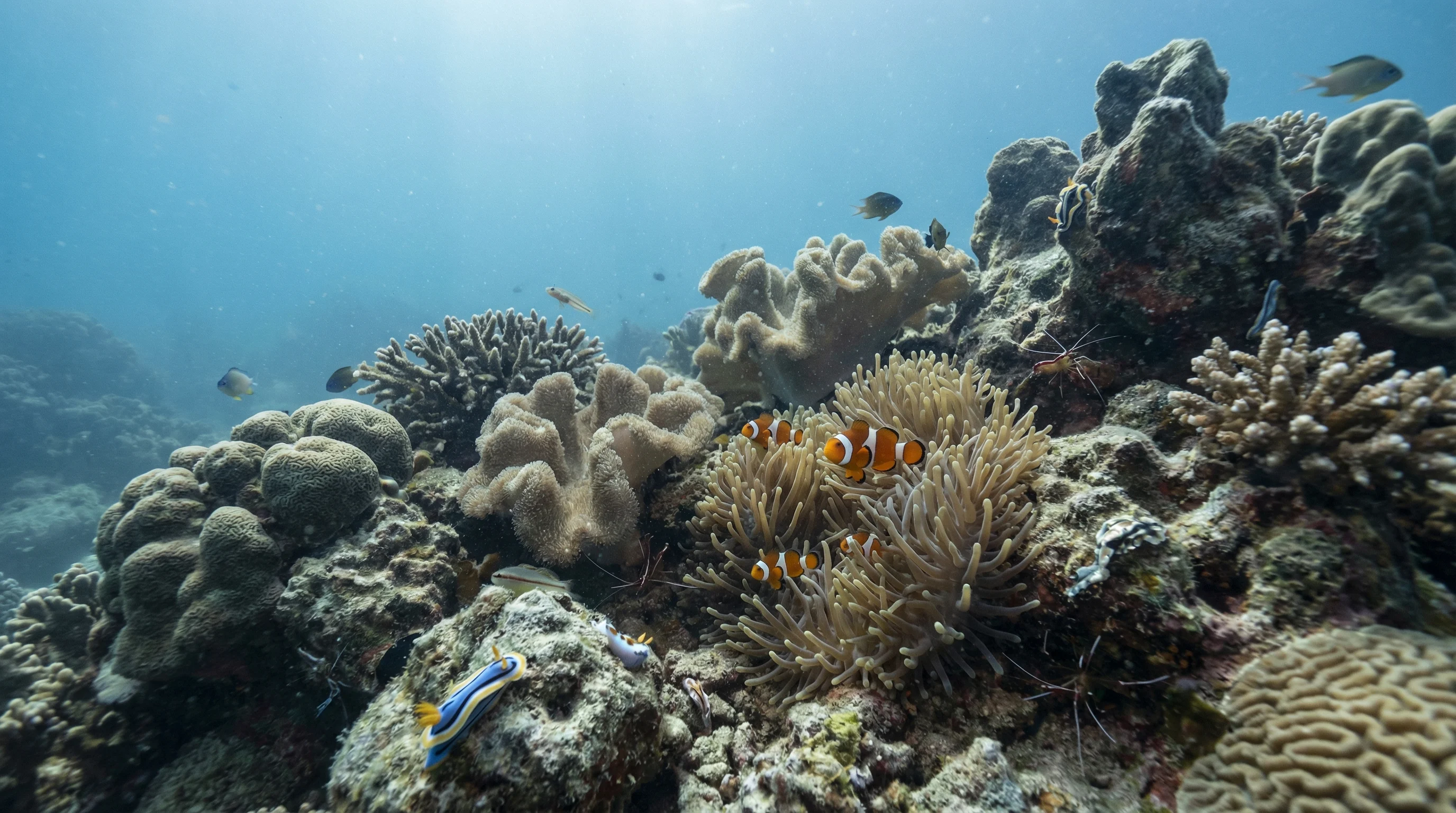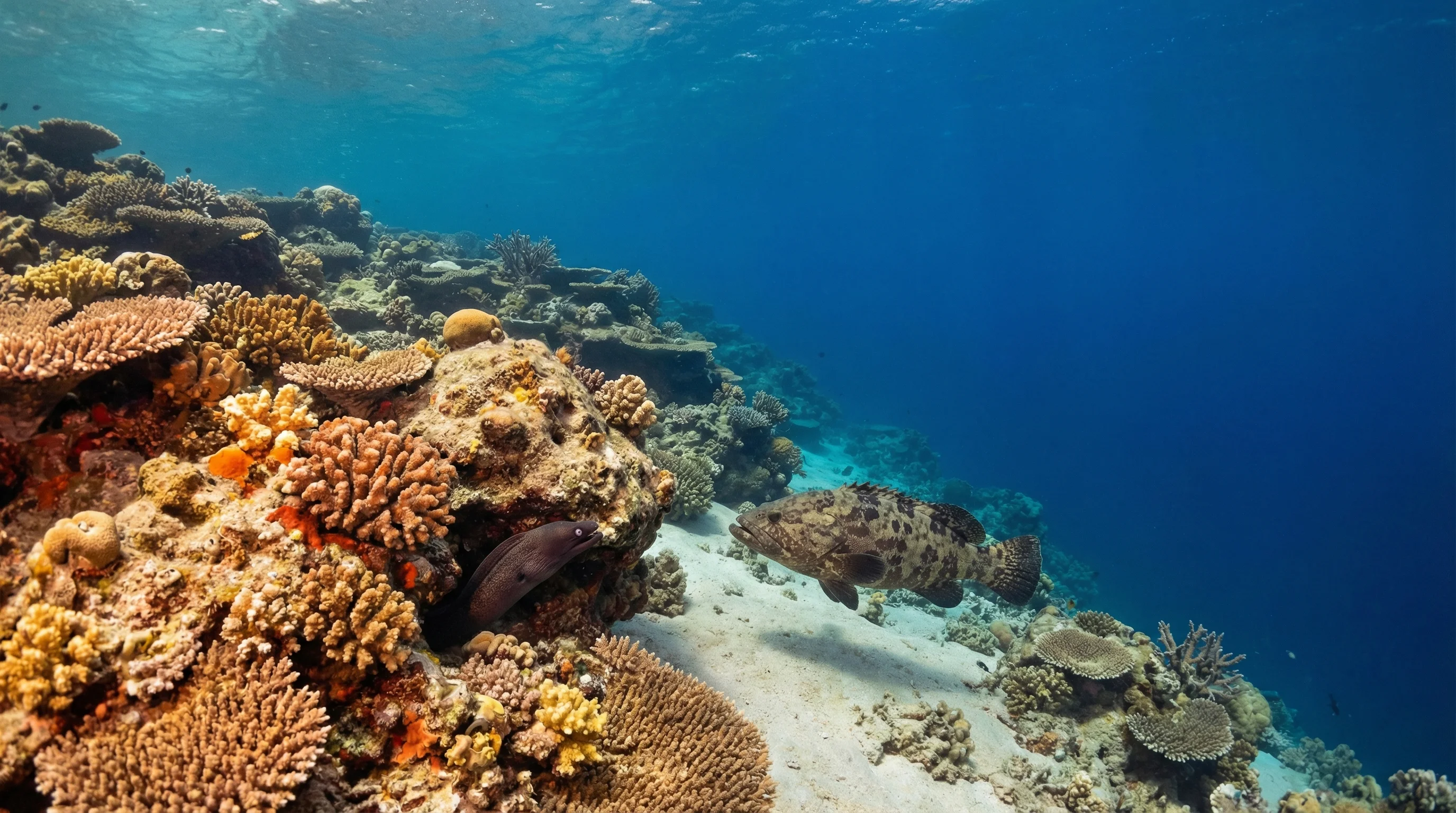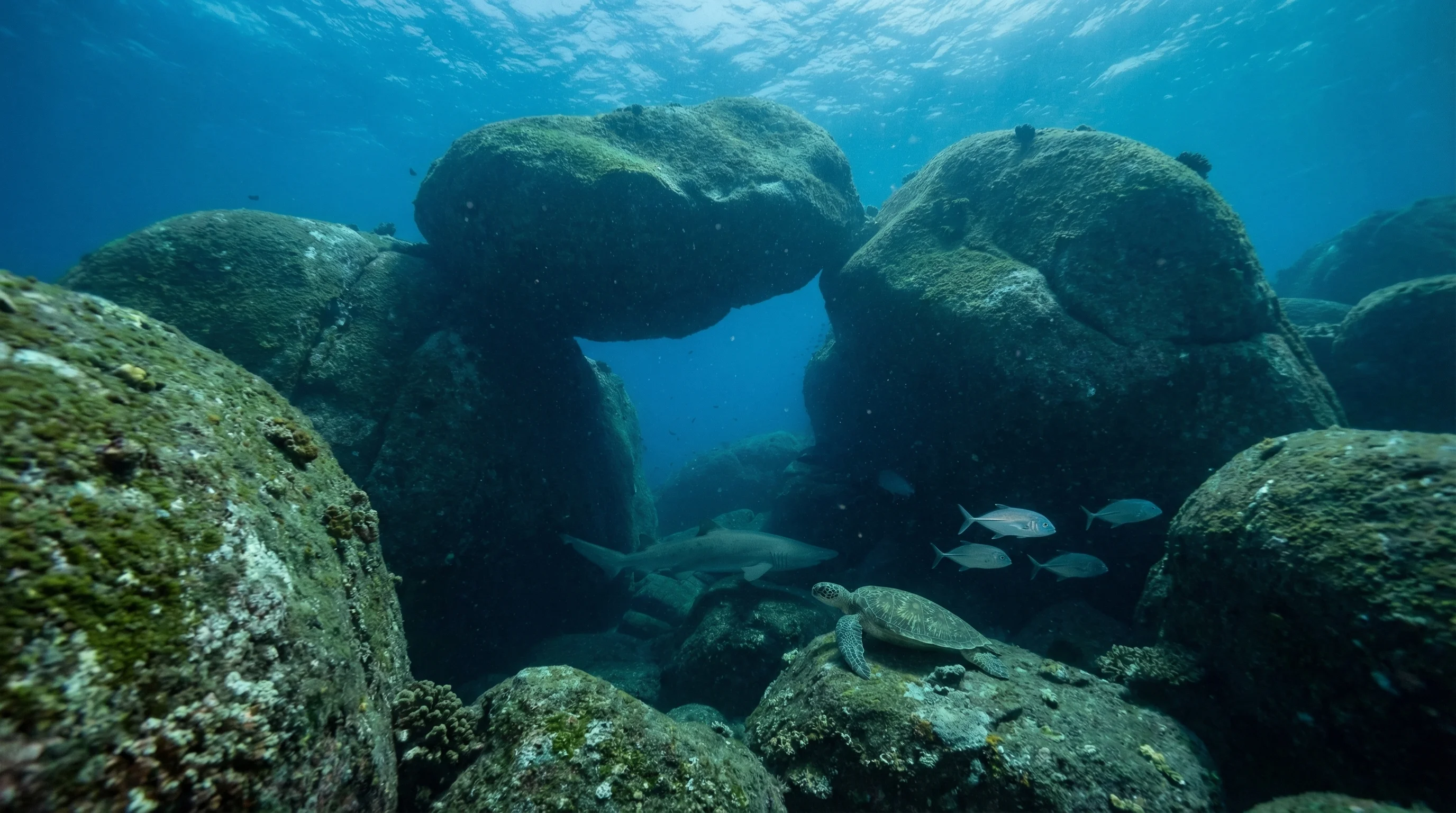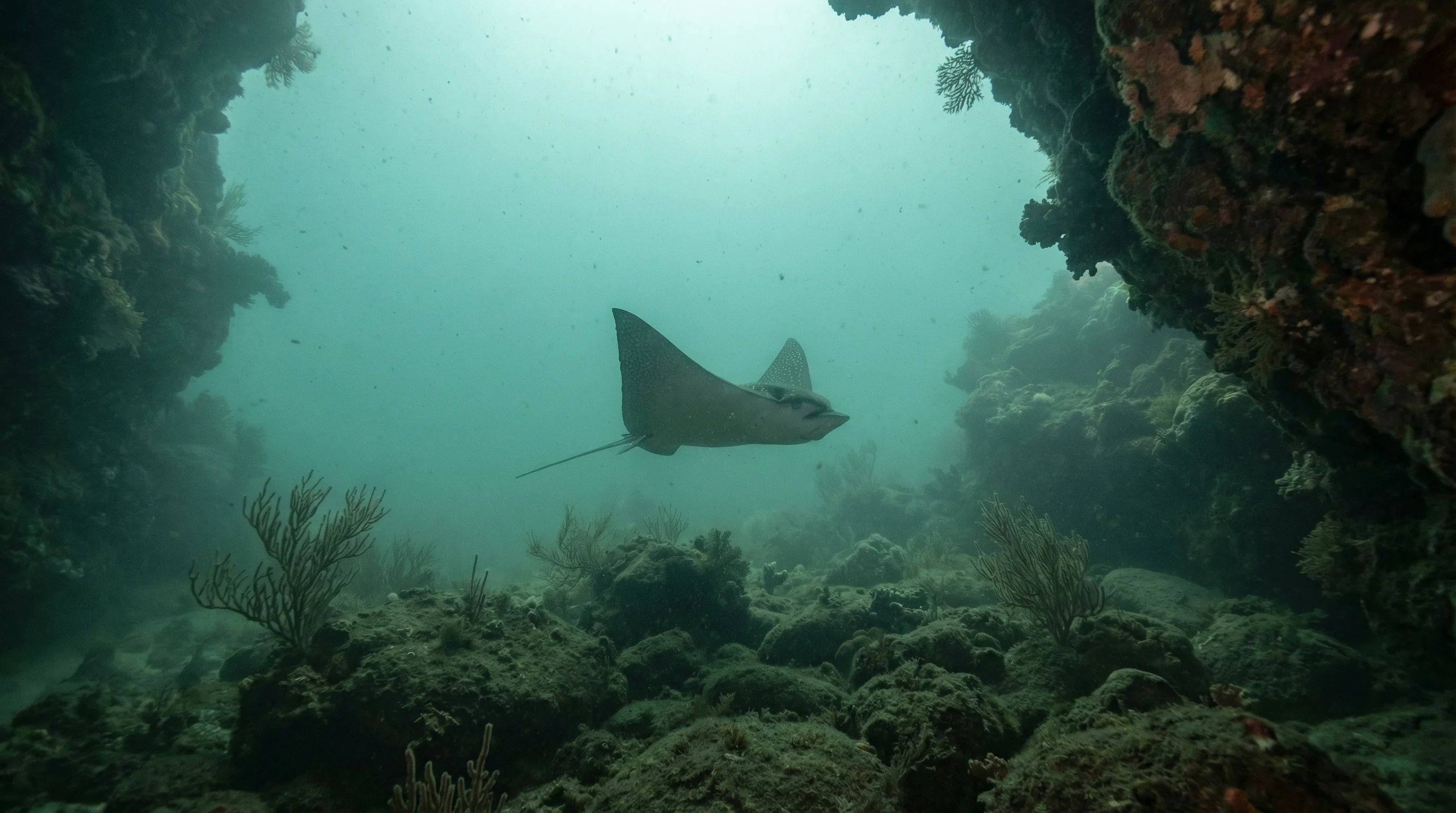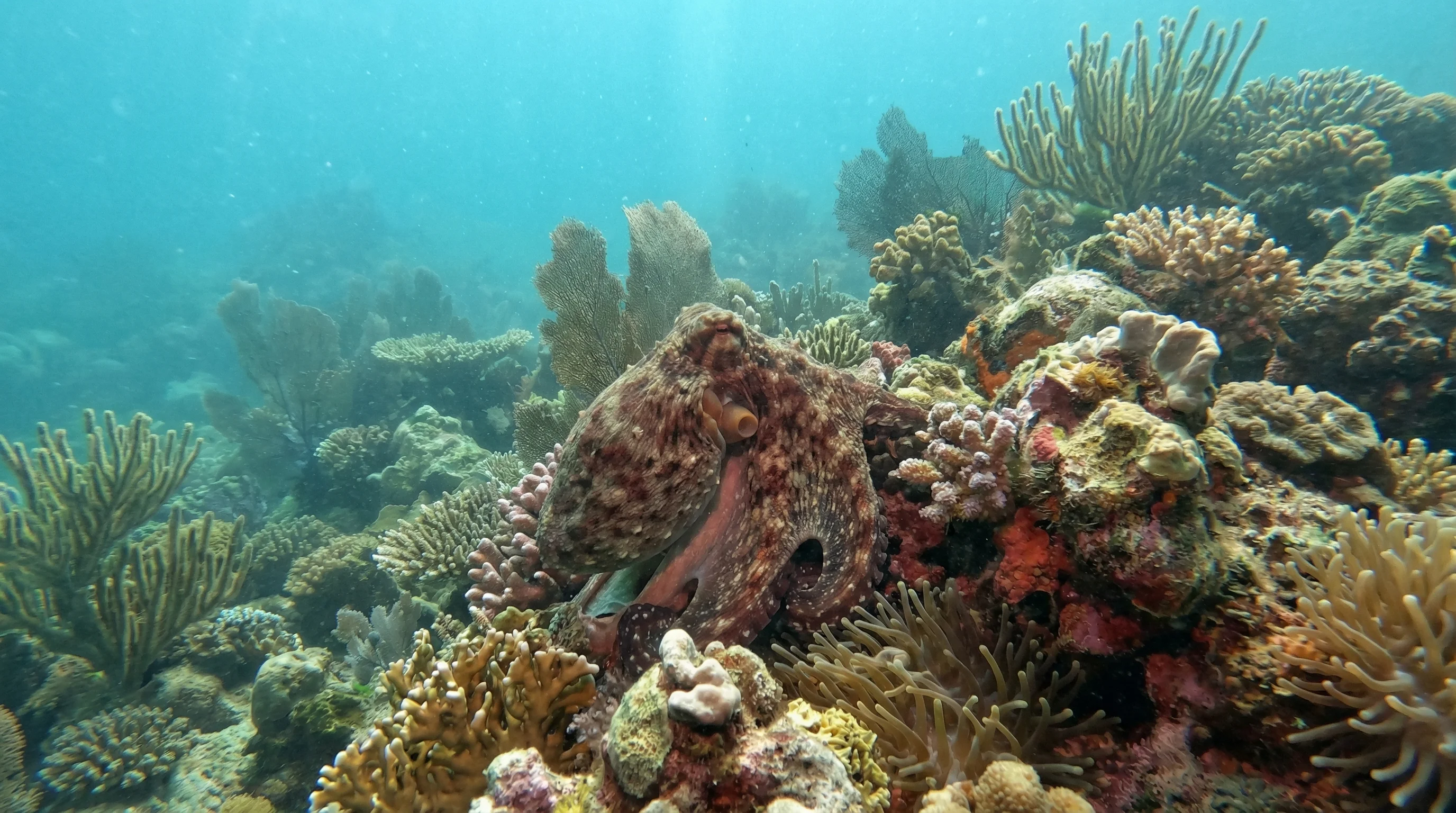
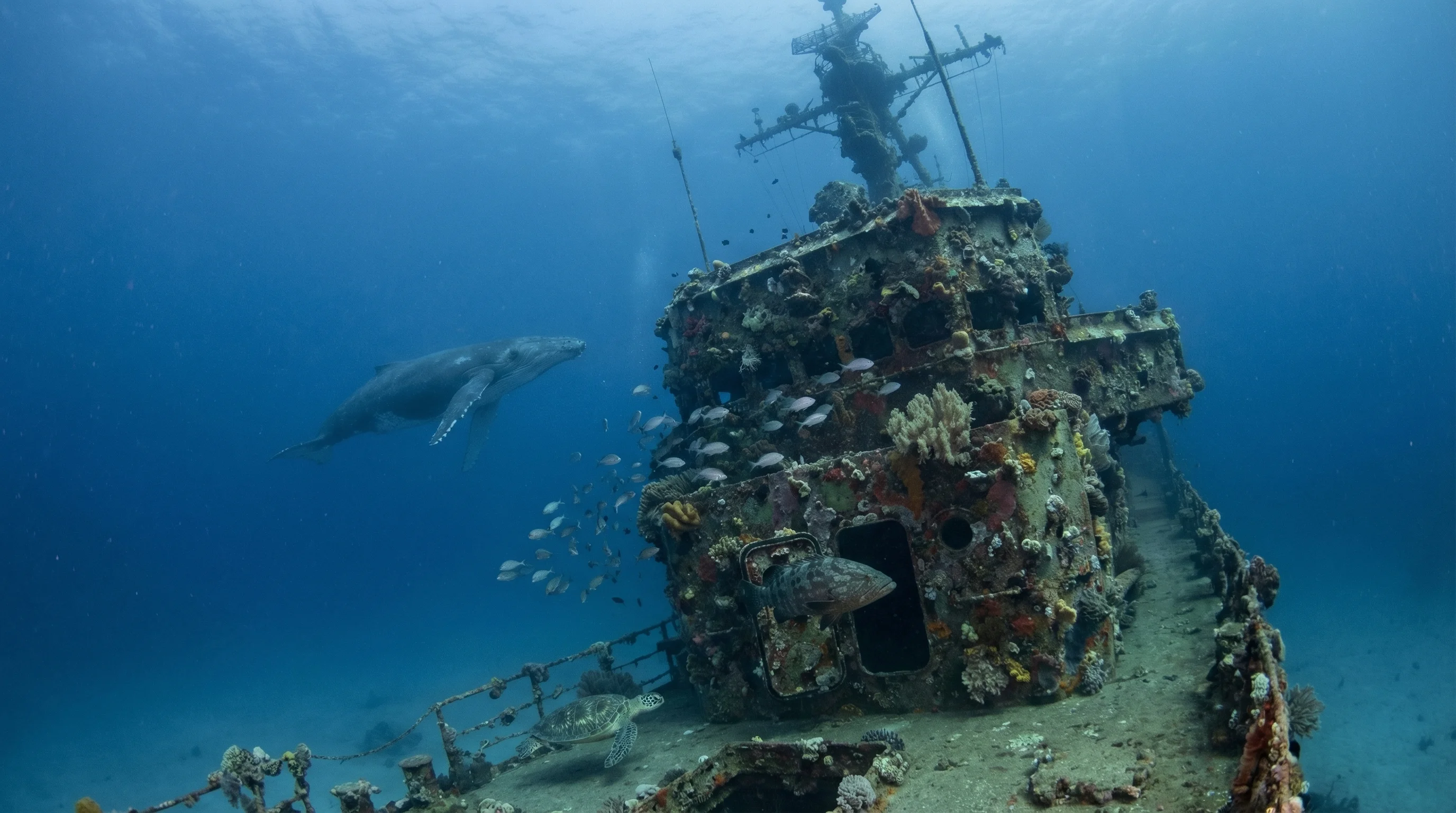
This 133-metre guided missile destroyer sits upright in 28 metres off Mooloolaba, her superstructure rising to within 3 metres of the surface. Scuttled in 2005, the Brisbane has transformed into a thriving artificial reef with multiple penetration points for experienced wreck divers. You can explore the bridge, engine rooms, and gun turrets, though moderate currents demand solid buoyancy control and wreck training. Visibility typically ranges from 10 to 14 metres, sufficient for appreciating the ship's impressive scale and the marine life that has colonised her surfaces. Queensland groupers have claimed territories throughout the wreck, while bull rays and eagle rays patrol the sandy bottom. Turtles drift past the superstructure, and leopard sharks rest beneath overhangs. The deck and railings host clownfish darting among anemones, batfish in the water column, and nudibranchs on encrusted metal. Octopus hide in compartments, and the occasional lionfish patrols corridors. The wreck's size means multiple dives to see everything. Sharp edges and entanglement hazards are present throughout, particularly in overhead environments. Strong currents can pick up quickly, making this a serious dive requiring proper planning and experience with wreck penetration.
-26.61610, 153.16980
June through October offers the most consistent visibility and calmer surface conditions, making wreck penetration considerably more manageable. Brief your boat crew on your planned penetration depth before descending, as current strength can vary significantly between the bow and stern.
The wreck is located 2.9 nautical miles (approx. 9km) off the coast. Access is via boat, typically with licensed dive tour operators departing from Mooloolaba Marina on the Mooloolah River. A permit from Queensland Parks and Wildlife Service is required to dive the site.
Penetration of the wreck should only be undertaken by certified and experienced wreck divers. Gloves are recommended due to sharp barnacles and oysters on the wreck's surface.
Depth
3-28m
Visibility
10-20m
Skill Level
Advanced
Entry
Boat
Boat required
Water Temp
20-26°C
Current
Mild
Typical Dive
50 min
Best Time
Year-round
The HMAS Brisbane wreck in Mooloolaba, Queensland requires an Advanced Open Water certification as a minimum, along with wreck diving certification. This 133-metre former Royal Australian Navy guided missile destroyer sits at depths ranging from 3 to 28 metres and presents overhead environment hazards that demand advanced training. The site's moderate currents and penetration opportunities make proper wreck diving skills essential for safe exploration.
The HMAS Brisbane wreck dive near Mooloolaba reaches a maximum depth of 28 metres, with the shallowest sections starting at 3 metres. The wreck sits upright on the seabed, allowing divers to explore various deck levels at different depths. This depth range makes it suitable for advanced divers whilst offering shallower sections for decompression stops.
The HMAS Brisbane wreck hosts Queensland groupers, leopard sharks, bull rays and eagle rays as resident species. Divers regularly encounter turtles, octopus, lionfish and batfish around the structure. The wreck has developed into a thriving artificial reef since its scuttling in 2005, attracting diverse marine species to its hull and penetrable compartments.
The best months to dive the HMAS Brisbane wreck are June through October, during Queensland's winter and early spring. Water temperatures range from 20 to 26 degrees Celsius, with visibility typically between 10 and 14 metres. These cooler months offer more stable conditions and clearer water compared to the summer cyclone season.
Night diving is permitted at the HMAS Brisbane wreck near Mooloolaba for appropriately certified divers. The wreck transforms after dark as nocturnal species emerge and the ship's structure creates dramatic torch-lit scenes. Divers must hold Advanced Open Water and wreck certifications, with night diving speciality strongly recommended given the overhead environment hazards.
The HMAS Brisbane wreck presents strong currents, entanglement risks, overhead environments and sharp coral as primary hazards. The moderate current can strengthen unexpectedly around the 133-metre structure, whilst internal compartments create confined spaces requiring proper wreck penetration training. Divers must exercise caution around deteriorating metal edges and established coral growth on the hull.
The HMAS Brisbane wreck is accessed exclusively by boat from Mooloolaba, Queensland. Dive shops and boat charters operate from the harbour with dedicated trips to the wreck, which lies approximately 2.8 kilometres offshore. Shore diving is not possible, and all dives require booking through a charter operator who can provide equipment rental and guided tours.
There is no entry fee to dive the HMAS Brisbane wreck itself. Divers only pay for boat charter services, equipment rental if needed, and guided tours through Mooloolaba-based dive operators. The wreck was deliberately scuttled as a public dive site and remains free to access, though all visits require booking with a licensed charter boat.
HMAS Brisbane (Wreck) in Mooloolaba requires advanced diving skills. Expect deeper depths, currents, or challenging conditions that are not suitable for newly certified divers.
Yes, equipment rental is available at or near HMAS Brisbane (Wreck) in Mooloolaba. Contact local dive operators for specific gear availability and prices.
A 5mm wetsuit is recommended for diving at HMAS Brisbane (Wreck) in Mooloolaba. Water temperatures range from 20°C to 26°C.