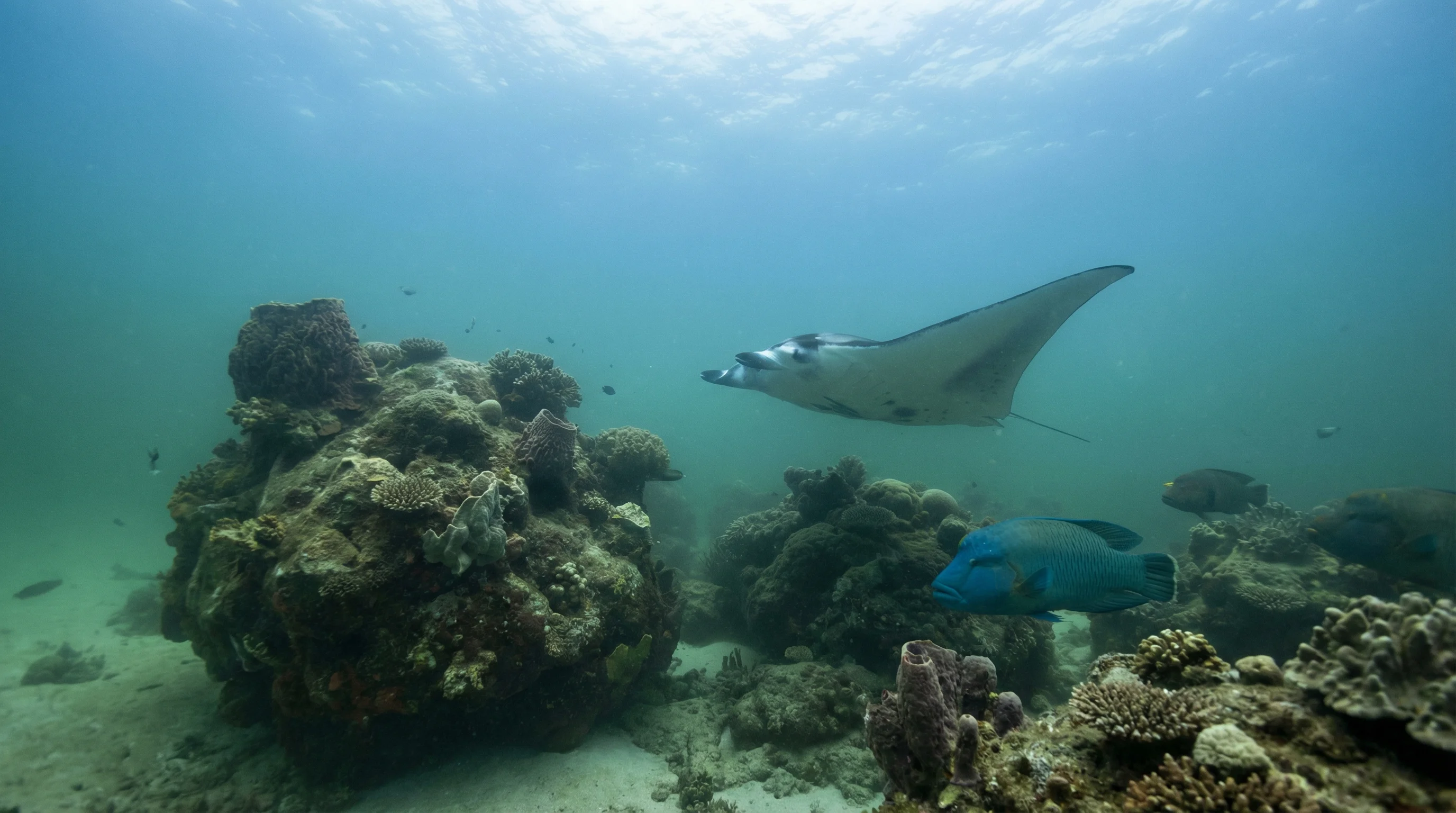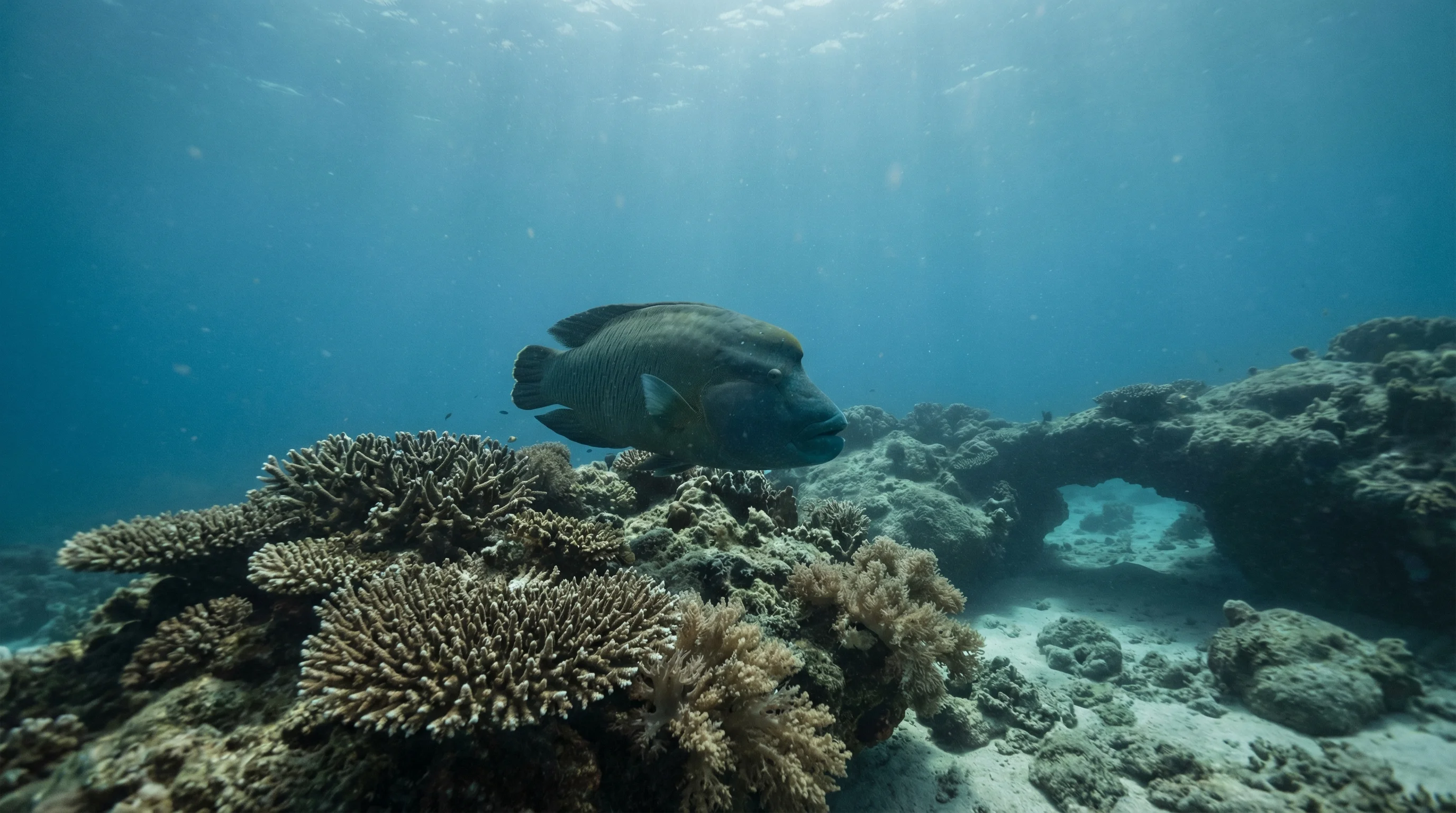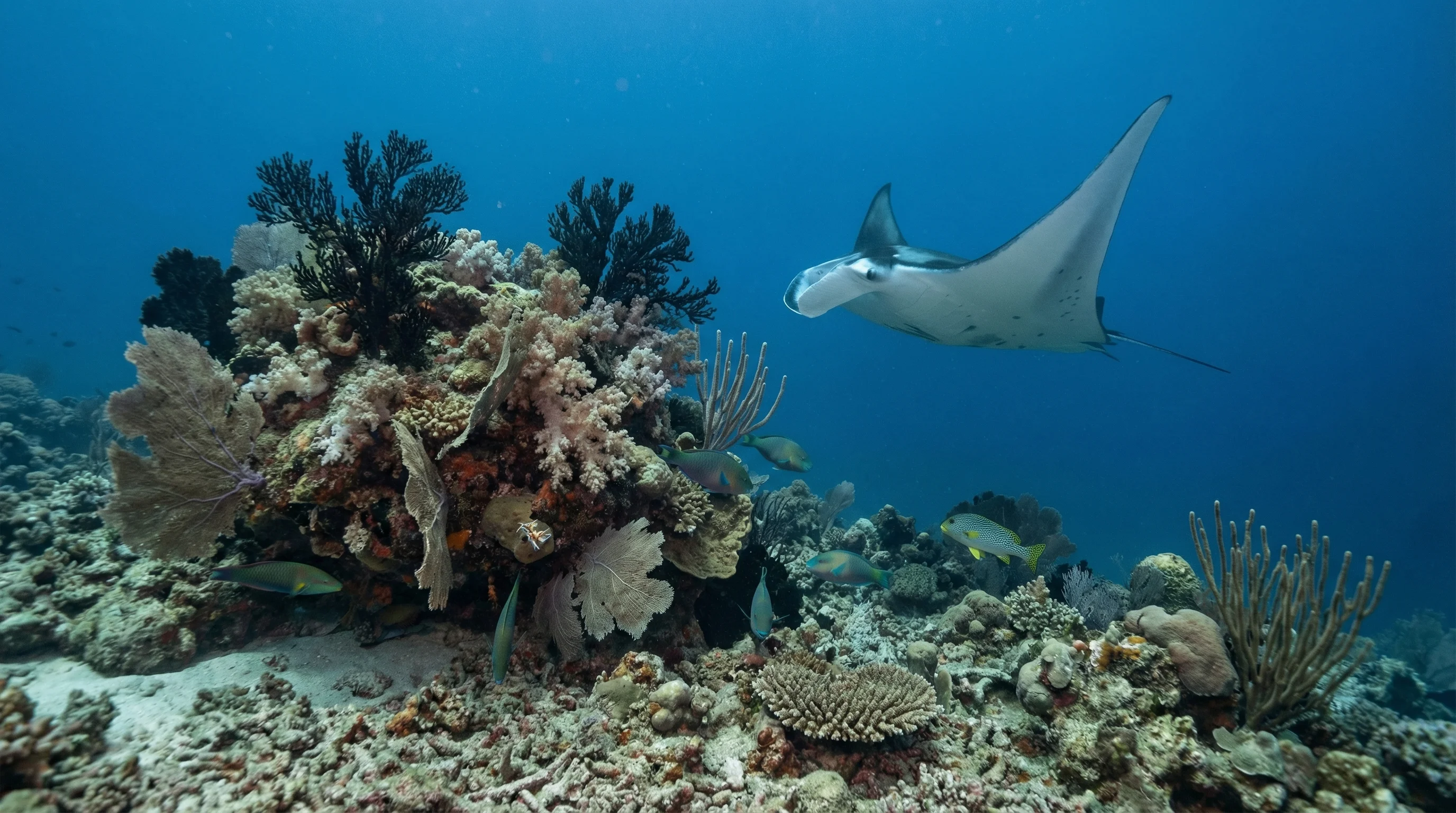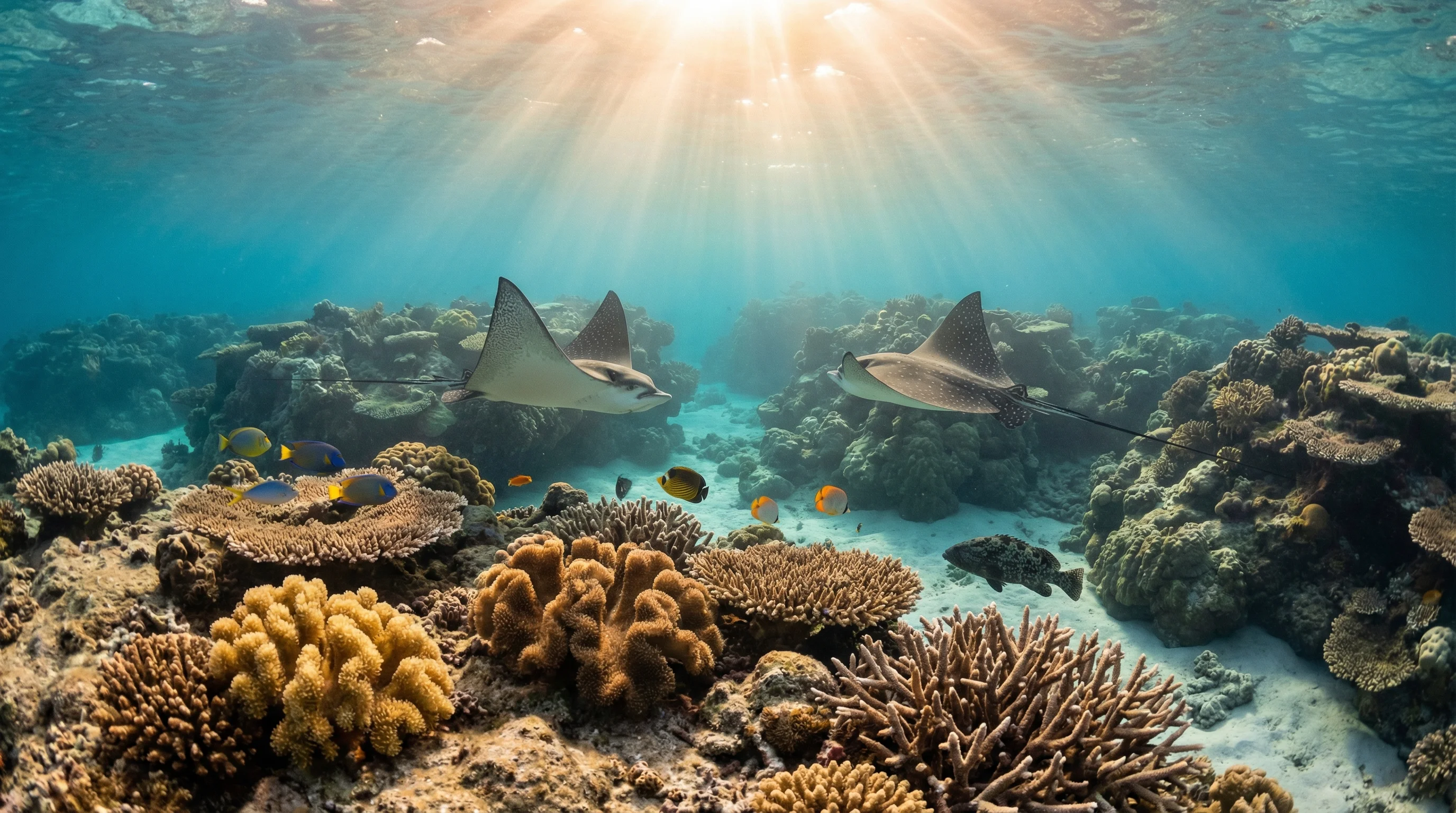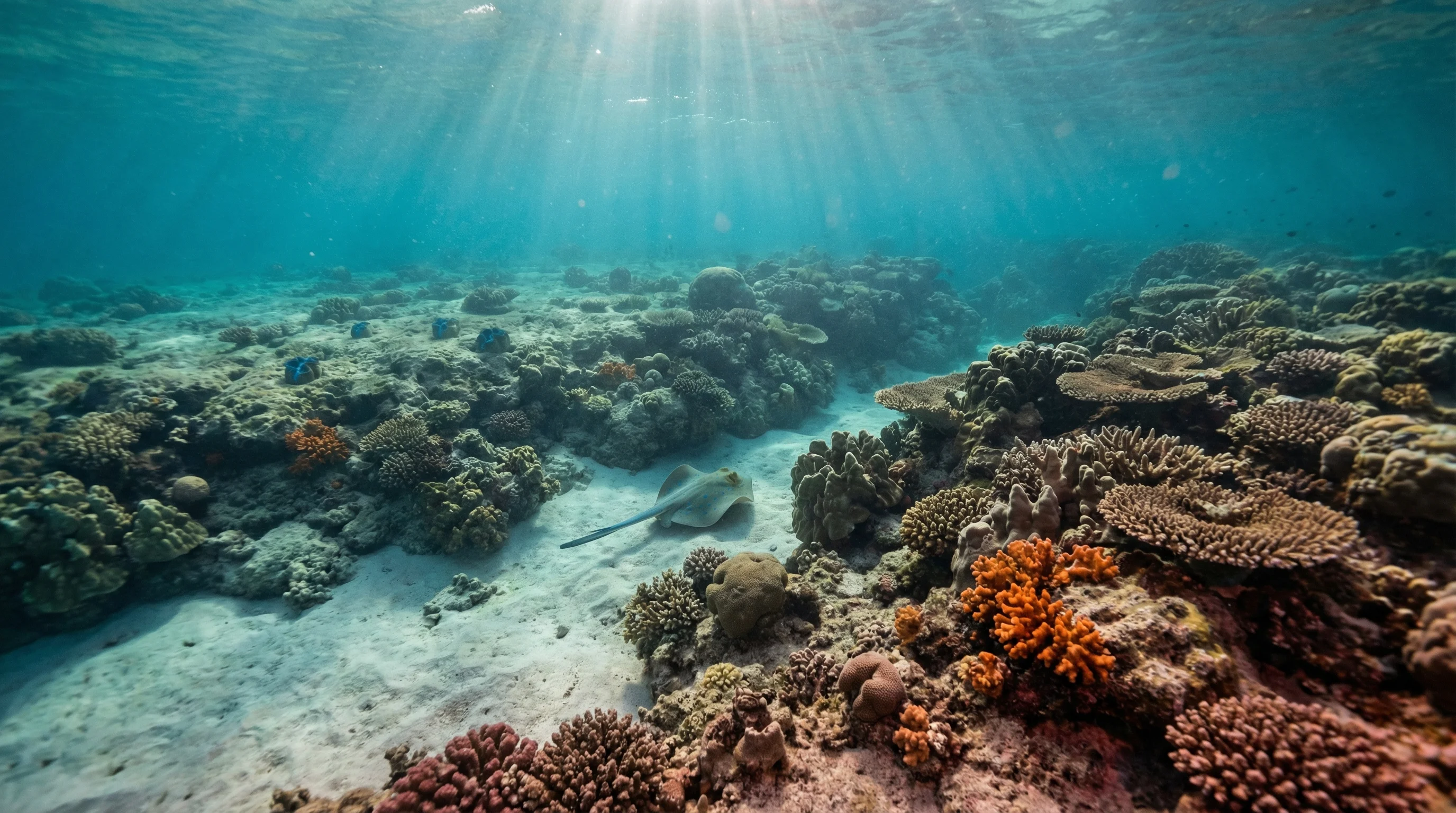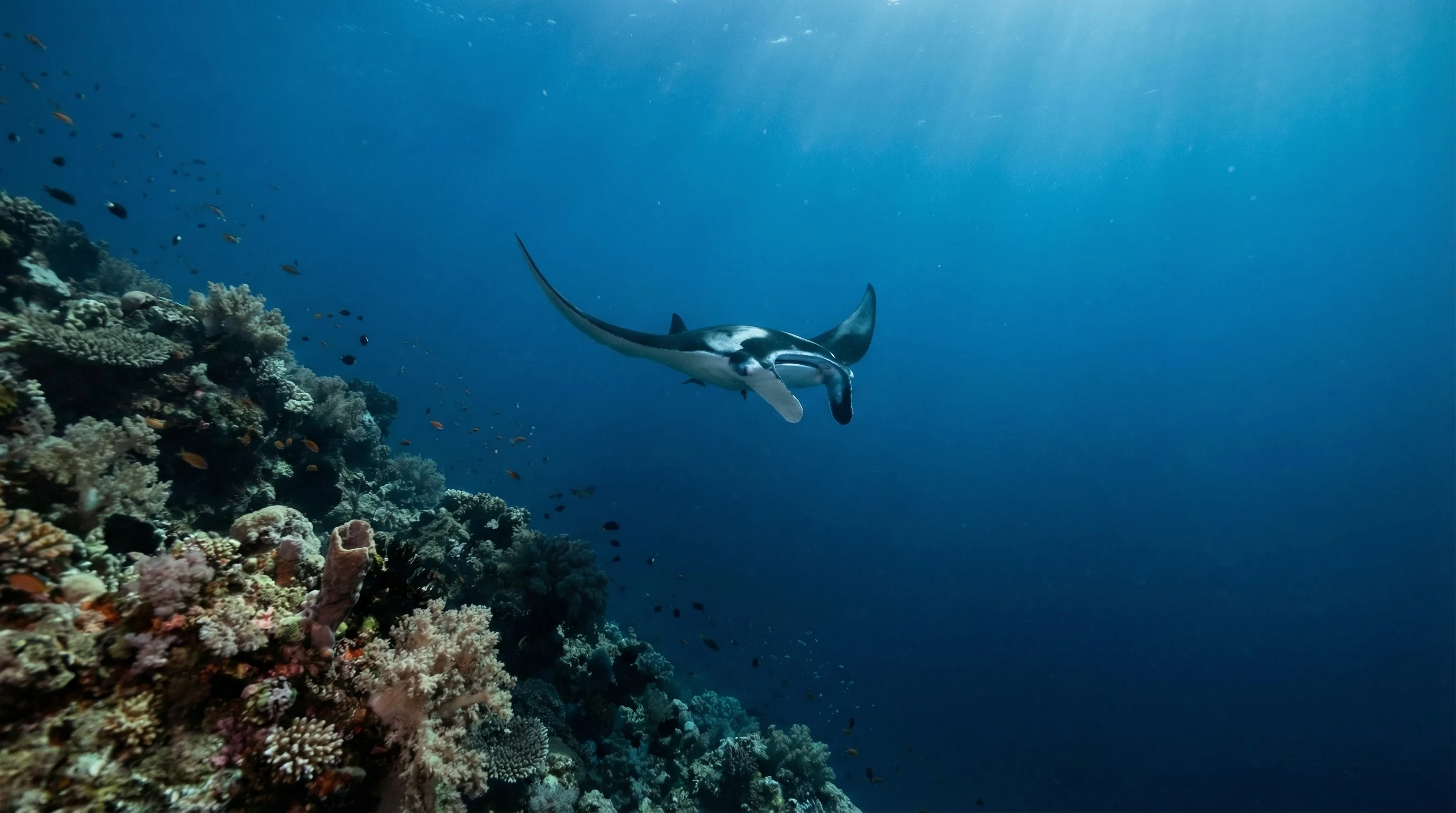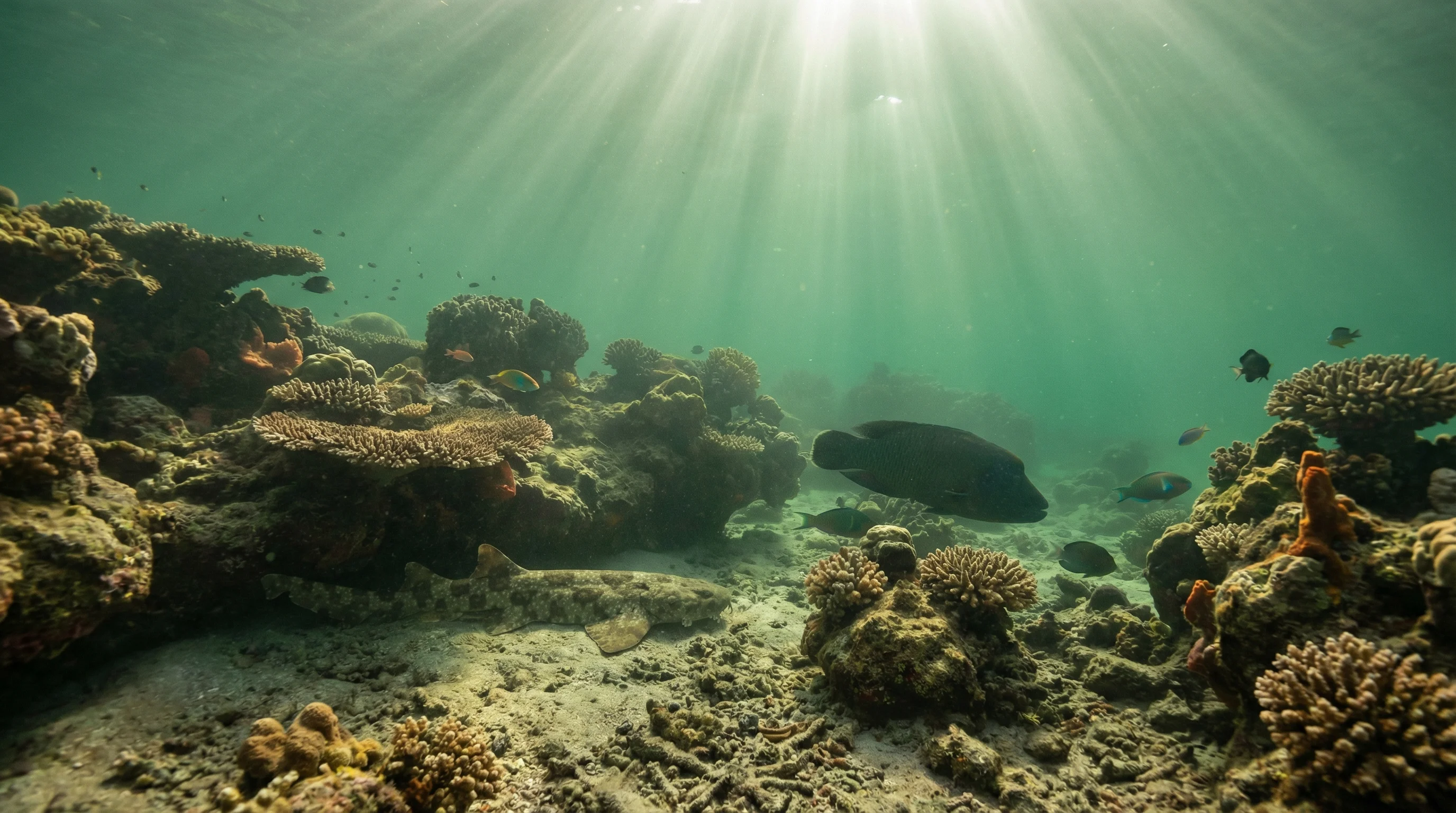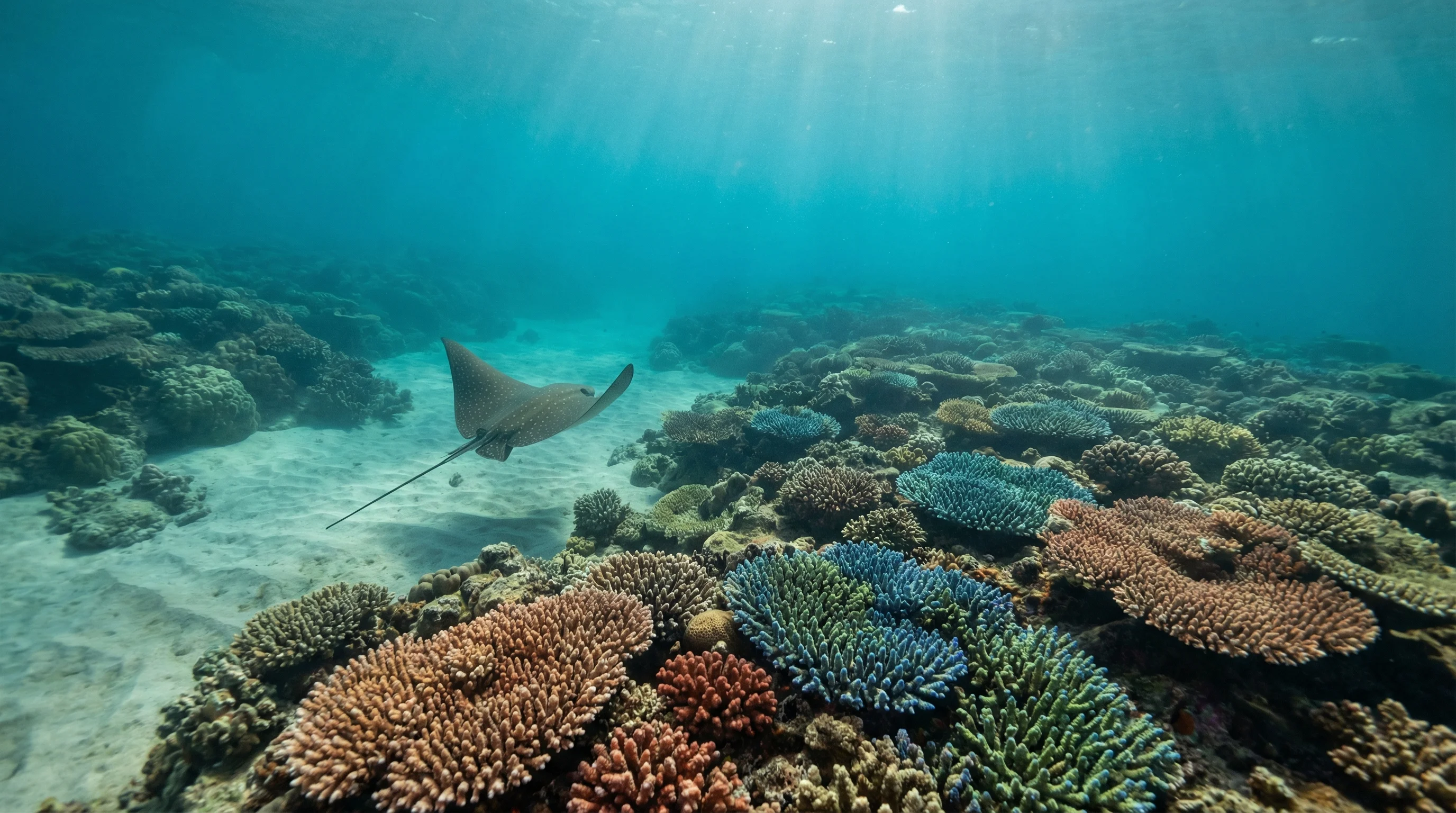
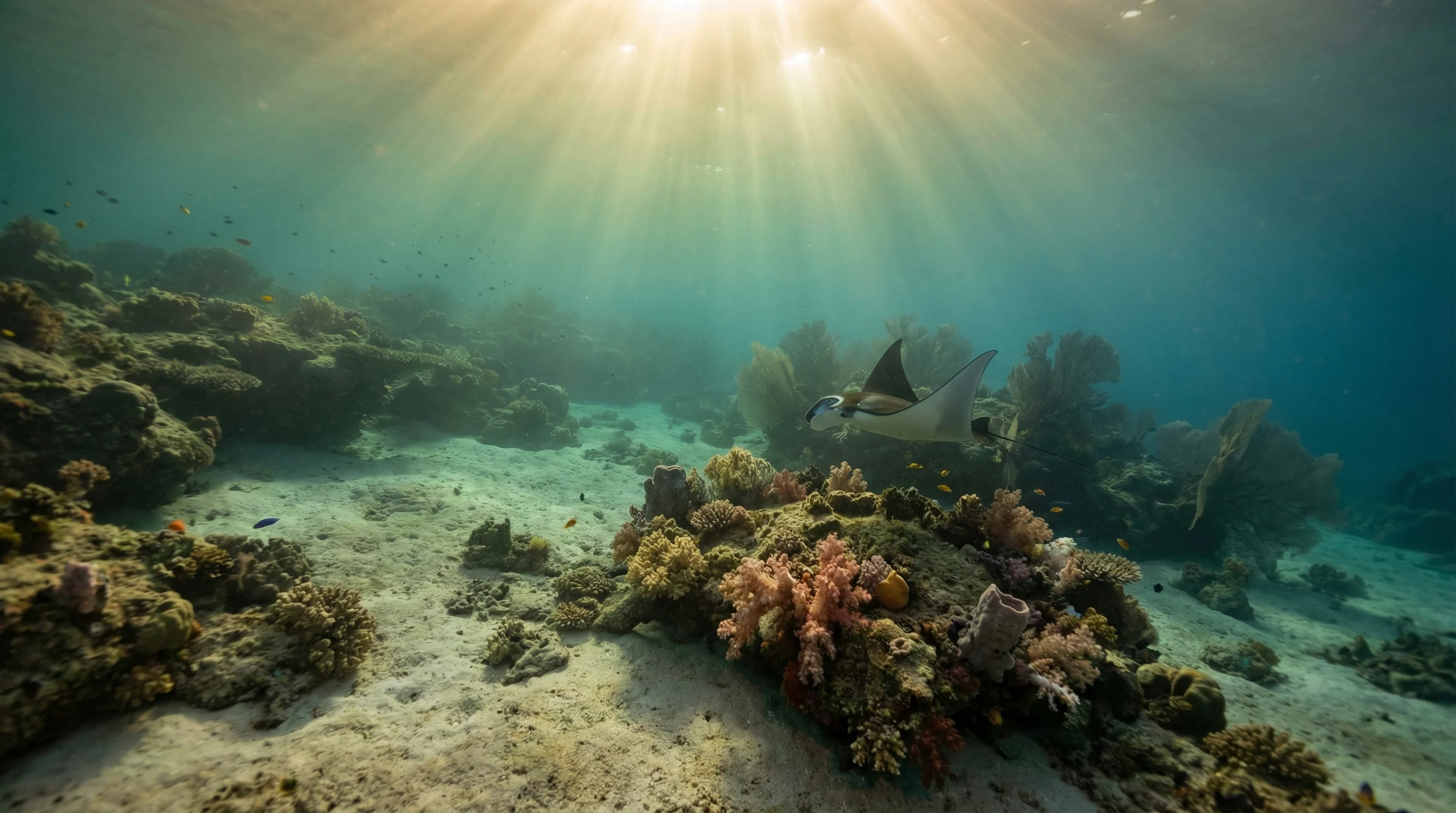
Mackerel Bay is a reef site that works well for beginner divers, with depths ranging from 1 to 20 metres and mild currents that keep things manageable. Visibility can reach up to 30 metres on a good day, though 2 metres is possible in poorer conditions, so timing matters. The reef is home to a solid mix of marine life, including angelfish, butterflyfish, wrasse, sweetlip, and groupers patrolling the coral. Turtles and rays make regular appearances, and reef sharks and mackerel move through the area too. Watch your hands around the coral as sharp edges are a genuine hazard, and keep an eye out for jellyfish.
-20.07417, 148.96361
August through December brings the best conditions, so plan your visit within that window if you can. Check locally for current jellyfish activity before you get in, as it can vary significantly.
Access is via boat, typically on day tours or multi-day cruises departing from Abell Point Marina at Airlie Beach. The specific snorkeling/diving spots are chosen by the operator based on sea conditions.
string
The reef was significantly damaged by Cyclone Debbie in 2017 and is in a state of recovery. The site is exposed and should be avoided during southerly winds. Stinger (jellyfish) season is a consideration in the Whitsundays.
Depth
1-18m
Visibility
2-30m
Skill Level
Beginner
Entry
Boat
Boat required
Water Temp
21-29°C
Current
Mild
Typical Dive
60 min
Best Time
Aug, Sep, Oct, Nov, Dec
Mackerel Bay in the Whitsunday Region supports diverse tropical species including reef sharks, sea turtles, rays, groupers, angelfish, butterflyfish, wrasse and sweetlip. The site's depth range of 1 to 20 metres creates varied habitats for these species. Visibility ranges from 2 to 30 metres depending on conditions, allowing good opportunities for marine life observation.
Mackerel Bay is suitable for beginner divers with an Open Water certification. The site offers mild currents and depths from 1 to 20 metres, allowing less experienced divers to stay shallow whilst progressing their skills. Boat access provides safe entry and exit points for novice divers.
The best months to dive Mackerel Bay are August through December. During this period, water temperatures range from 21 to 29 degrees Celsius and conditions are typically more stable. Visibility during these months can reach up to 30 metres on good days.
Boat access is required to reach Mackerel Bay as there is no shore entry option. The site is located in the Whitsunday Region of Queensland and must be accessed via chartered dive boat or private vessel. No facilities are available at the site itself.
You need an Open Water diving certification to dive Mackerel Bay. This entry-level certification is sufficient due to the site's beginner-friendly conditions with mild currents and manageable depths. The maximum depth of 20 metres falls well within Open Water limits.
The primary hazards at Mackerel Bay are sharp coral and jellyfish. Divers should maintain proper buoyancy to avoid contact with coral formations and consider wearing protective exposure suits. Jellyfish presence varies seasonally, with higher concentrations typically between November and May in Queensland waters.
Visibility at Mackerel Bay ranges from 2 to 30 metres depending on weather conditions, tides and seasonal factors. The best visibility typically occurs during the dry season months of August through December. Water temperature ranges from 21 to 29 degrees Celsius throughout the year.
A 3mm wetsuit is recommended for diving at Mackerel Bay in Whitsunday Region. Water temperatures range from 21°C to 29°C.
Mackerel Bay in Whitsunday Region has depths ranging from 1 metres to 18 metres.
A typical dive at Mackerel Bay in Whitsunday Region lasts approximately 60 minutes. Actual dive time depends on depth, air consumption, and conditions.