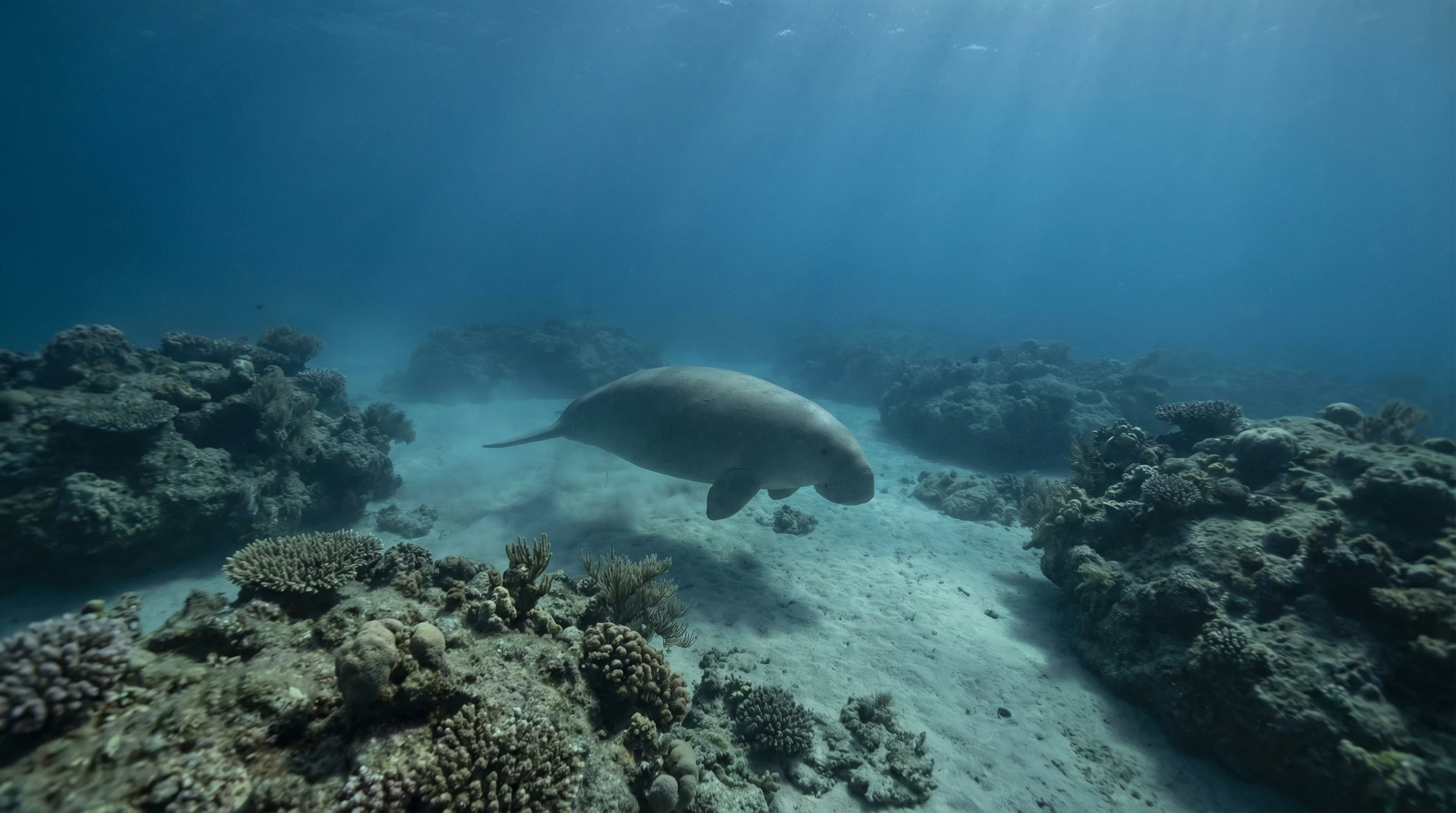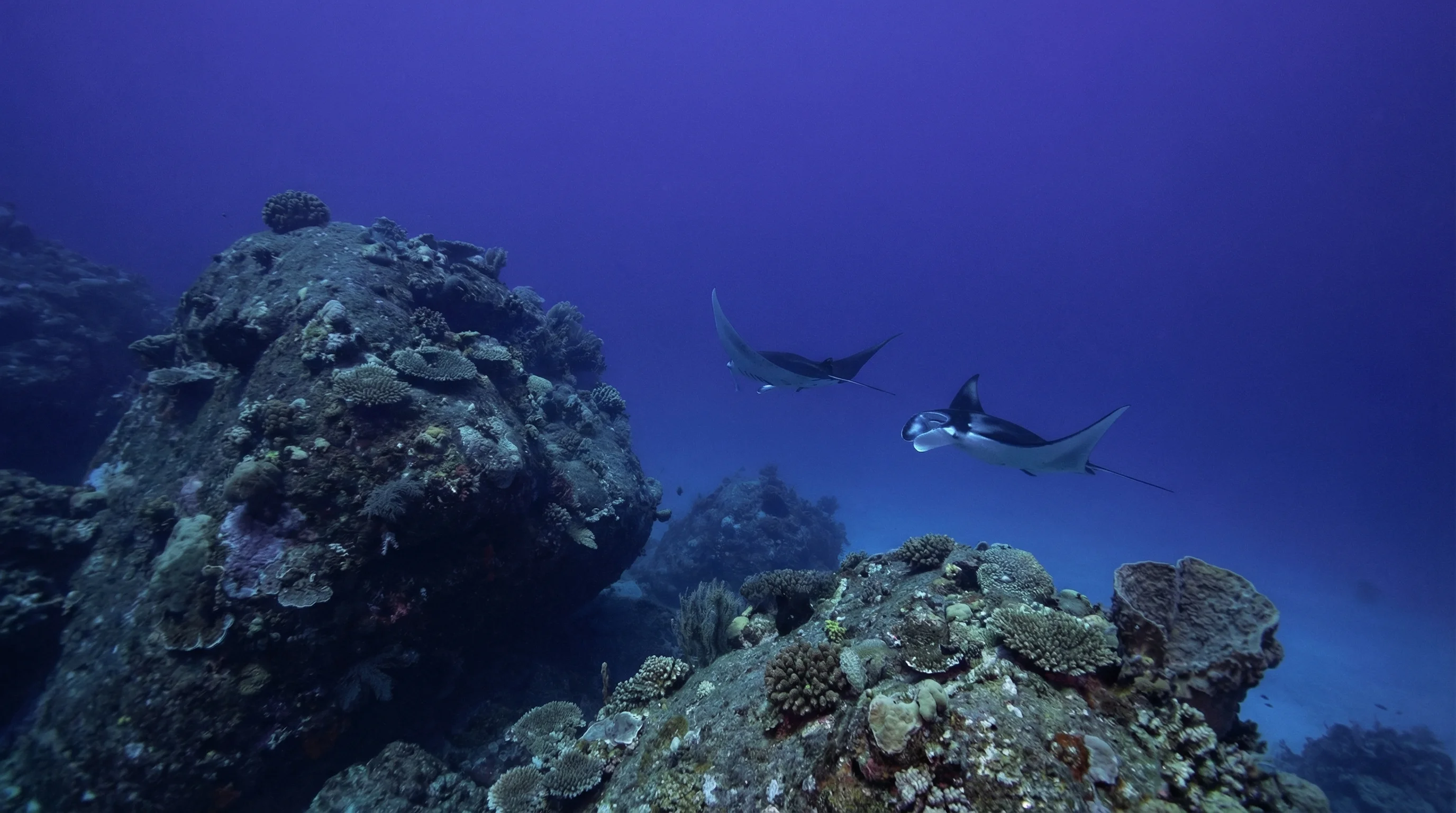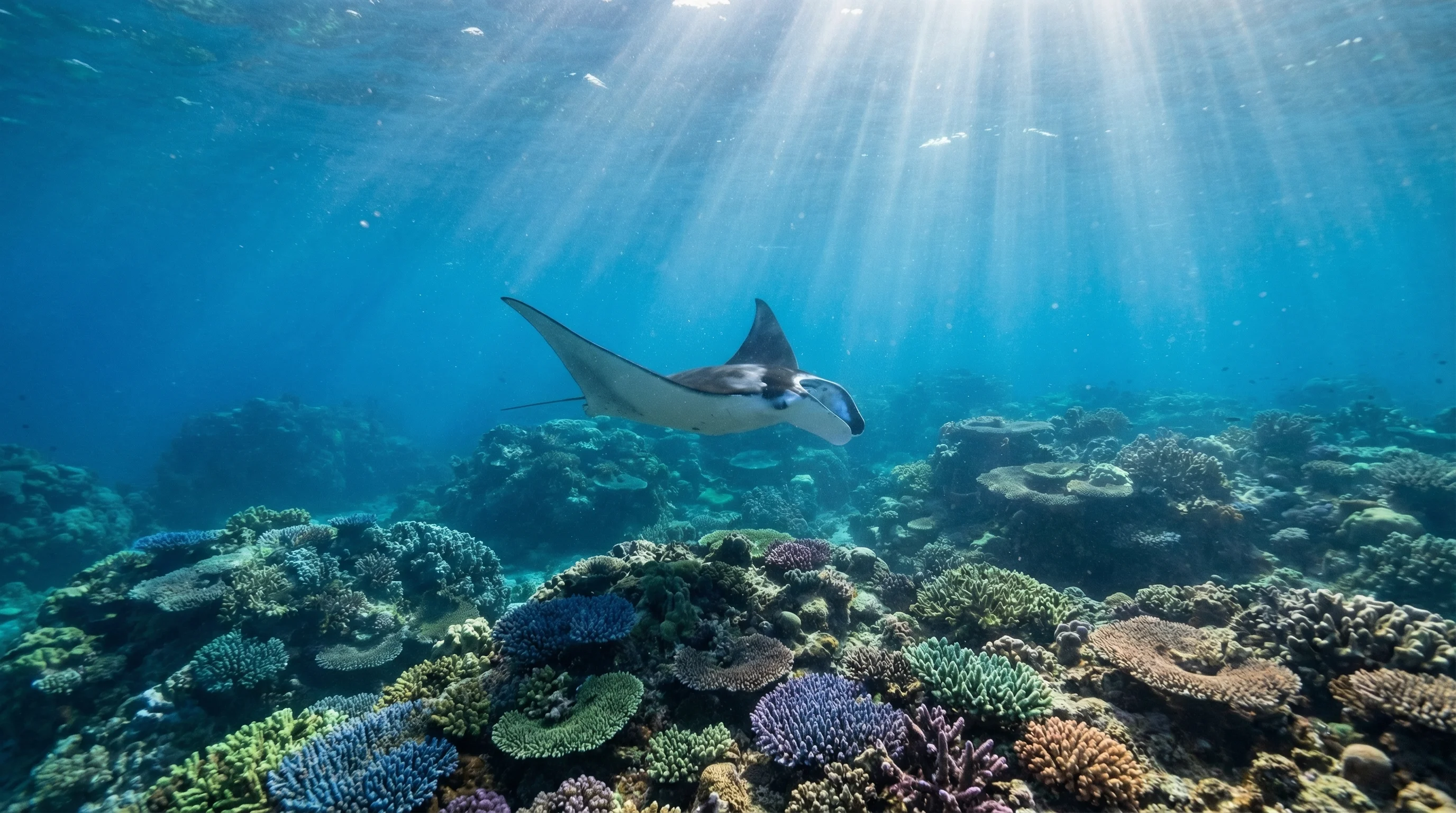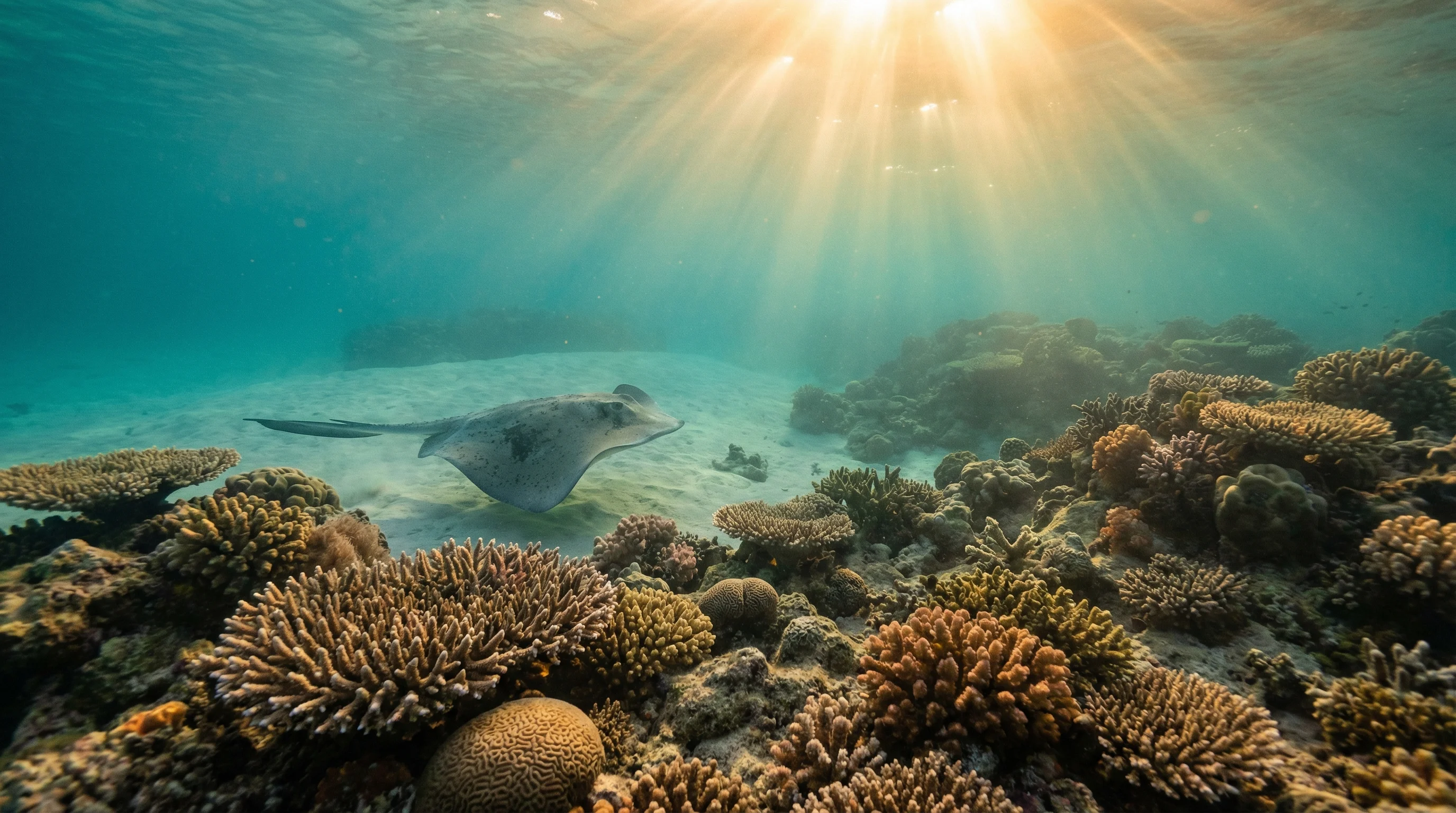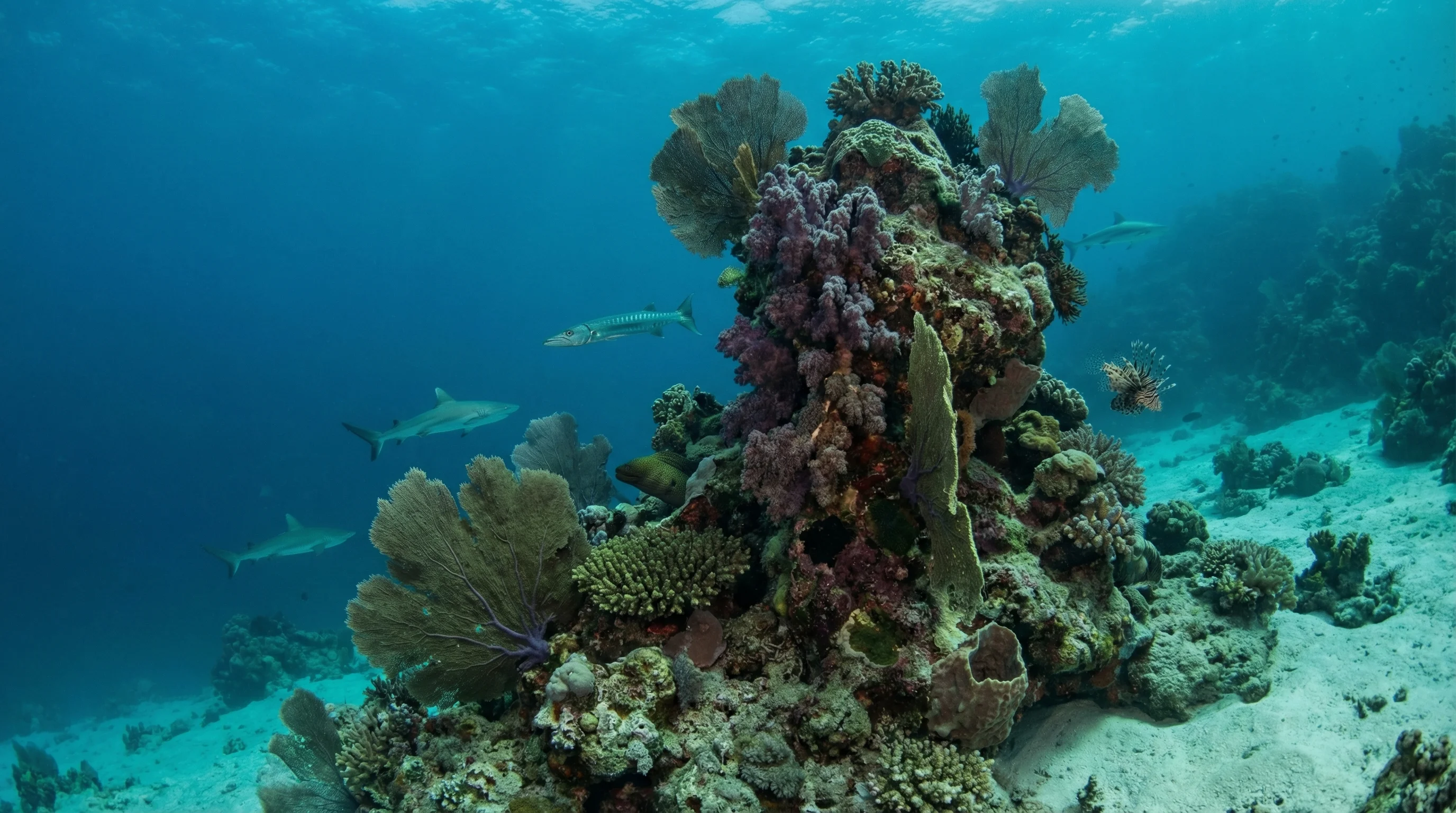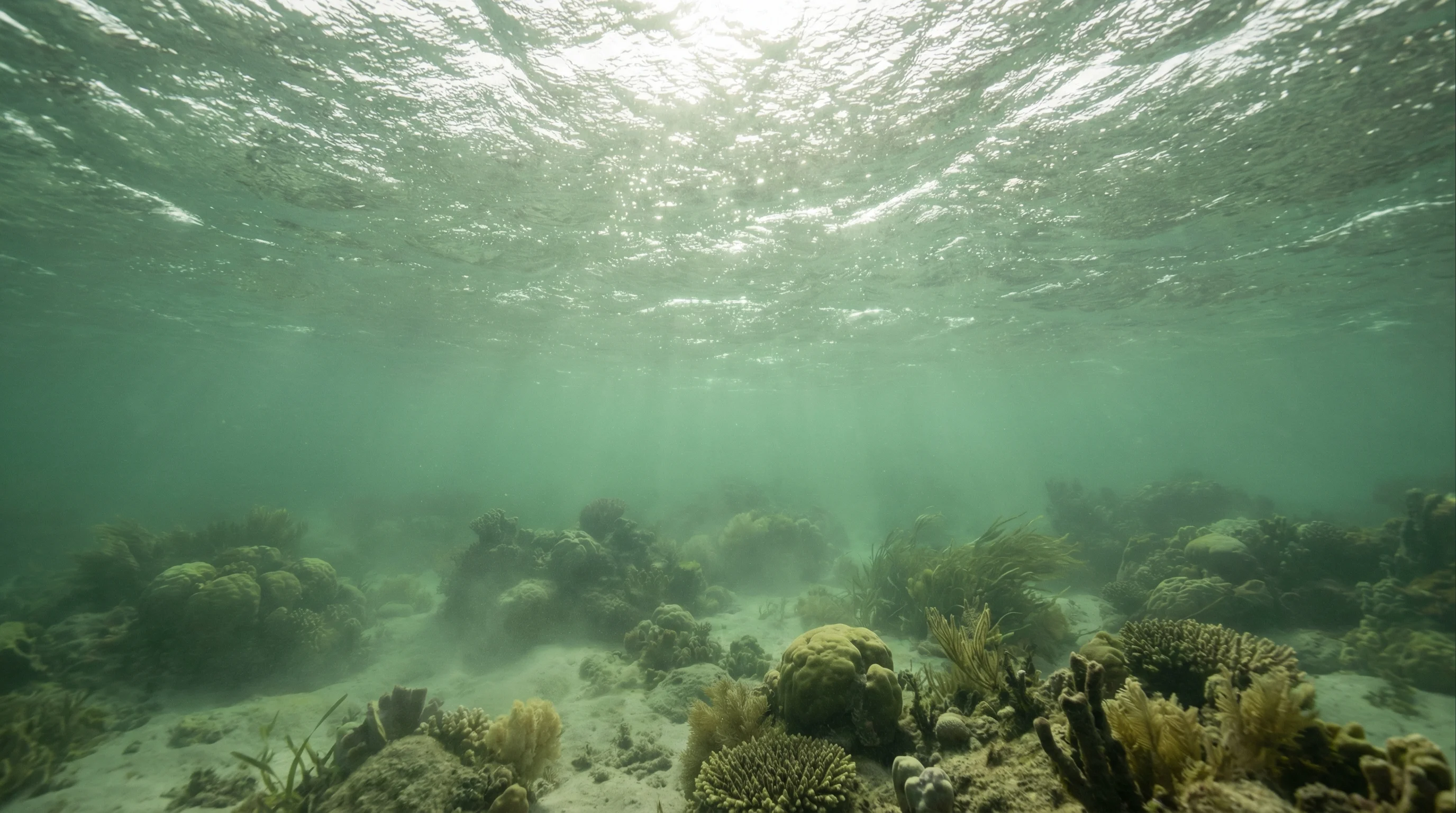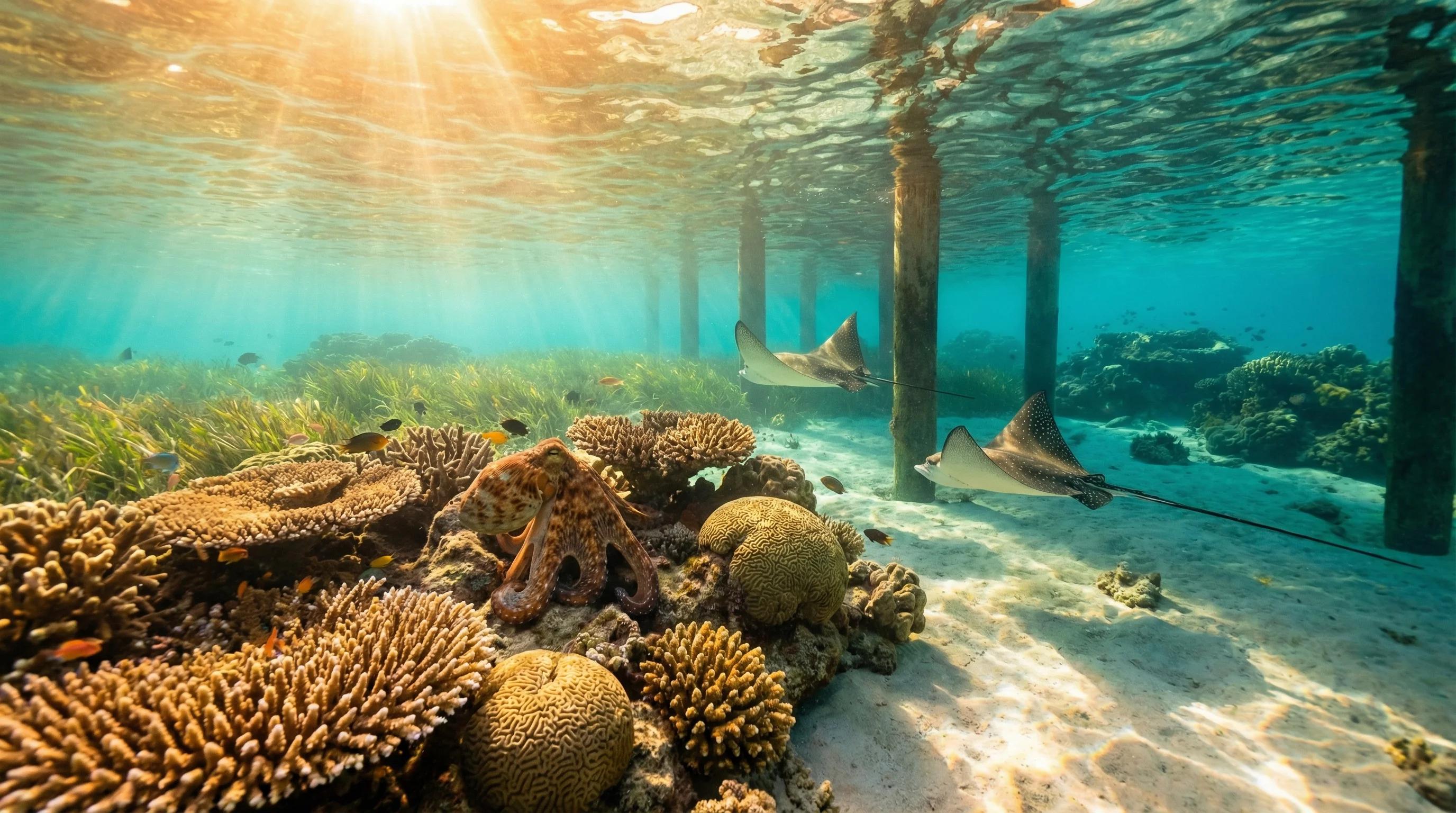
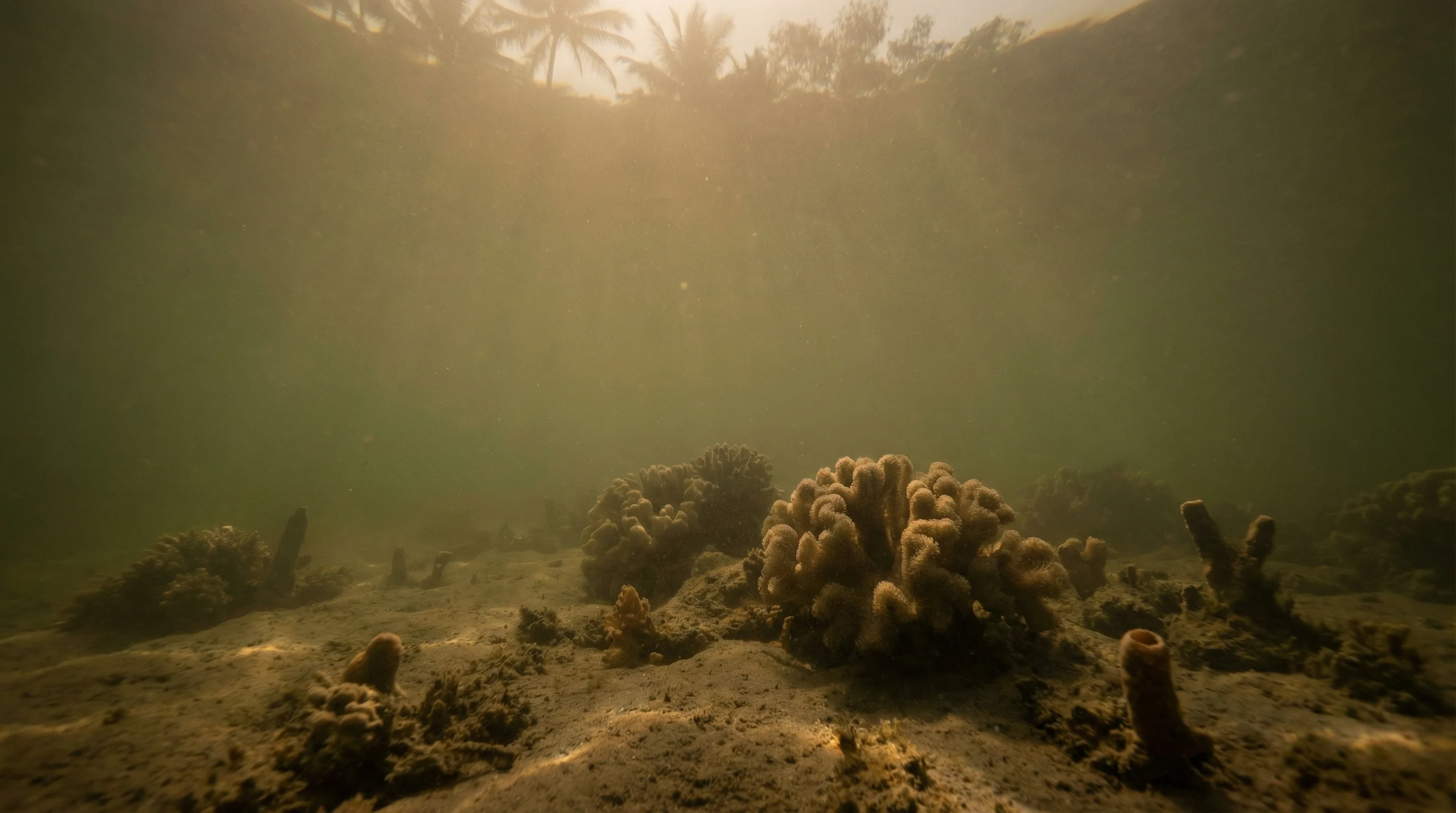
Palm Cove Beach is a gentle shore entry suitable for those new to snorkelling or diving. The seagrass beds sit in just 1 to 3 metres of water, making it easy to surface at any time and get your bearings. Visibility is variable and can be quite limited, so don't expect crystal-clear water, but the shallow depth means you're always close to what you're looking at. Various reef species move through the seagrass, so take your time and look carefully. The current is mild, which helps you focus on technique rather than fighting the water. Check conditions before entering, as jellyfish can be present.
-16.74627, 145.67131
May through October tends to bring calmer, clearer conditions and reduced jellyfish activity, making it the more comfortable window for a visit. Wearing a full stinger suit is worth considering whenever you're in the water here.
Access is directly from the public beach along Williams Esplanade. Stinger nets are in place during the hazardous jellyfish season.
Stinger (jellyfish) season is a significant hazard from November to May. Both Box Jellyfish and Irukandji are present. Swimming inside the deployed stinger nets is strongly advised during this period. Estuarine crocodiles have also been cited as a potential risk in the area.
Depth
1-3m
Visibility
1m
Skill Level
Beginner
Entry
Shore
Water Temp
22-31°C
Current
Mild
Typical Dive
45 min
Best Time
May, Jun, Jul, Aug, Sep, Oct
Palm Cove Beach in Far North Queensland has a snorkel rating of 1 out of 5, making it a poor choice for snorkelling. The visibility is extremely limited at just 1 metre, and the shallow depths of 1 to 3 metres combined with minimal marine life offer little underwater interest. Better snorkelling sites exist elsewhere along the Queensland coast.
Palm Cove Beach offers straightforward shore entry directly from the sand, with no boat required. The site features convenient facilities including parking, toilets, and a cafe near the beach access point. Water depths remain shallow at 1 to 3 metres close to shore, making entry easy for beginners.
Water temperatures at Palm Cove Beach in Queensland range from 22°C in winter months to 31°C during summer. The warmest conditions occur between November and April, whilst the cooler 22°C temperatures are typical from June to August. Even at the coolest, the water remains comfortable for snorkelling in a shorty wetsuit.
The best months for snorkelling at Palm Cove Beach are May through October, coinciding with the dry season in Far North Queensland. These winter and spring months offer the most favourable conditions and avoid the summer stinger season. Water temperatures during this period range from 22°C to 26°C.
Jellyfish are the primary hazard at Palm Cove Beach, particularly dangerous box jellyfish and irukandji during the wet season from November to May. A stinger enclosure operates during peak season, and wearing a full-body stinger suit is essential if entering the water outside the winter months. The recommended snorkelling months of May to October largely avoid peak stinger season.
Palm Cove Beach is suitable for beginner snorkellers with no prior experience required. The shallow depths of 1 to 3 metres, shore entry, and mild currents create safe conditions for first-time snorkellers. However, awareness of jellyfish hazards and appropriate protective gear remain essential regardless of skill level.
Palm Cove Beach has no entry fee, offering free public access to the snorkelling area. The site provides complimentary facilities including parking, toilets, and nearby cafe options. This makes it an accessible option for budget-conscious visitors to Far North Queensland, despite its limited snorkelling conditions.
Diving at Palm Cove Beach in Far North Queensland requires the following certifications: Open Water. Always dive within your training limits.
A 3mm wetsuit is recommended for diving at Palm Cove Beach in Far North Queensland. Water temperatures range from 22°C to 31°C.