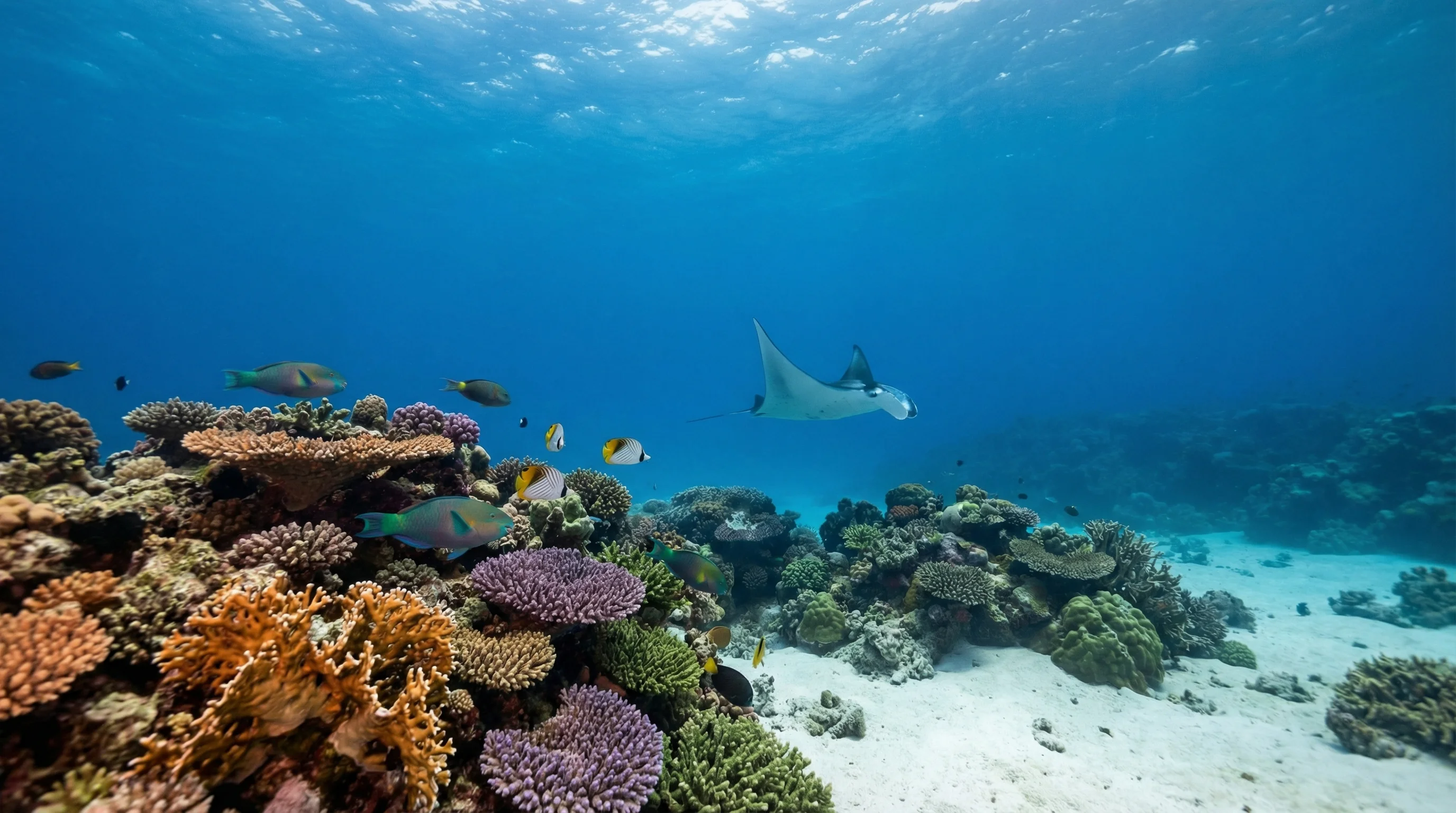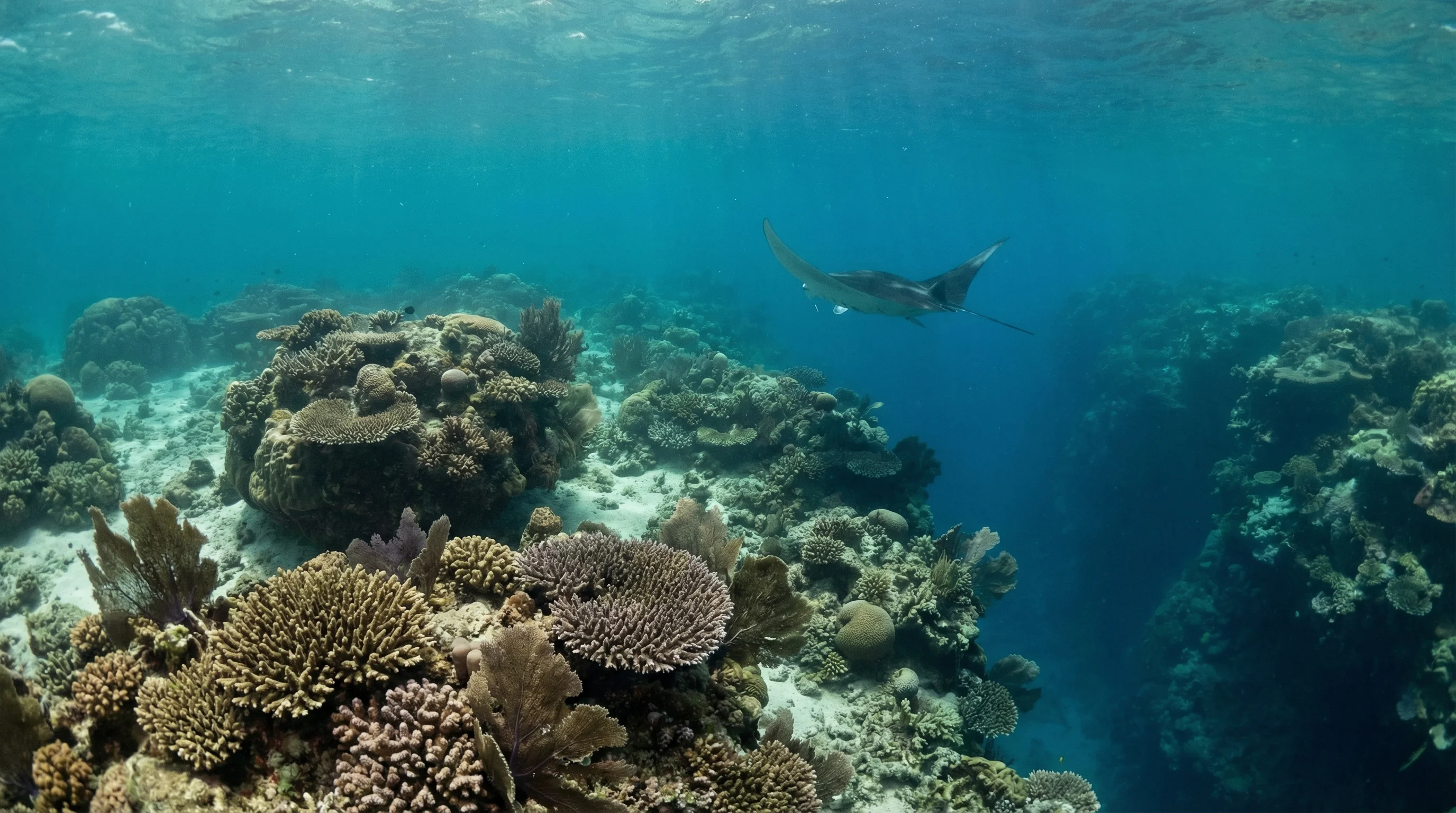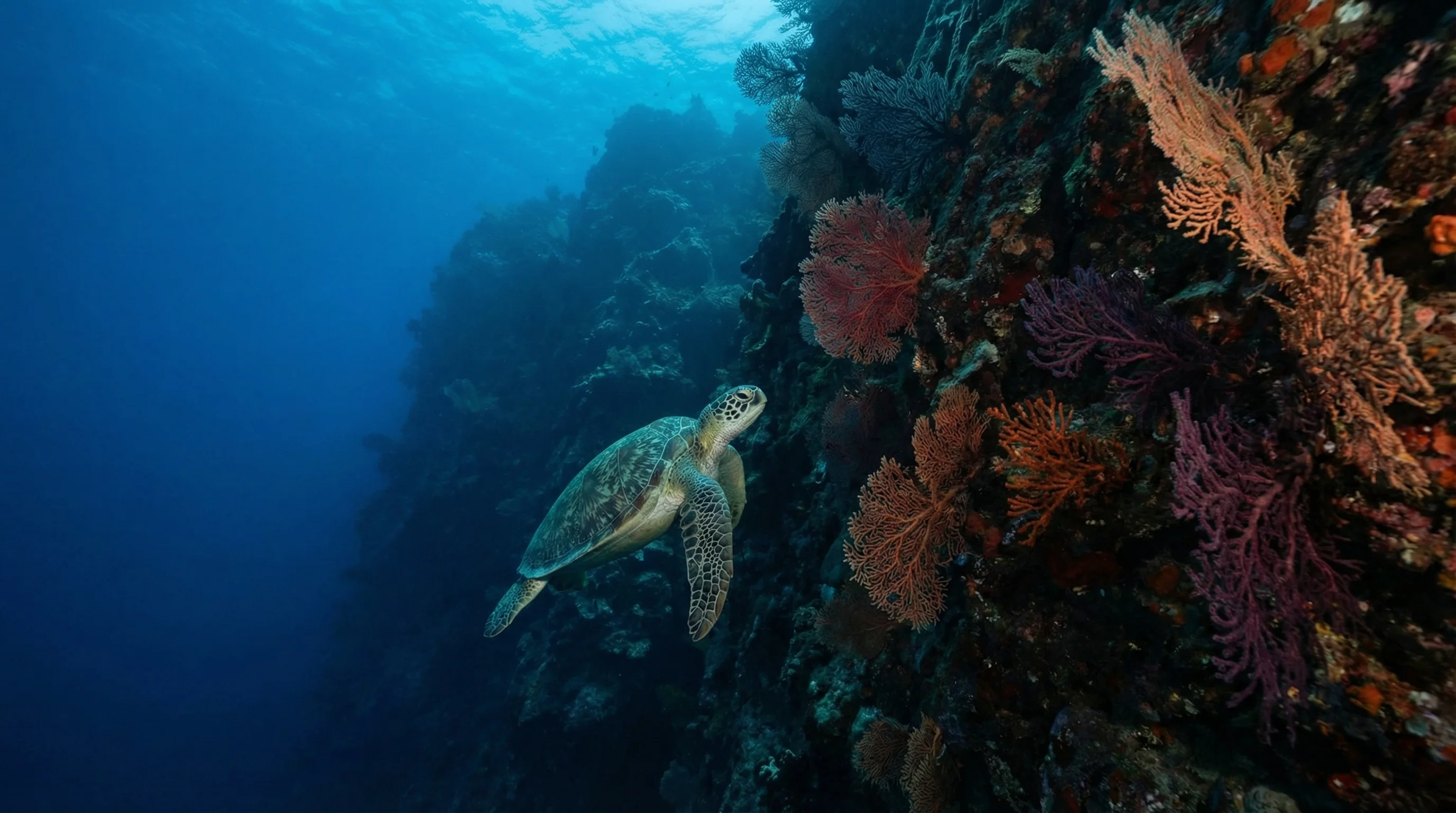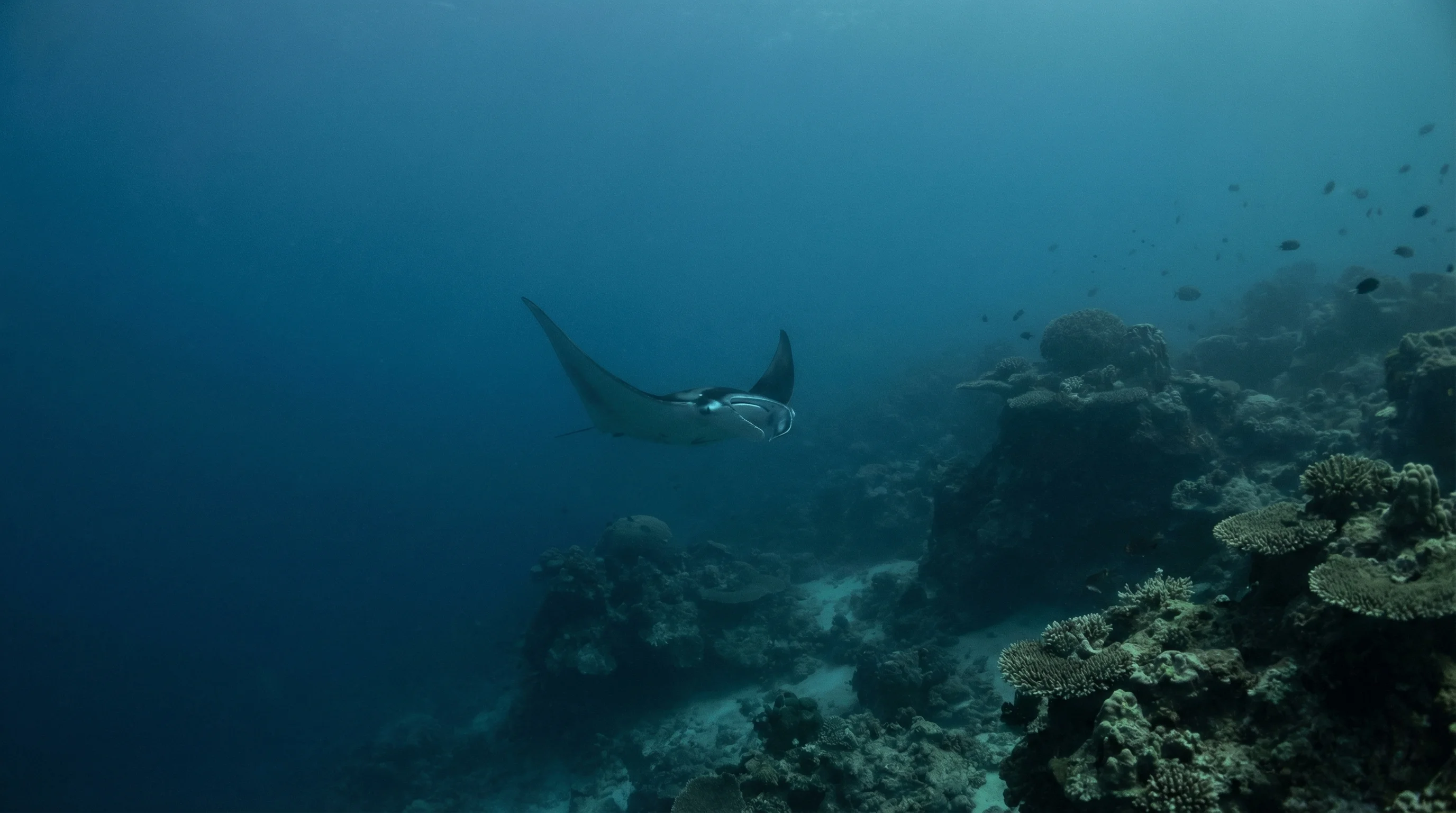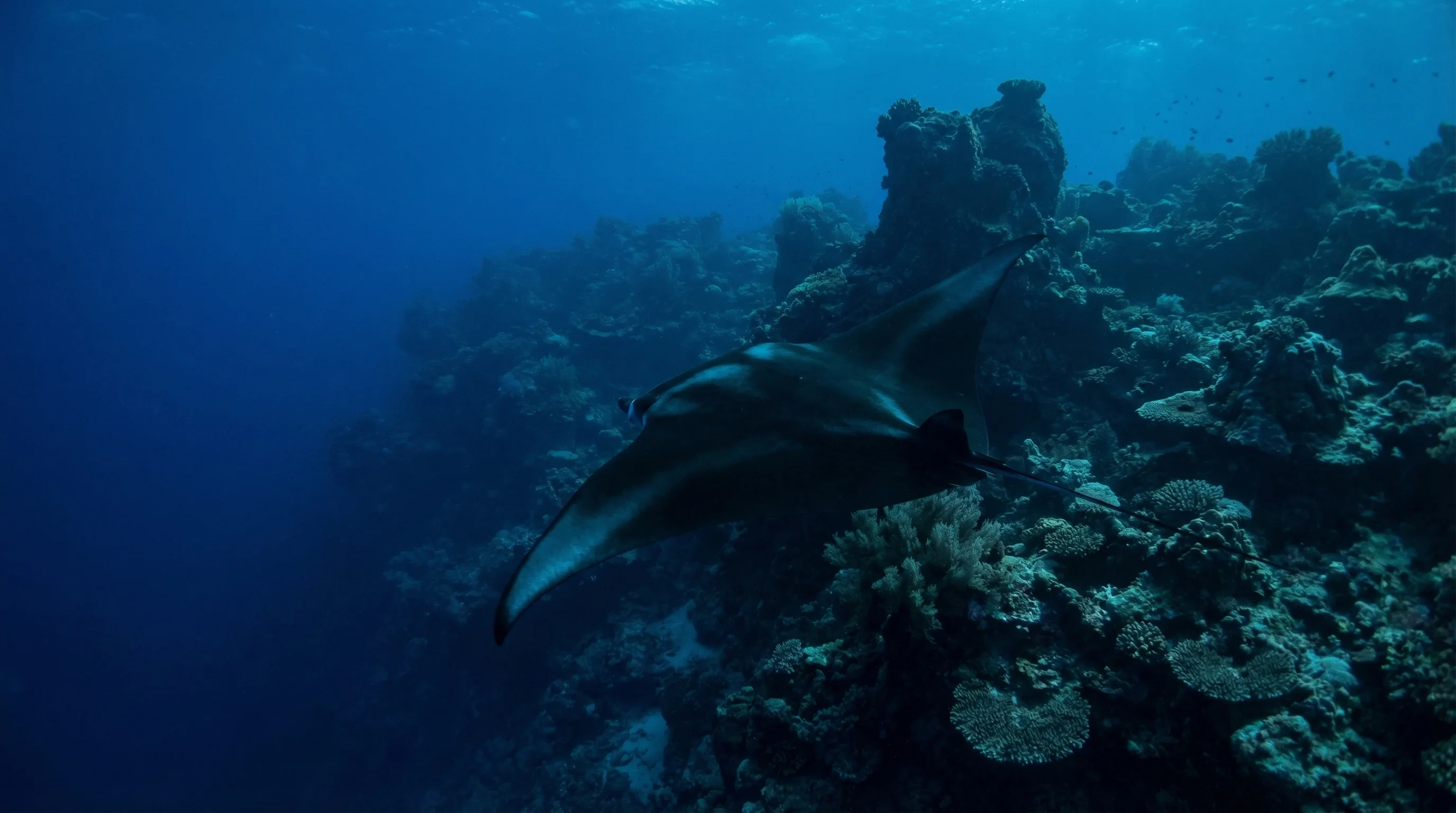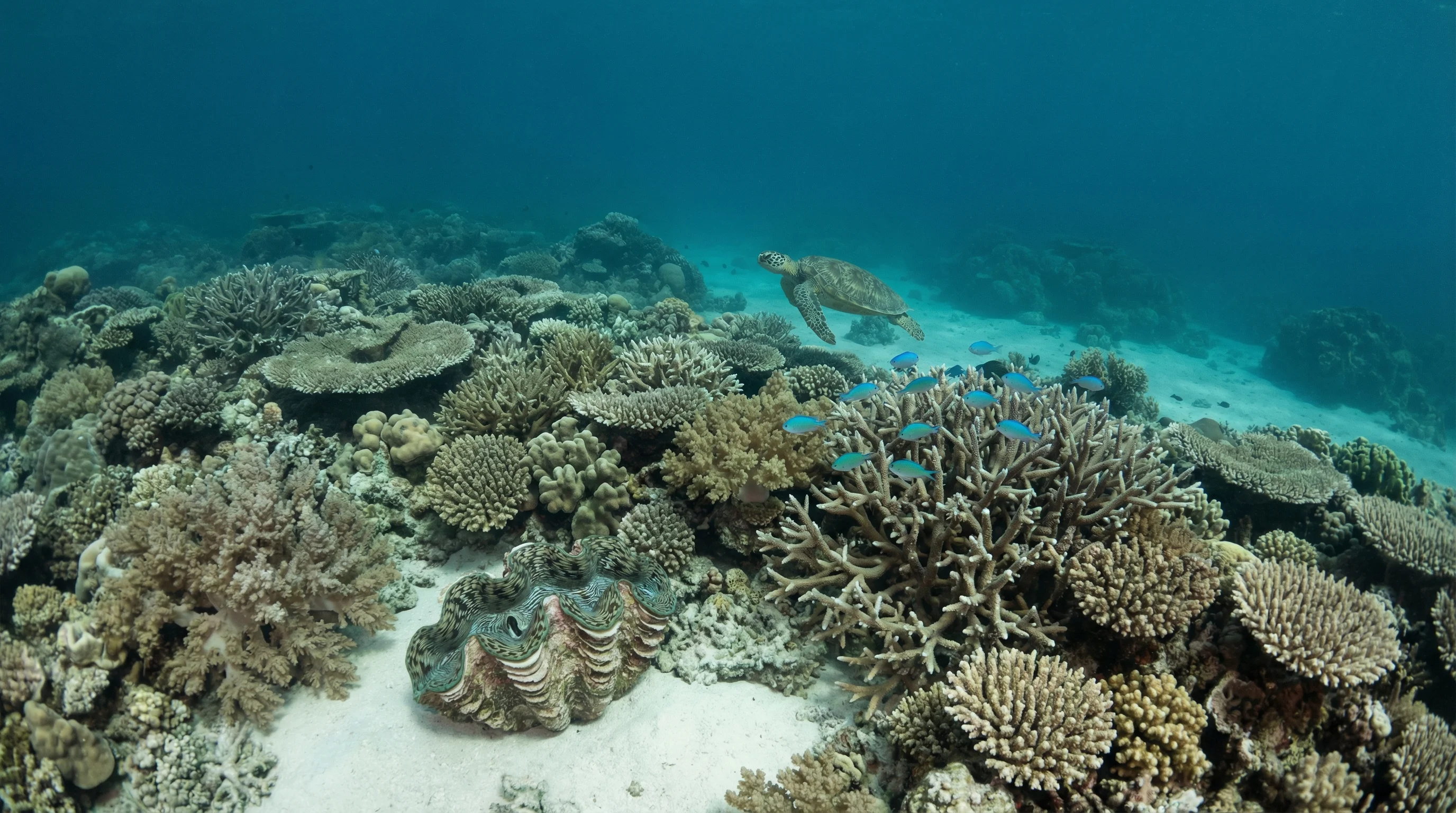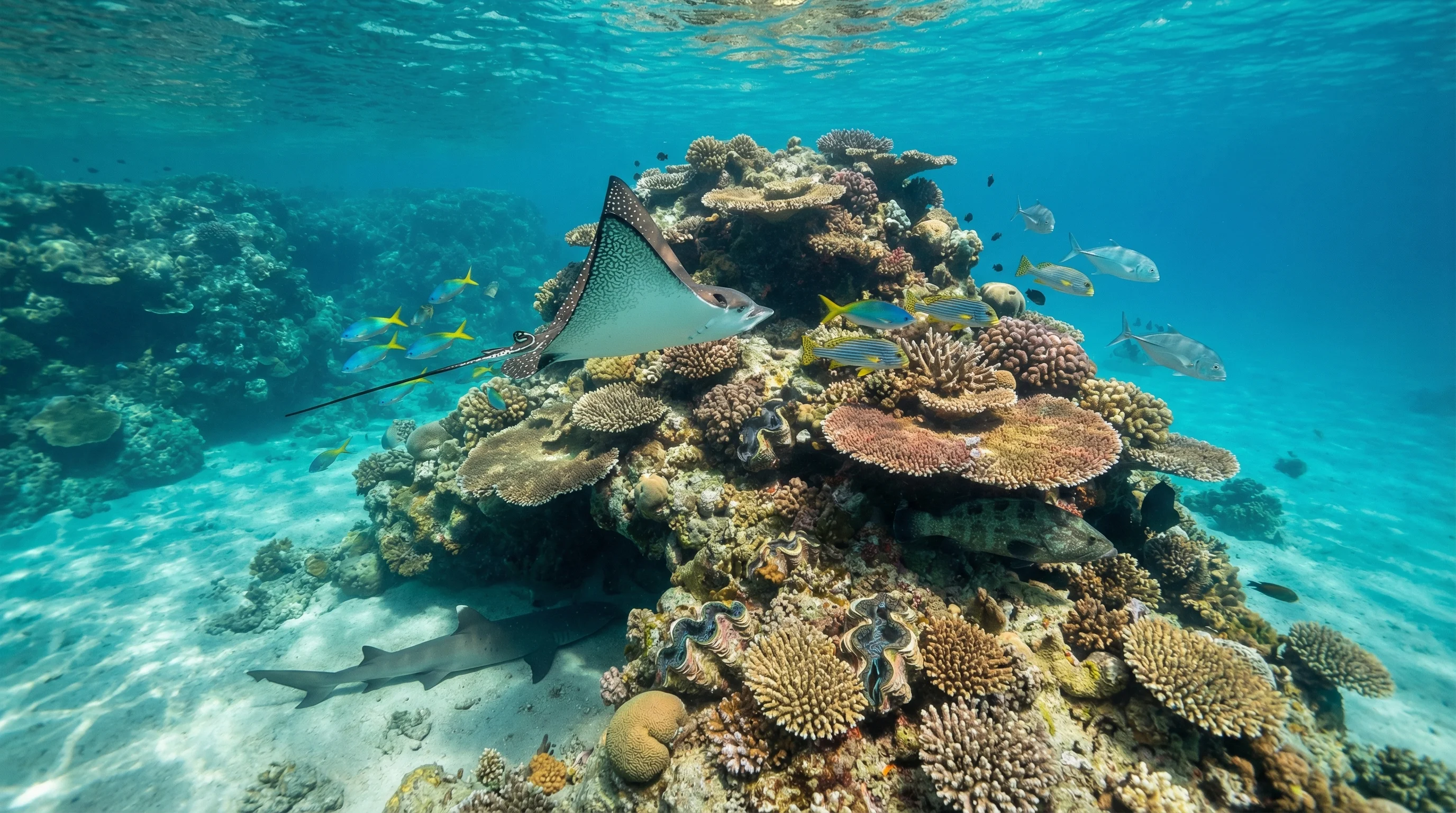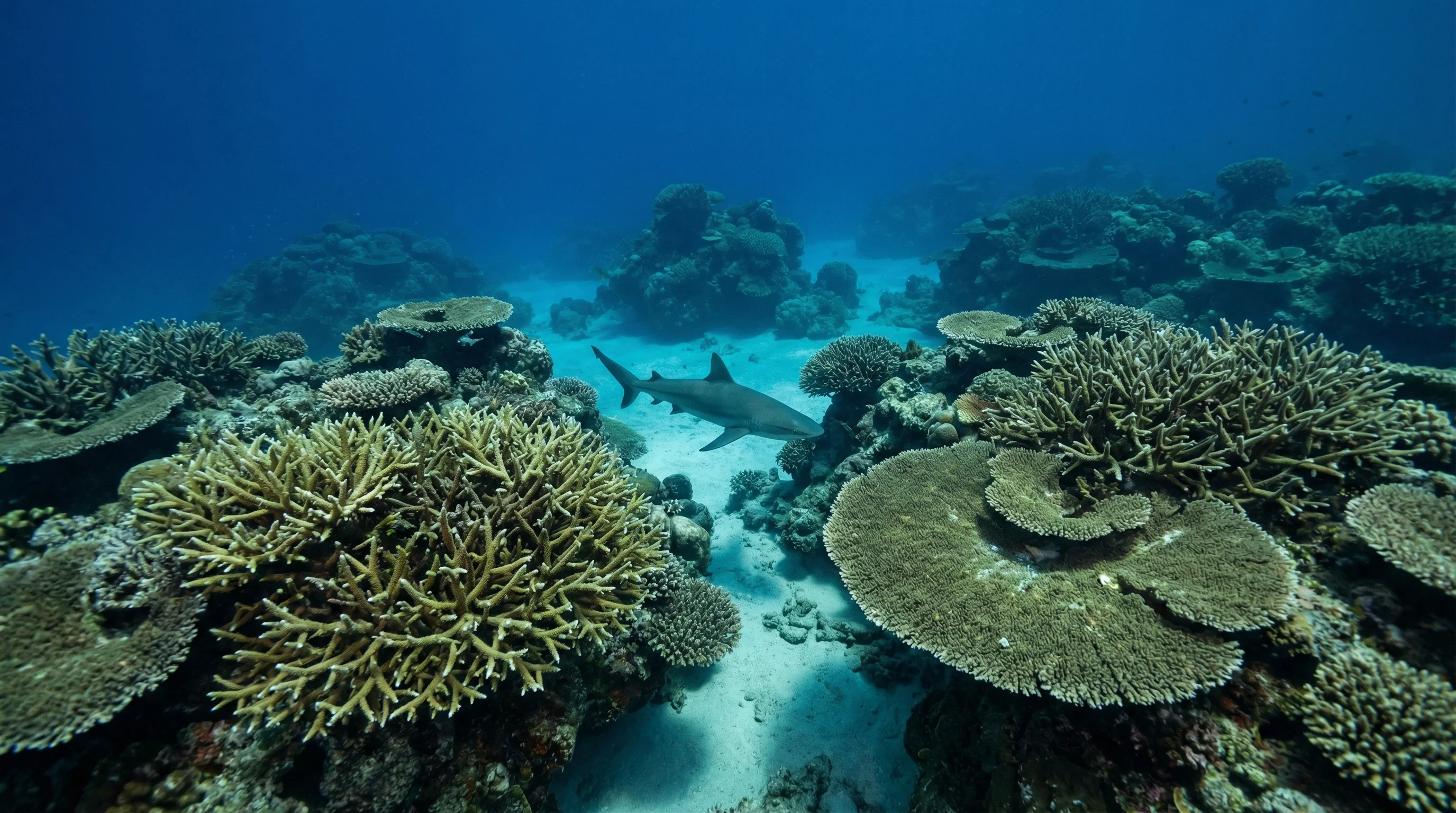
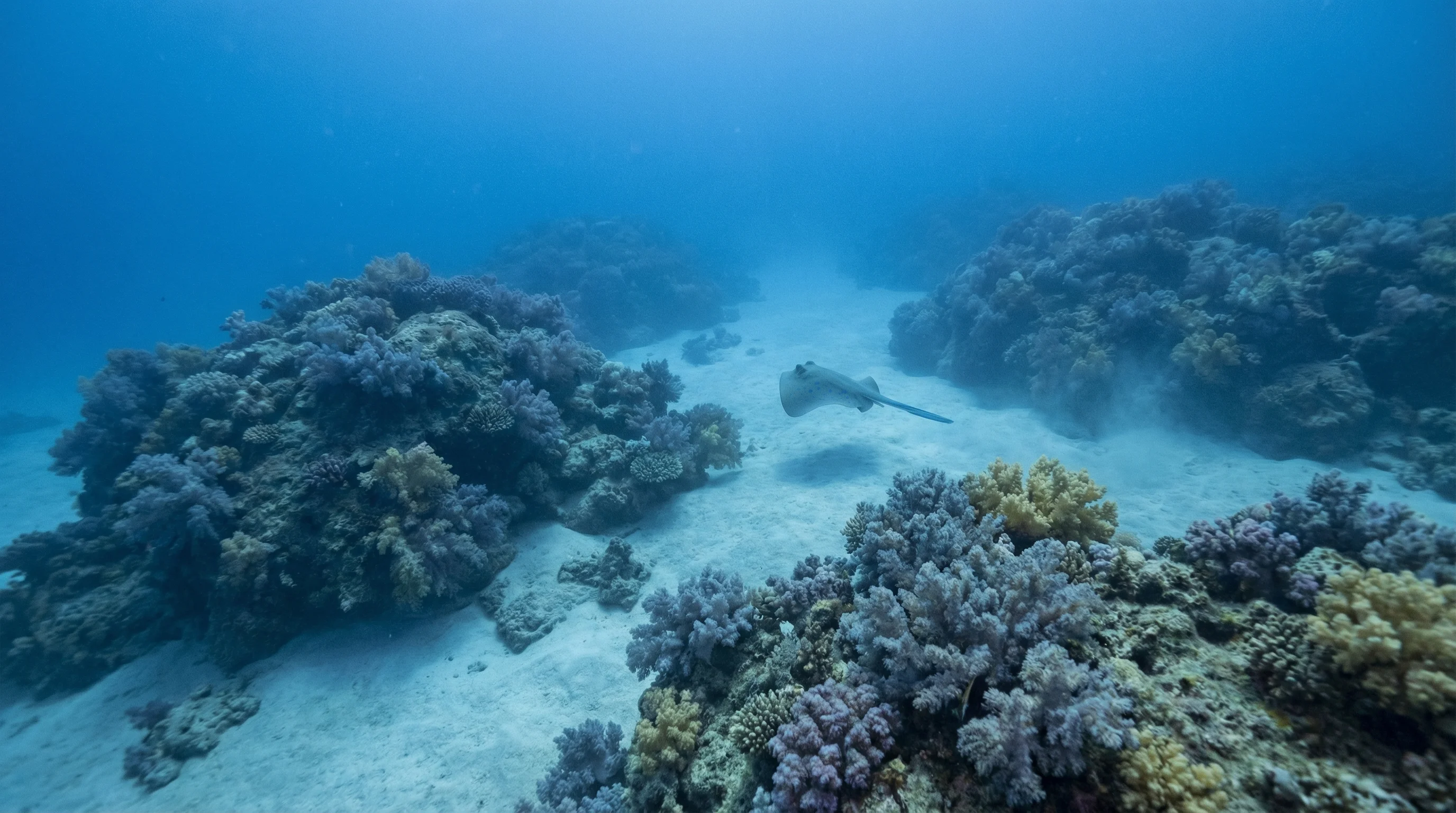
St. Crispin Reef sits off Queensland's coast and offers a wide depth range, from shallow areas around 6 metres down to 30 metres in the deeper sections. Visibility can reach an impressive 40 metres in good conditions, though 8 metres is possible when conditions are less favourable. Currents vary, so check conditions before you go. The reef attracts reef sharks, bumphead parrotfish, and sweetlips alongside more approachable species like butterflyfish, wrasse, and sergeant majors. Slow down and look closer to find nudibranchs, feather stars, sea cucumbers, and giant clams. Access is by boat, with guided tours available to help beginners feel confident.
-16.13170, 145.80620
Watch where you put your hands and feet around the reef, as sea urchins are present and some marine life may react if approached too closely. May through November generally brings the most settled conditions and the clearest water.
The reef is accessible via full-day boat charters from Port Douglas or Cairns. The journey takes approximately 90 minutes. Several tour operators visit the site.
While reef sharks are present, they are described as shy. Moray eels may be encountered in crevices.
Depth
6-30m
Visibility
8-40m
Skill Level
Beginner
Entry
Boat
Boat required
Current
Moderate
Typical Dive
45 min
Best Time
May, Jun, Jul, Aug, Sep, Oct, Nov
St. Crispin Reef in Queensland, Australia offers dive depths from 6 metres to 30 metres. The shallow sections at 6 metres are ideal for newer divers and training, whilst the deeper areas extend to 30 metres for more experienced exploration. This depth range makes the reef accessible for various certification levels.
St. Crispin Reef is accessed exclusively by boat from Port Douglas, with charter operators providing guided tours to the site. The reef lies offshore in the Great Barrier Reef Marine Park and cannot be reached from shore. Boat charters handle all navigation and mooring arrangements for visiting divers.
St. Crispin Reef hosts reef sharks, bumphead parrotfish, sweetlips, and sergeant majors as key species. Divers also encounter colourful wrasse, butterflyfish, feather stars, and nudibranchs throughout the reef system. The diverse marine life makes this Queensland site popular for underwater photography and wildlife observation.
An Open Water certification is required to dive St. Crispin Reef near Port Douglas. The site's depth range of 6 to 30 metres suits the training limits of Open Water divers, though depths beyond 18 metres require Advanced certification. Guided tours with charter operators accommodate divers at the beginner skill level.
The best months to dive St. Crispin Reef are May through November, covering the Australian dry season. During these months, conditions typically offer calmer seas and better visibility ranging from 8 to 40 metres. The cooler, drier weather from May to November provides the most reliable diving conditions on this Great Barrier Reef site.
St. Crispin Reef is suitable for beginner divers with Open Water certification. The shallow sections starting at 6 metres provide gentle conditions for newer divers, whilst boat charters offer guided tours for added supervision. The site's beginner-friendly classification and accessible depth range make it an ideal Queensland destination for those building experience.
The primary hazards at St. Crispin Reef include sea urchins on the reef substrate and potential marine life interactions. Divers should maintain proper buoyancy to avoid contact with sea urchins and respect wildlife by observing from appropriate distances. Standard reef diving precautions and awareness of surroundings minimise risks at this Queensland site.
St. Crispin Reef in Port Douglas has depths ranging from 6 metres to 30 metres.
A typical dive at St. Crispin Reef in Port Douglas lasts approximately 45 minutes. Actual dive time depends on depth, air consumption, and conditions.