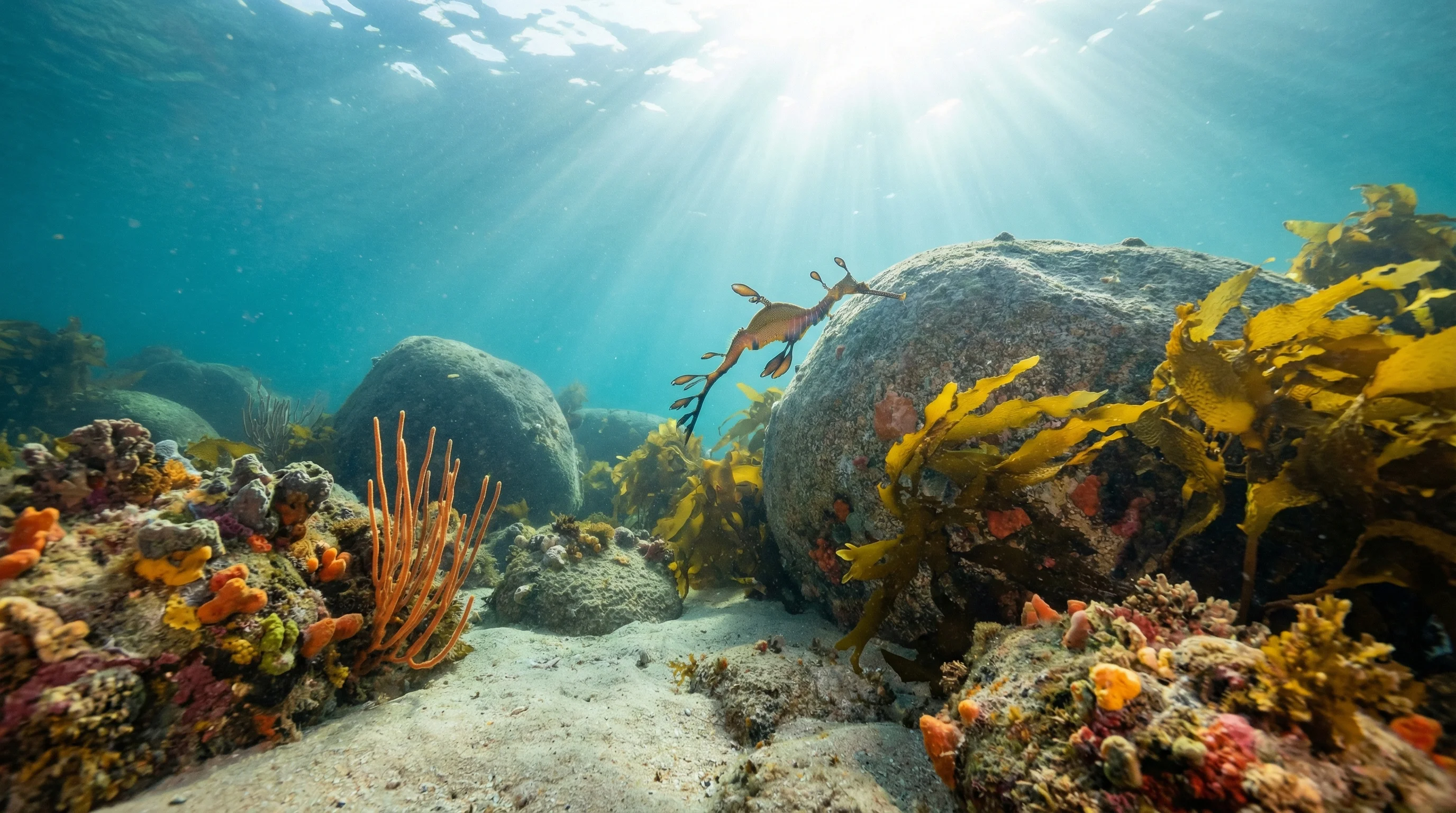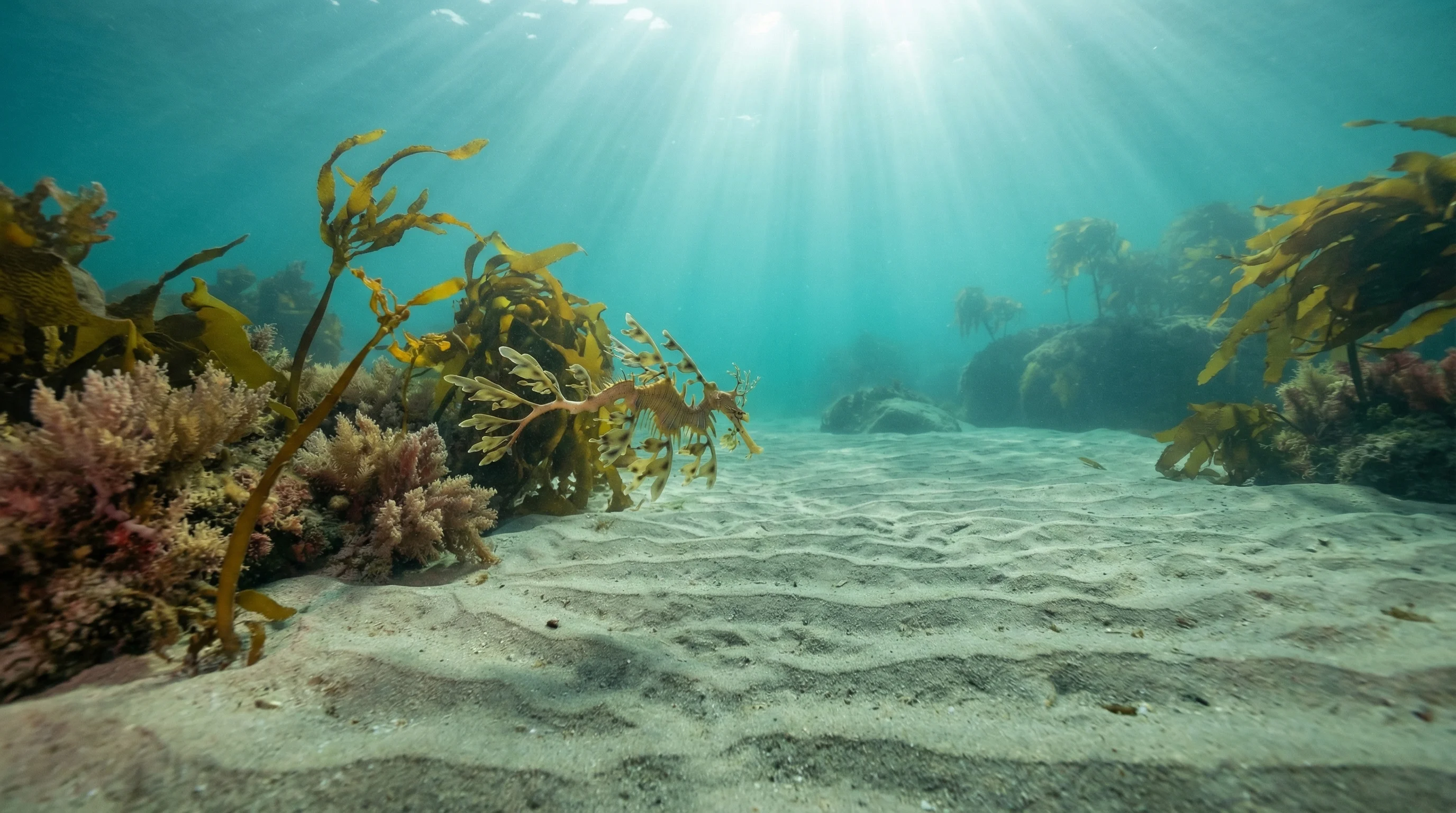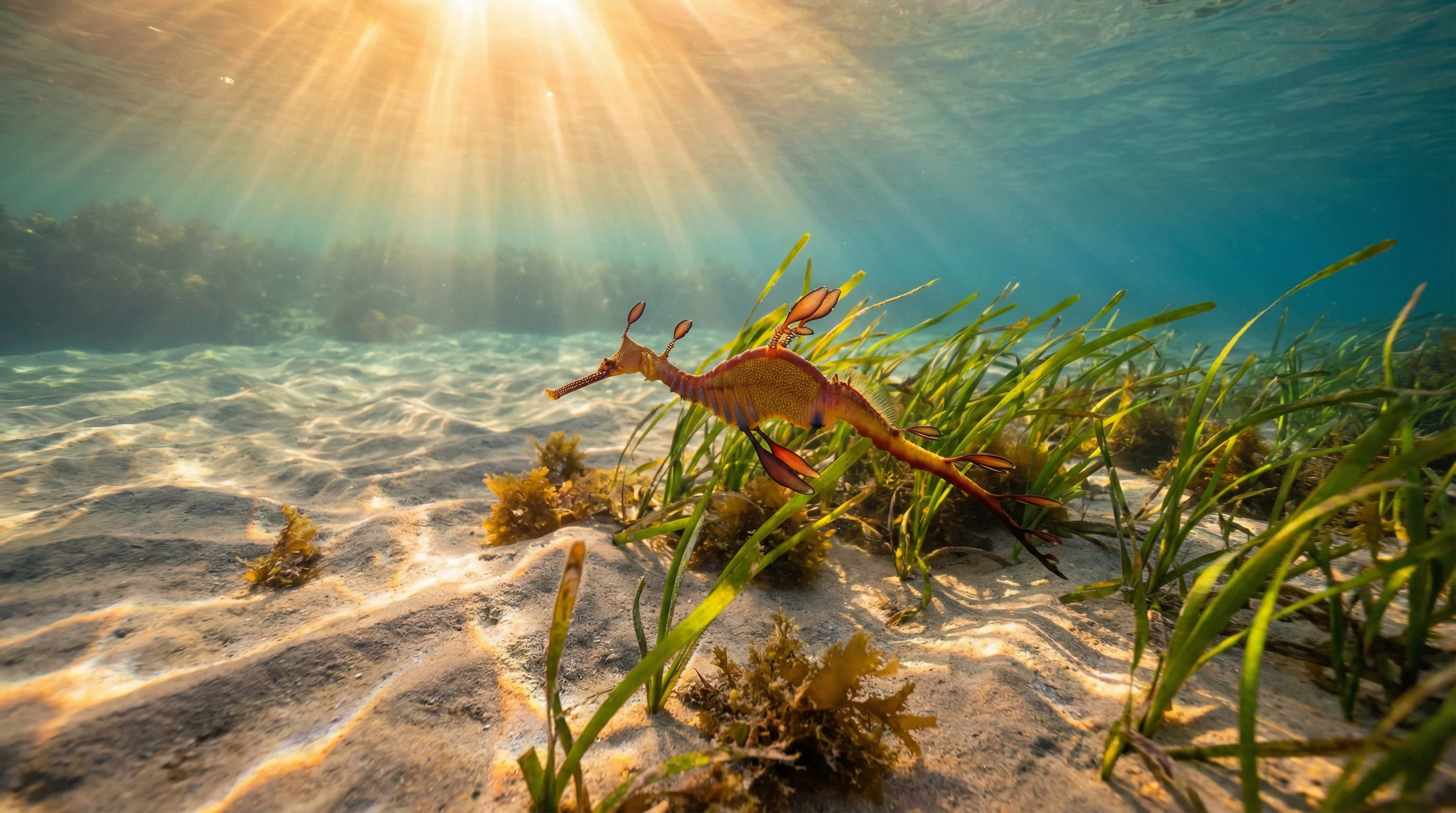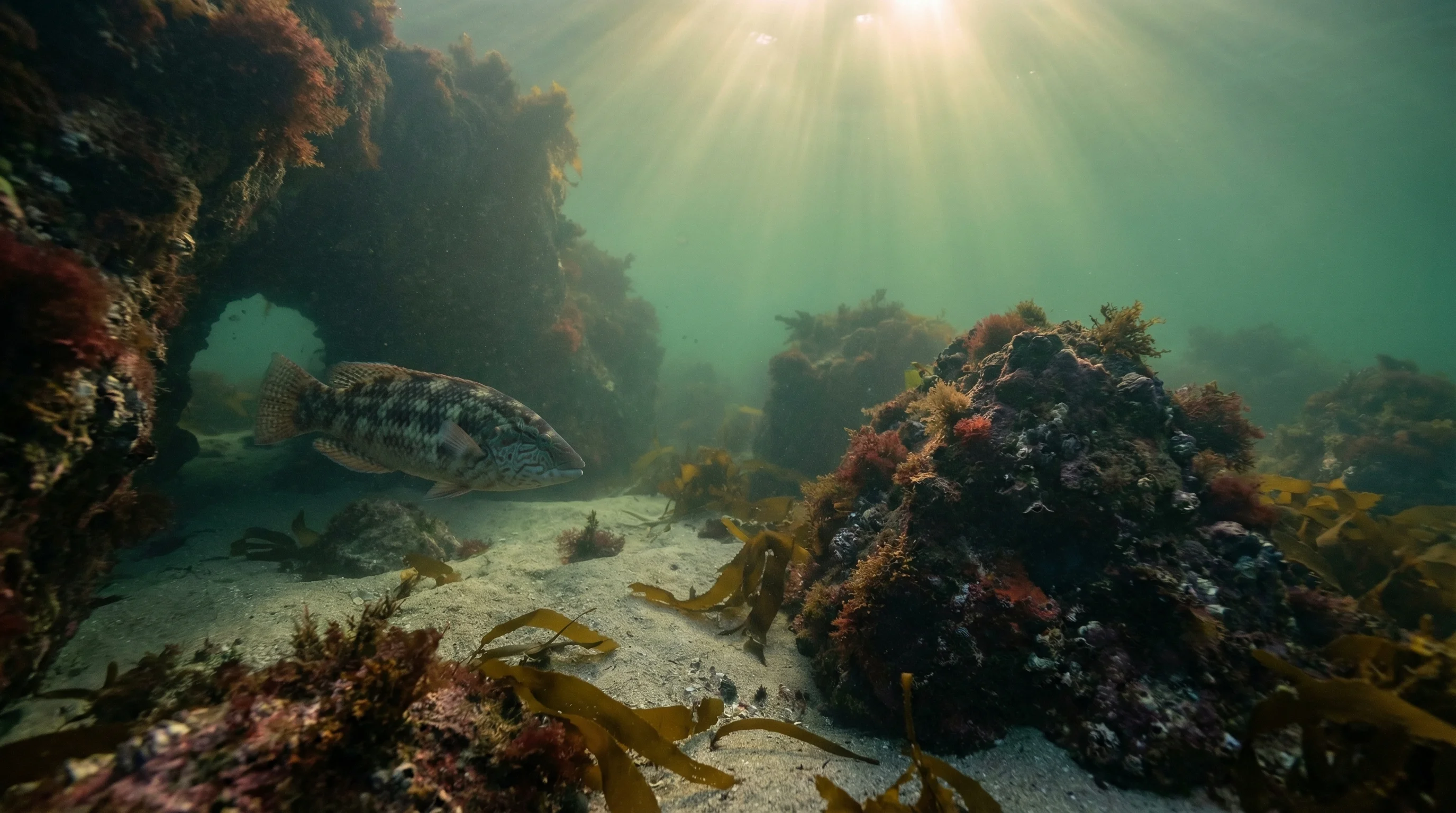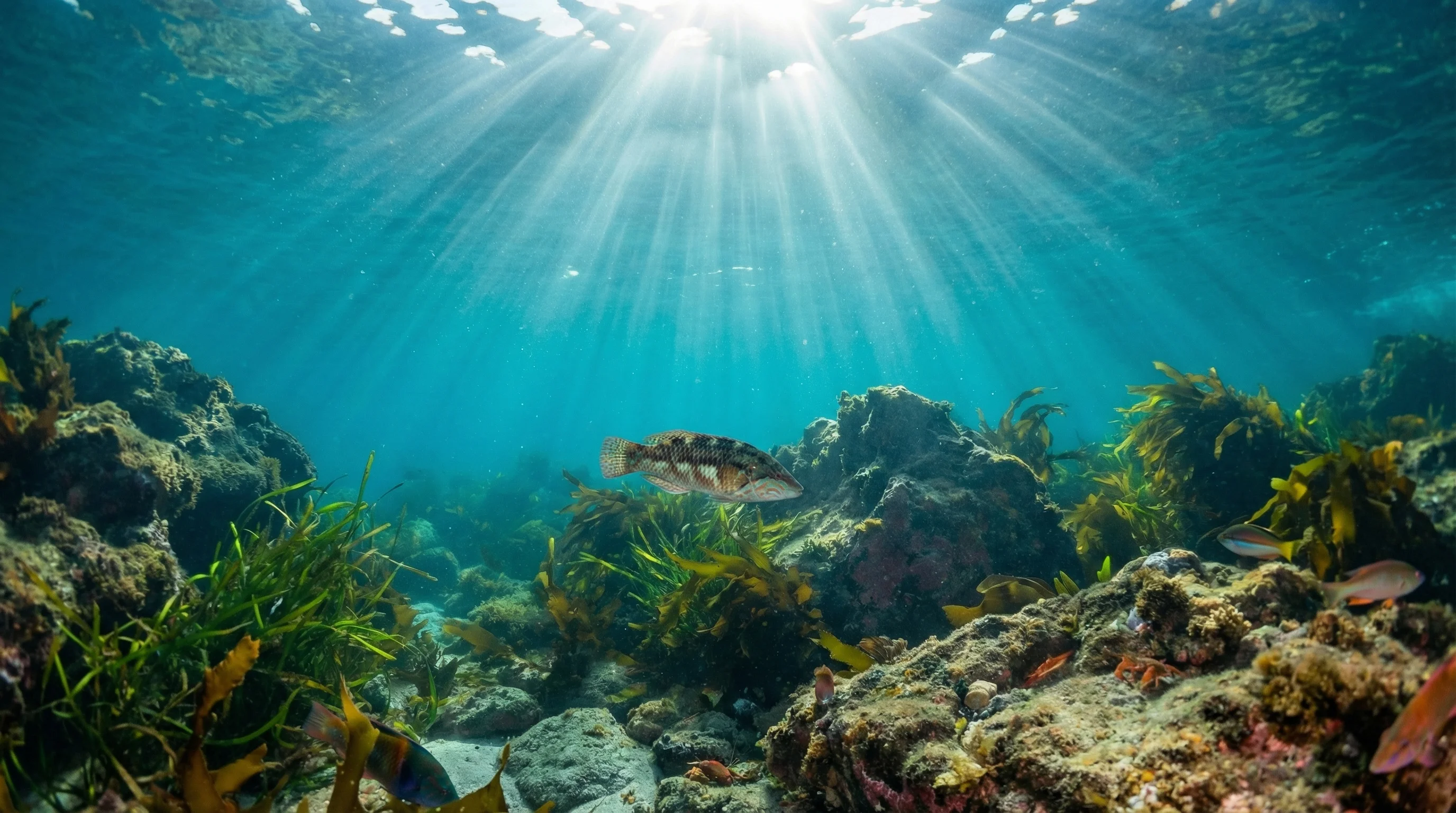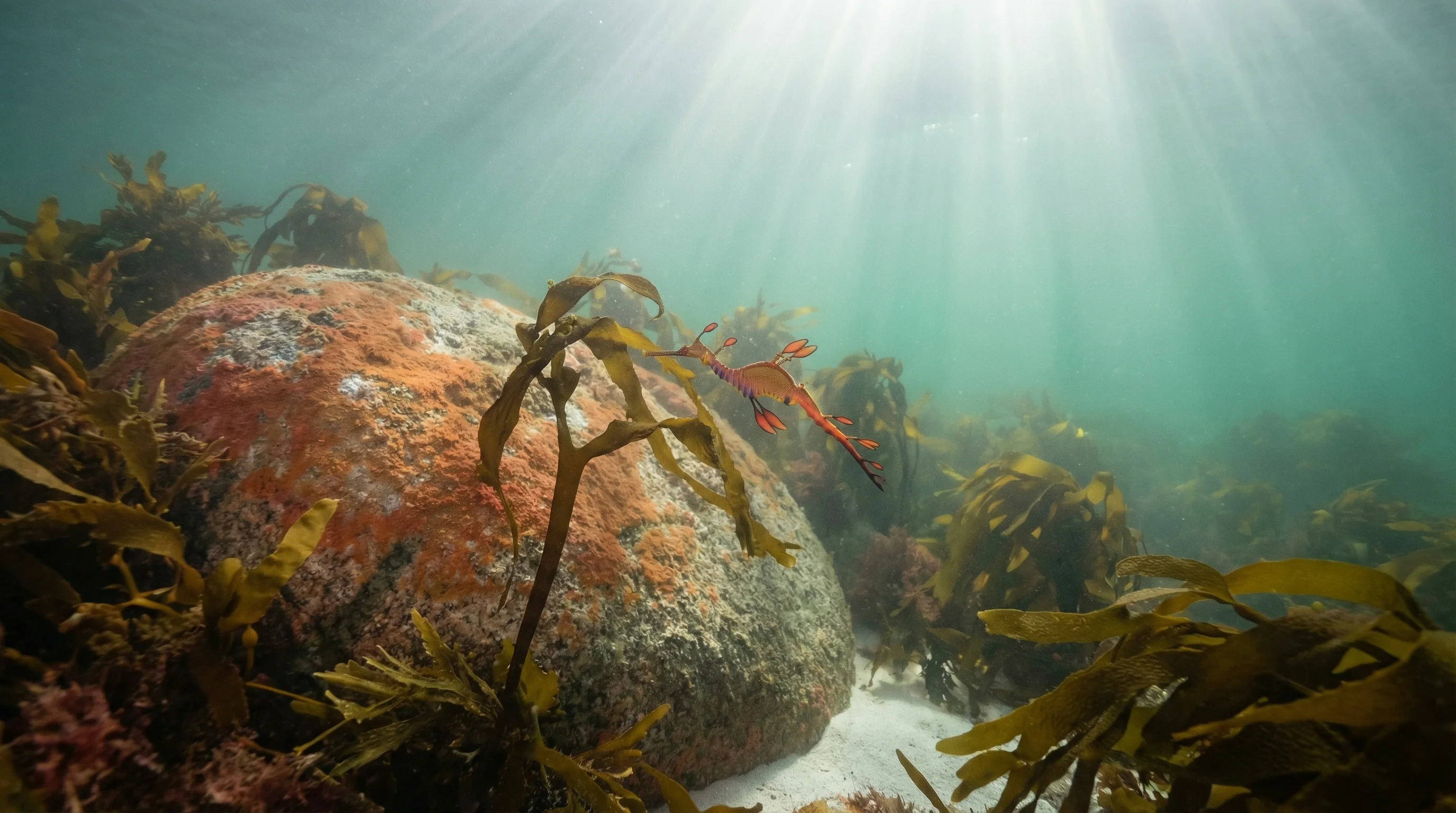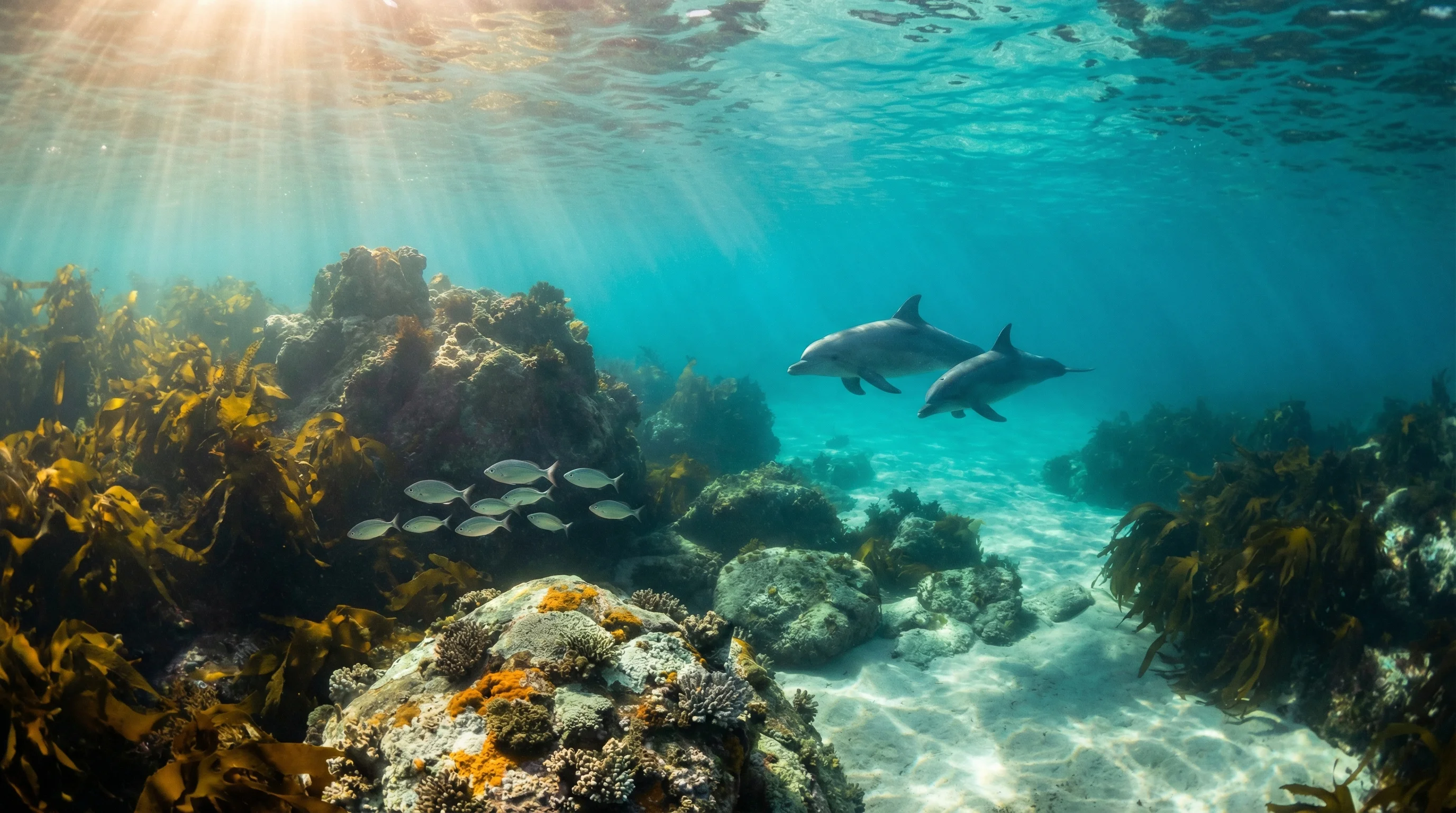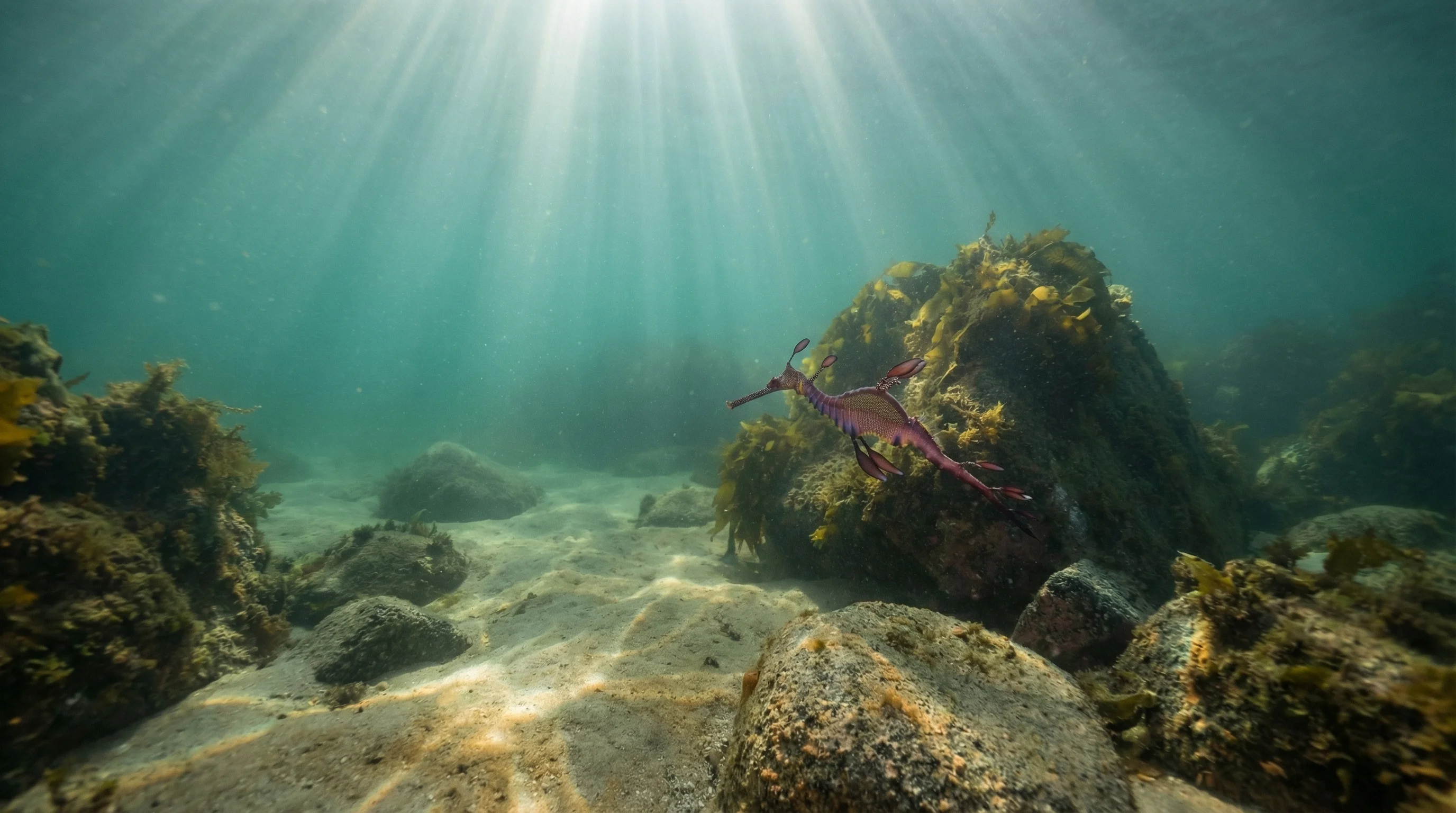
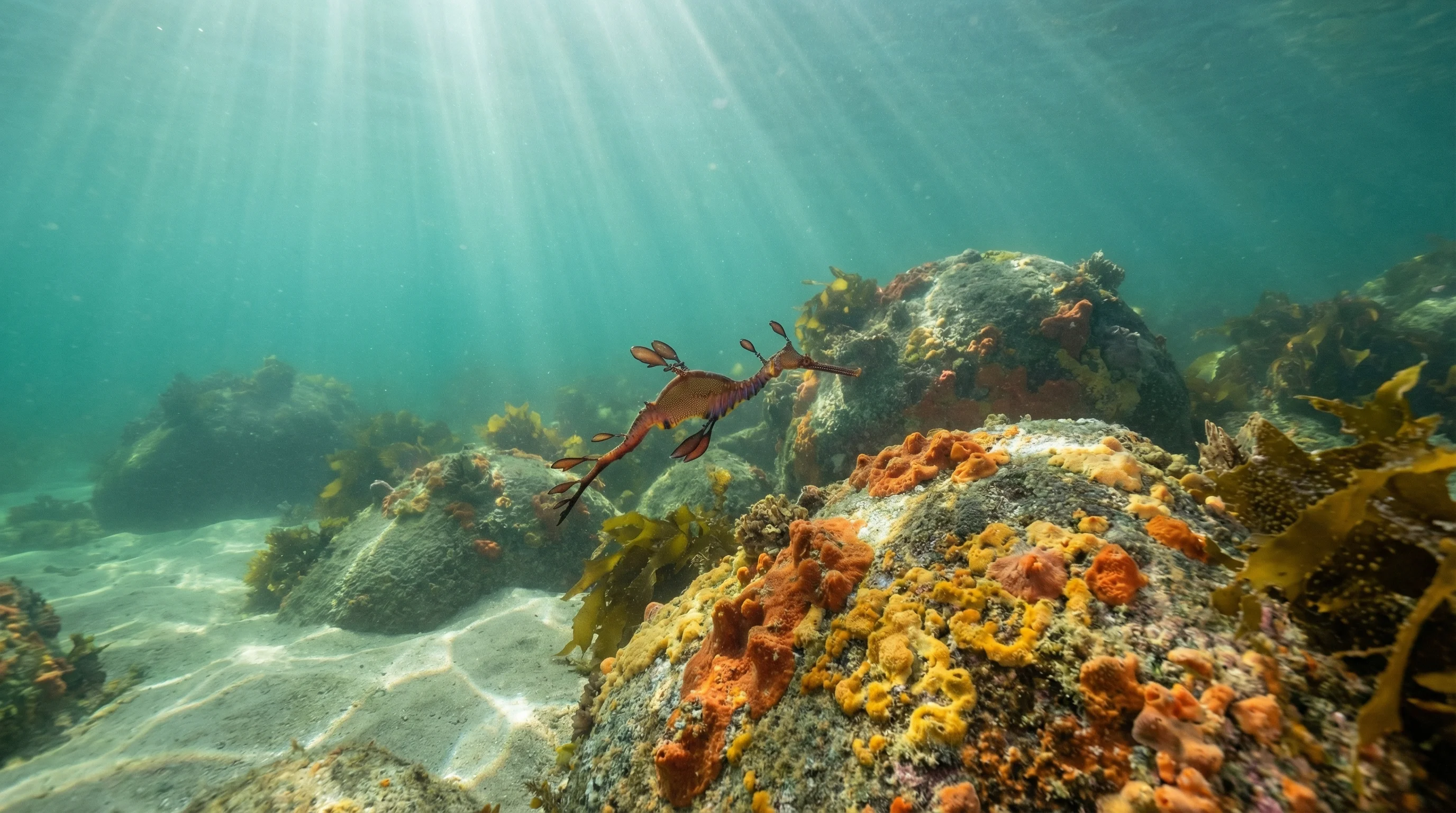
Falmouth Beach and Lagoon offers calm, shallow waters that make it a welcoming entry point for beginner snorkellers and divers in Tasmania. Visibility can reach up to 30 metres on good days, giving you a clear look at the kelp forest and reef below. Keep an eye out for weedy seadragons tucked among the kelp, along with sea stars, anemones, wrasses, leatherjackets, and octopuses on the reef. Seals and dolphins occasionally pass through. Currents are variable, so check conditions before you enter. The water is cold year-round, so a wetsuit is essential regardless of the season.
-41.52456, 148.28077
Wear at least a 5mm wetsuit and consider gloves and a hood, as Tasmanian waters stay cold even in summer. Calm mornings tend to offer the best visibility before any afternoon wind stirs up the surface.
The site is accessible from the shore along Falmouth Beach.
The primary hazard is the cold water, requiring appropriate thermal protection.
Depth
2-12m
Visibility
5-30m
Skill Level
Beginner
Entry
Shore
Water Temp
28-30°C
Current
Mild
Typical Dive
25 min
Best Time
Year-round
Falmouth Beach and Lagoon in Tasmania hosts diverse marine life including weedy seadragons, Australian fur seals, dolphins, leatherjackets, octopuses, wrasses, sea stars and anemones. The sheltered lagoon provides excellent conditions for observing these species in shallow water. Weedy seadragons are a particular highlight for snorkellers exploring the kelp beds and rocky areas.
Falmouth Beach and Lagoon is ideal for beginner snorkellers with its calm sheltered waters and shore entry. The lagoon provides protected conditions away from ocean swells, making it accessible for first-time snorkellers. Basic swimming ability and cold water tolerance are the only requirements, with no certification needed.
Water temperatures at Falmouth Beach and Lagoon range from 12°C in winter to 19°C in summer. A wetsuit of at least 5mm thickness is essential year-round due to the cold Tasmanian waters. Most snorkellers wear 7mm wetsuits or drysuits for extended comfort in these conditions.
The best months for snorkelling at Falmouth Beach and Lagoon are January through August, covering summer through winter. Summer months (January to March) offer the warmest water temperatures around 19°C and longest daylight hours. Visibility is typically best during these calmer months, reaching up to 30 metres on clear days.
Falmouth Beach and Lagoon offers convenient shore entry directly from the beach with parking and toilet facilities available. Snorkellers can wade into the shallow lagoon waters without requiring a boat. The sandy beach provides easy access, making it particularly suitable for beginners and families.
There is no entry fee to snorkel at Falmouth Beach and Lagoon on Tasmania's East Coast. The site provides free access with complimentary parking and public toilet facilities. Snorkellers only need to bring their own equipment or arrange rental from nearby towns.
Night snorkelling is possible at Falmouth Beach and Lagoon for those wanting to observe nocturnal marine life. The sheltered lagoon conditions and shore entry make it safer than many coastal sites after dark. Underwater torches are essential, and snorkellers should be comfortable with cold water and night conditions.
The primary hazard at Falmouth Beach and Lagoon is cold water exposure, with temperatures ranging from 12°C to 19°C year-round. Hypothermia risk is significant without proper thermal protection such as a thick wetsuit or drysuit. The variable currents require snorkellers to monitor conditions and stay within the sheltered lagoon area.
Diving at Falmouth Beach and Lagoon in East Coast requires the following certifications: Open Water. Always dive within your training limits.
A rashguard or 2mm shorty is recommended for diving at Falmouth Beach and Lagoon in East Coast. Water temperatures range from 28°C to 30°C.