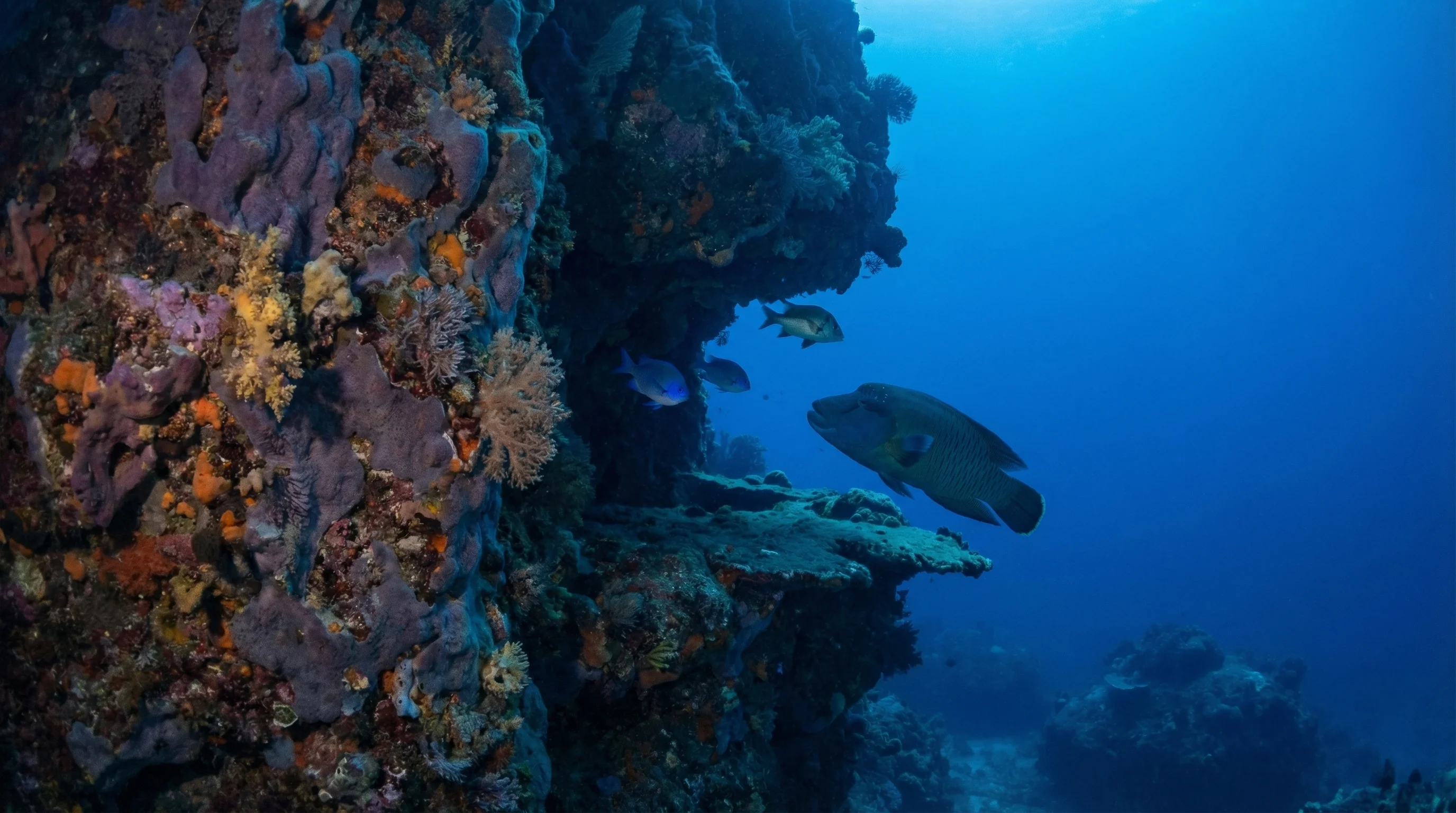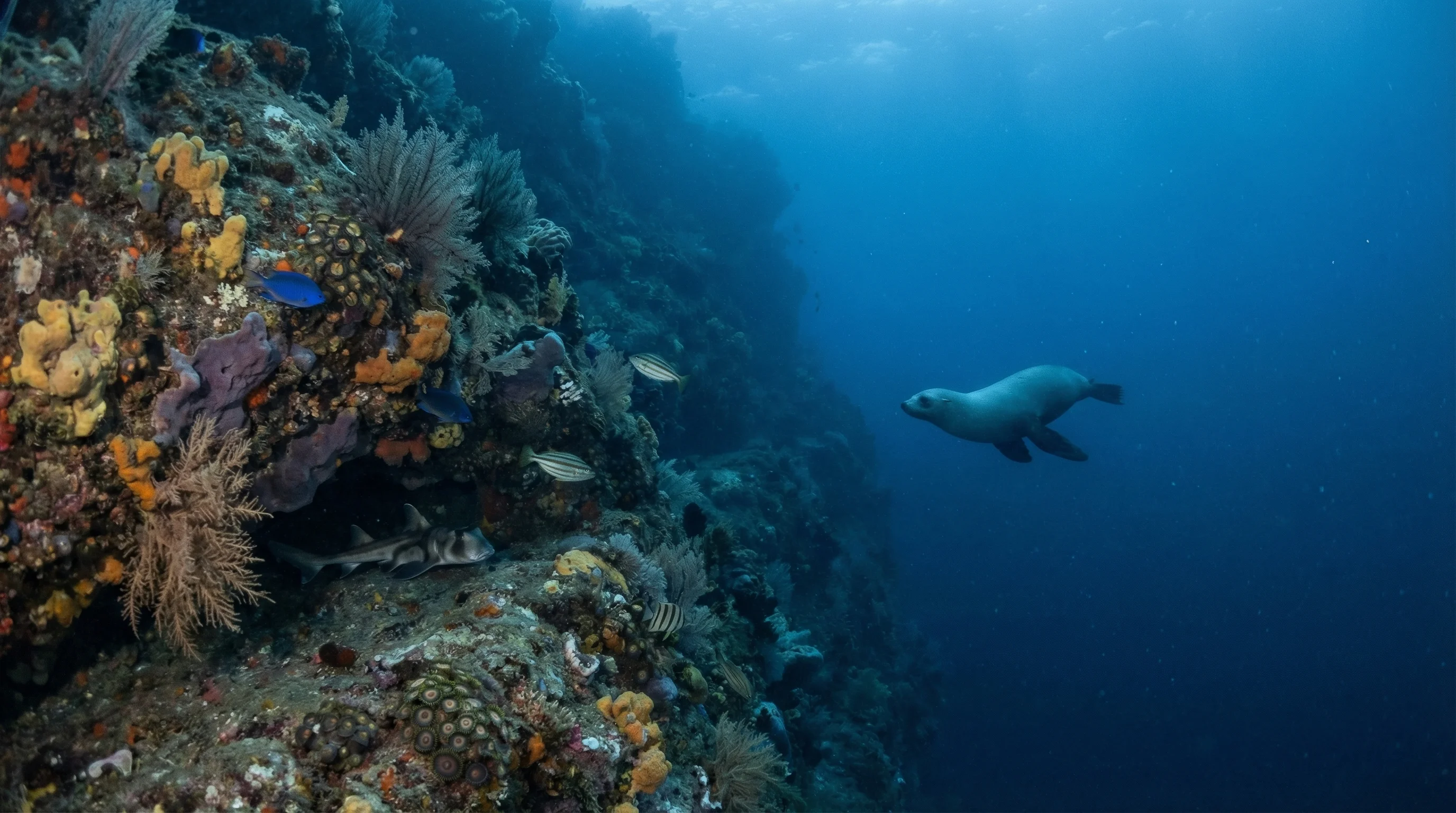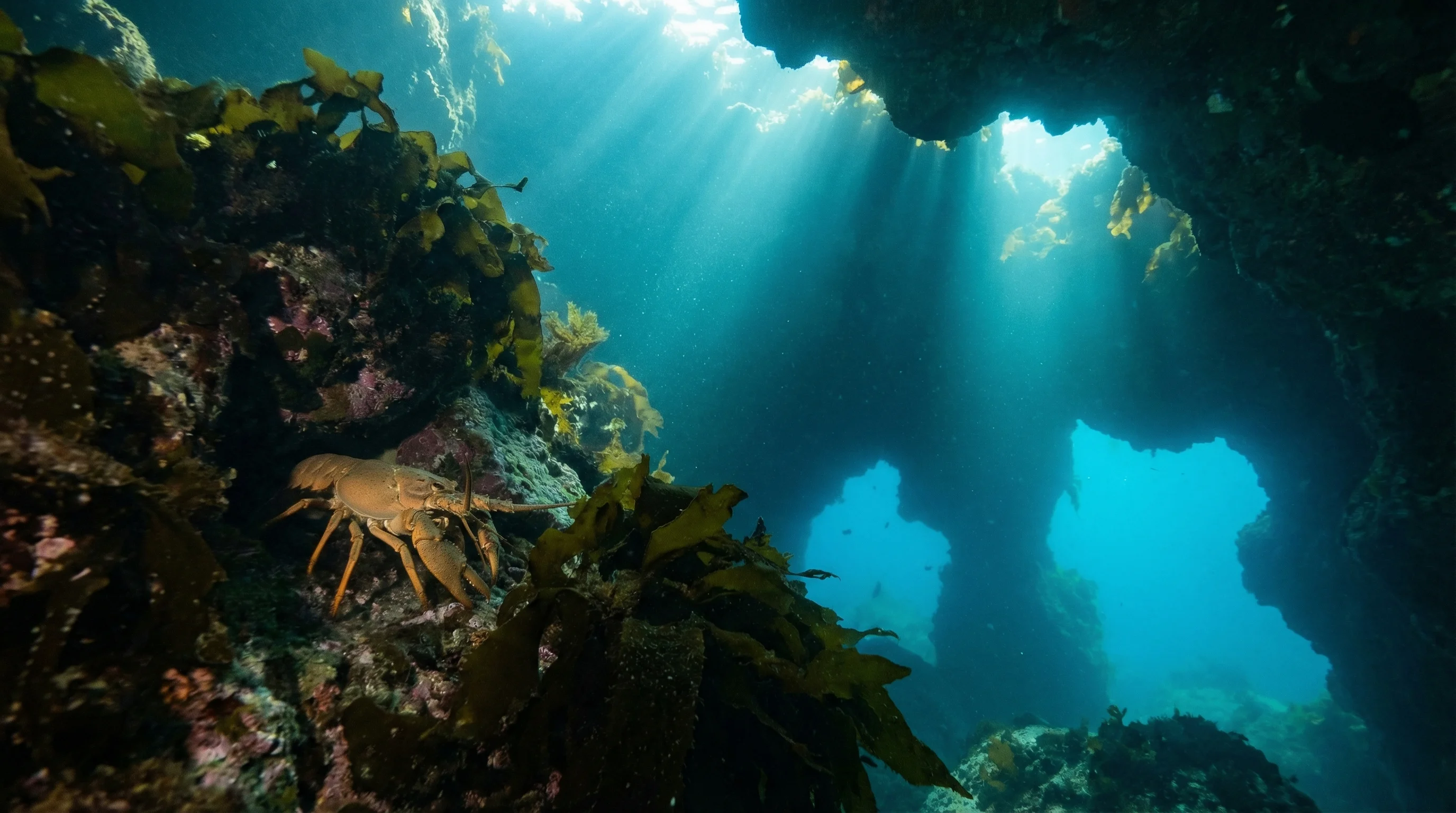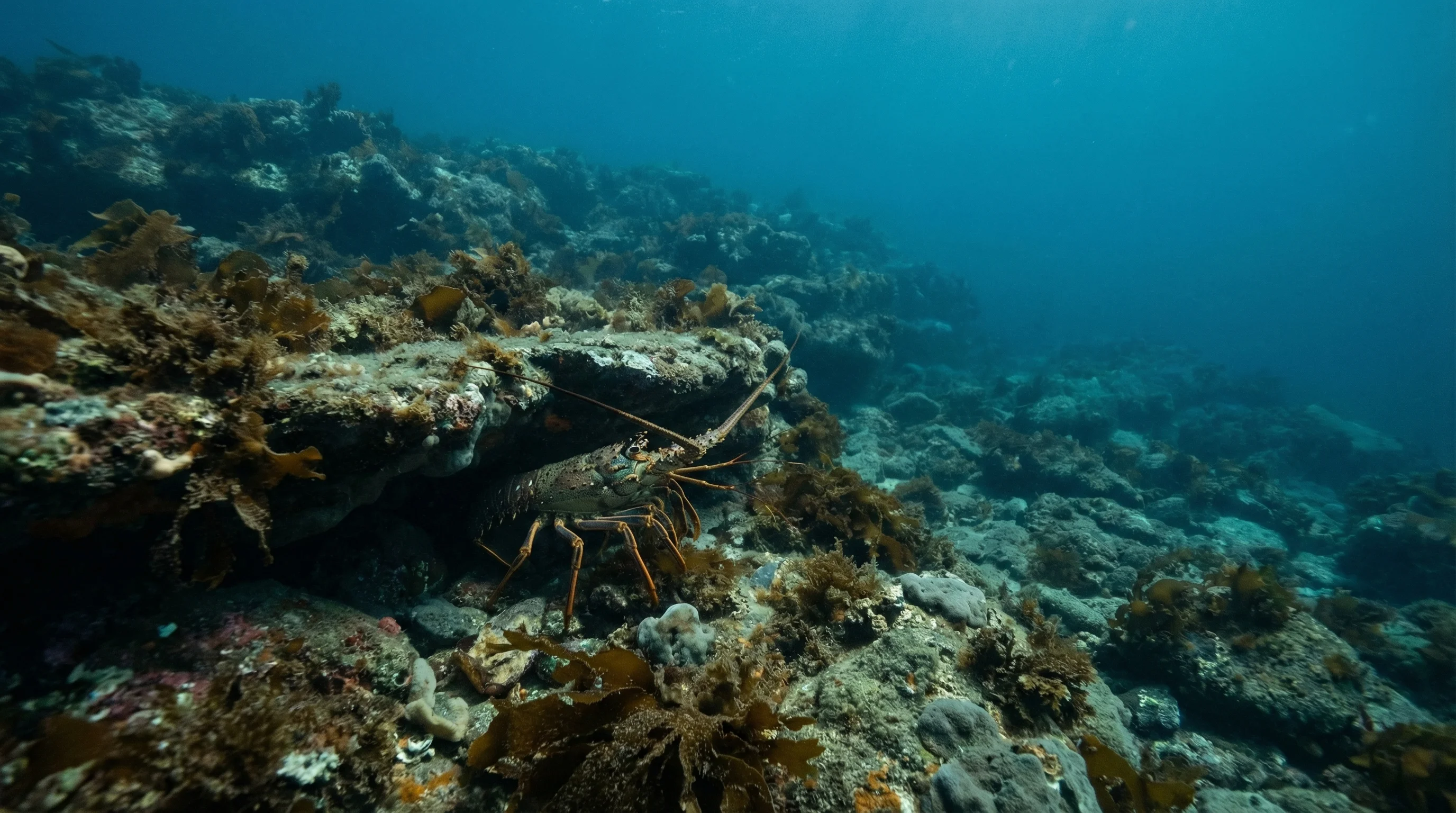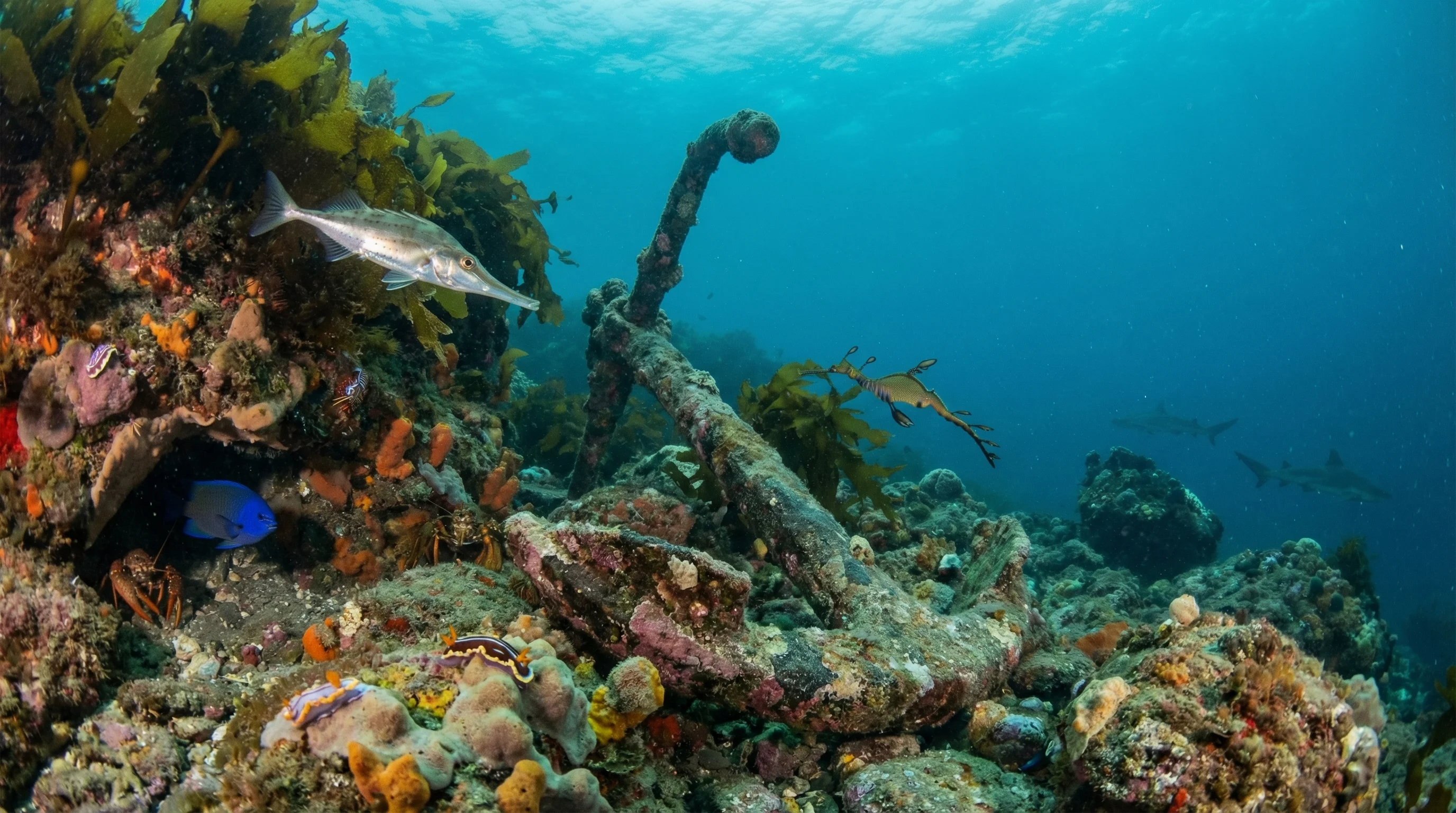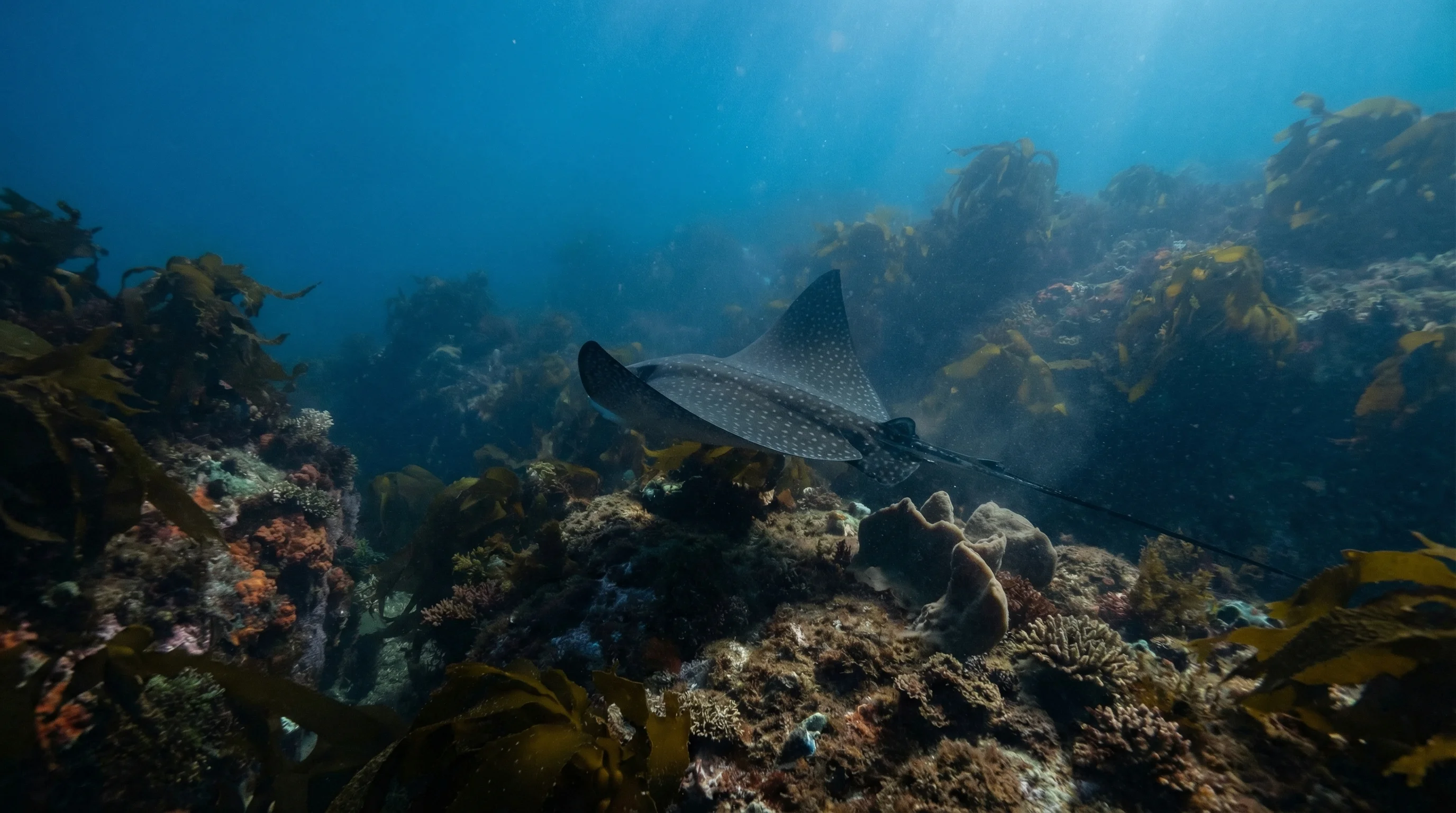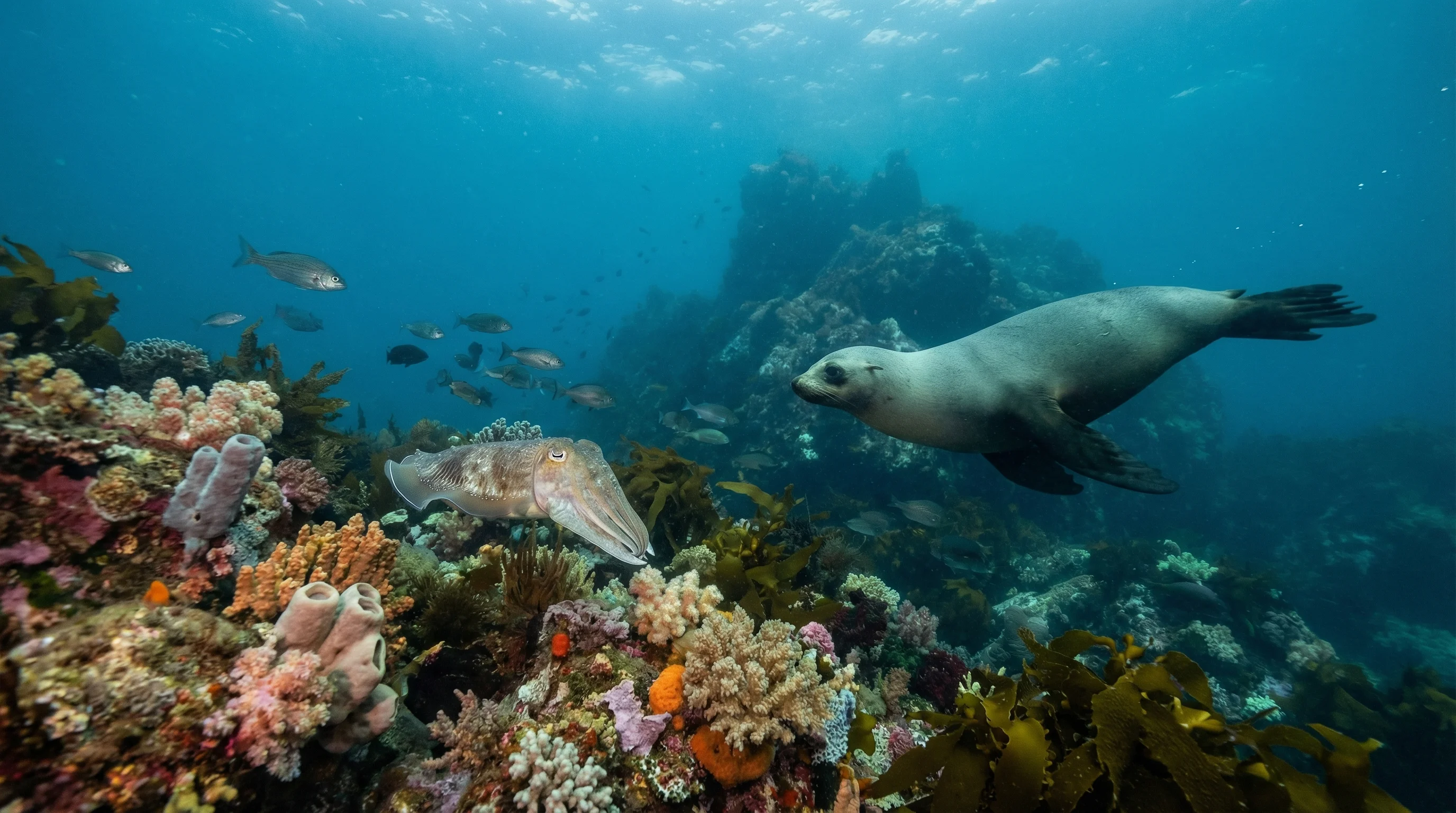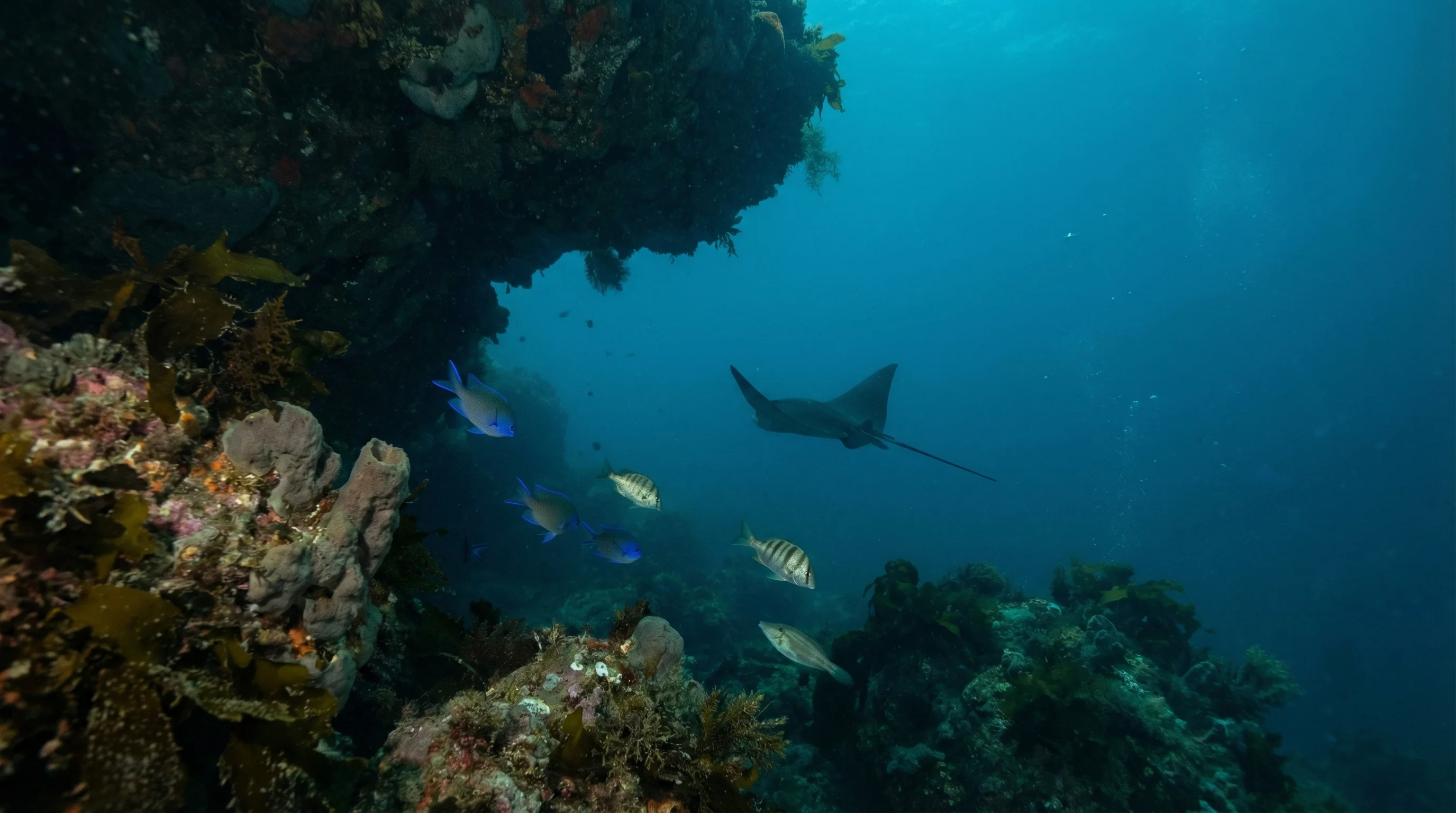
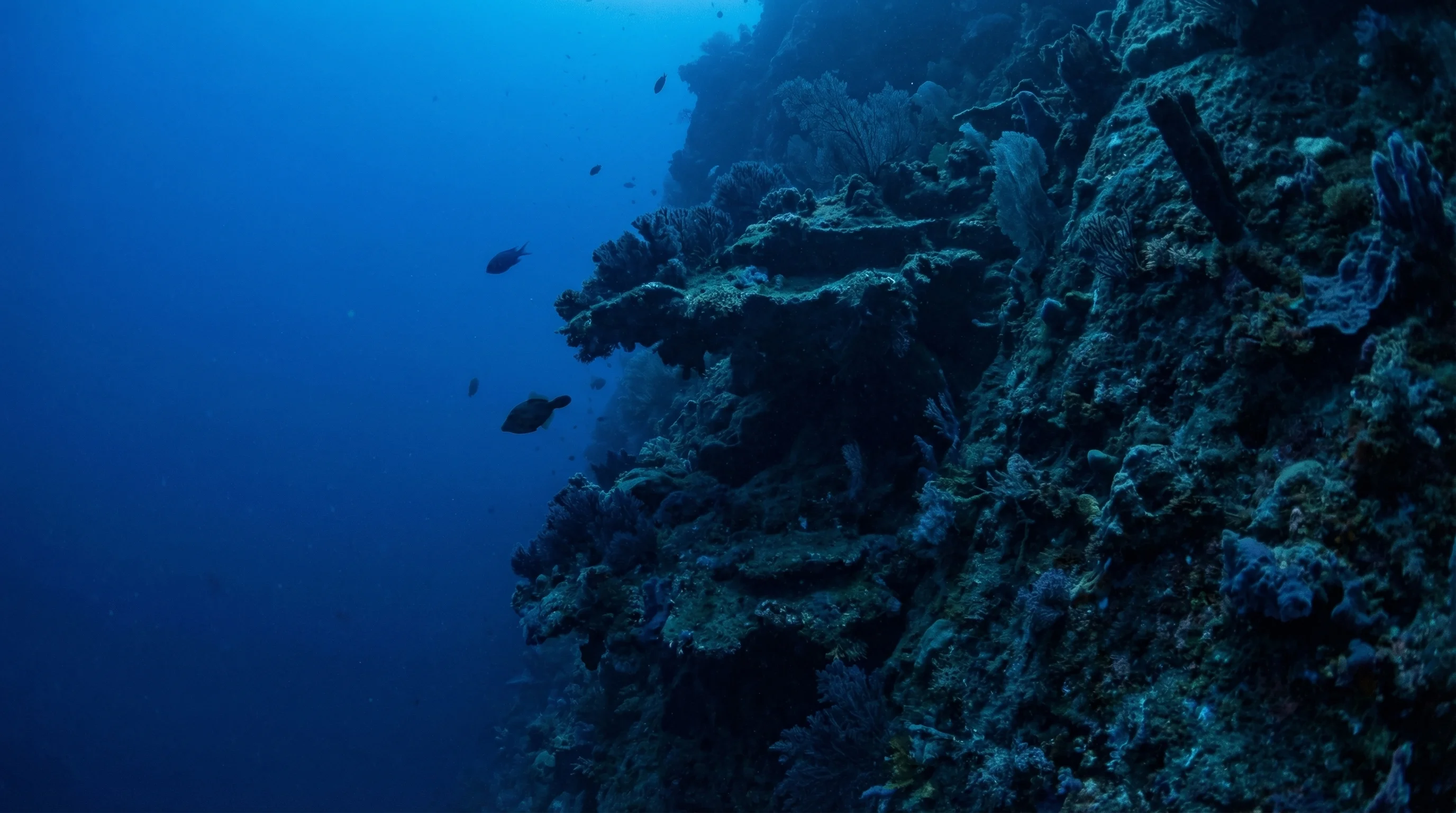
Foggy Reef earns its name from changeable visibility that ranges from 3 to 15 metres, demanding solid navigation skills and composure when conditions shift mid-dive. Strong currents sweep across this advanced site, creating drift diving opportunities through depths from 8 to 30 metres. The overhead environment adds technical challenge, with cave systems requiring proper training and redundant light sources. The current brings nutrients that feed impressive soft coral colonies and gorgonians, their branches extending into the flow. Sponges cluster in the calmer pockets around the reef structure. Bluedevil fish hover in the mid-water, their electric blue colouration vivid even in reduced visibility. Australian fur seals occasionally investigate divers, particularly curious in summer months. Bottlenose dolphins pass through the area, though encounters remain opportunistic. Cephalopod enthusiasts should check crevices and reef edges for cuttlefish and octopus. Boat traffic overhead requires proper ascent protocols and safety stops conducted with surface marker buoys deployed. The combination of depth, current, overhead environment, and variable visibility creates a genuinely challenging dive. Plan conservatively, maintain buddy contact, and expect conditions to test your advanced training.
-38.29330, 144.62082
Time your dive around slack water at the turn of the tide, as the currents at Lonsdale can run hard enough to make the dive unpleasant or unsafe at full flow. A guided charter is genuinely worth it here, both for local knowledge on timing and for navigating the boat traffic in this busy stretch of water.
The site is accessible via boat charter, typically from Queenscliff or Portsea.
This boat-entry site has strong currents and variable visibility, so stay close to your guide. Be aware of boat traffic and shuffle your feet when entering from shore to avoid stingrays. The significant depth and overhead environments require advanced training.
Depth
8-60m
Visibility
2-15m
Skill Level
Intermediate
Entry
Boat
Boat required
Current
Strong
Typical Dive
50 min
Best Time
Jan, Feb, Mar, Apr, May, Dec
Yes, Lonsdale Wall in Melbourne is a boat-access-only dive site. You will need to book with a local dive operator or charter a boat to reach it.
Lonsdale Wall in Melbourne is best suited for divers with some experience. You should be comfortable with your buoyancy and have logged at least 10 to 20 dives.
Diving at Lonsdale Wall in Melbourne requires the following certifications: Open Water, Advanced. Always dive within your training limits.
Lonsdale Wall in Melbourne is home to soft coral, gorgonians, sponges, bluedevil fish, Australian fur seals, and bottlenose dolphins. Marine life sightings vary by season and conditions.
The best months to visit Lonsdale Wall in Melbourne are December, January, February, March, April, and May. Conditions outside these months can still be good but are less predictable.
Lonsdale Wall in Melbourne has depths ranging from 8 metres to 60 metres.
Yes, Lonsdale Wall in Melbourne is suitable for snorkelling.
A typical dive at Lonsdale Wall in Melbourne lasts approximately 50 minutes. Actual dive time depends on depth, air consumption, and conditions.
Divers at Lonsdale Wall in Melbourne should be aware of sharks. These encounters are generally rare and avoidable with proper awareness. Follow local safety guidance and maintain a respectful distance from all marine life.
Lonsdale Wall in Melbourne can have strong currents. Advanced experience with drift diving and current navigation is recommended.
Visibility at Lonsdale Wall in Melbourne typically ranges from 2 metres to 15 metres. Conditions vary with weather, tides, and seasons.