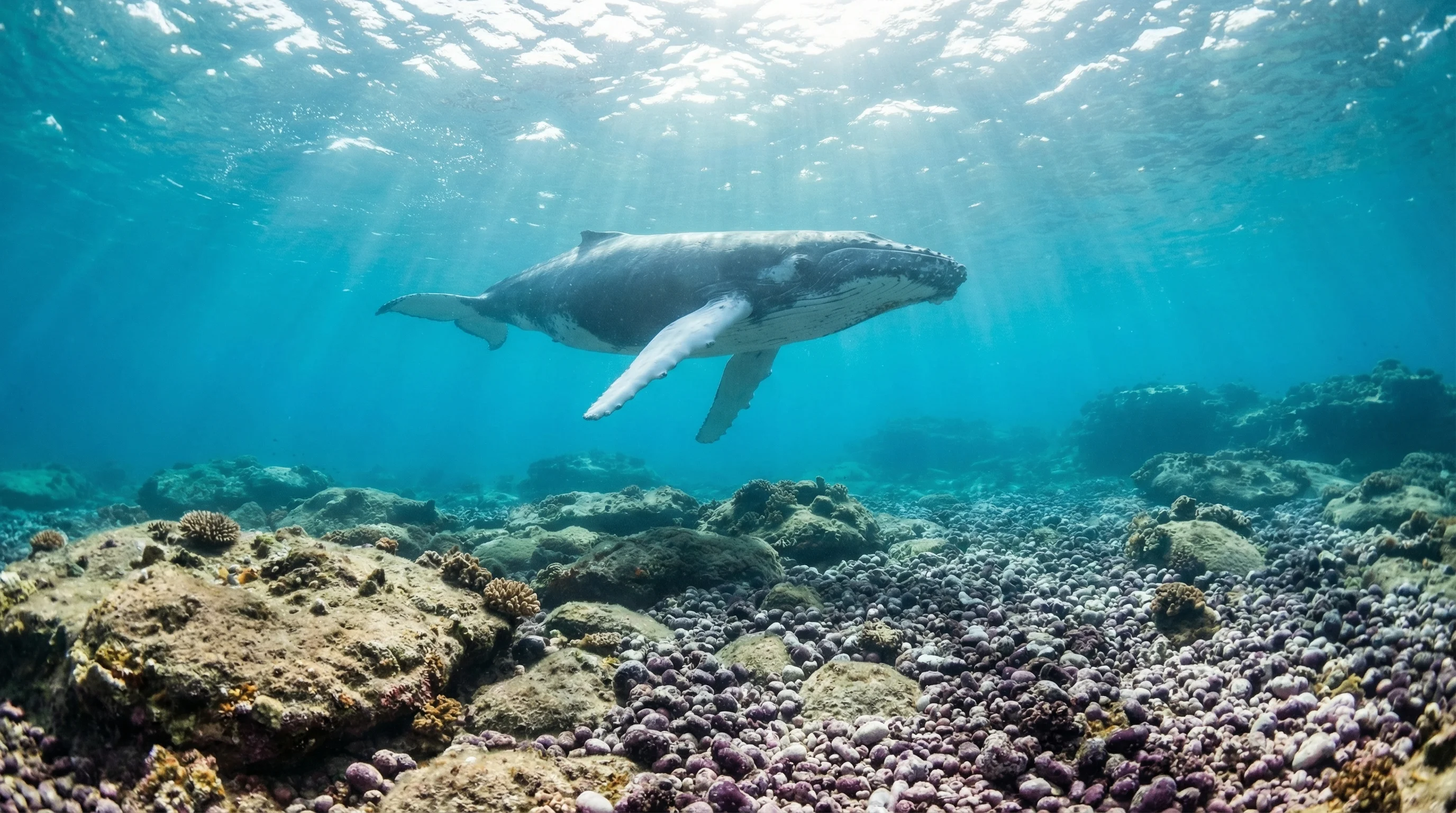
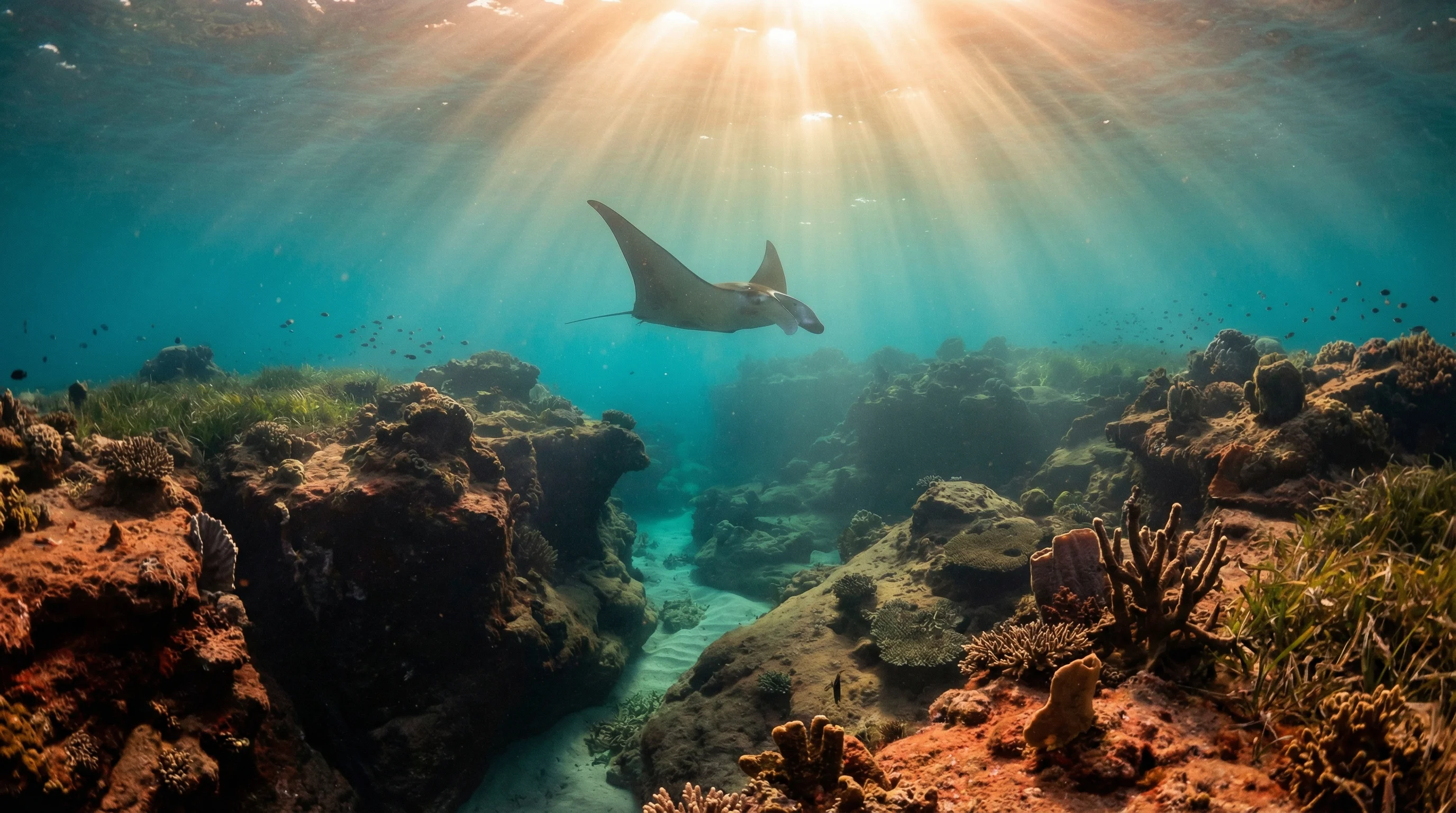
The Buccaneer Archipelago is a remote and complex system of reefs, seagrass beds, and walls shaped by some of the most powerful tidal currents in the world. Visibility varies considerably depending on tidal state, so timing your dive around slack water is essential. Depths are shallow throughout, reaching 10 metres at most, but the extreme current demands solid buoyancy control and drift diving experience. The marine life reflects this wild, nutrient-rich environment: sea turtles, dugongs, manta rays, tawny nurse sharks, and black-tipped reef sharks are all present, alongside emperor, trevally, coral trout, Spanish mackerel, and clams. Be aware that crocodiles are a genuine hazard in these waters.
-15.96552, 124.29247
Plan every dive strictly around slack tide, as the currents here are not forgiving of poor timing. Check locally for the most current crocodile activity reports before entering the water.
Access is only possible via multi-day liveaboard cruises or expedition vessels, typically departing from Broome. Some shorter day tours may depart from Cygnet Bay.
Saltwater crocodiles are known to frequent the reef and surrounding waters; caution is essential. The massive tidal movements create extremely strong and unpredictable currents.
Depth
0-10m
Visibility
0m
Skill Level
Advanced
Entry
Boat
Boat required
Water Temp
27-31°C
Current
Extreme
Best Time
Mar, Apr, May, Jun, Jul, Aug, Sep, Oct, Nov
Buccaneer Archipelago in Western Australia experiences extreme tidal currents, making it one of the most challenging snorkelling environments in Australia. These powerful currents are driven by some of the largest tidal movements in the world, with water rushing through narrow channels between the islands. Snorkellers must time their visits carefully and only enter the water during slack tide periods under expert local guidance.
Buccaneer Archipelago supports diverse marine life including black-tipped reef sharks, tawny nurse sharks, emperor fish, coral trout, Spanish mackerel, and large trevally. Snorkellers frequently encounter sea turtles gliding through the channels, and massive clams dot the reef structures. The nutrient-rich waters from extreme tidal exchange create ideal feeding conditions for these species.
Buccaneer Archipelago requires intermediate snorkelling skills due to extreme currents and challenging water conditions. Snorkellers must be confident in strong water movement, capable of controlling their buoyancy, and comfortable with deep water boat entries. This site is unsuitable for beginners or those without prior experience in demanding marine environments.
Saltwater crocodiles inhabit the Buccaneer Archipelago region in the Kimberley, as these waters fall within their natural range along Western Australia's northern coast. Tour operators select snorkelling sites carefully and monitor for crocodile activity before water entry. Snorkellers must follow strict safety protocols and remain with their group at all times.
The optimal months for snorkelling Buccaneer Archipelago are March through October, during the Kimberley's dry season. Water temperatures range from 24°C to 31°C during these months, with calmer seas and better accessibility. The wet season from November to February brings rough conditions and reduced tour operator access to the archipelago.
Buccaneer Archipelago is accessible only by boat from the Kimberley region of Western Australia, with no land-based entry points. Most visitors join multi-day liveaboard expeditions or day tours departing from Broome or Derby. The remote location requires several hours of boat travel through the archipelago's 800 islands.
A rashguard or 2mm shorty is recommended for diving at Buccaneer Archipelago in Kimberley. Water temperatures range from 27°C to 31°C.
Buccaneer Archipelago in Kimberley has a maximum depth of 10 metres.