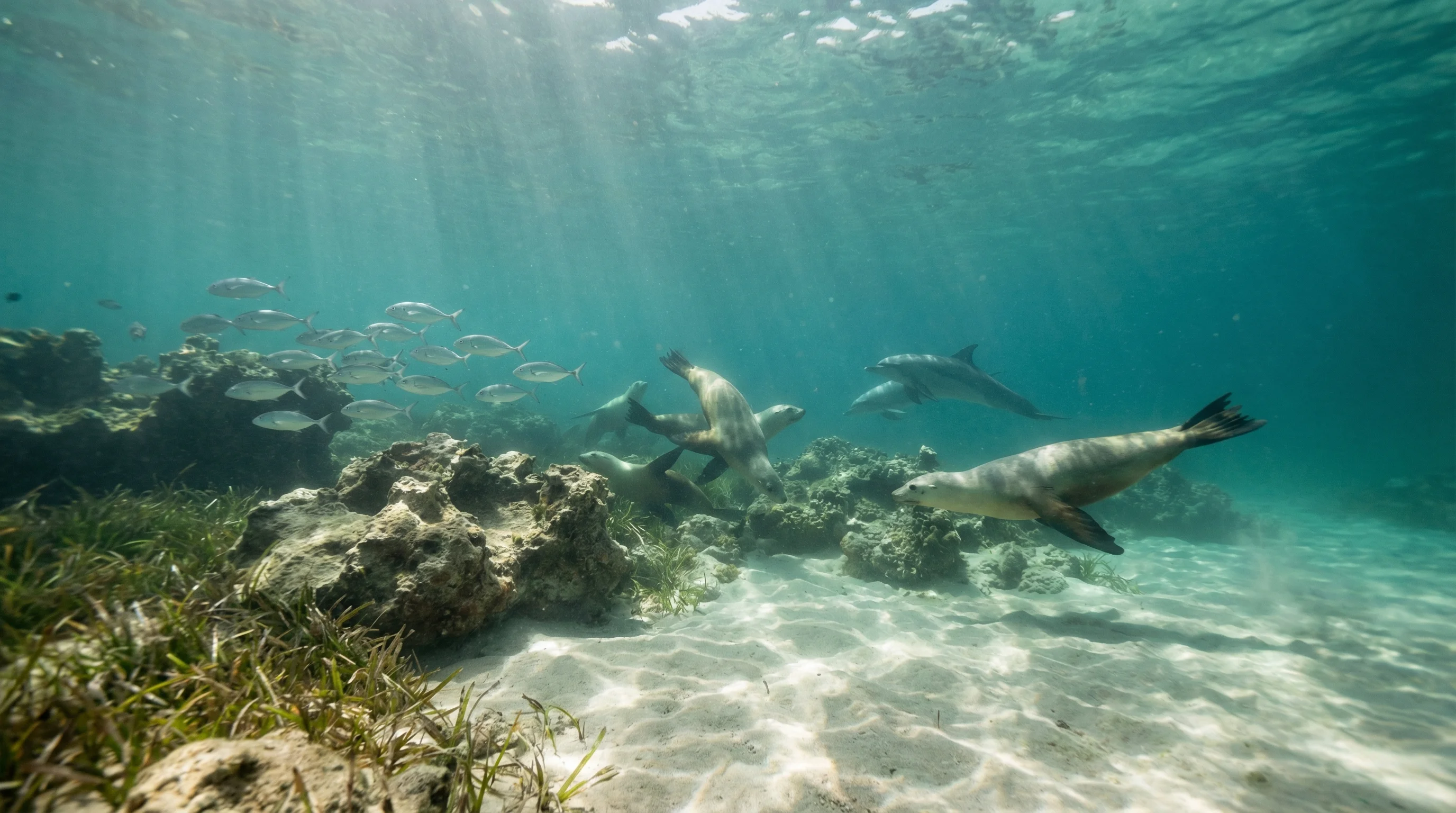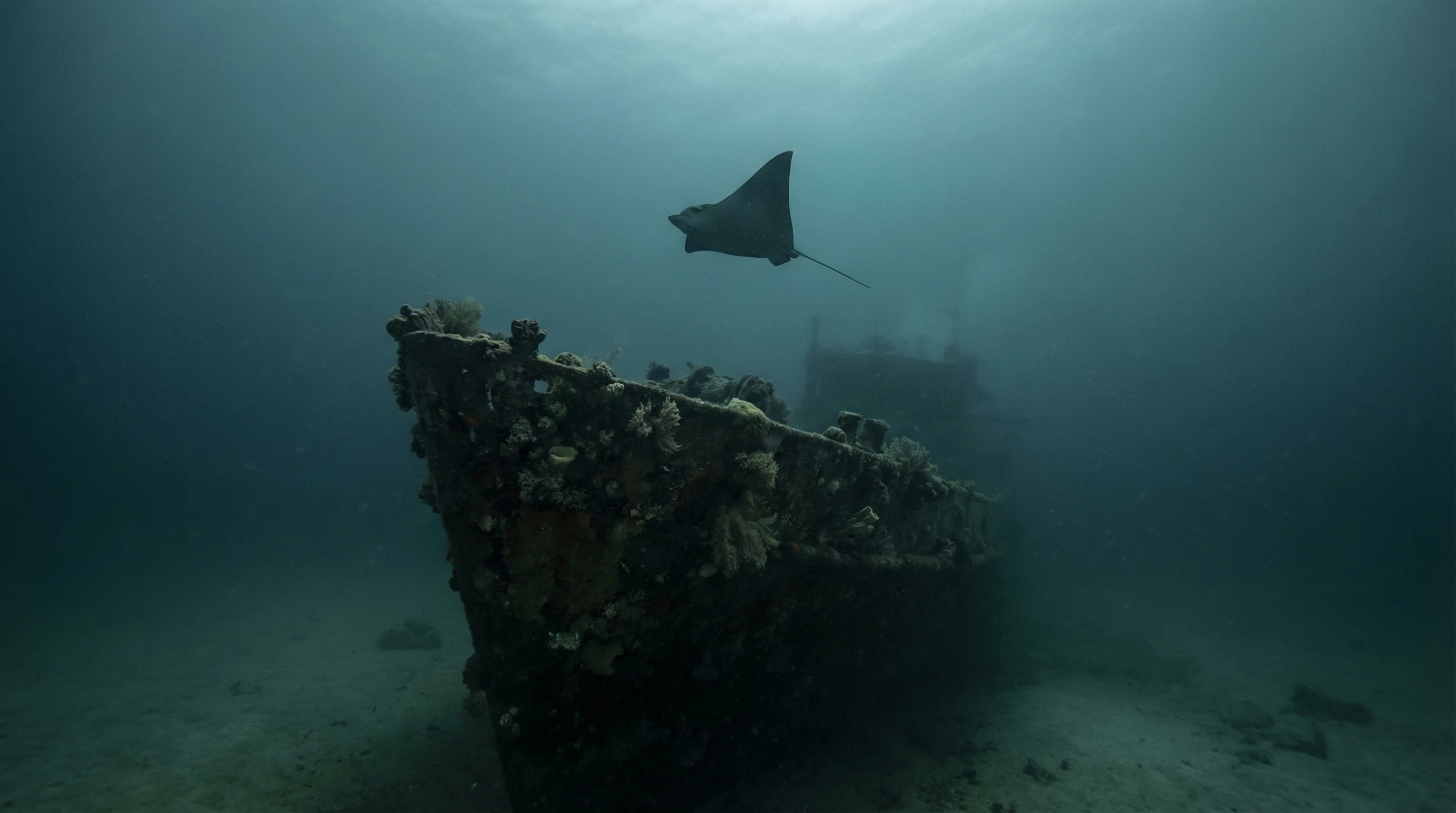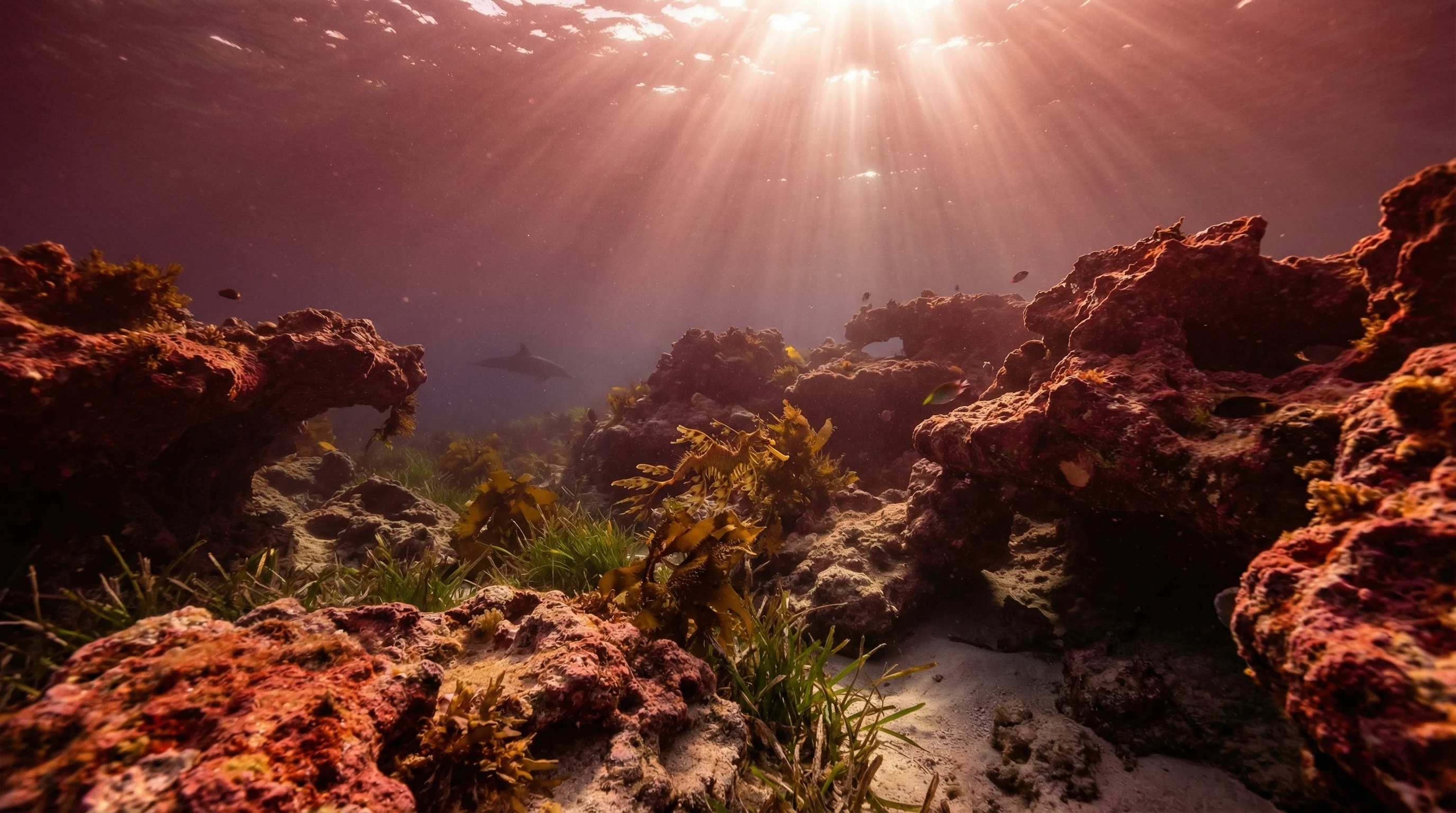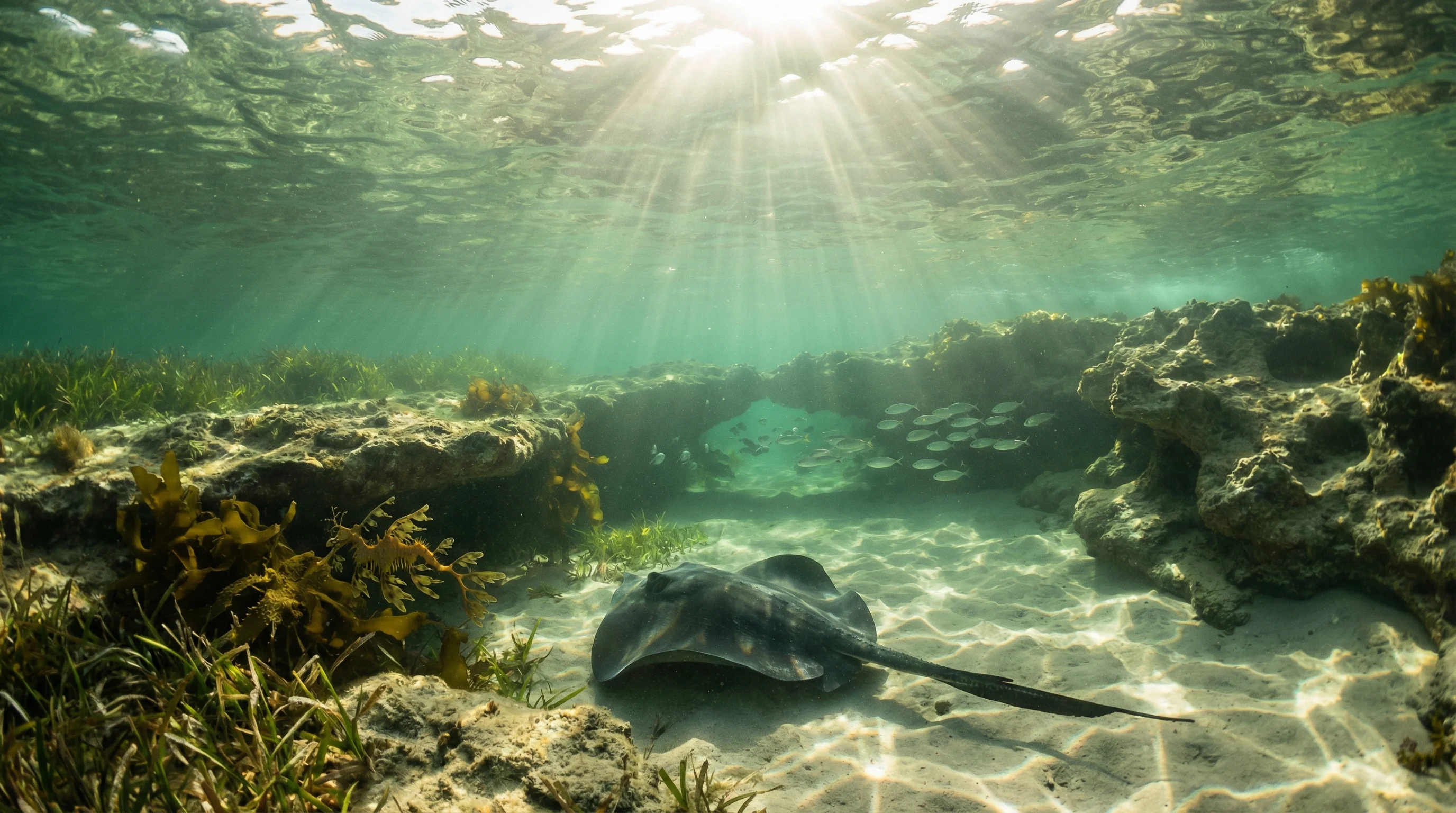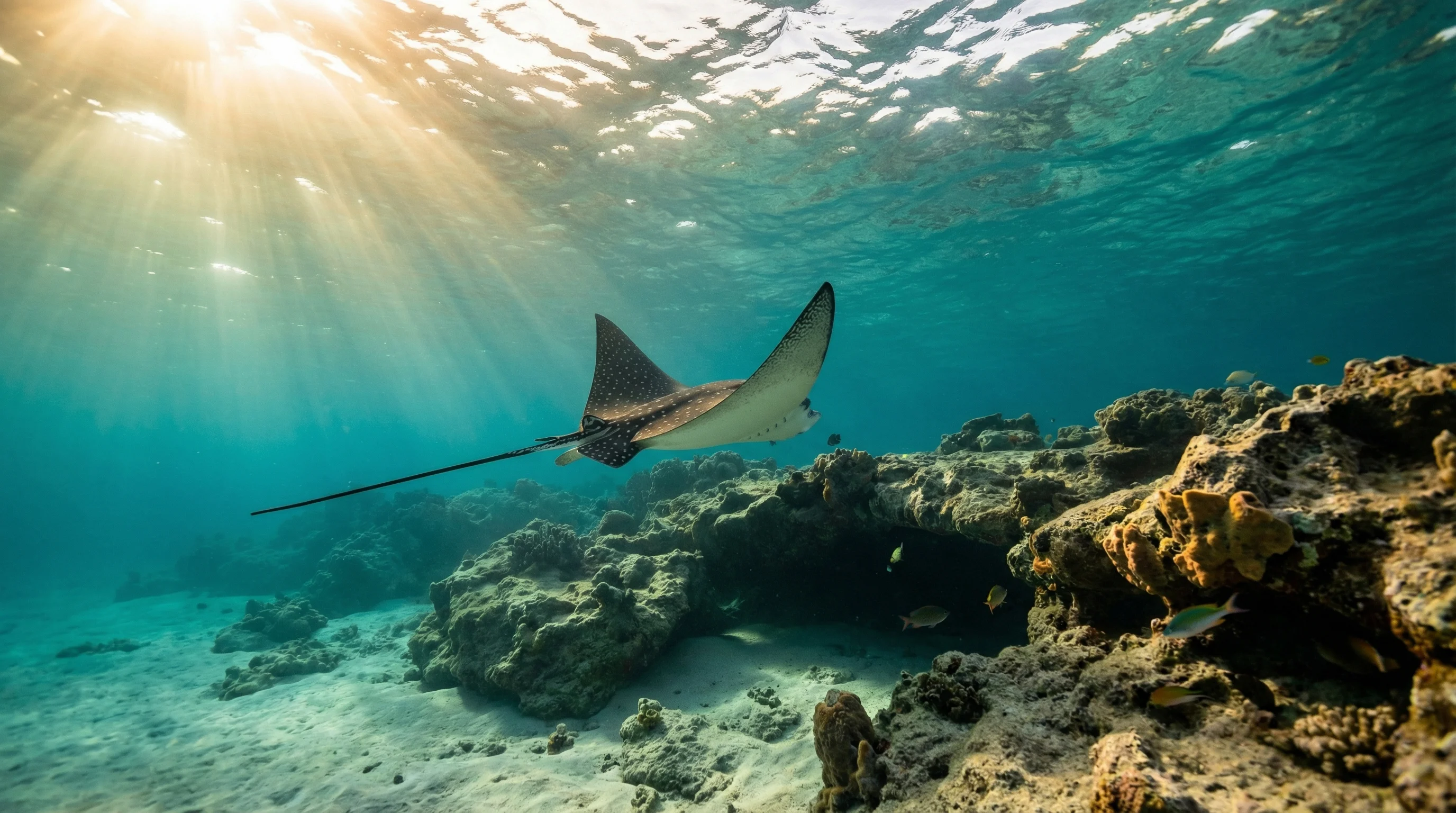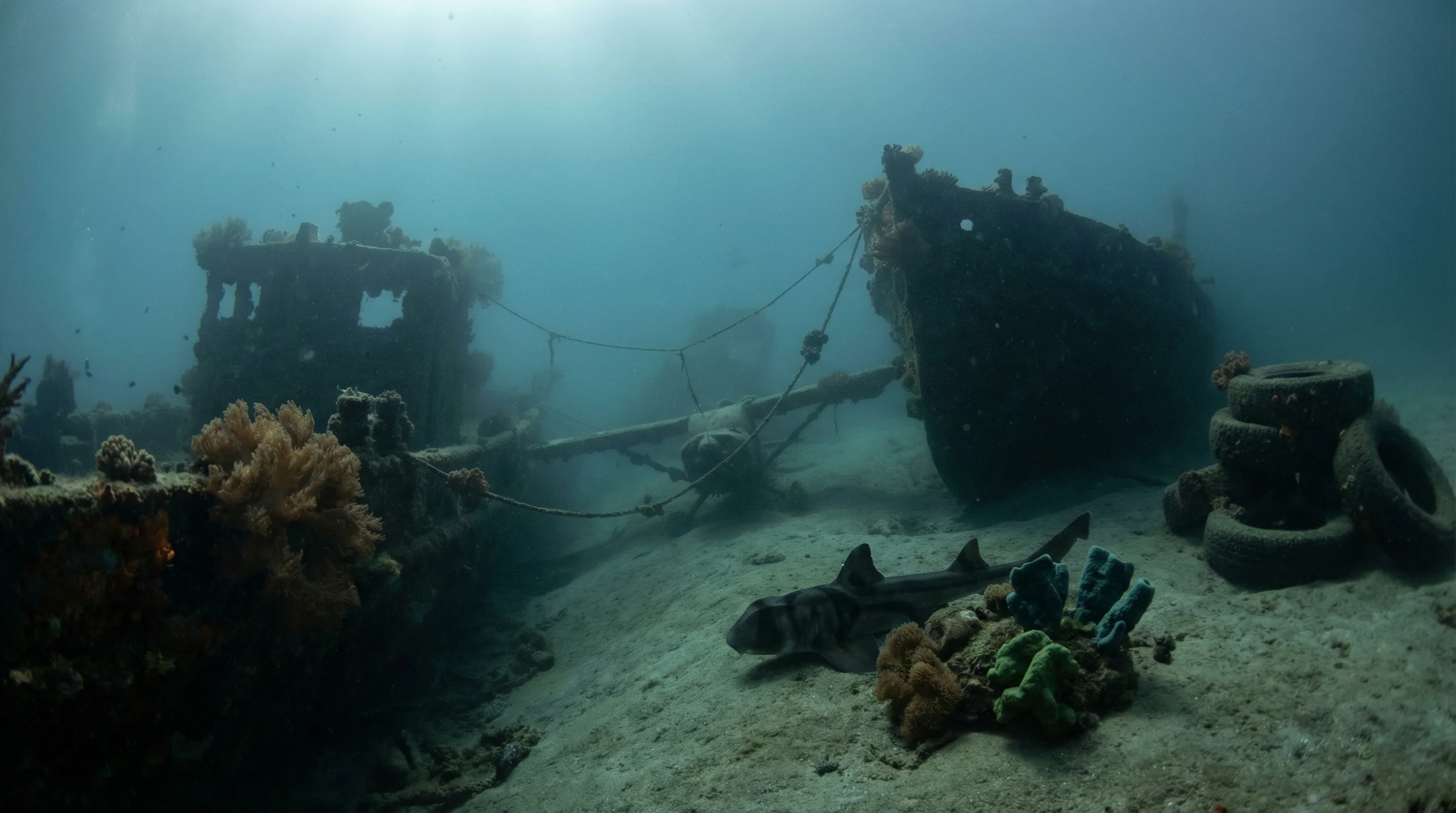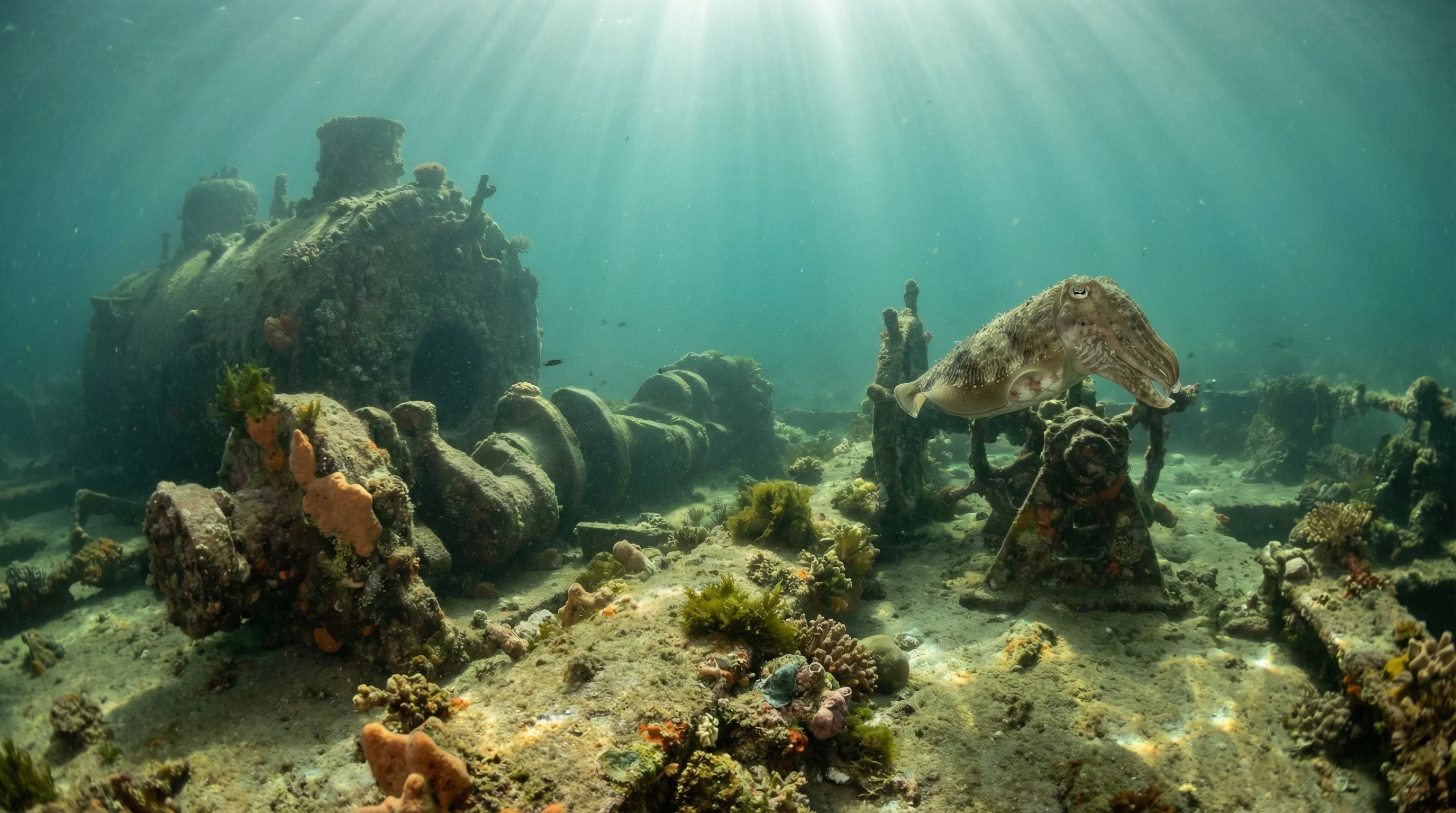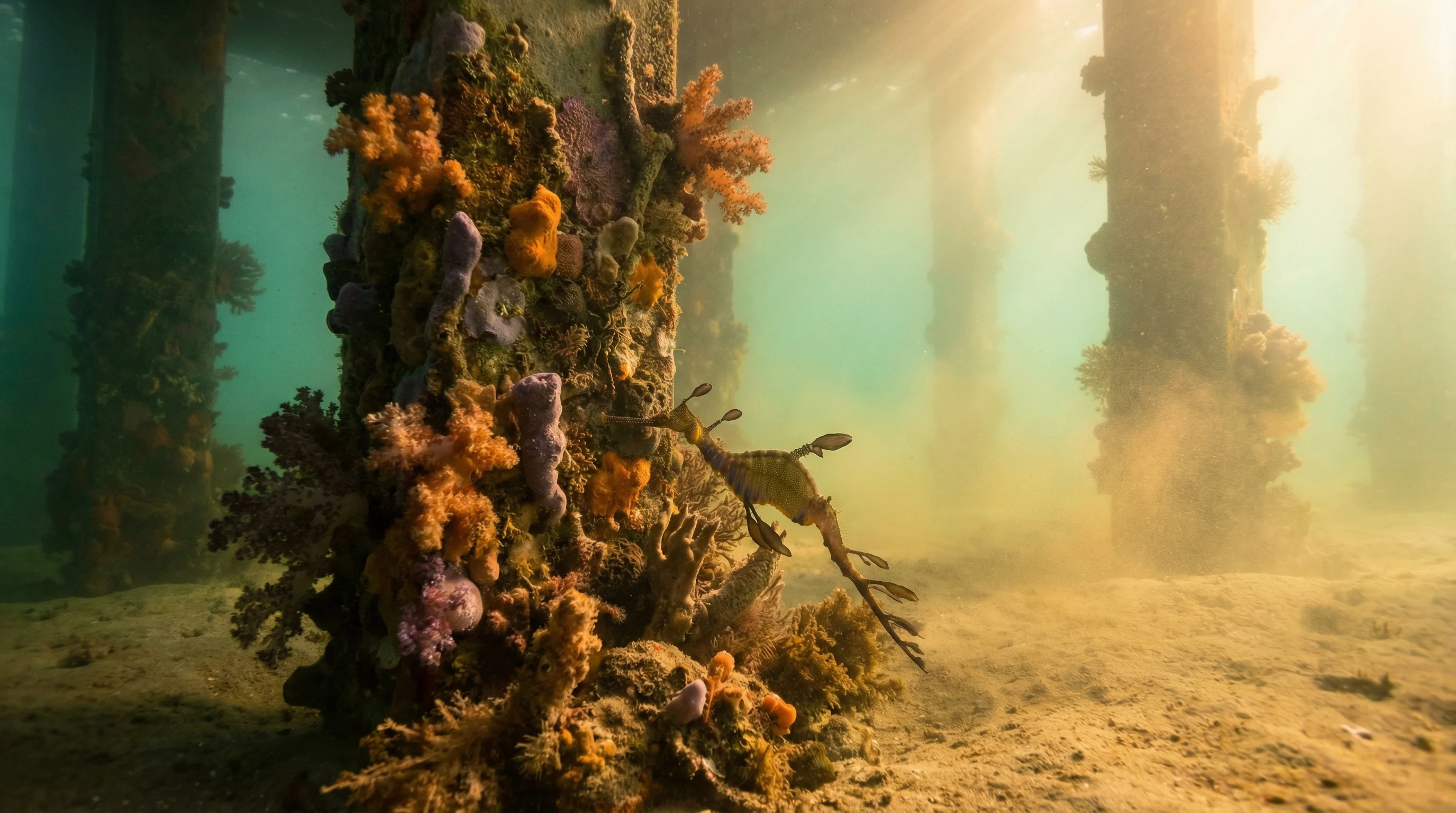
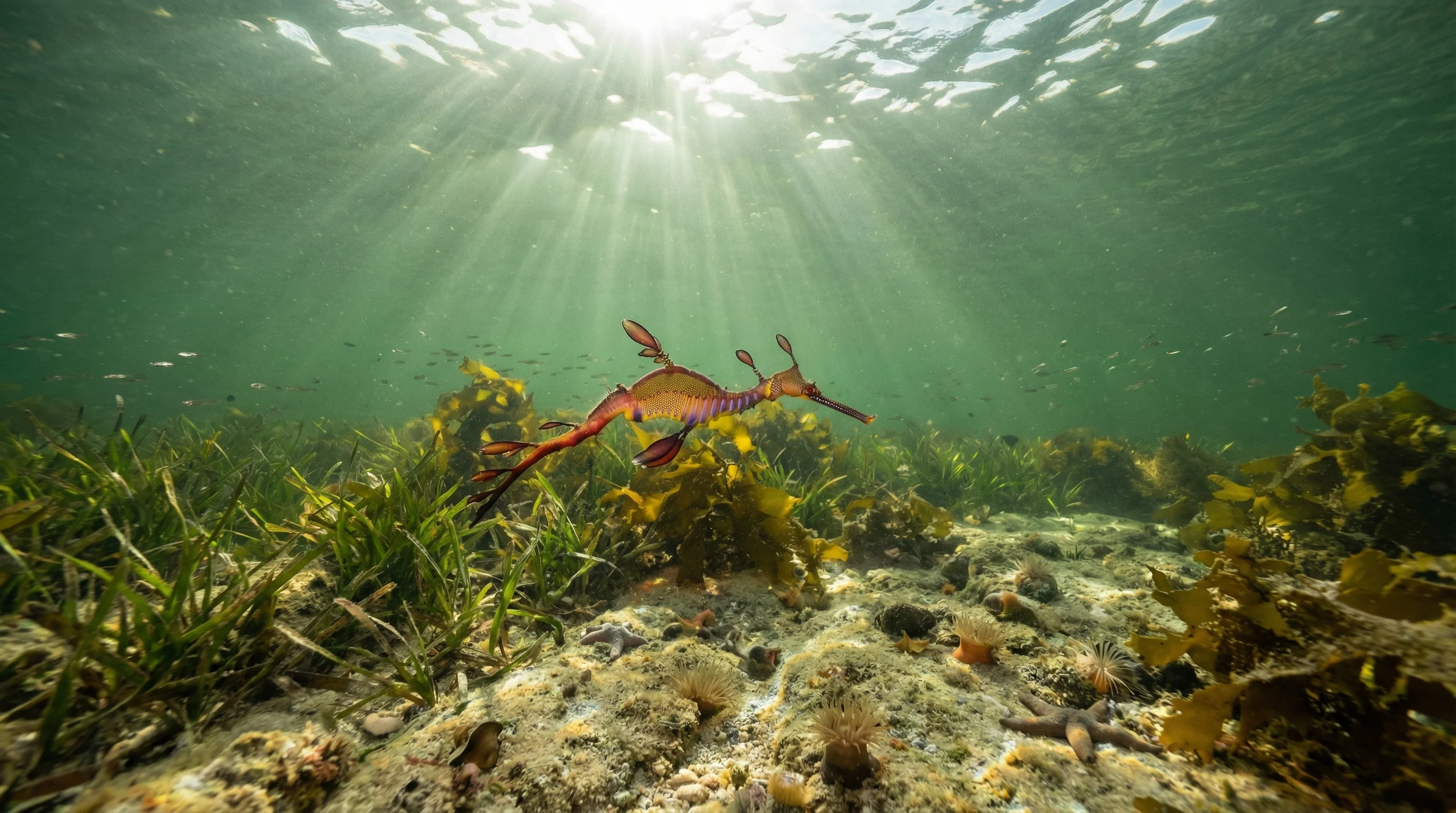
Penguin Island offers snorkelling and diving in shallow, calm waters with depths of 2 to 5 metres, making it a relaxed entry point for beginners. Visibility typically runs 5 to 10 metres. The site combines reef and seagrass habitats, where you can spot sea stars, sea urchins, blue manna crabs, and baitfish moving through the shallows. The real draw is the wildlife: little penguins occasionally venture into the water nearby, Australian sea lions may cruise past, and bottlenose dolphins are known to pass through. Mild currents keep conditions manageable, though you should stay aware of boat traffic and any rip currents forming near the shore.
-32.30750, 115.69150
Visit during the summer months of December through March when conditions are at their calmest and wildlife activity is highest. Enter the water slowly and keep an eye on the current near the island's edges, as rips can develop without much warning.
Access to Penguin Island is via a 5-minute ferry from Mersey Point in Shoalwater. It is also accessible by private boat or kayak. Authorities strongly advise against walking across the 700m sandbar due to the risk of changing tides and strong currents, which has led to drownings.
The primary hazard is crossing the sandbar on foot; this is strongly discouraged by authorities due to unpredictable currents and changing water depths. The island is also closed to the public on days when the temperature is forecast to be 35°C or higher to protect the penguins.
Depth
2-5m
Visibility
5-10m
Skill Level
Beginner
Entry
Shore
Water Temp
18-23°C
Current
Mild
Typical Dive
50 min
Best Time
Jan, Feb, Mar, Dec
Penguin Island in Western Australia hosts little penguins (the site's namesake), Australian sea lions, and blue manna crabs amongst the shallow reefs. Divers and snorkellers also encounter baitfish schools, sea stars, sea urchins, and occasionally spot king skinks and pelicans around the shoreline. The diverse marine life thrives in the sheltered waters at depths of 2 to 5 metres.
Penguin Island is classified as a beginner-level site with shallow depths between 2 and 5 metres and shore-based entry. However, snorkellers must be aware of mild currents and rip currents that can occur in the area. The site receives a modest snorkelling rating due to variable visibility of 5 to 10 metres.
The optimal months for diving Penguin Island are December through March, coinciding with Western Australia's summer season. Water temperatures during these months range from 18 to 23 degrees Celsius, providing the most comfortable conditions. Visibility typically ranges from 5 to 10 metres throughout the peak season.
Penguin Island offers shore-based entry without requiring a boat, making it accessible for independent divers and snorkellers. The site is located near South West in Western Australia and includes toilet facilities onshore. No entry fee is charged for accessing the dive site.
The primary hazards at Penguin Island are rip currents and boat traffic in the surrounding waters. Divers and snorkellers should plan entries and exits carefully to avoid being caught in rips, particularly during changing tides. The mild current conditions can strengthen unexpectedly, requiring constant awareness of water movement.
No diving certification is required for Penguin Island as it is designated a beginner-level site with shallow maximum depths of 5 metres. The site is accessible to both certified divers and snorkellers. The gentle conditions and shore entry make it ideal for those new to underwater exploration.
Water temperatures at Penguin Island range from 18 to 23 degrees Celsius throughout the diving season. The warmest conditions occur during the summer months of December through March. Most divers and snorkellers find a 5mm wetsuit suitable for these temperatures in Western Australian waters.
A 5mm wetsuit is recommended for diving at Penguin Island in South West. Water temperatures range from 18°C to 23°C.
Penguin Island in South West has depths ranging from 2 metres to 5 metres.
A typical dive at Penguin Island in South West lasts approximately 50 minutes. Actual dive time depends on depth, air consumption, and conditions.