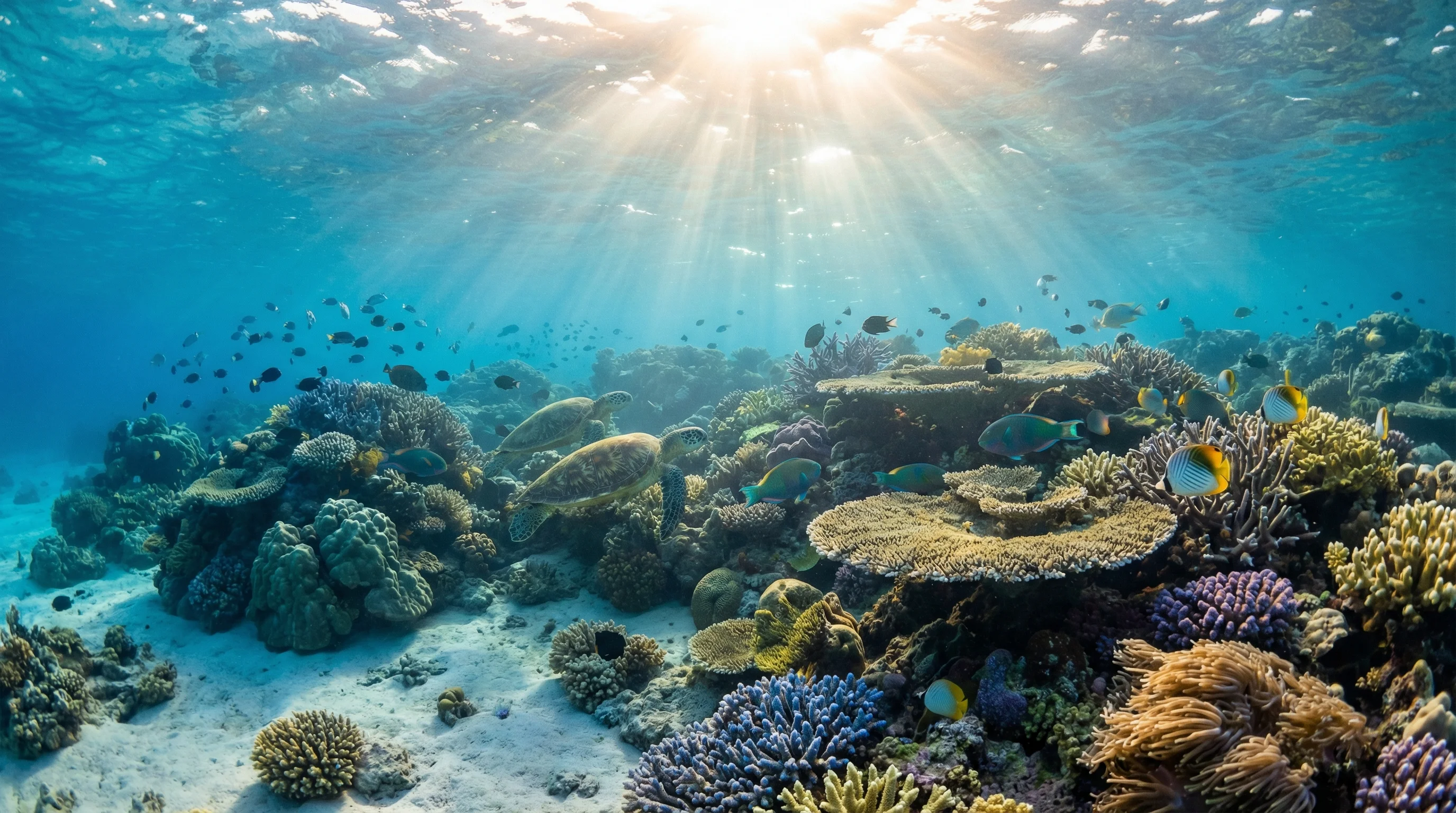
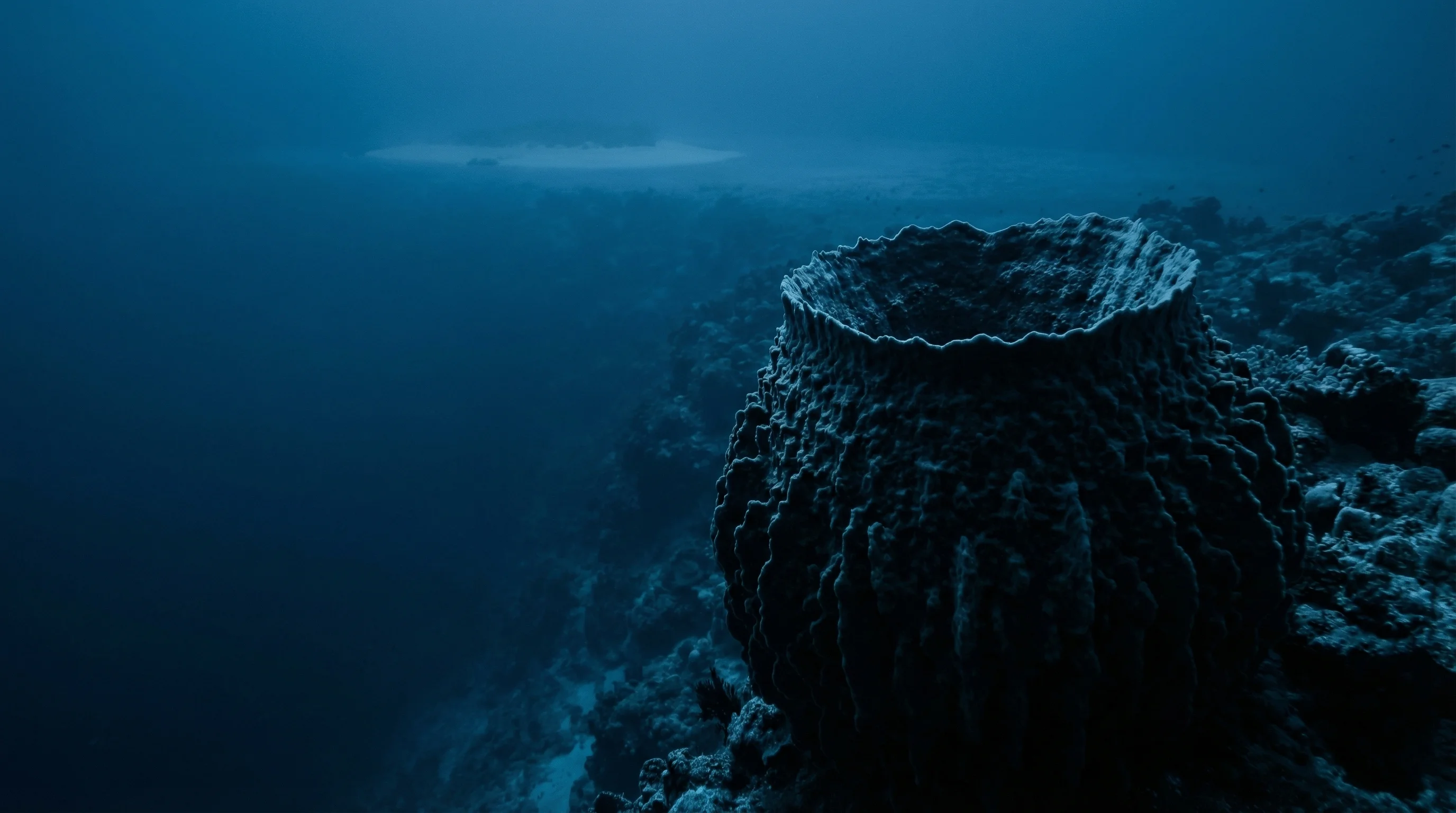
Scott Reef sits far offshore in Western Australia and delivers the kind of open-ocean diving that rewards intermediate divers willing to handle strong, unpredictable currents. Walls and drop-offs plunge to 39 metres, while visibility routinely stretches between 15 and 50 metres, making the blue water feel genuinely vast. This is pelagic territory: sailfish, wahoo, dogtooth tuna, and marlin move through the water column, while coral trout and dense schools of glass fish work the reef structure closer in. Giant barrel sponges mark the walls, green turtles cruise the shallower sections, and dusky sea snakes are a regular sighting. Pygmy blue whales pass through seasonally, adding real weight to any dive here.
-14.00000, 121.83333
June through October offers the most settled conditions and the best chance of pelagic encounters, but current management is non-negotiable at this site, so plan your entry and exit around slack water and ensure your boat crew is experienced with live drops.
Access is via multi-day liveaboard charter vessels, typically departing from Broome, located approximately 240 nautical miles (444 km) to the southeast.
The site is extremely remote. Divers should be aware of the endemic dusky sea snake. Strong tidal currents necessitate careful dive planning.
Depth
15-39m
Visibility
15-50m
Skill Level
Intermediate
Entry
Boat
Boat required
Water Temp
28-30°C
Current
Strong
Best Time
Jun, Jul, Aug, Sep, Oct
Yes, Scott Reef in Islands is a boat-access-only dive site. You will need to book with a local dive operator or charter a boat to reach it.
Scott Reef in Islands is best suited for divers with some experience. You should be comfortable with your buoyancy and have logged at least 10 to 20 dives.
Diving at Scott Reef in Islands requires the following certifications: Open Water. Always dive within your training limits.
A rashguard or 2mm shorty is recommended for diving at Scott Reef in Islands. Water temperatures range from 28°C to 30°C.
Scott Reef in Islands is home to Sailfish, Coral Trout, glass fish, Dogtooth Tuna, pygmy blue whales, and dusky sea snake. Marine life sightings vary by season and conditions.
The best months to visit Scott Reef in Islands are June, July, August, September, and October. Conditions outside these months can still be good but are less predictable.
Scott Reef in Islands has depths ranging from 15 metres to 39 metres.
Scott Reef in Islands offers snorkelling with a rating of 1 out of 5.
Divers at Scott Reef in Islands should be aware of sharks. These encounters are generally rare and avoidable with proper awareness. Follow local safety guidance and maintain a respectful distance from all marine life.
Scott Reef in Islands can have strong currents. Advanced experience with drift diving and current navigation is recommended.
Visibility at Scott Reef in Islands typically ranges from 15 metres to 50 metres. Conditions vary with weather, tides, and seasons.