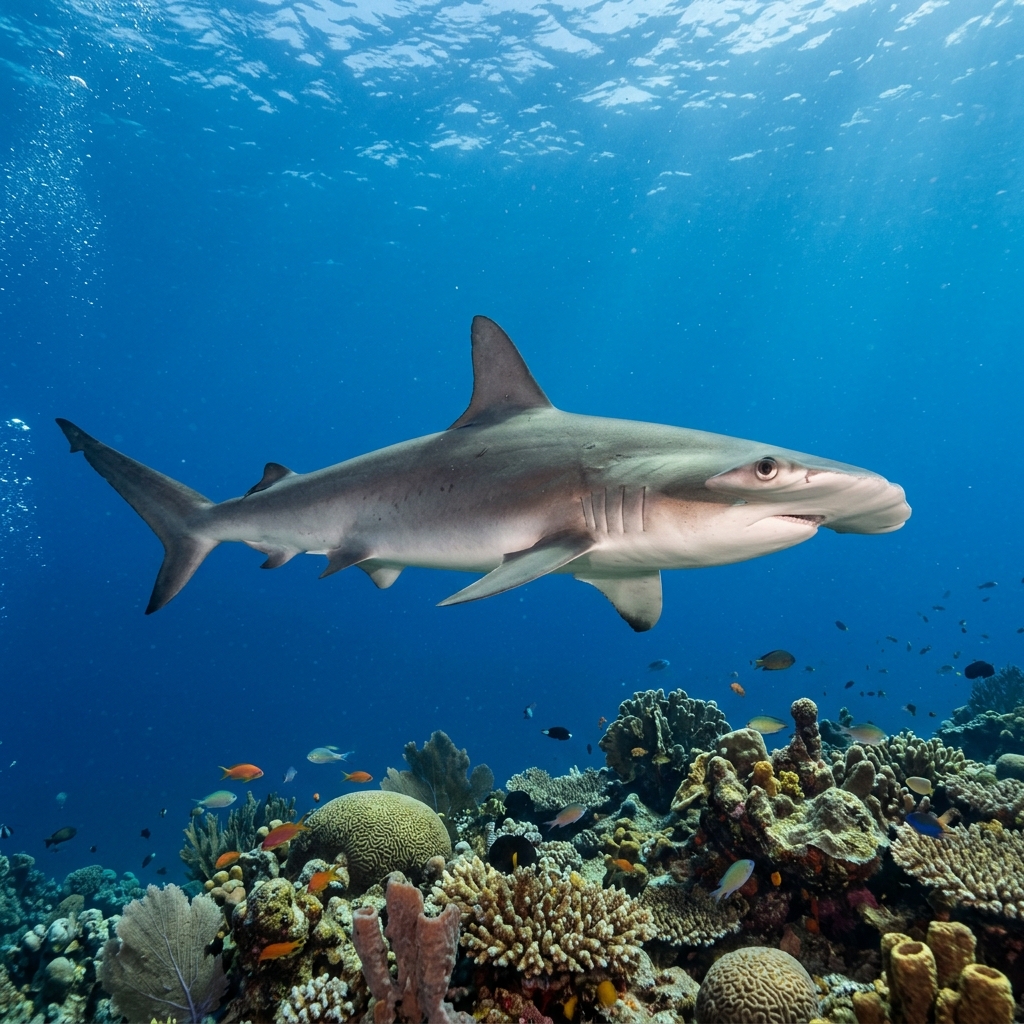
Sphyrna spp.
3.0m
10-80m
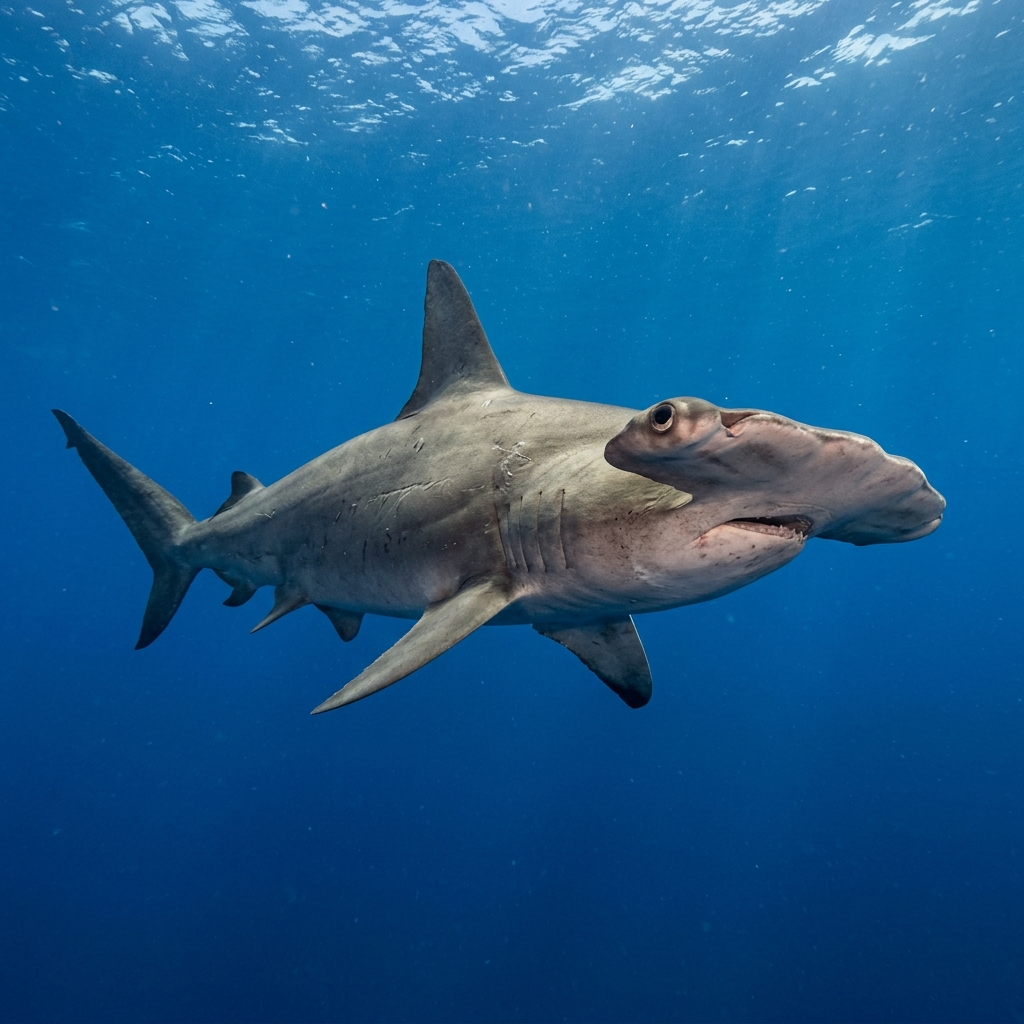
The most obvious feature is the distinctive hammer-shaped head (cephalofoil). The cephalofoil varies in shape between species, but is always present. They are typically grey or brownish-grey on their dorsal side, fading to a lighter underside. Their tall, sickle-shaped dorsal fin is also a good identifying feature. Their swimming style is powerful and graceful, and they are often seen schooling in large numbers.
The Hammerhead Shark is listed as critically endangered by the IUCN. When diving, please observe from a distance, avoid touching or feeding, and report any sightings to local marine research organisations.
96 sites
Sphyrnidae
Prepare to be awestruck! Hammerhead sharks, members of the *Sphyrna* genus, are among the most iconic and sought-after shark sightings for divers. Their distinctive, flattened hammer-shaped head (cephalofoil) immediately sets them apart, making them a truly unforgettable encounter. Divers typically spot these magnificent creatures in tropical and subtropical waters, often around seamounts, drop-offs, and strong current areas where they aggregate. The scalloped hammerhead is the most commonly observed species. Witnessing a school of hammerheads gracefully navigating the currents is an experience that ranks among the pinnacle of diving adventures. While typically not aggressive towards divers, these are large, powerful animals. Respect their space and avoid any sudden movements or attempts to approach them too closely. Hammerheads often form large schools, offering a spectacular display of coordinated movement. Seeing these sharks cruise in formation is a mesmerizing experience, making them a bucket-list species for many underwater enthusiasts.
Safety Warning
Large species should be treated with caution. Maintain distance and avoid sudden movements.