Hydrophiinae spp.
1.2m
1-30m
91 sites
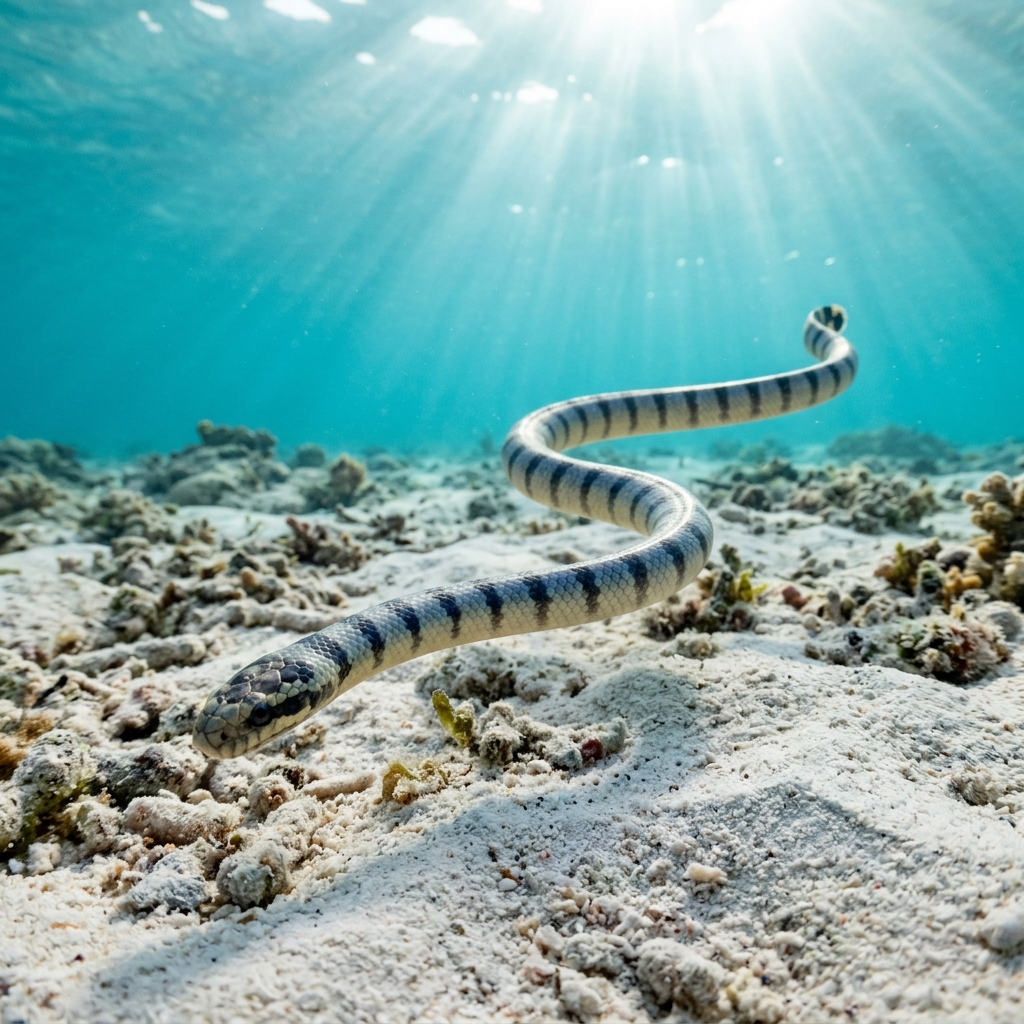
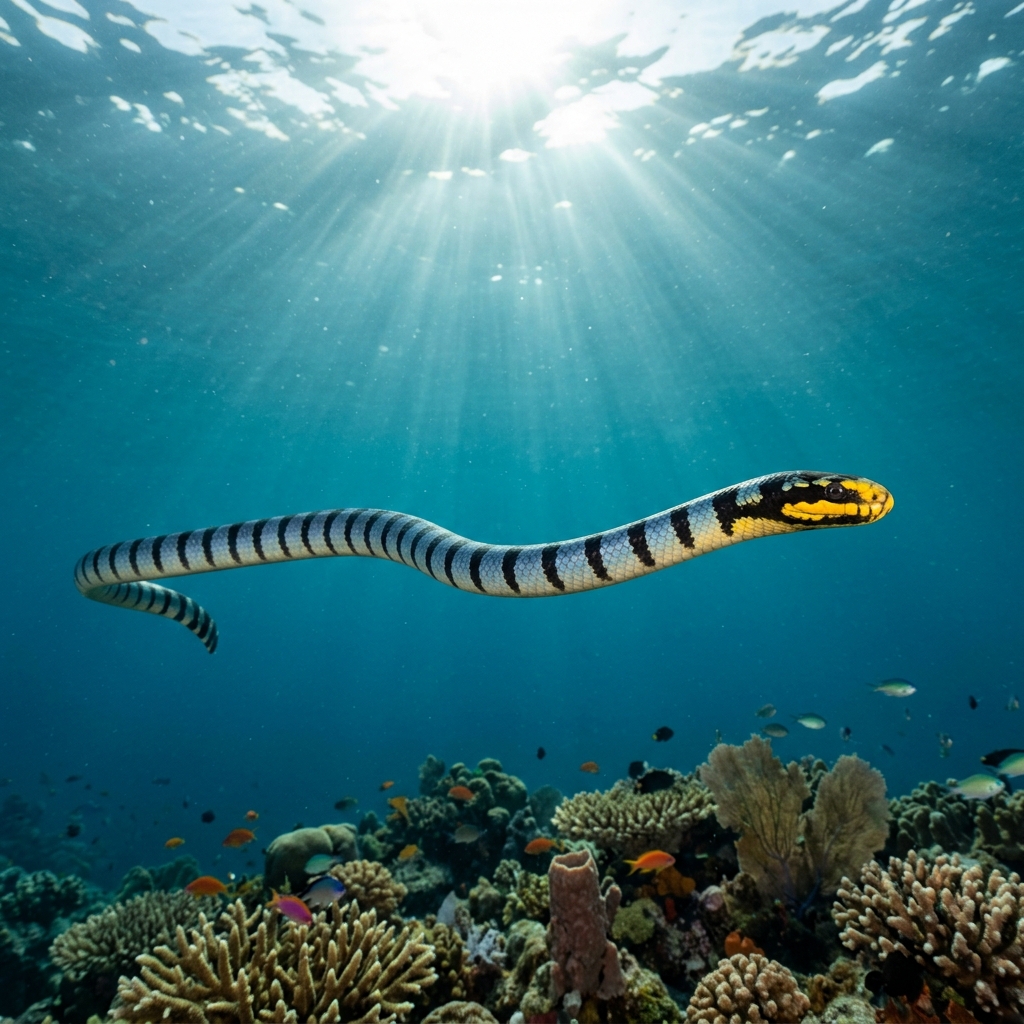
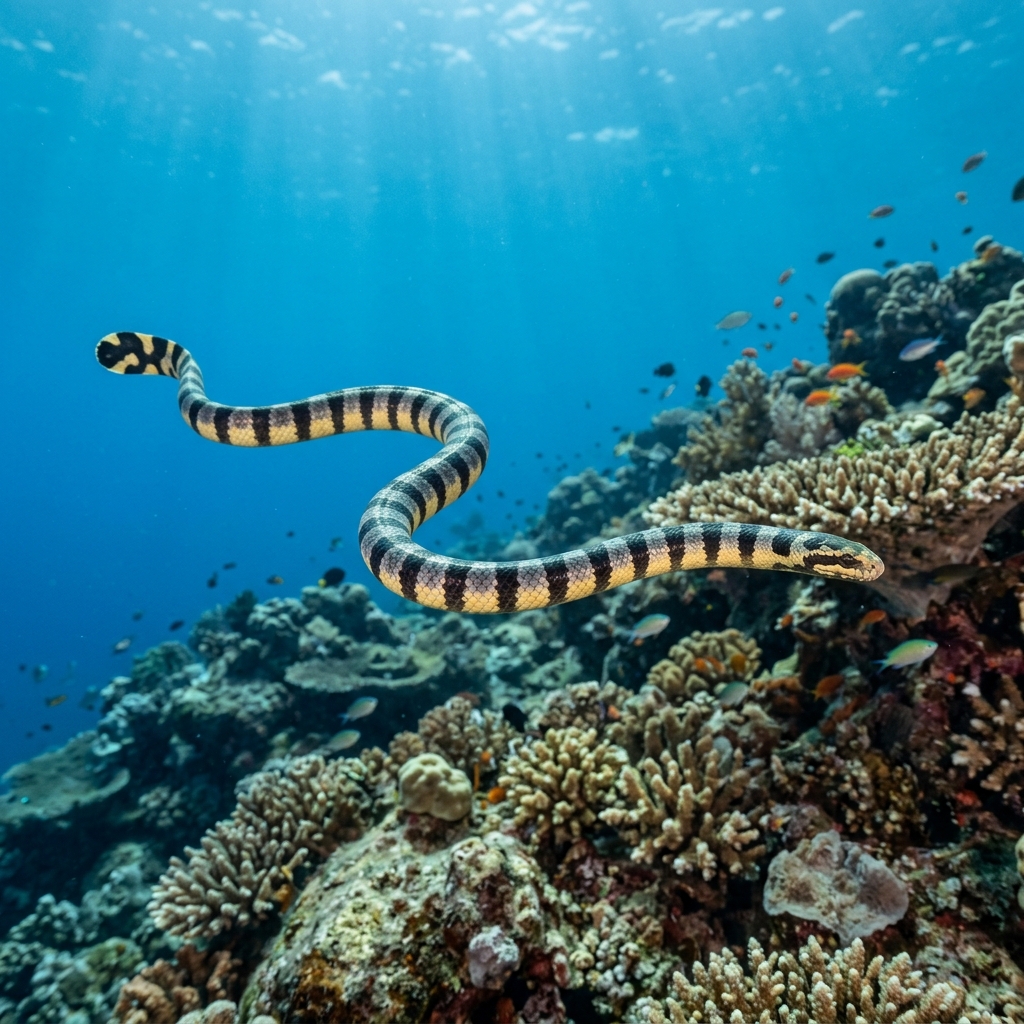
Look for a long, slender body, often with distinctive banding patterns in shades of black, grey, yellow, or green. Their paddle-shaped tail is a key identifier, perfectly adapted for swimming. They move with a graceful, undulating motion, and their head is relatively small and streamlined. Unlike eels, sea snakes need to surface regularly to breathe, so you'll often see them near the surface.
Elapidae
Imagine gliding through the turquoise waters, when suddenly, a sleek, serpentine form catches your eye – a Sea Snake! These fascinating reptiles, relatives of cobras and mambas, are a relatively common sight for divers and snorkellers across tropical and subtropical oceans. Typically around 120cm long, they inhabit depths from the surface down to 30 meters, though specific habitat and diet information is not readily available. While encounters are rarely dangerous, respect is key. Sea Snakes are highly venomous, but generally placid, and attacks on humans are rare. Often, they're simply curious, approaching divers to investigate before moving on. Their presence adds a unique thrill to any dive, a reminder of the ocean's incredible biodiversity.
Safety Warning
Highly venomous but rarely aggressive. Do not touch or handle. Give space if they approach to investigate.