Megaptera novaeangliae
13.2m
0-616m
150 sites
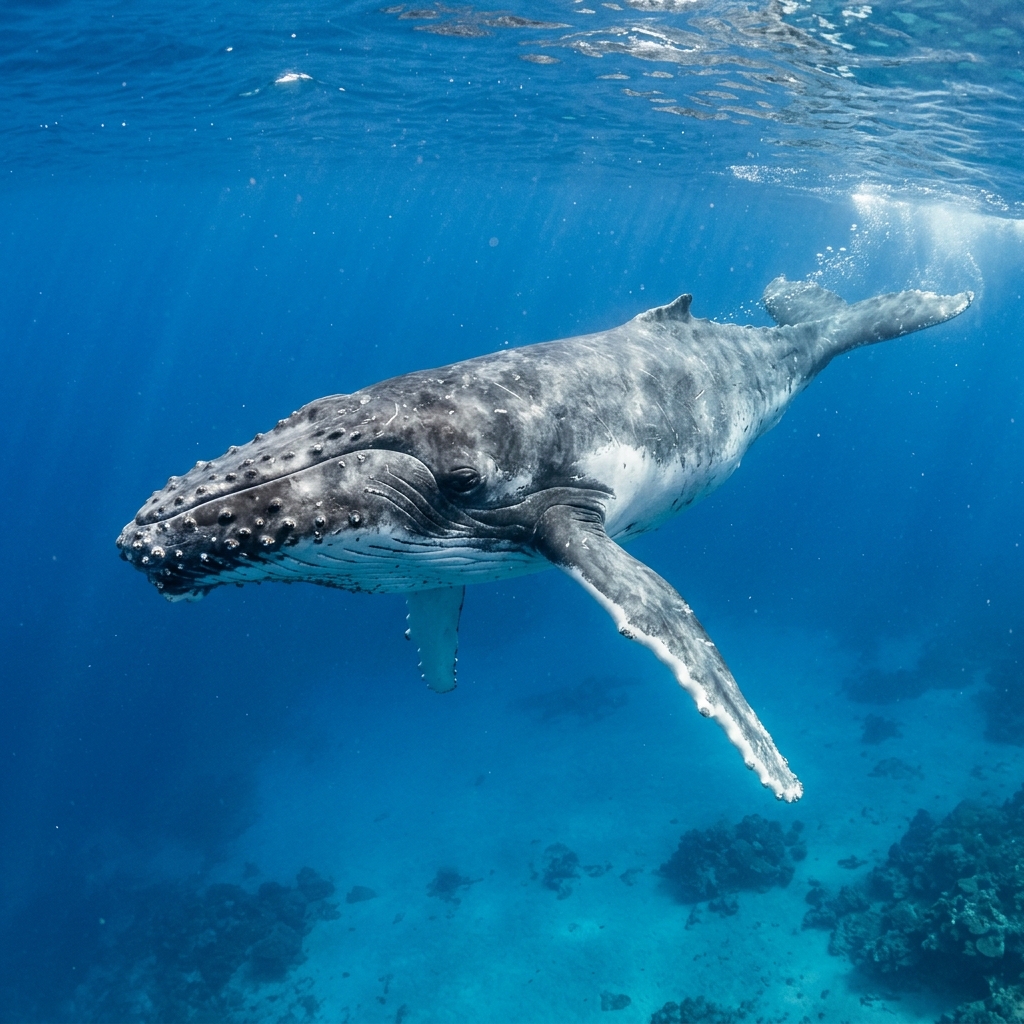
Humpback Whales are easily distinguished by their enormous size and distinctive knobbly head. Their most striking feature is their exceptionally long pectoral fins, which can be up to a third of their body length and are often white. Look for their unique tail fluke patterns, which are like fingerprints, varying from whale to whale. Finally, observe their behaviour; Humpbacks are famous for their breaching and lob-tailing (slapping their tail on the surface).
Balaenopteridae
Imagine gliding through the blue, and then *WHAM* – a creature the size of a bus appears, singing a song only its kind can truly understand. That's the magic of encountering a Humpback Whale! These gentle giants, reaching lengths of up to 19 meters, are a highlight for any diver or snorkeller. While you won't find them hanging out on the reef, these pelagic wanderers can be spotted in open ocean environments, often in areas like the Northeast Pacific, North Atlantic, Southern Australia, Hawaii, and the Indian Ocean. Keep your eyes peeled in shallower, epipelagic zones (0-616m) especially during migration or breeding seasons. Witnessing a Humpback is more than just a sighting; it's an experience. From their acrobatic breaches to their haunting songs, these whales are a spectacle. Some lucky divers even witness 'bubble-net feeding,' a cooperative hunting technique where whales work together to corral fish using bubbles, creating an underwater vortex of life.