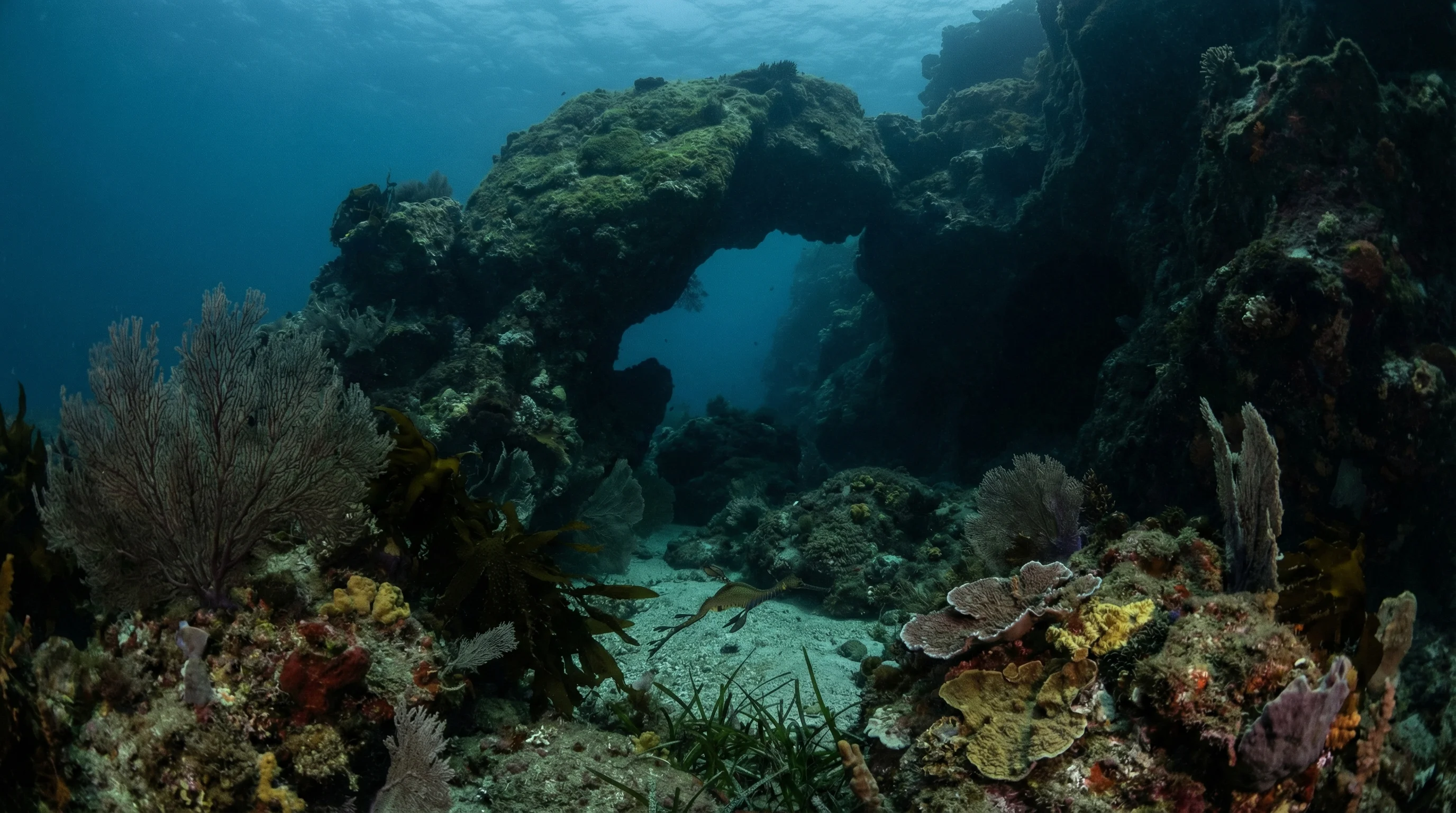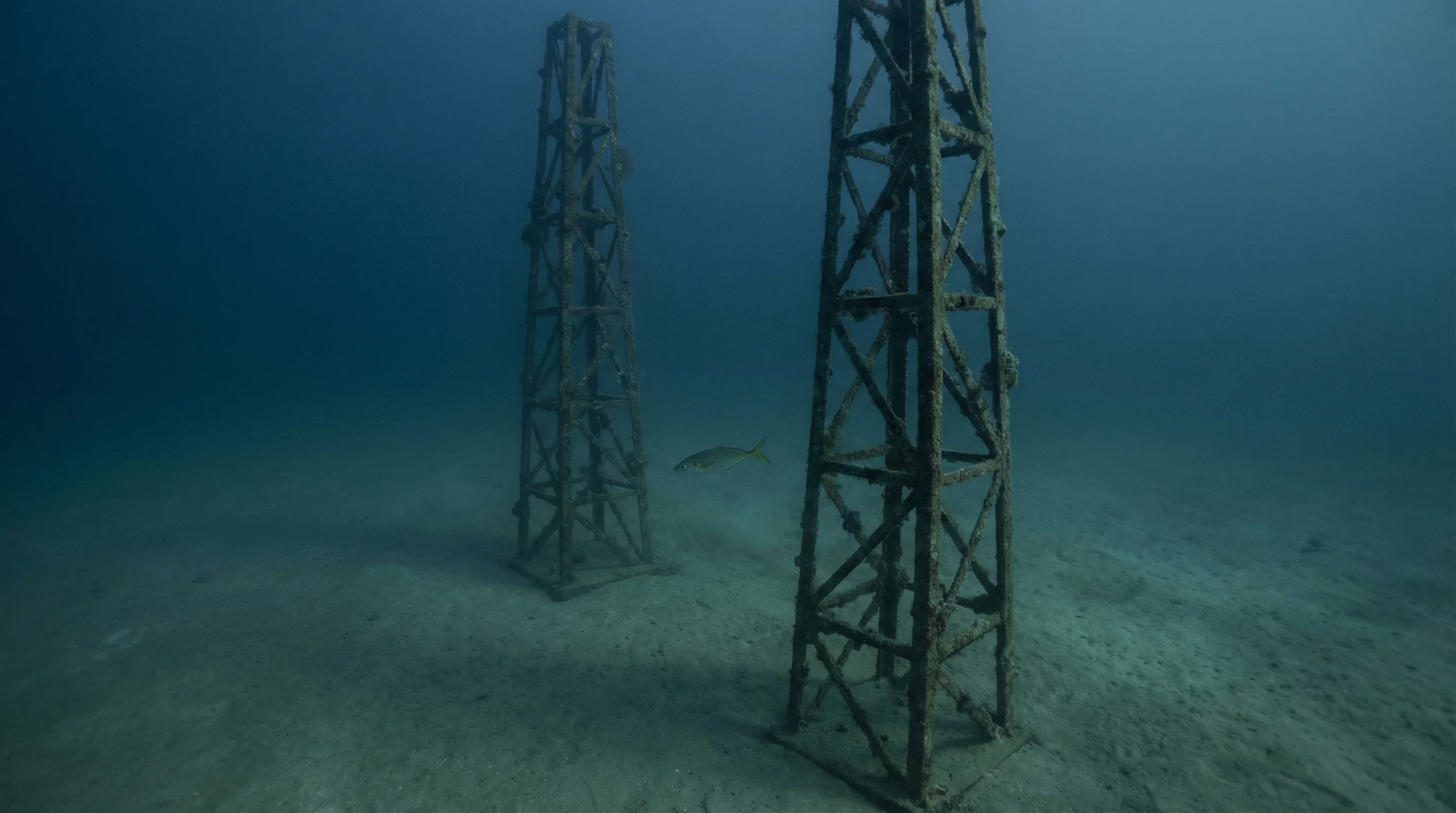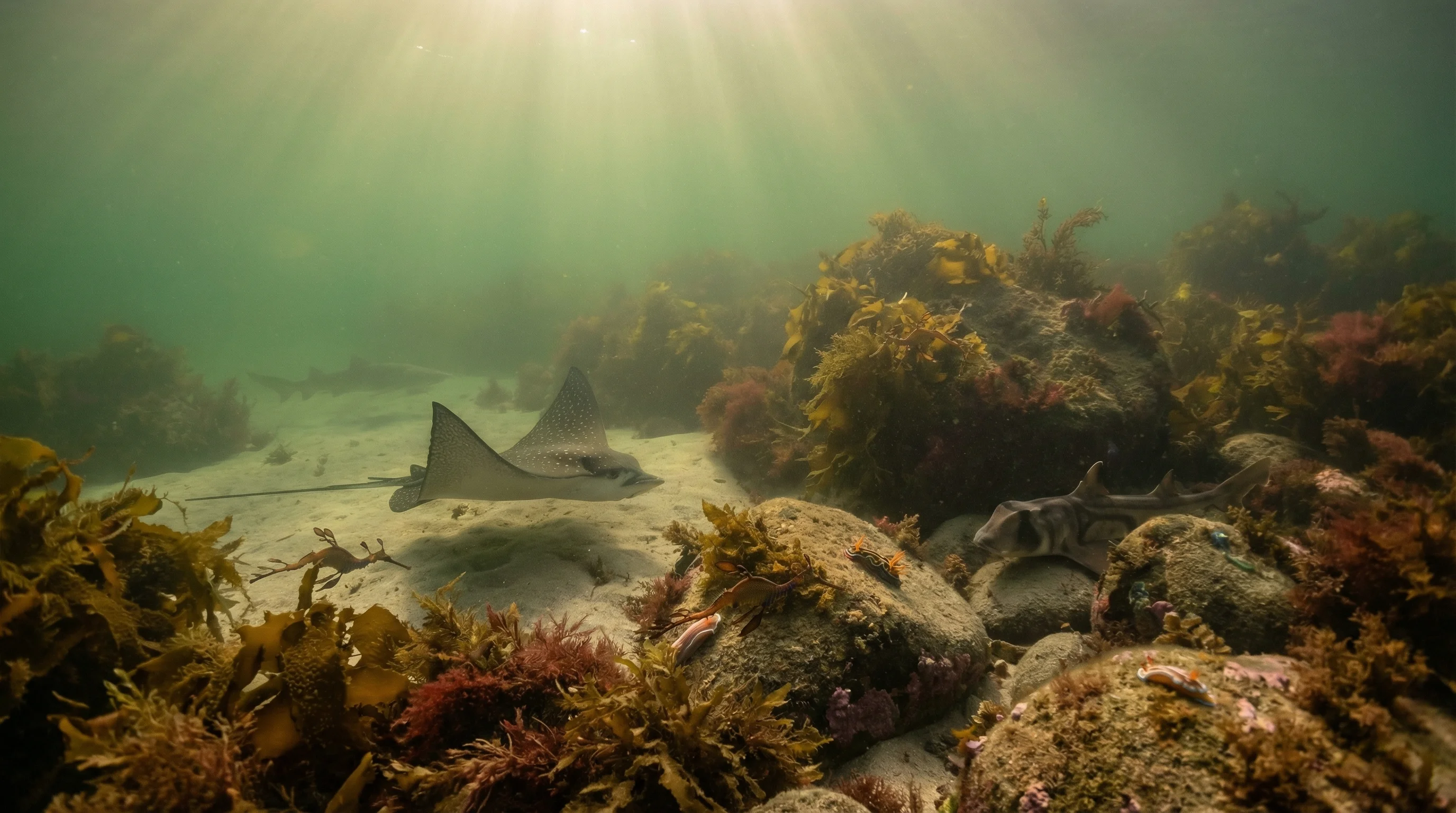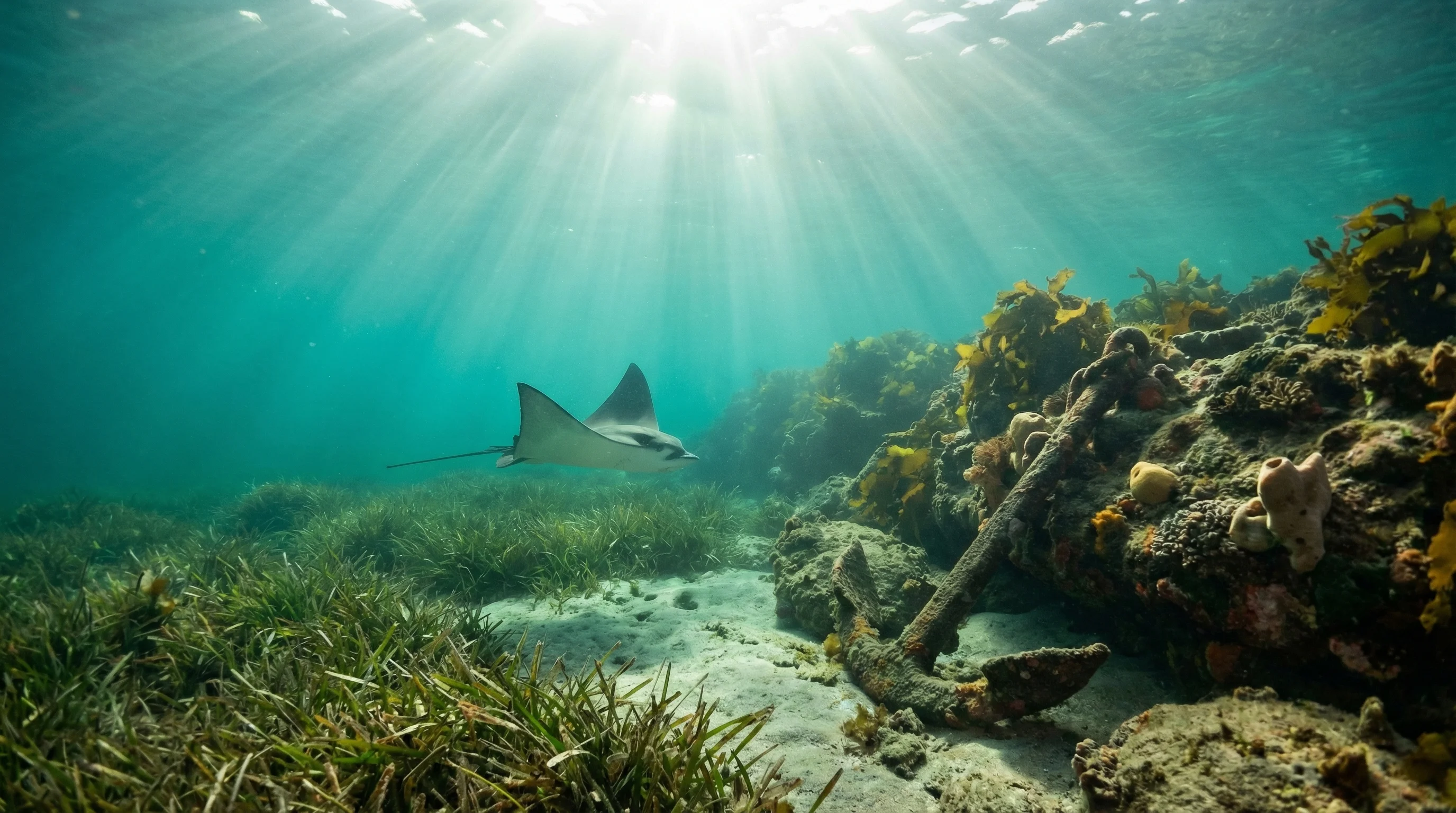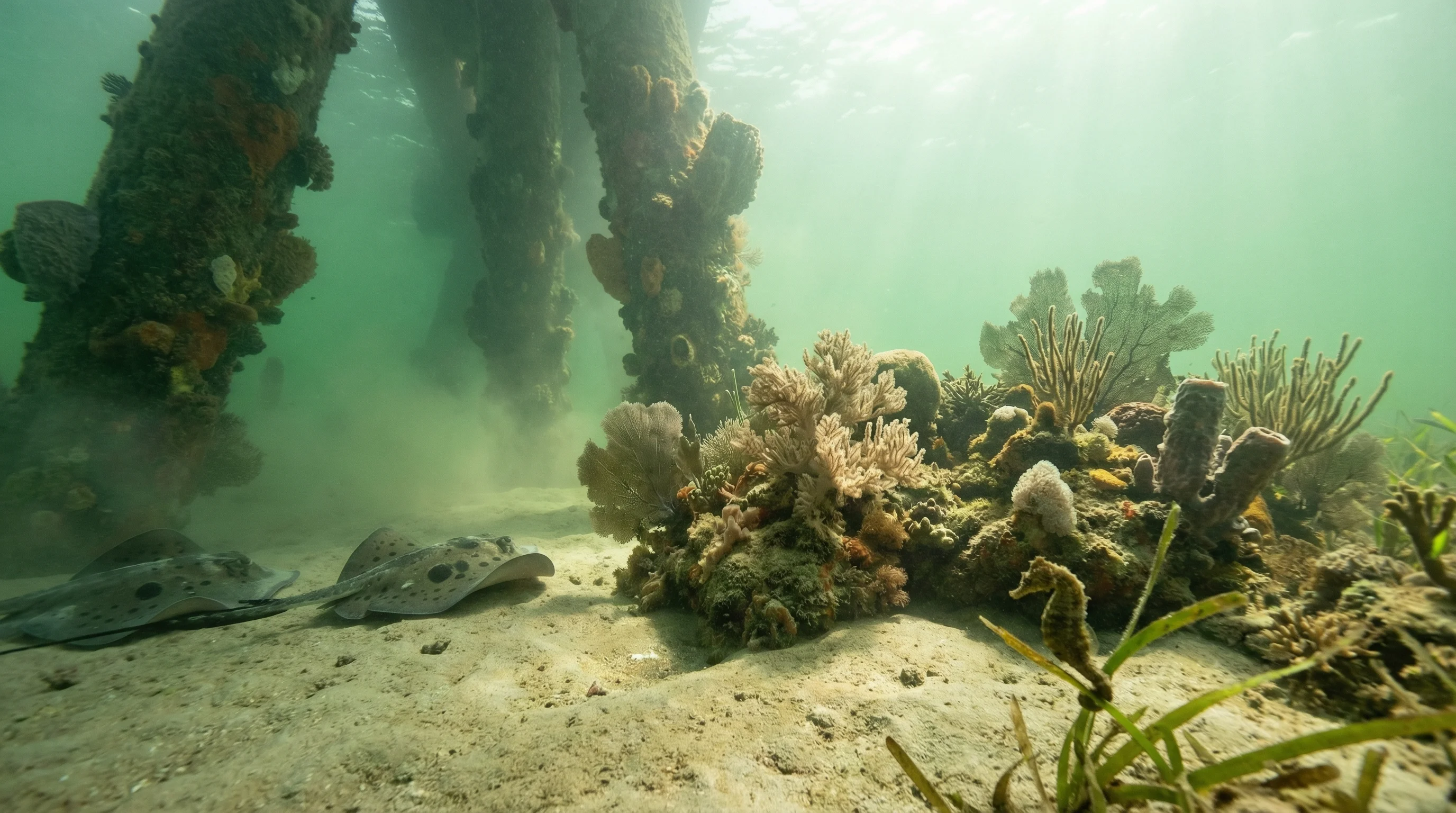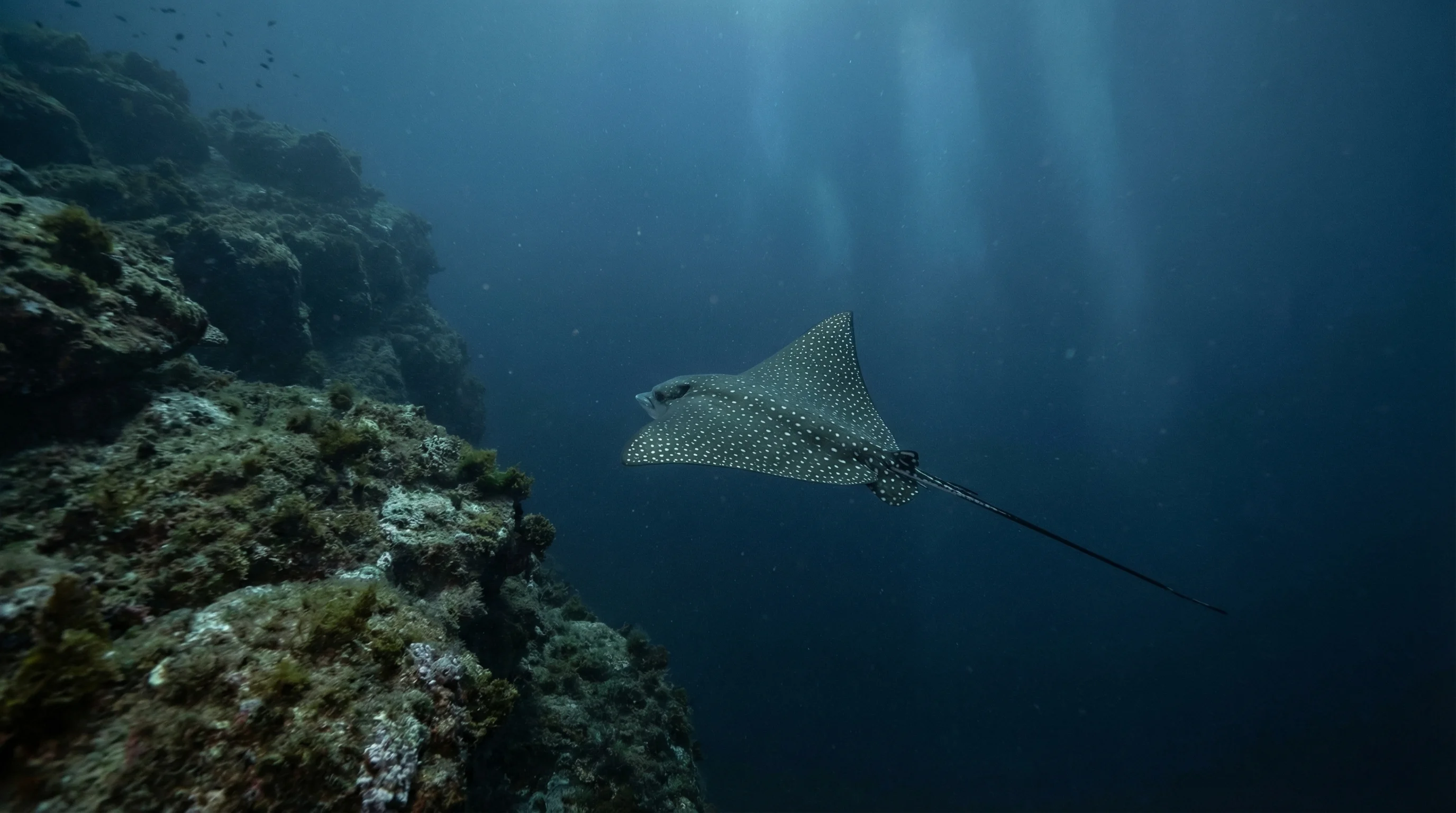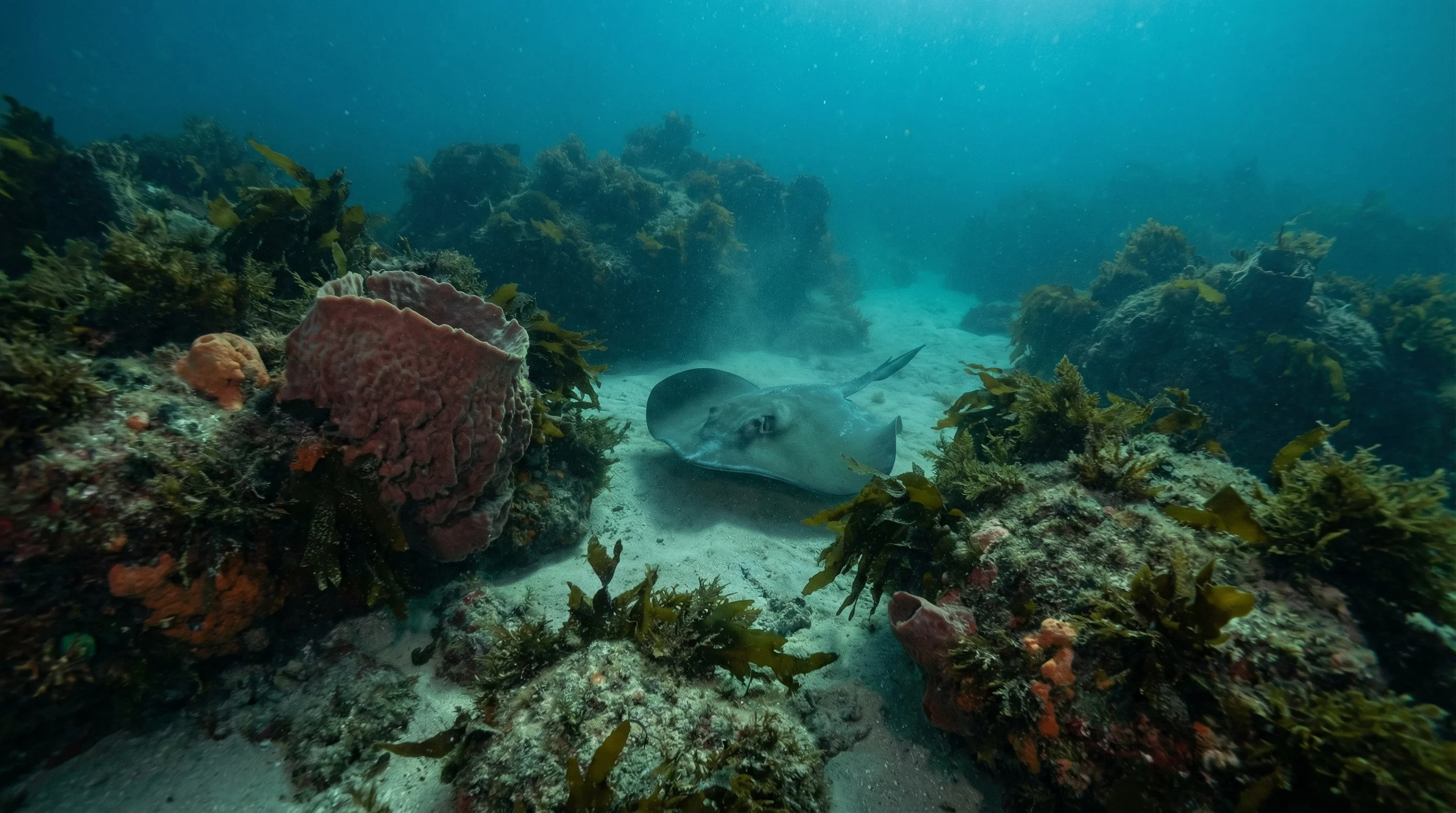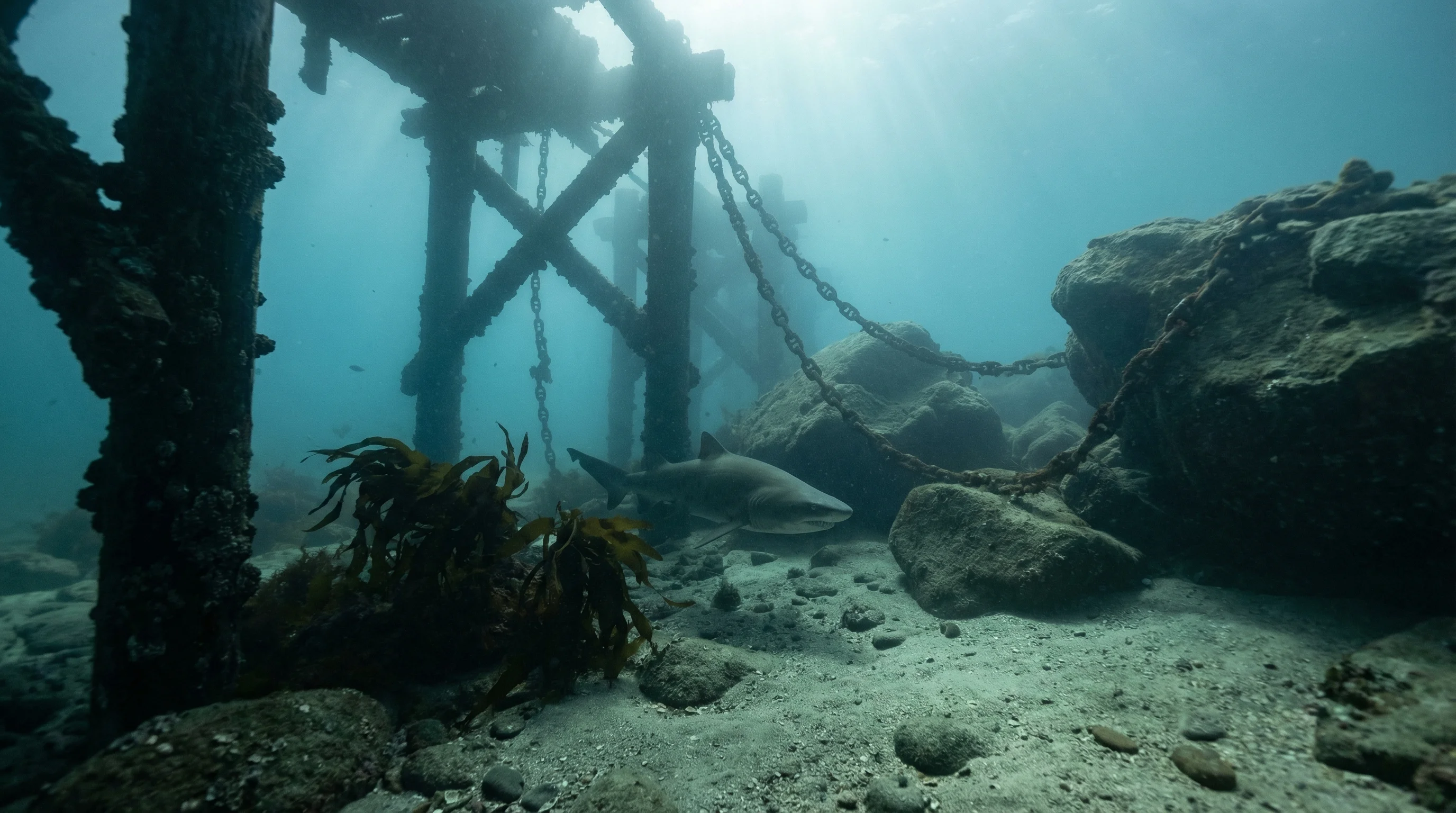
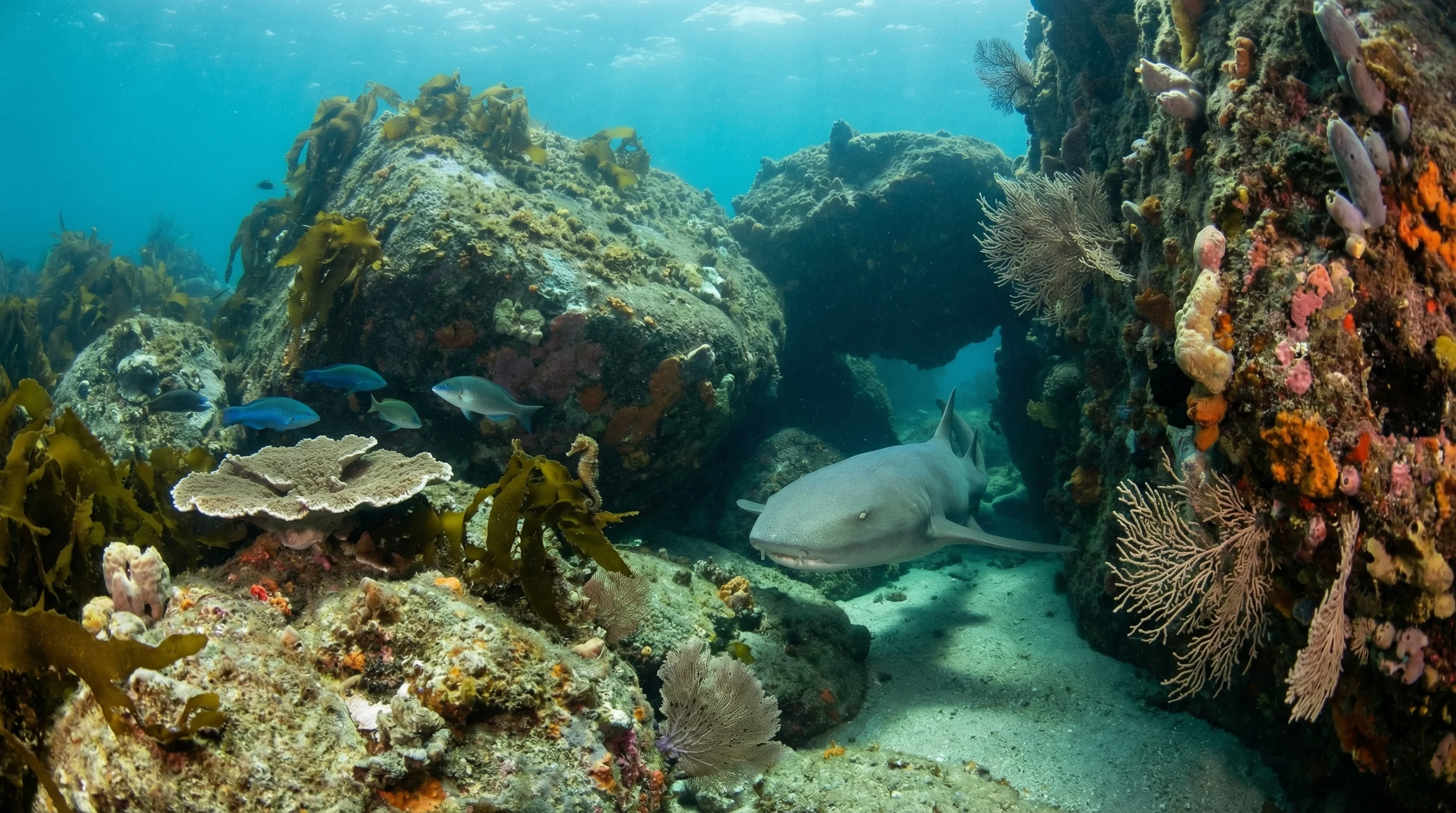
Moon Island offers a combination of reef diving and cave exploration in New South Wales waters, with depths running from the shallows down to 25 metres. Visibility here can reach 30 metres in good conditions, though moderate to strong currents mean you need to time your entry and plan your drift. The cave sections require careful buoyancy control and awareness of overhead environments, so intermediate divers should be comfortable with both before heading in. Various reef species populate the site throughout the water column. January and February tend to deliver the clearest water. Watch for lionfish, particularly around cave entrances and rocky overhangs, and stay aware of boat traffic on the surface.
-33.08433, 151.67250
Plan your dive around slack water to manage the currents, and carry a surface marker buoy given the boat traffic at this site. Check locally for current facility availability before you head out.
Access info coming soon
Enter carefully from the beach or boat, and be aware of potential overhead environments like caves. If exploring caves, always carry a light and know your exit route. Keep an eye out for sharks and maintain good buoyancy control.
Depth
5-24m
Visibility
10-30m
Skill Level
Intermediate
Entry
Shore & Boat
Boat required
Current
Moderate
Typical Dive
60 min
Best Time
Jan, Feb, Mar
Moon Island in New South Wales requires intermediate diving skills due to moderate currents and depths reaching 25 metres. The site presents challenges including boat traffic and overhead environments that demand solid buoyancy control and navigation skills. Divers should be comfortable managing currents and planning dive profiles for depths beyond recreational entry levels.
Moon Island dive site reaches a maximum depth of 25 metres, offering a varied depth profile from shallow areas down to deeper sections. The site's depth range allows for multi-level diving and extended bottom times when properly planned. Divers can explore different sections according to their certification limits and gas management plans.
The optimal months for diving Moon Island are January and February during the Australian summer. These months typically offer calmer seas, warmer water temperatures, and better visibility compared to winter conditions. The summer period also provides more stable weather windows for boat access and shore entries.
Moon Island can be accessed by both shore entry and boat, providing flexibility for different diving operations. Shore access allows independent diving when conditions permit, whilst boat access can provide easier entry points and coverage of more distant sections. The dual access options make the site accessible for various diving logistics and group sizes.
Moon Island presents several hazards including boat traffic, strong currents, overhead environments, and lionfish. Divers must maintain proper buoyancy when navigating overhead sections and carry surface markers due to boat activity above. The moderate to strong currents require good fitness levels and awareness of surge conditions, whilst lionfish demand careful hand placement and awareness.
Diving at Moon Island in Newcastle requires the following certifications: Open Water. Always dive within your training limits.
Yes, equipment rental is available at or near Moon Island in Newcastle. Contact local dive operators for specific gear availability and prices.
Moon Island in Newcastle is home to Eel, Nudibranch, Weedy Seahorse, Seal, Hard Coral, and Grey Nurse Shark. Marine life sightings vary by season and conditions.
Moon Island in Newcastle has depths ranging from 5 metres to 24 metres.
A typical dive at Moon Island in Newcastle lasts approximately 60 minutes. Actual dive time depends on depth, air consumption, and conditions.