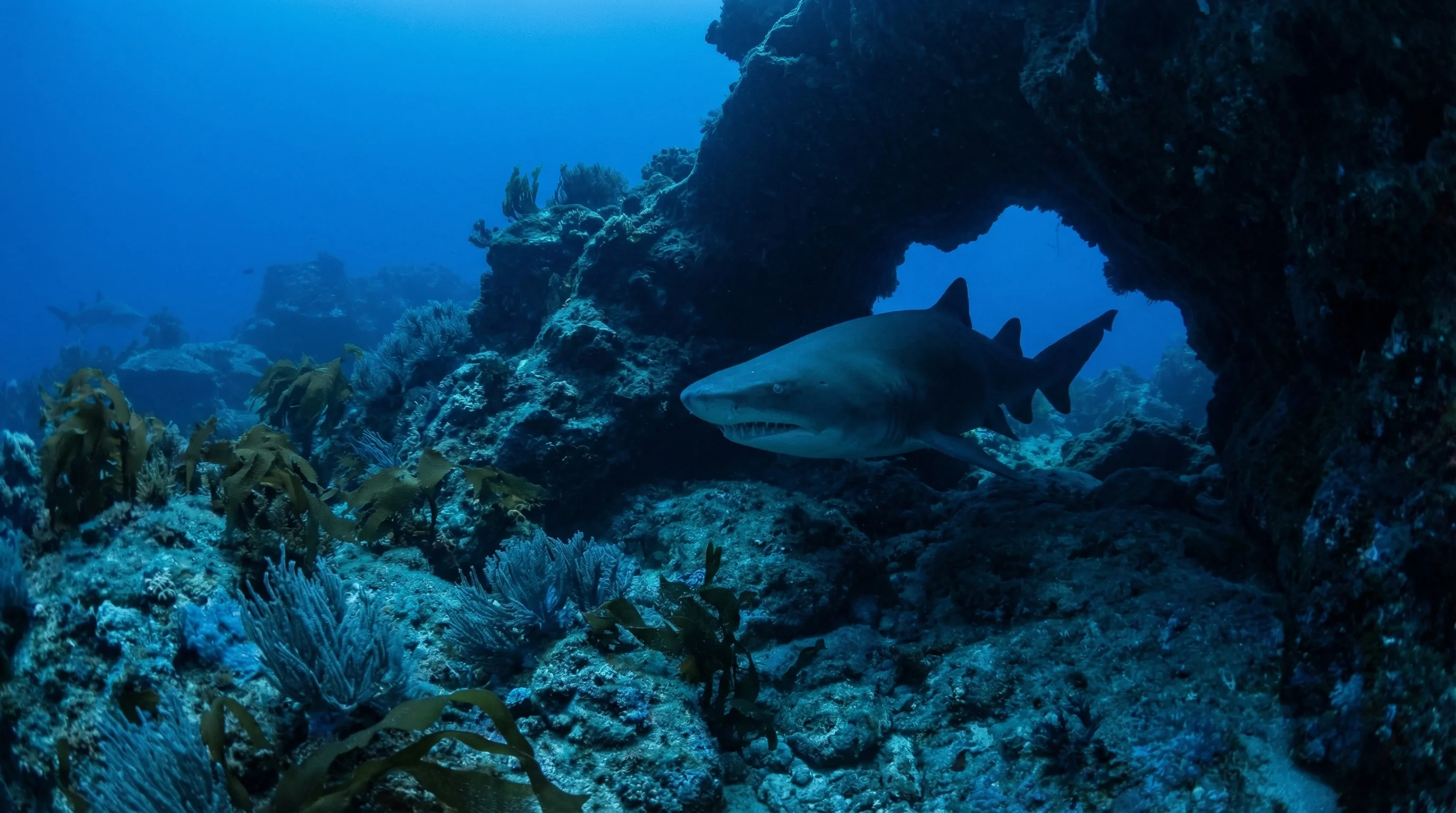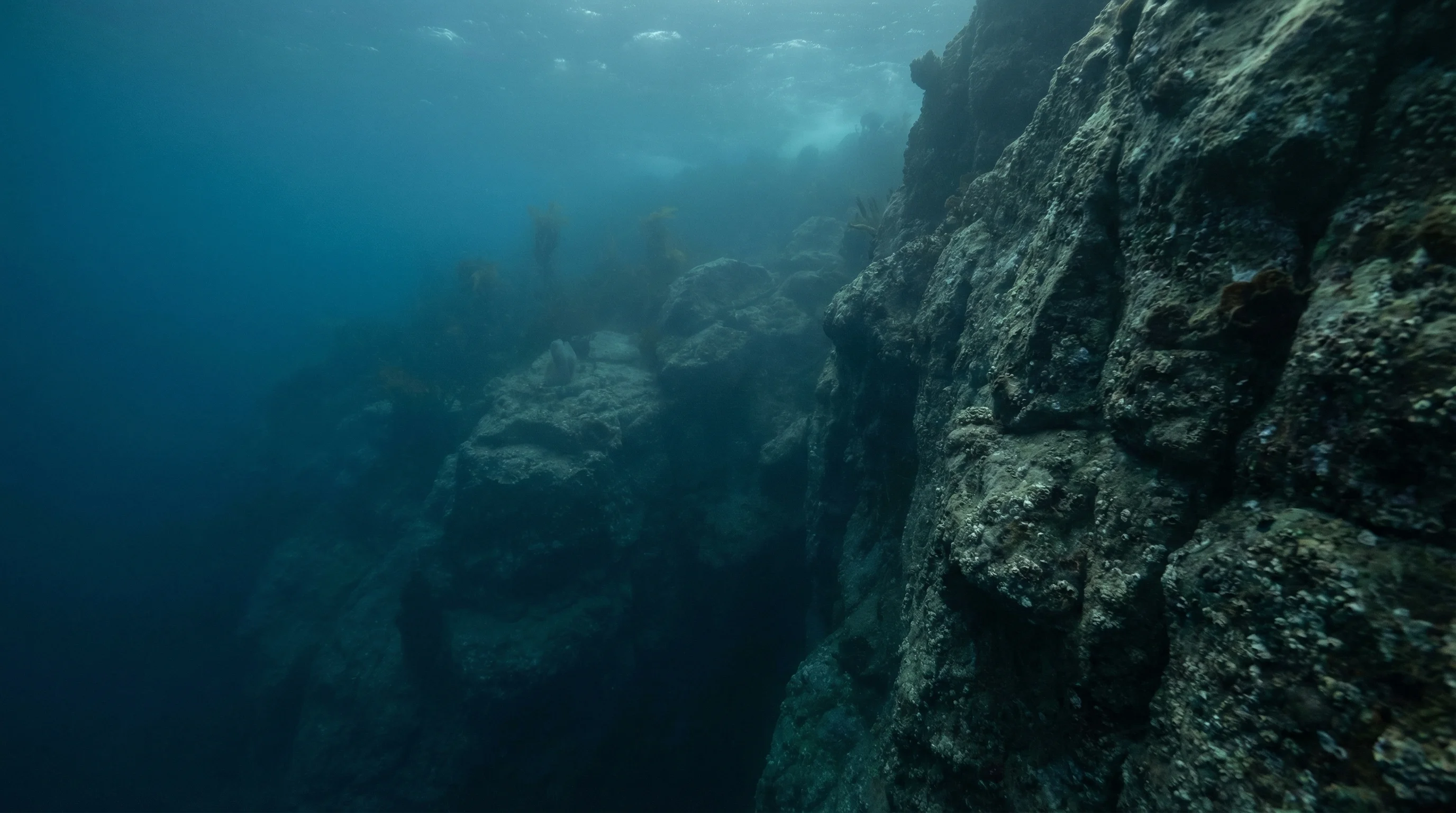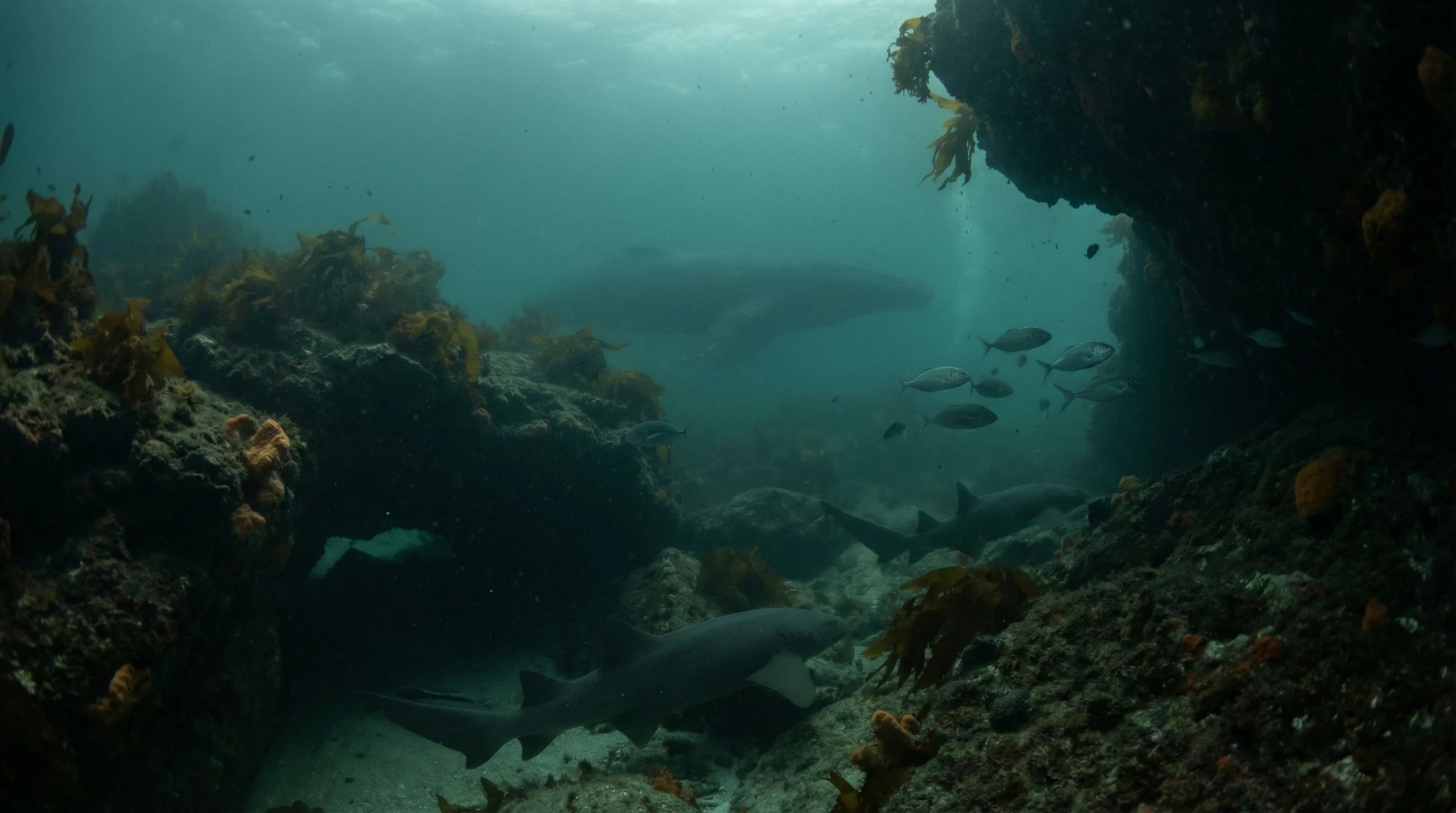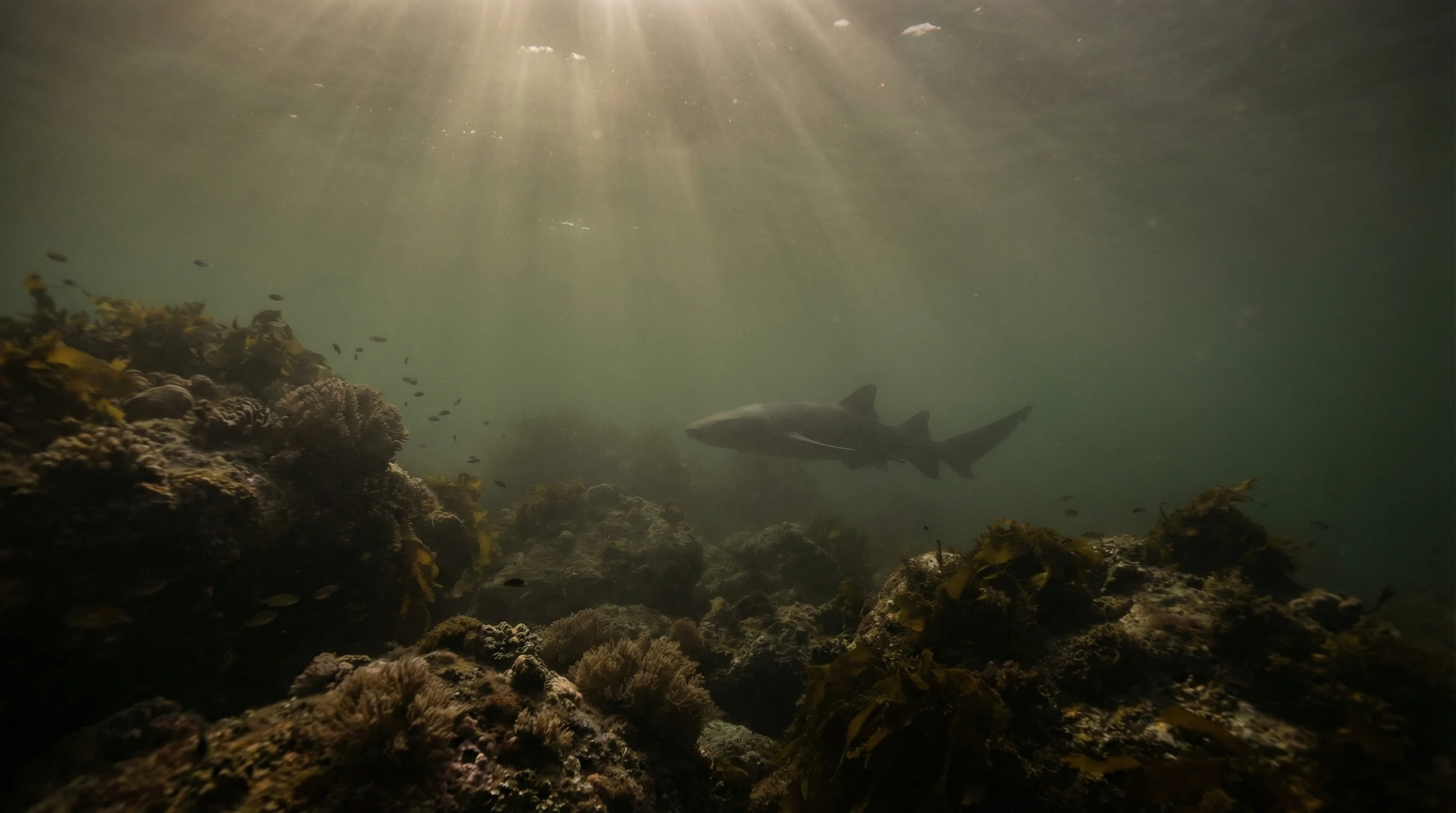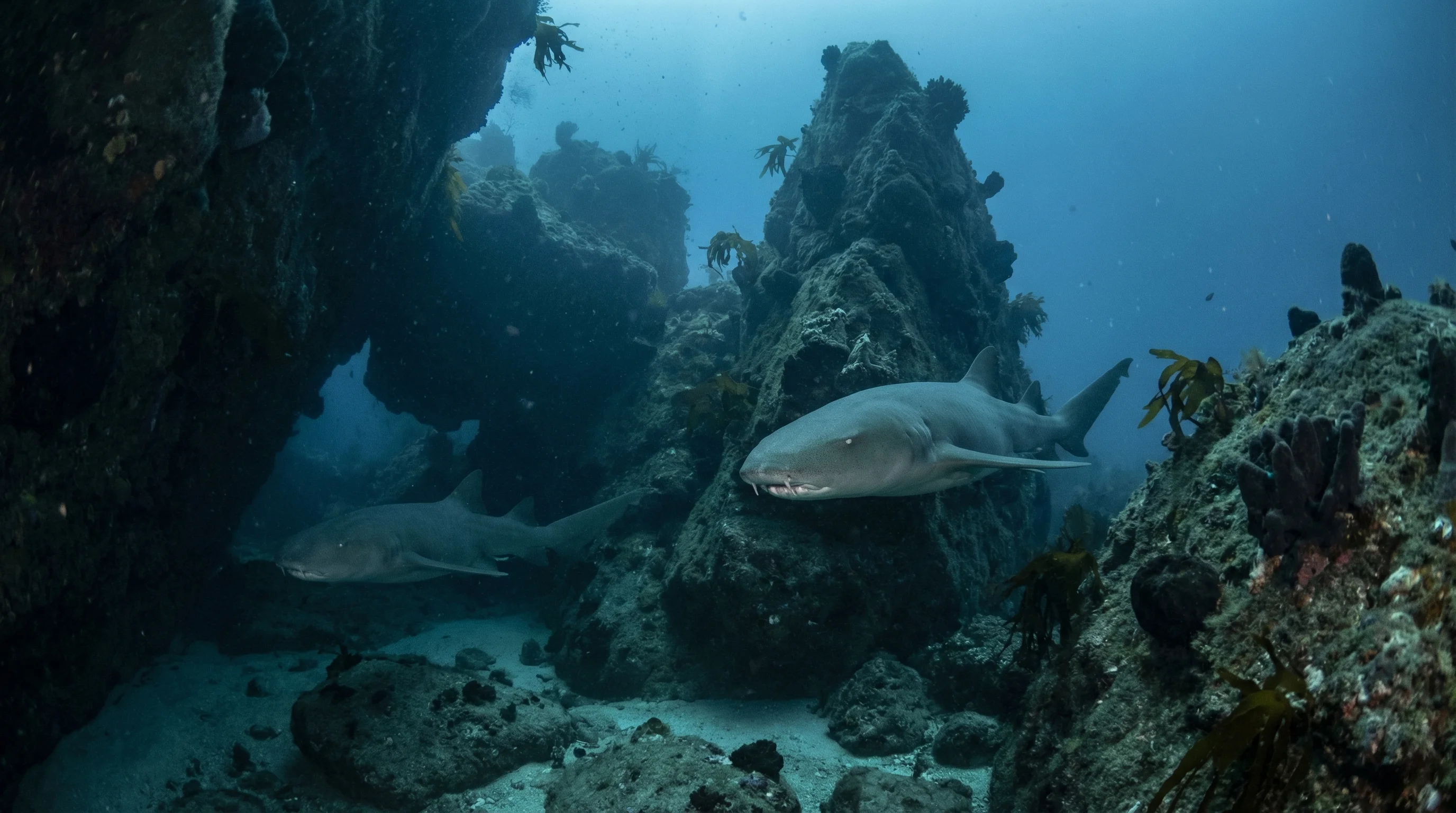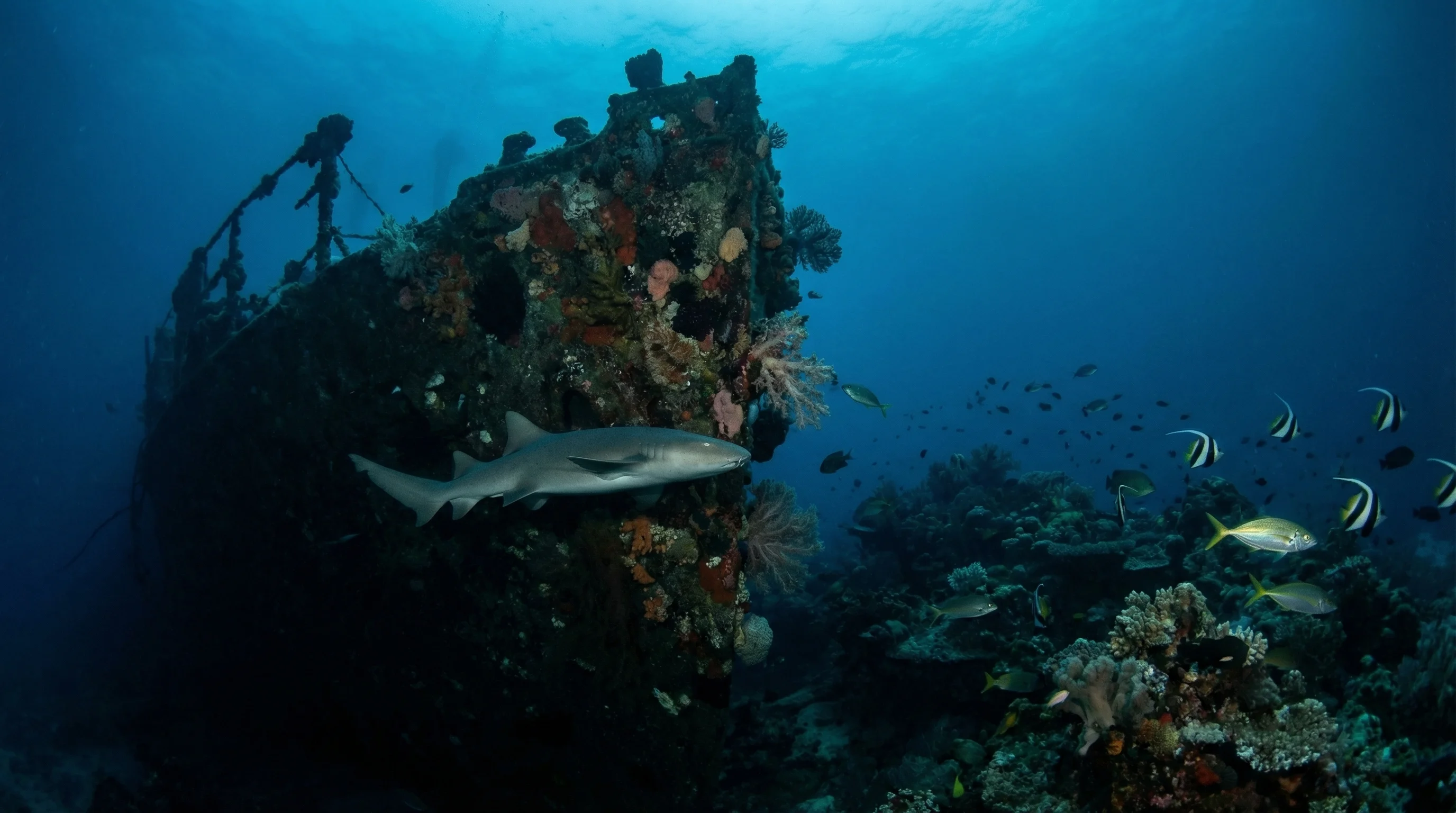
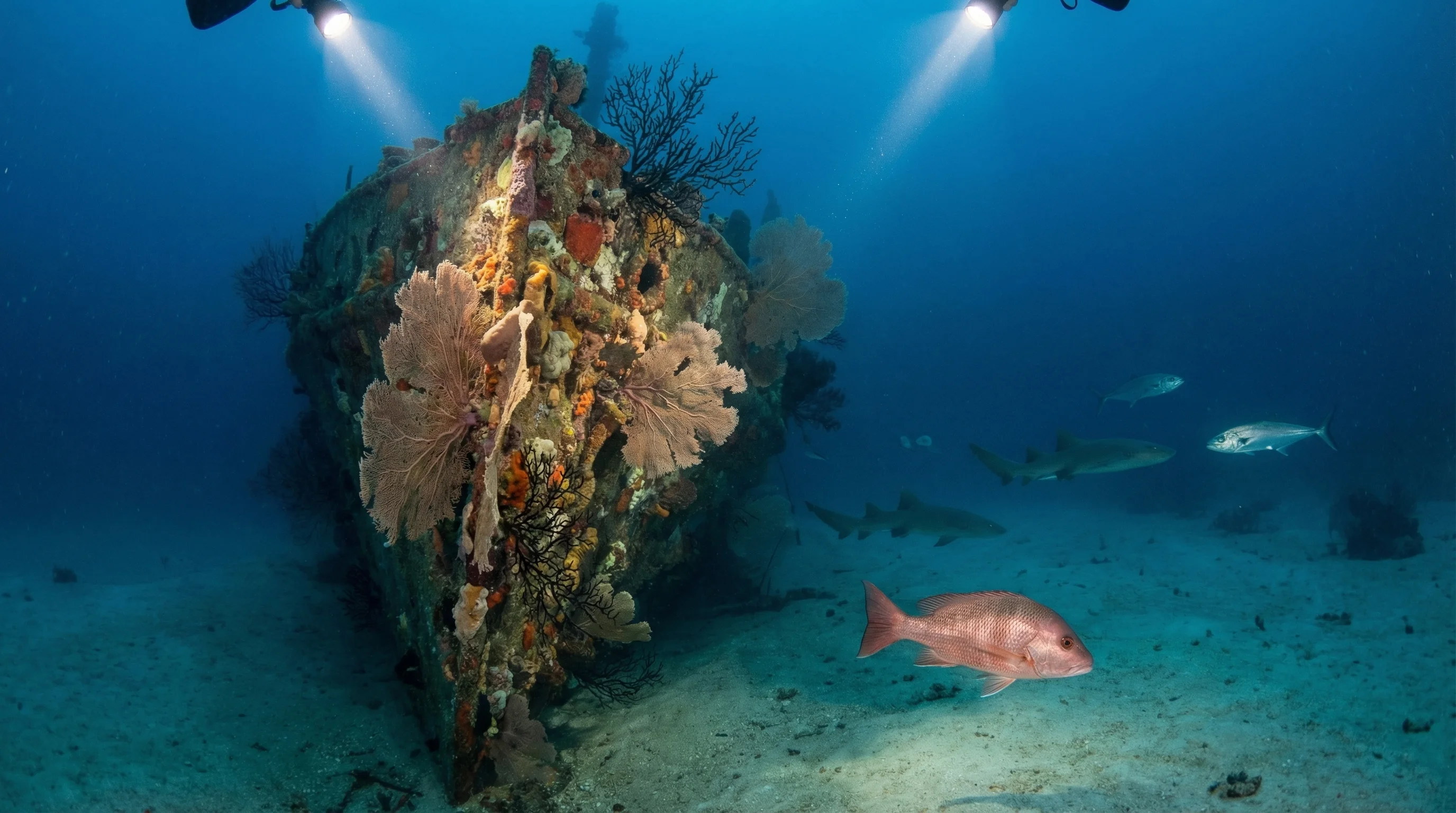
The SS Catterthun is a 19th-century passenger steamship resting at 56 to 60 metres off New South Wales, placing this firmly in technical diving territory with mandatory decompression. The wreck sits alongside a wall, giving experienced divers two distinct environments to work within a single bottom time. Visibility swings wildly from near-zero to 30 metres depending on conditions, so timing your dive matters. Strong currents run regularly, and boat traffic adds another layer of hazard management. Bronze whaler sharks patrol the site with some regularity, and nannygai are present around the structure. This is not a wreck to approach casually.
-32.43090, 152.57833
April through September generally offers the most stable visibility windows, but conditions can shift fast, so get a current local briefing before committing your gas plan. Carry a surface marker buoy and a backup, as strong currents and boat traffic make a clean ascent line non-negotiable.
The site is approximately 4 kilometres off the coast of Seal Rocks and requires access via a boat. Launching facilities at Seal Rocks itself are limited.
This is a very challenging dive due to its depth, which is beyond standard recreational limits, and the potential for very strong currents. Mandatory decompression stops are required, and a dive of around 30 minutes can result in over 35 minutes of decompression time. The site is exposed to the open ocean.
Depth
55-60m
Visibility
3-35m
Skill Level
Technical
Entry
Boat
Boat required
Water Temp
17-26°C
Current
Strong
Typical Dive
45 min
Best Time
Apr, May, Jun, Jul, Aug, Sep
The SS Catterthun wreck lies between 56 and 60 metres deep off Seal Rocks, New South Wales. This technical dive site sits well beyond recreational diving limits and requires advanced decompression procedures. The wreck rests on the seabed in waters known for strong currents and variable visibility.
Diving the SS Catterthun requires technical diving certification, specifically deep diving and trimix qualifications. The wreck lies at 56 to 60 metres depth, making it a technical-only site that demands extensive training in decompression diving and mixed gas procedures. Recreational certifications are not adequate for this advanced dive site off Seal Rocks.
Bronze whaler sharks and nannygai are the notable marine species at the SS Catterthun wreck near Seal Rocks. The bronze whalers are frequently encountered around the wreck structure at depths between 56 and 60 metres. These deeper waters attract pelagic species alongside the colourful nannygai that shelter in the wreck's remaining structure.
The best months to dive the SS Catterthun are April through September, covering the Australian autumn and winter period. During these months, conditions off Seal Rocks typically offer more stable weather patterns for this challenging technical dive. Water temperatures during this period range from 17 to 26 degrees Celsius.
The SS Catterthun presents multiple technical diving hazards including mandatory decompression at 56 to 60 metres depth, strong currents, and visibility that can drop to zero metres. Boat traffic in the Seal Rocks area adds surface danger during ascent and descent. The combination of deep depth and strong currents makes this one of New South Wales' most challenging wreck dives.
A boat is essential to dive the SS Catterthun wreck off Seal Rocks, as the site lies in 56 to 60 metres of water beyond swimming distance from shore. Charter operators in Seal Rocks provide technical diving support and know the precise wreck location. The boat also provides a critical platform for managing the long decompression obligations required at this depth.
Visibility at the SS Catterthun ranges from zero to 30 metres depending on conditions and currents off Seal Rocks. Strong currents can reduce visibility dramatically by stirring up sediment around the wreck. At 56 to 60 metres depth, even good visibility days require powerful dive lights to properly explore the wreck structure.
Diving the SS Catterthun requires full technical diving equipment including twin cylinders or a rebreather, decompression stage bottles with appropriate trimix and oxygen blends, and redundant dive computers. The 56 to 60 metre depth demands mixed gas equipment, powerful torches for the low light conditions, and surface marker buoys for safe ascent in boat traffic. Complete backup systems are essential given the mandatory decompression obligations and strong currents.
SS Catterthun in Seal Rocks is a technical diving site requiring specialised training, equipment, and certifications beyond recreational limits.
SS Catterthun in Seal Rocks has depths ranging from 55 metres to 60 metres.
A typical dive at SS Catterthun in Seal Rocks lasts approximately 45 minutes. Actual dive time depends on depth, air consumption, and conditions.