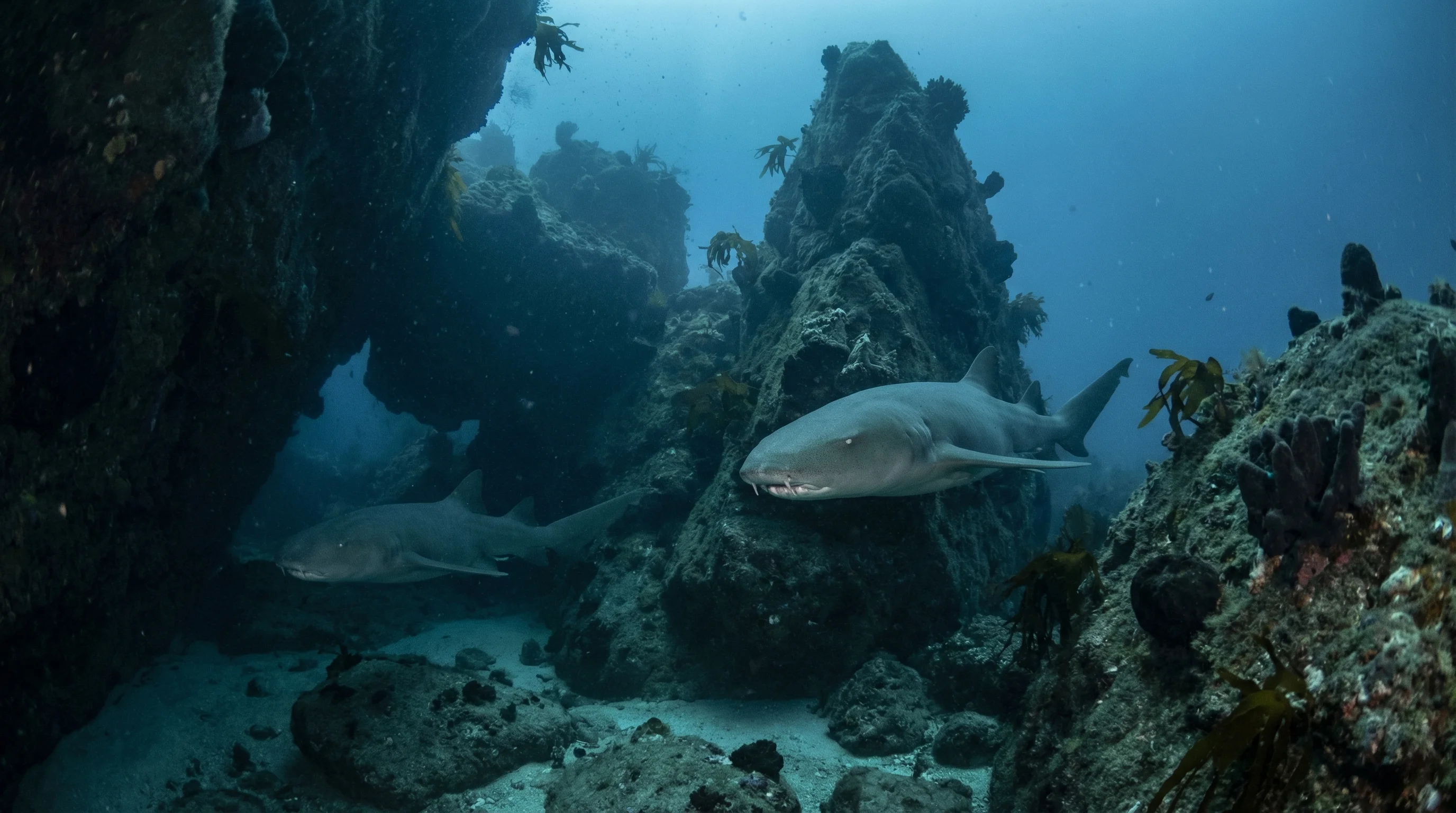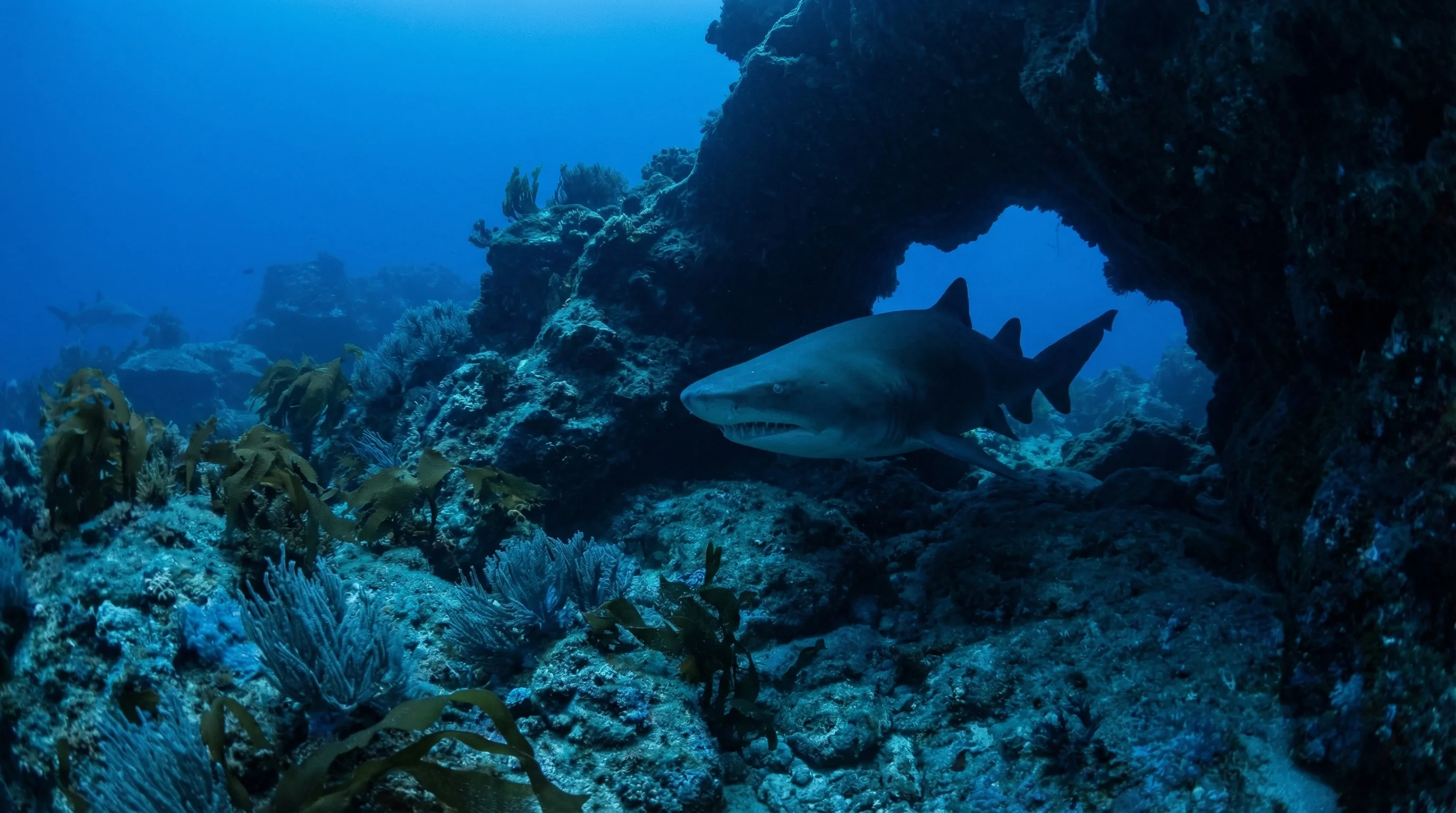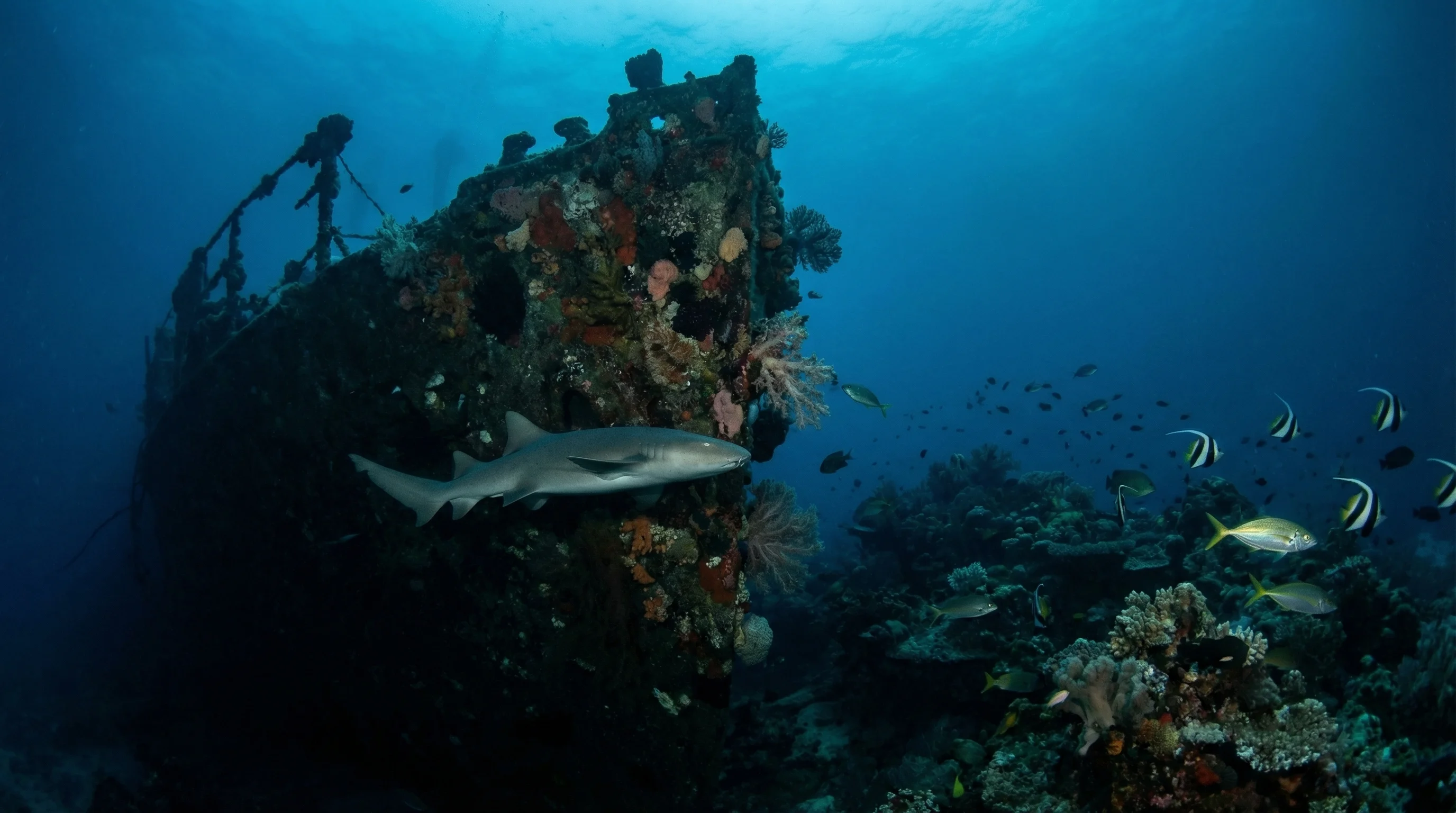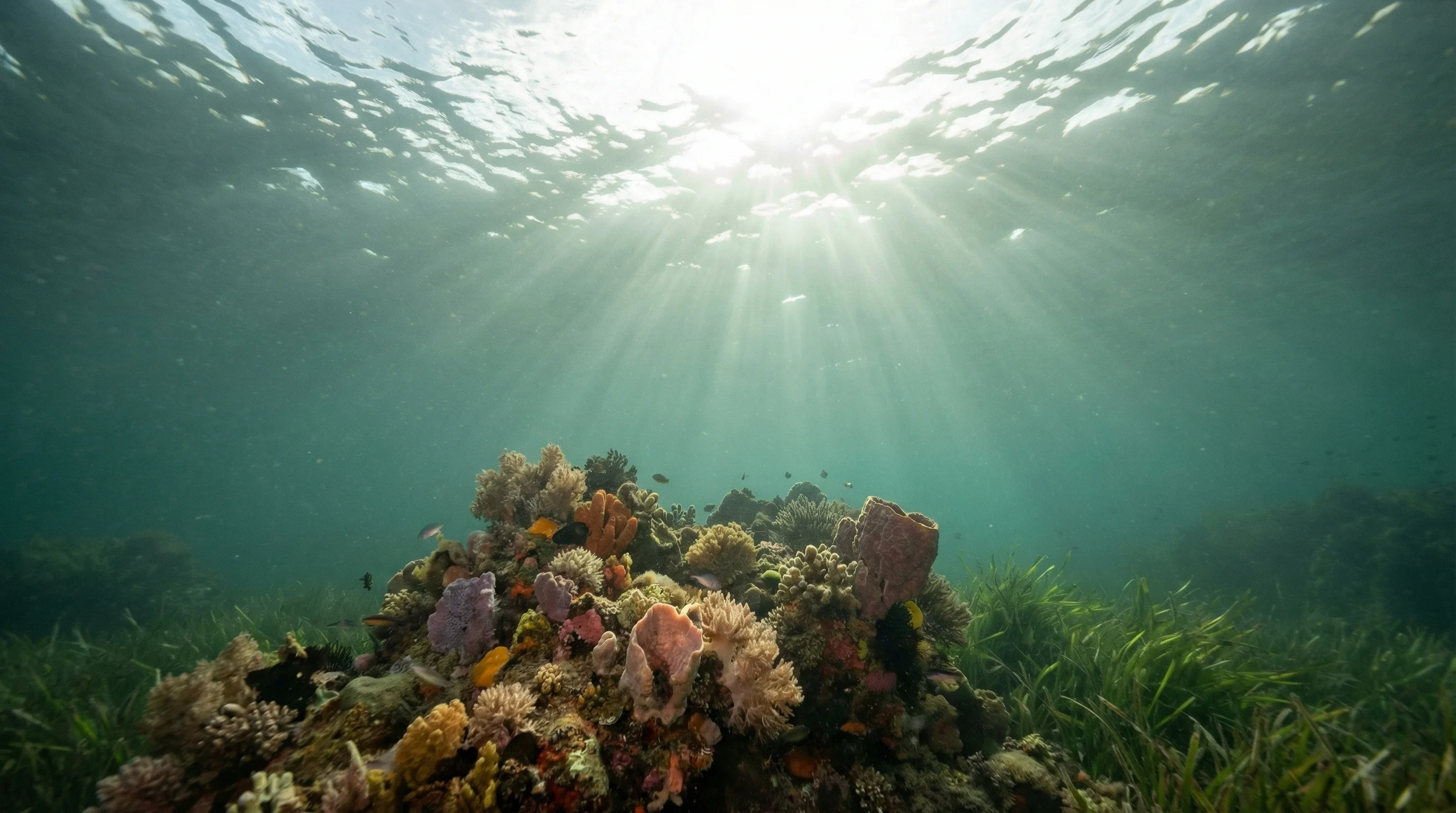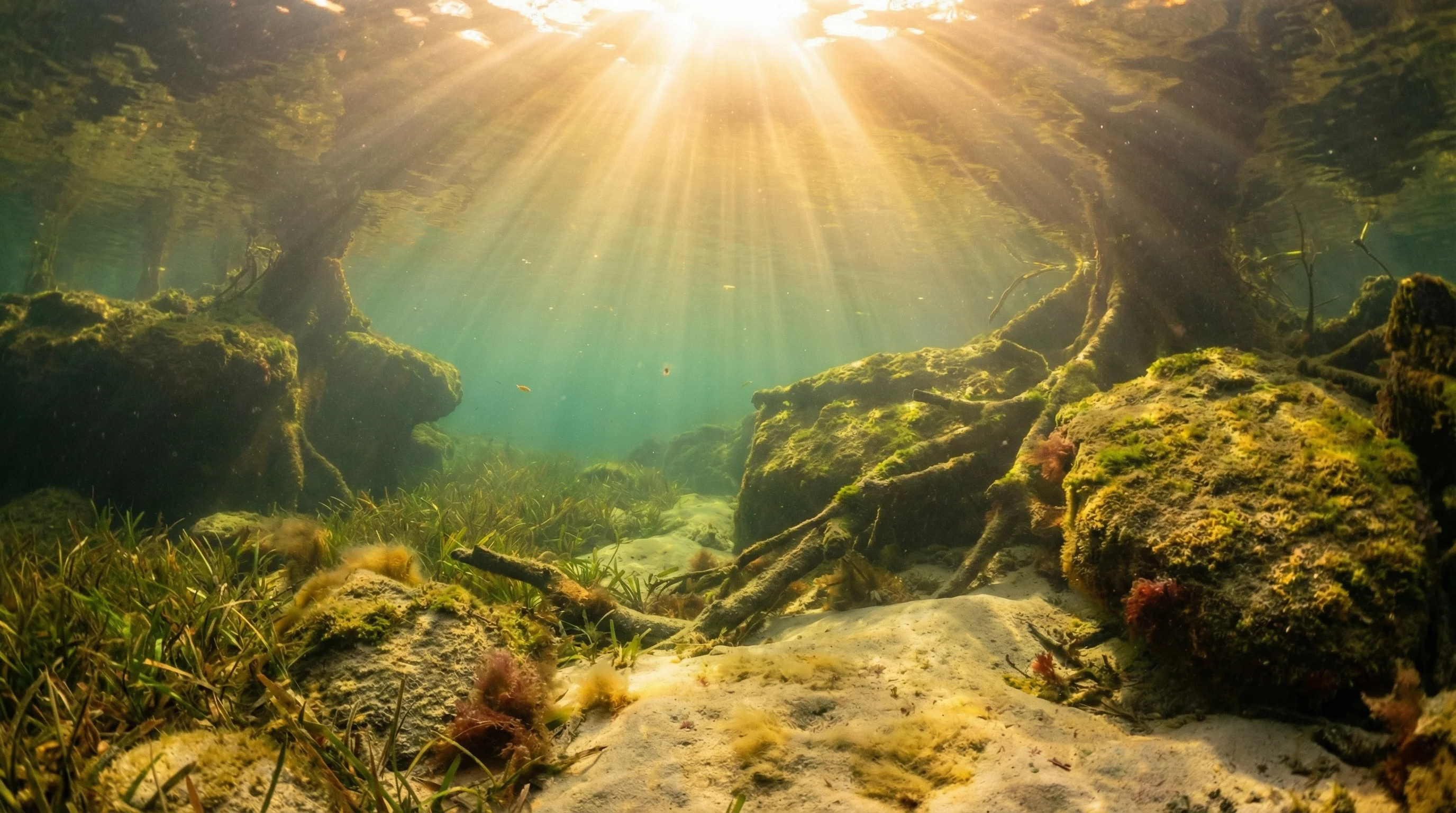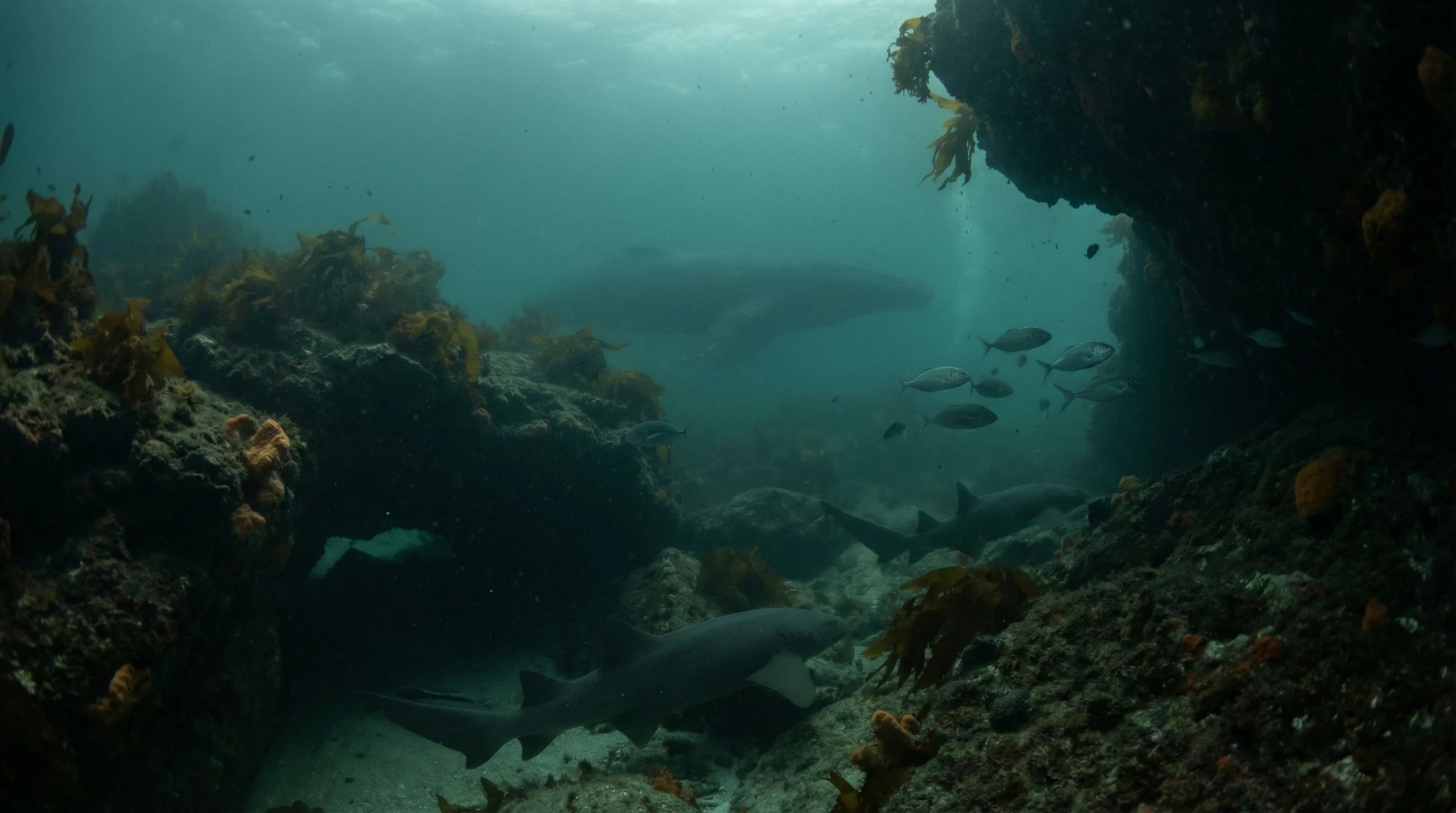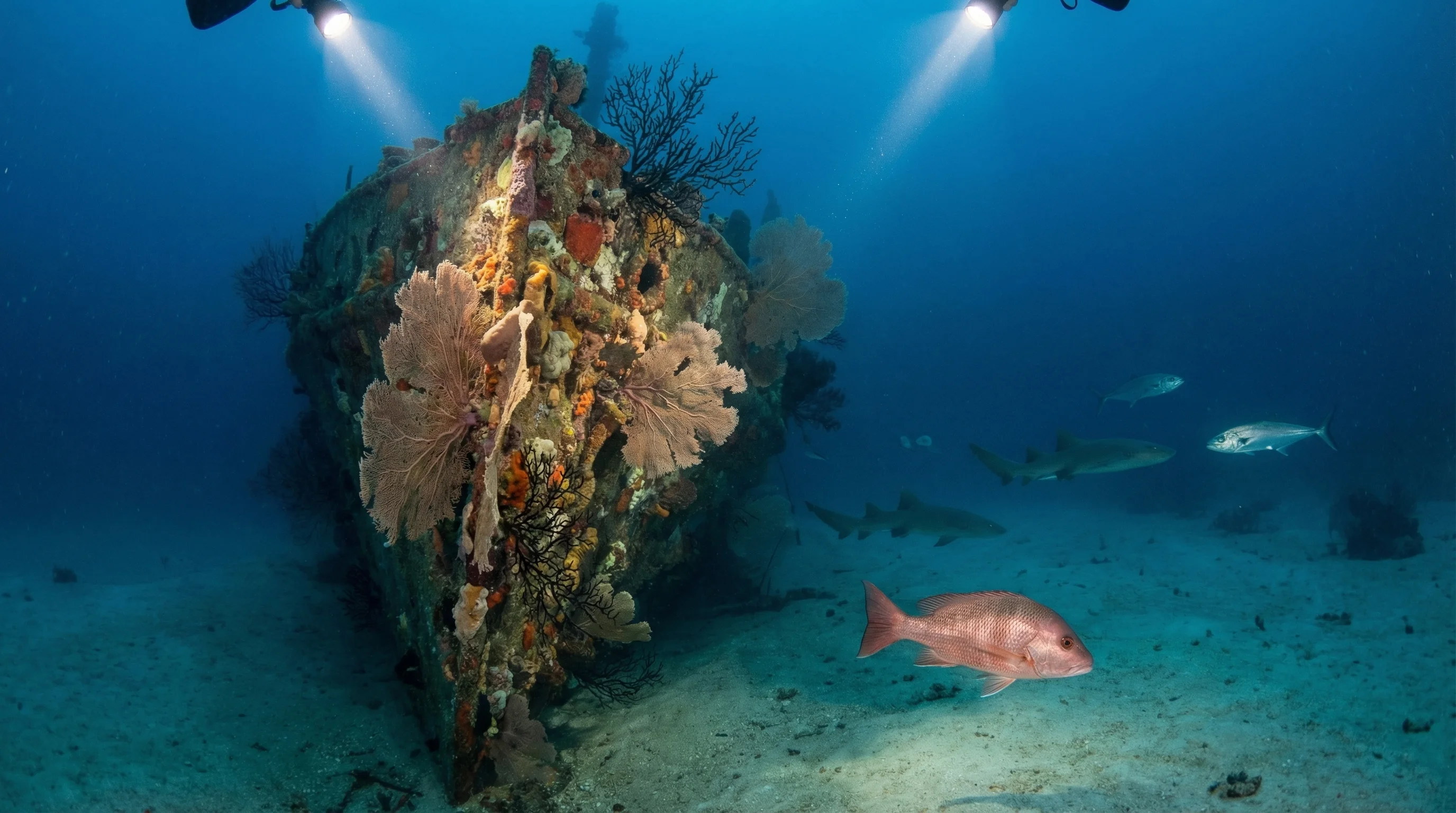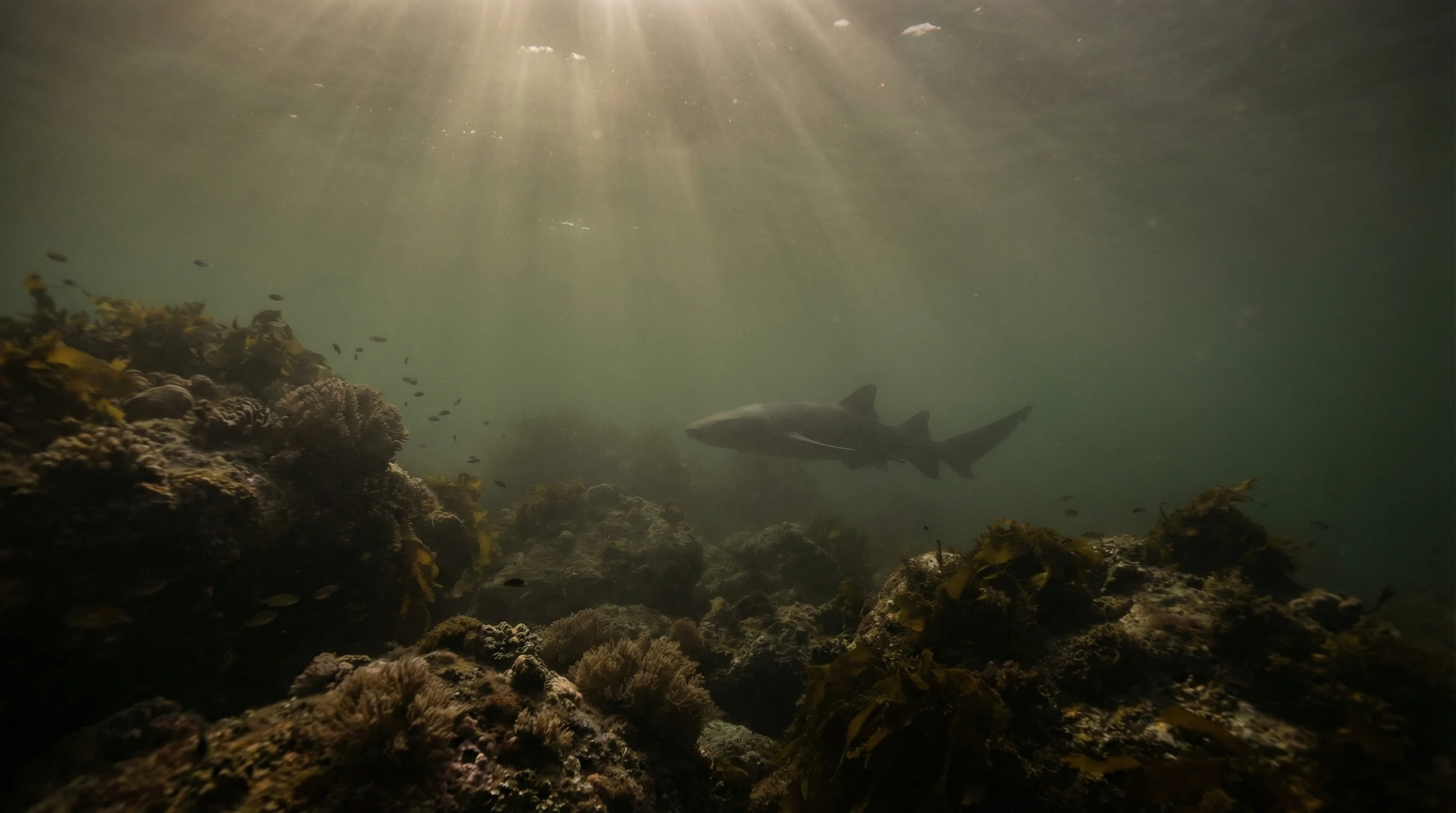
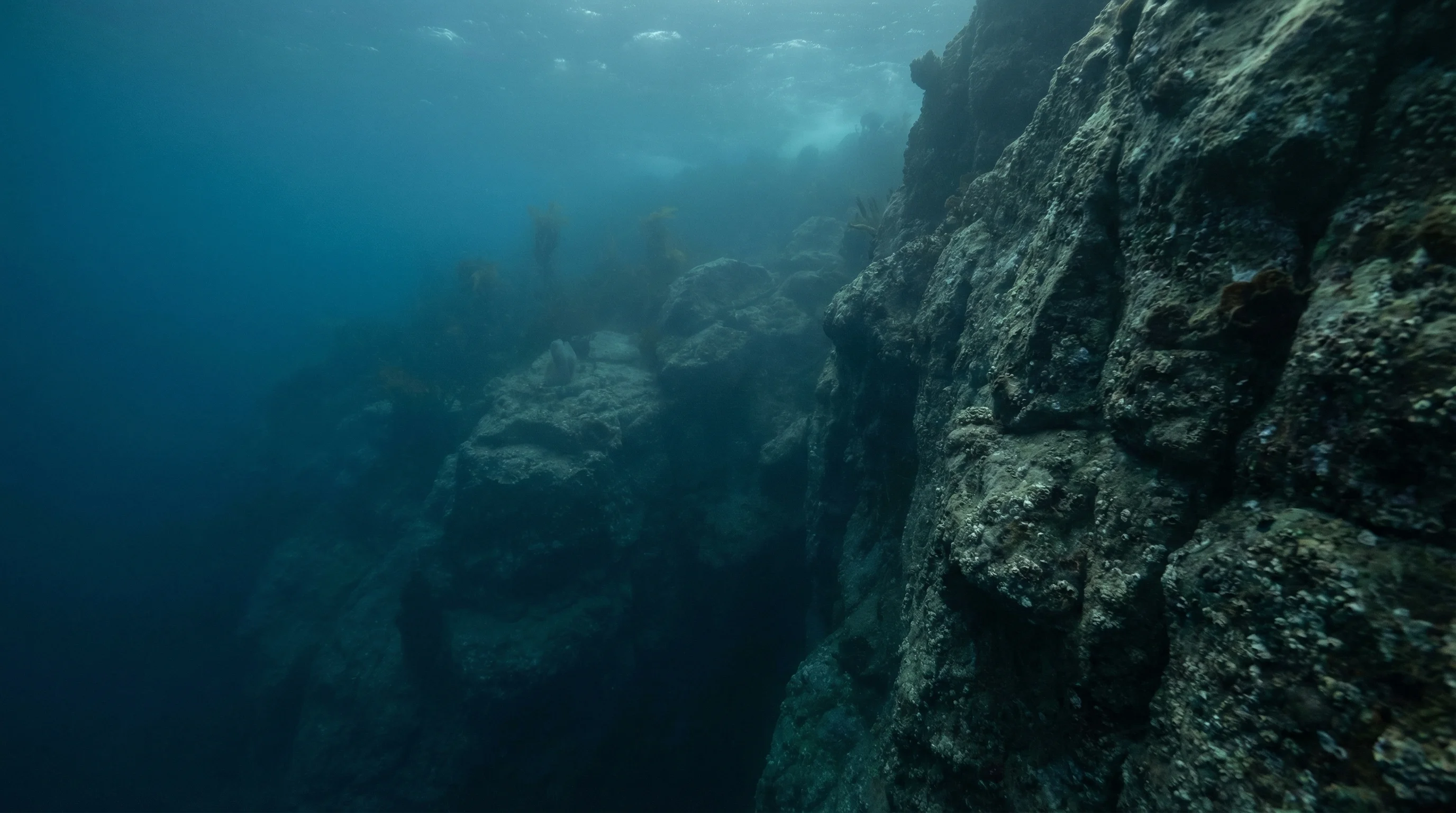
Big Seal Rock's signature cavern dive combines technical challenge with exceptional marine encounters in one of New South Wales' most demanding sites. You'll drop down a dramatic wall from 12 metres to the cavern entrance at around 30 metres, where the overhead environment opens into a swim-through large enough for multiple divers. Grey nurse sharks patrol the entrance during winter months, often in aggregations of a dozen or more, whilst wobbegong sharks rest on ledges throughout the structure. The strong currents that sweep this exposed pinnacle bring excellent visibility, often reaching 30 metres, and drive schools of kingfish and other pelagics past the rock. Black cod inhabit the deeper sections, and you'll frequently spot stingrays gliding along the sandy patches. Turtles occasionally cruise past the wall. Plan your dive carefully around the current, which can make both descent and ascent challenging. The boat traffic around Seal Rocks is significant, so surface procedures matter. Winter months from May through December offer the best conditions and the most reliable grey nurse shark sightings. This isn't a dive for pushing certification limits. Solid buoyancy control, comfort with overhead environments, and experience managing strong currents in deep water are essential.
-32.46198, 152.55268
Time your dive around slack water if possible, as the strong current can make the cavern entrance genuinely hazardous at full run. A torch is essential inside the overhead sections, and a surface marker buoy is mandatory given the boat traffic in the area.
The site is an offshore reef accessible only by boat. Dive charters operate from nearby towns, primarily Forster.
Divers should be experienced with deep and drift diving. A surface marker buoy is essential due to strong currents and boat traffic. The site is a known aggregation area for Grey Nurse Sharks.
Depth
12-40m
Visibility
0-30m
Skill Level
Advanced
Entry
Boat
Boat required
Water Temp
17-26°C
Current
Strong
Typical Dive
45 min
Best Time
Year-round
Big Seal Rock - The Cavern in New South Wales requires both Advanced Open Water and Deep Diver certifications due to the site's overhead environment and depths extending to 40 metres. The cavern features strong currents and multiple hazards that make it unsuitable for novice divers. All diving at this site must be conducted from a chartered boat with experienced guides.
Big Seal Rock - The Cavern off the Mid North Coast is renowned for grey nurse shark encounters, particularly during aggregation periods. Divers regularly observe wobbegong sharks, black cod, kingfish, stingrays, and schooling pelagic fish, whilst sea turtles frequent the area. The cavern's structure and surrounding waters create ideal conditions for both large predators and schooling species.
The optimal diving season at Big Seal Rock - The Cavern runs from May through December, offering eight months of prime conditions. Winter months (June to August) provide the highest probability of grey nurse shark sightings, though water temperatures drop to 17°C. Visibility ranges from 0 to 30 metres depending on conditions and recent weather patterns.
Big Seal Rock - The Cavern near the Mid North Coast ranges from 12 metres at the shallowest sections to 40 metres at maximum depth. The cavern's varying depths require deep diving certification and proper gas management skills. The overhead environment and strong currents add complexity to depth considerations throughout the dive.
Big Seal Rock - The Cavern receives a moderate snorkel rating of 3 out of 5, though conditions can be challenging for surface activities. Strong currents, boat traffic, and surge make snorkelling here suitable only for experienced individuals with strong swimming abilities. The site's main attractions, including the cavern and grey nurse sharks, are best experienced by certified divers at depth.
Big Seal Rock - The Cavern in New South Wales presents multiple significant hazards including an overhead environment, strong currents, surge, and depths to 40 metres. Boat traffic is a constant concern at this popular site, and whilst sharks are present, grey nurse sharks are generally docile. The combination of deep depths and cavern penetration requires advanced training and conservative dive planning.
Big Seal Rock - The Cavern is accessible only by chartered boat from the Mid North Coast of New South Wales. Guided tours are the standard operating procedure due to the site's advanced nature, strong currents, and navigation challenges. No shore access exists, and boat charters typically include experienced dive guides familiar with the cavern's layout and prevailing conditions.
The Cavern in Mid North Coast requires advanced diving skills. Expect deeper depths, currents, or challenging conditions that are not suitable for newly certified divers.
A 5mm wetsuit is recommended for diving at The Cavern in Mid North Coast. Water temperatures range from 17°C to 26°C.