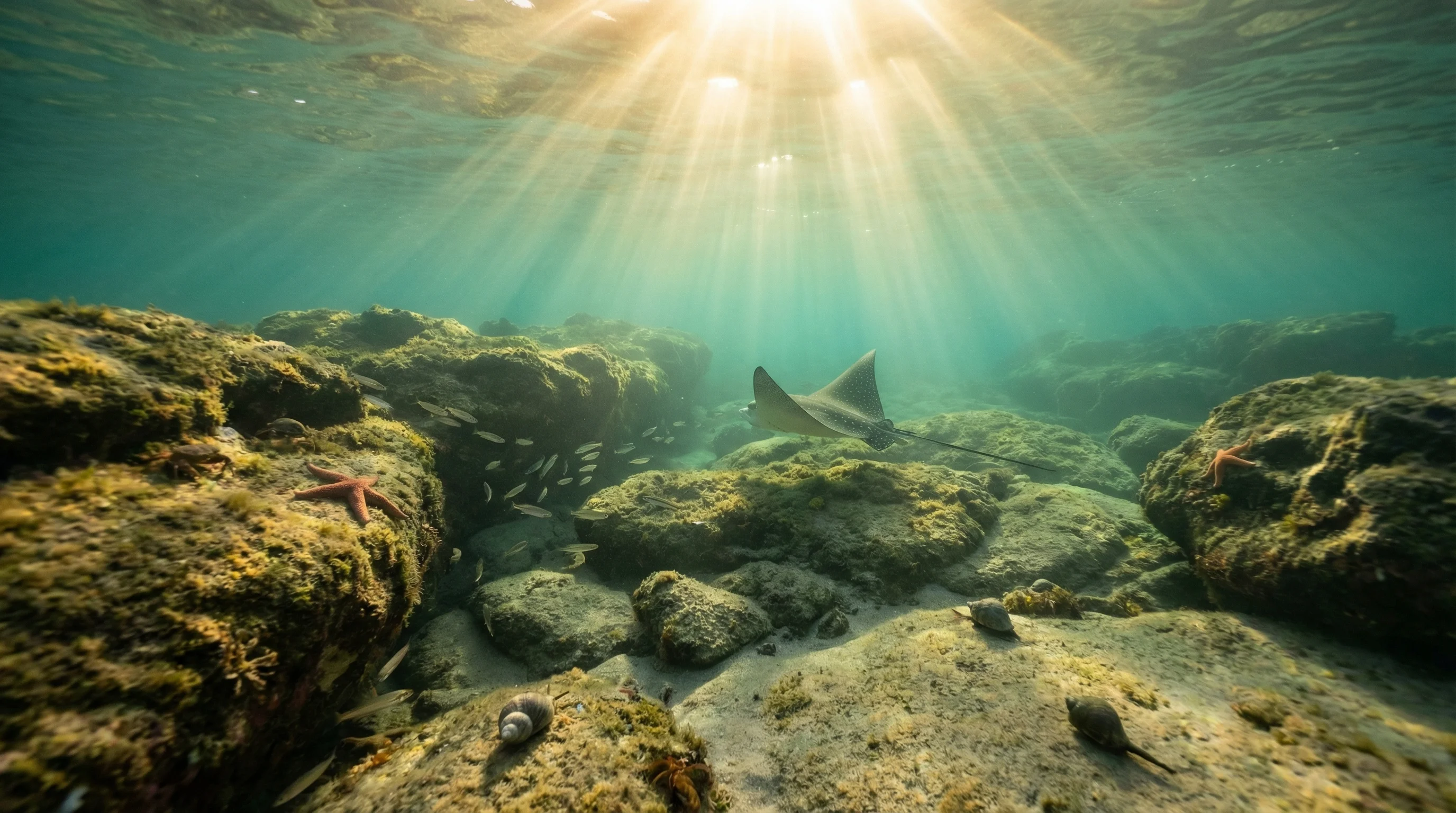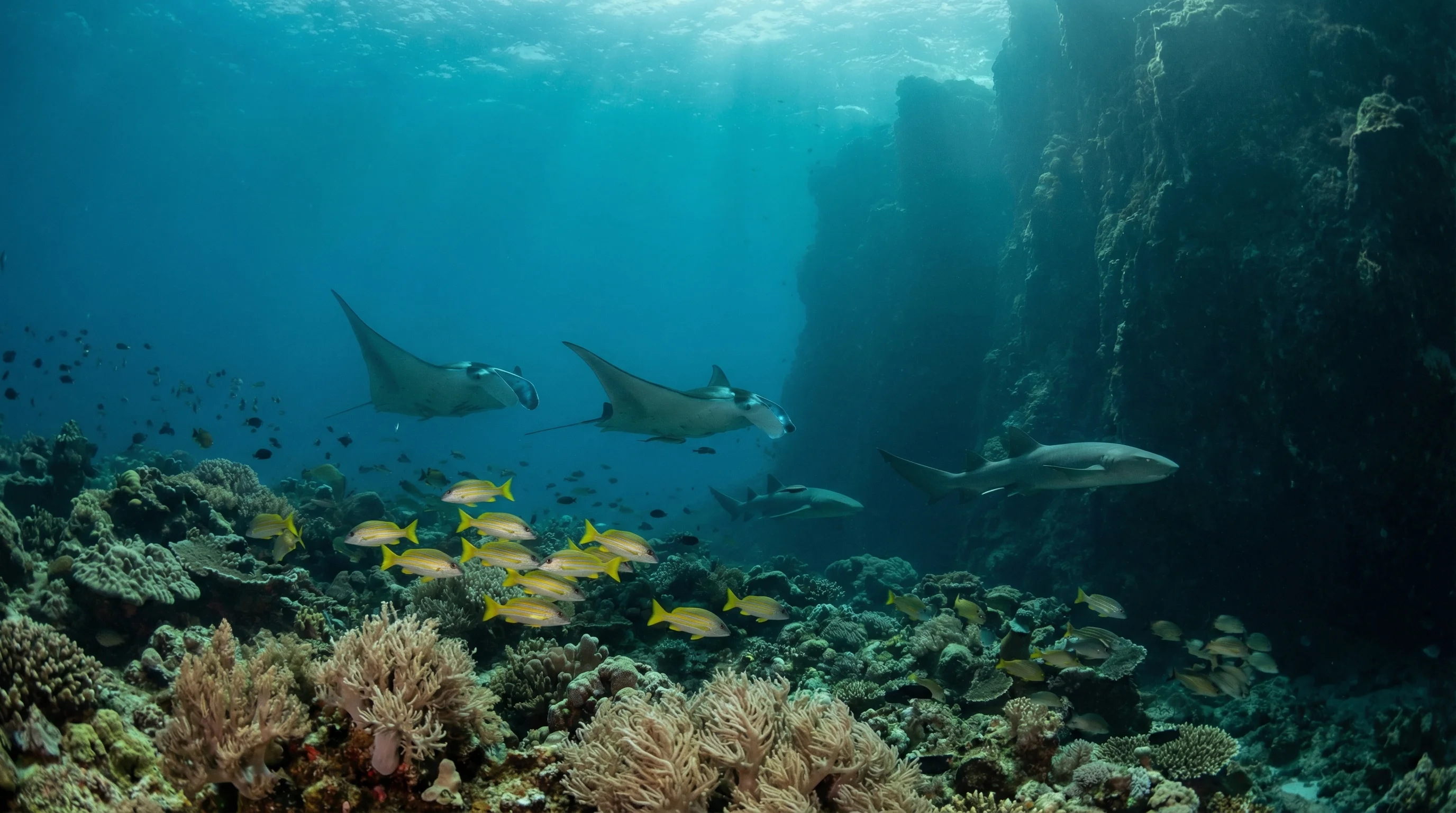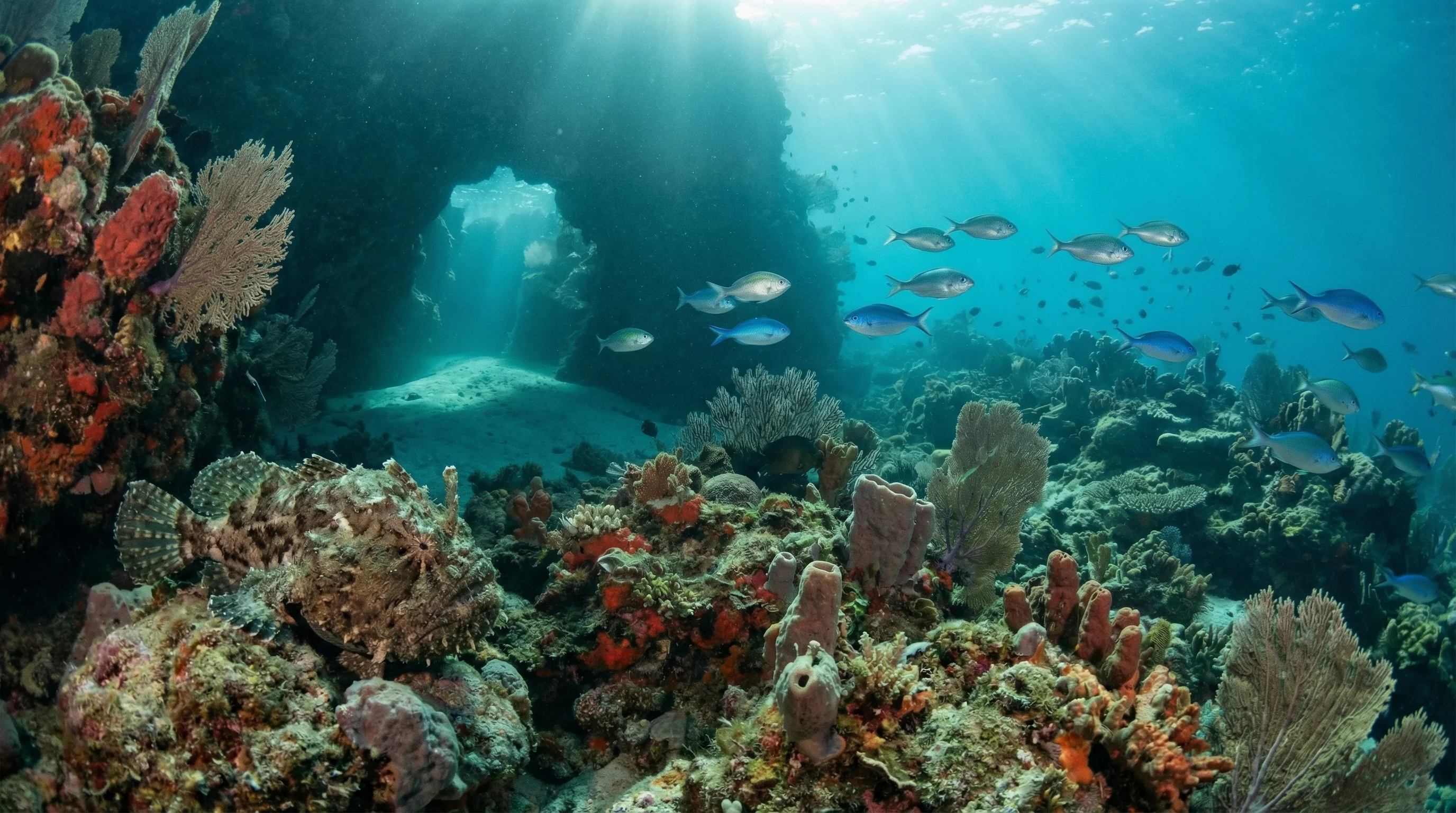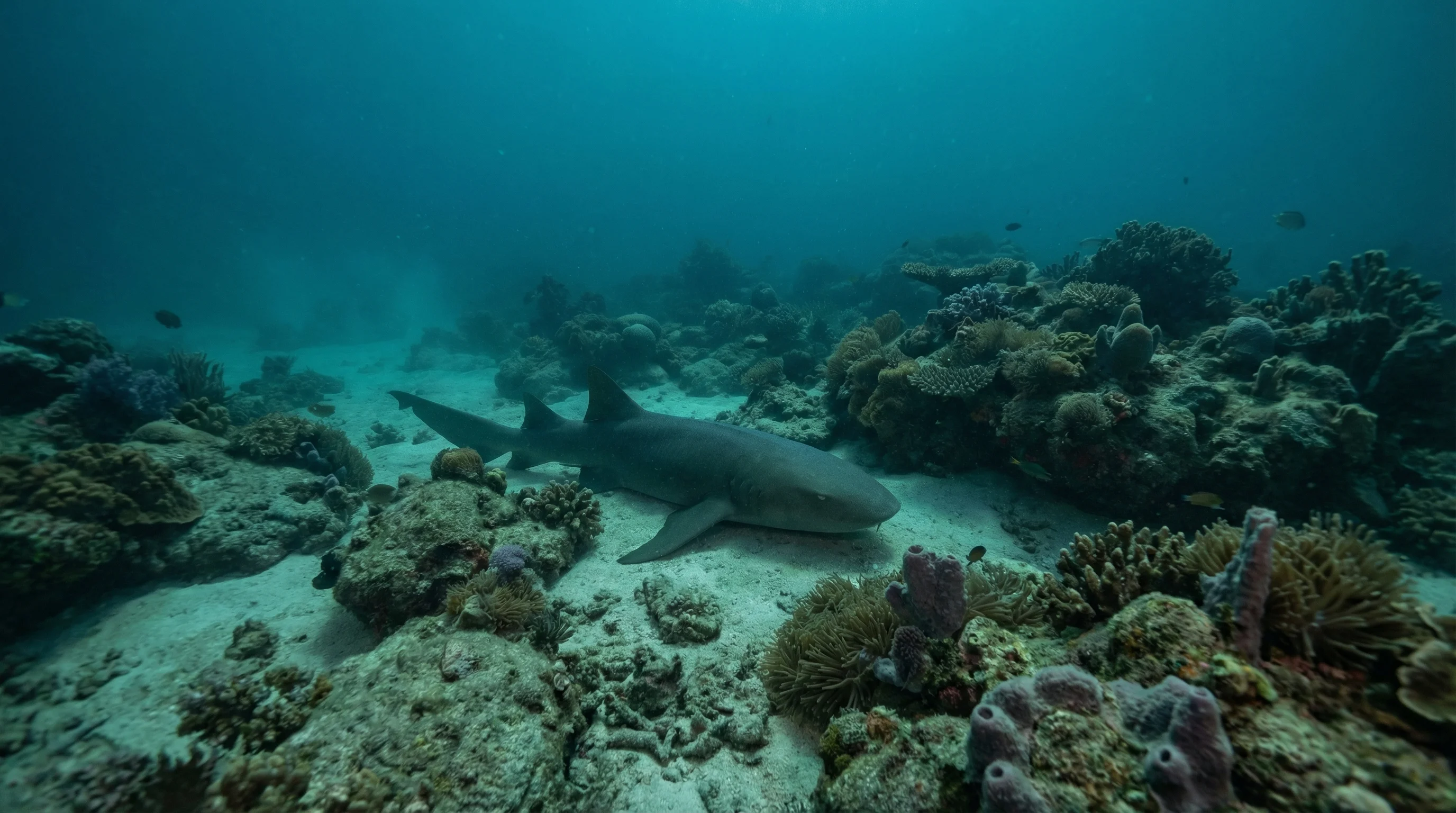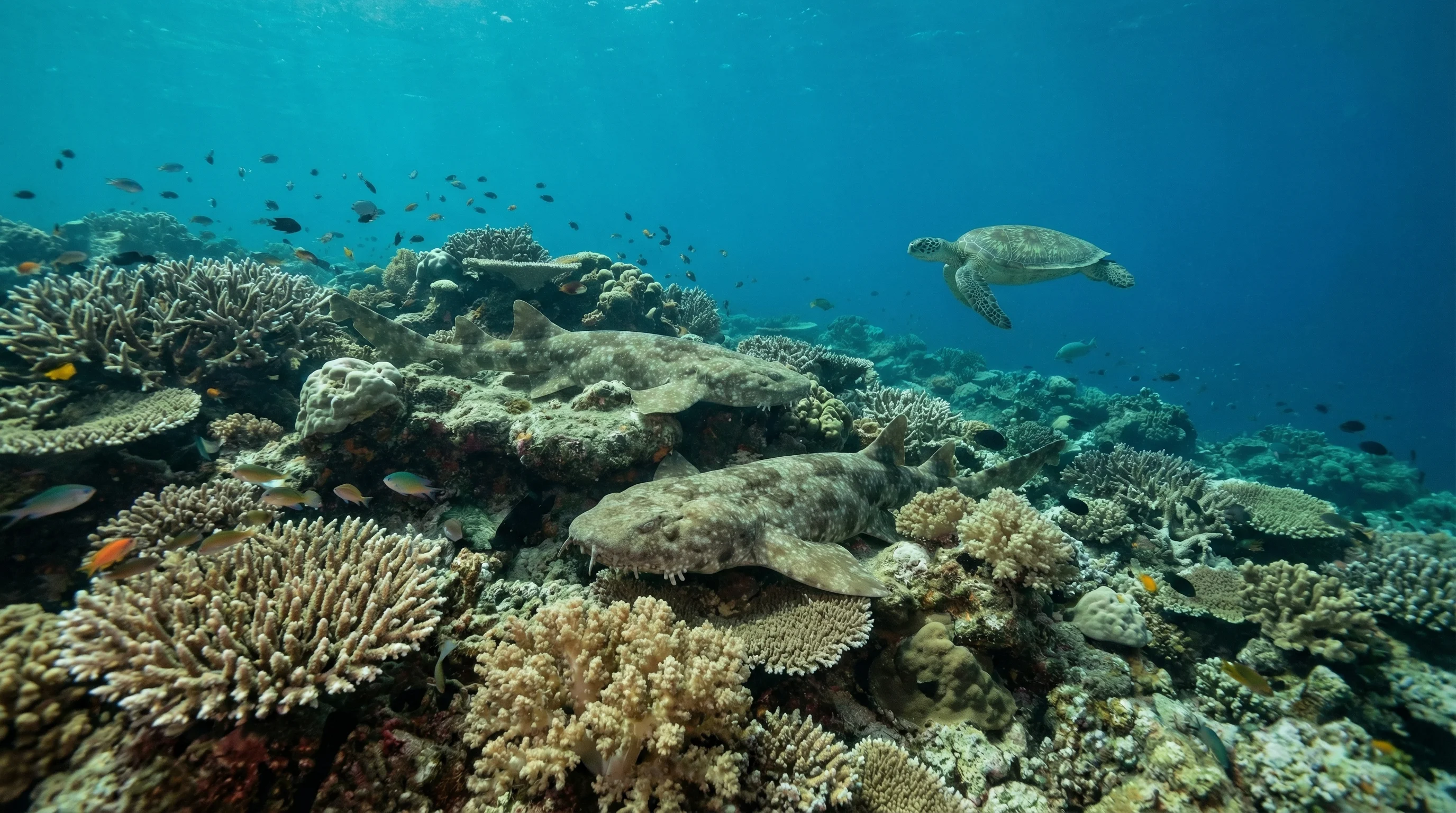
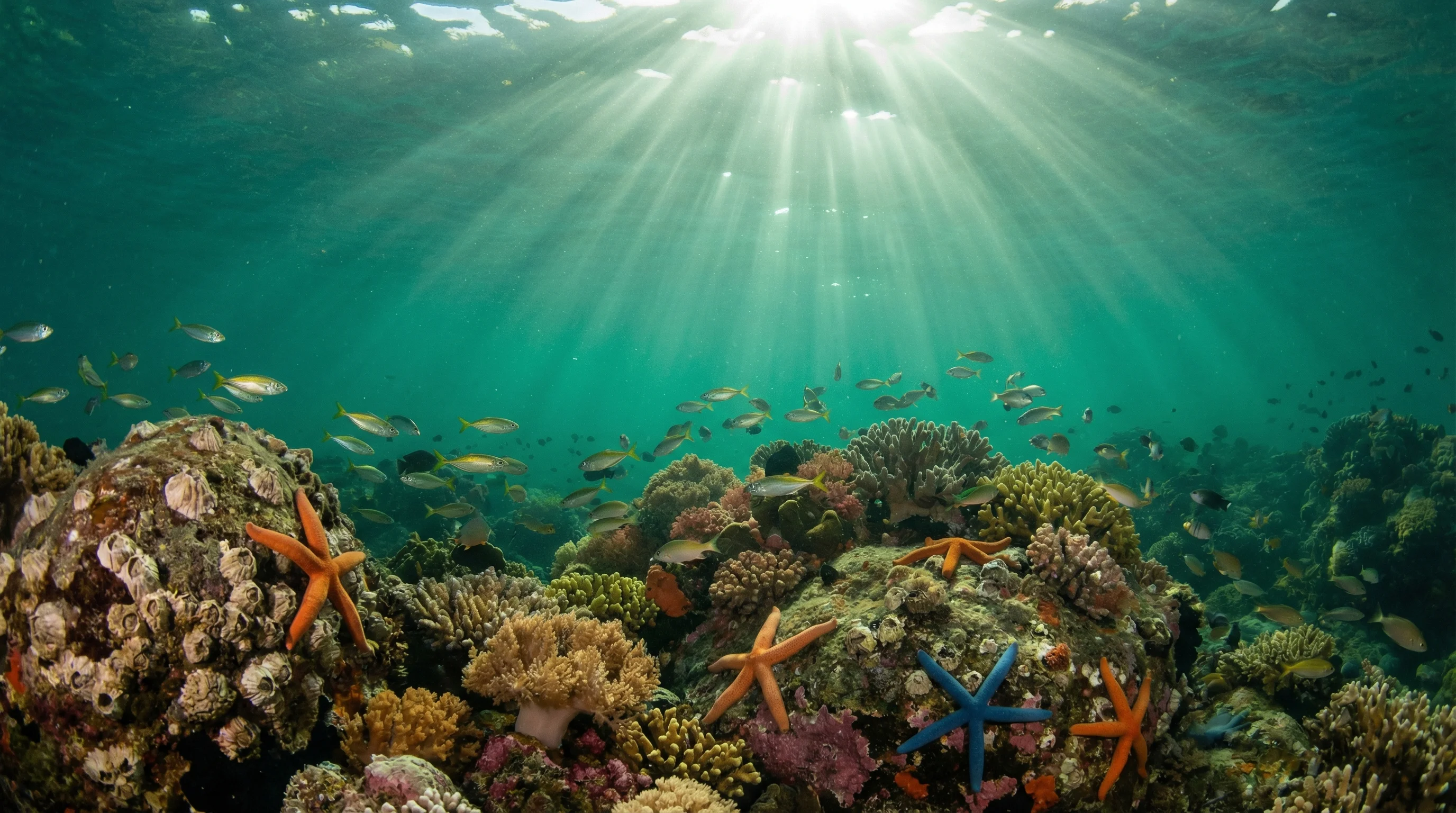
Woolgoolga Headland is a gentle shore entry site suited to newer snorkellers and divers wanting to explore intertidal and shallow reef life. The waters here are calm and shallow, though visibility can vary depending on swell and recent rainfall, so picking a settled day makes a real difference. Keep your eyes close to the rock surfaces and you will find barnacles, limpets, oysters, and snails going about their business, along with crabs tucked into crevices and starfish resting on the reef. Watch where you put your hands and fins, as sea urchins and sharp coral edges are present. Good facilities including parking, showers, and toilets are available on site.
-30.10877, 153.20699
Visit between January and May or September through December when conditions tend to be more settled. Go at high tide to give yourself more water over the shallower reef sections and to reduce the risk of contact with urchins and sharp edges.
The site is accessible from the shore at Woolgoolga Headland. Parking is available at the headland, though it can be limited on weekends.
Collection of sea urchins is not permitted, indicating their presence. Oysters on the rocks can be sharp.
Depth
5-12m
Visibility
8-20m
Skill Level
Beginner
Entry
Shore
Water Temp
18-26°C
Current
Mild
Typical Dive
45 min
Best Time
Jan, Feb, Mar, Apr, May, Sep, Oct, Nov, Dec
Woolgoolga Headland in New South Wales is an excellent choice for beginner snorkellers. The site offers easy shore access with basic facilities including showers, toilets, and parking. The shallow protected waters around the headland provide a gentle introduction to snorkelling, though you should watch for sea urchins and sharp rocks near the waterline.
Woolgoolga Headland features intertidal and shallow water marine life typical of New South Wales rocky shores. Snorkellers can observe barnacles, limpets, starfish, snails, oysters, and various crab species amongst the rock platforms and shallow reef areas. The site is best suited for observing invertebrate life rather than fish species.
The optimal months for snorkelling at Woolgoolga Headland are January through May and September through November. Water temperatures range from 18 to 26 degrees Celsius throughout the year. Avoid the winter months of June, July, and August when conditions are less favourable and water temperatures drop to their lowest.
Woolgoolga Headland offers convenient shore access from the North Coast of New South Wales without requiring a boat. On-site facilities include parking, toilets, and showers for rinsing after your snorkel. Entry is free with no admission charges, making it an accessible option for budget-conscious snorkellers.
Snorkellers at Woolgoolga Headland should be aware of sea urchins and sharp rocks that can cause cuts or puncture wounds. Wear protective footwear when entering and exiting the water across rock platforms. The site experiences variable currents, so check conditions before entering and stay close to shore if you are inexperienced.
Woolgoolga Headland has no entry fee, making it a free snorkelling destination on the New South Wales coast. The site provides complimentary parking, toilets, and shower facilities for visitors. No certifications or permits are required to snorkel at this beginner-friendly location.
Diving at Woolgoolga Headland in North Coast requires the following certifications: Open Water. Always dive within your training limits.
A 5mm wetsuit is recommended for diving at Woolgoolga Headland in North Coast. Water temperatures range from 18°C to 26°C.
Woolgoolga Headland in North Coast has depths ranging from 5 metres to 12 metres.
Woolgoolga Headland in North Coast offers snorkelling with a rating of 1 out of 5. Shallow areas start from 5 metres, making it accessible for snorkellers.
A typical dive at Woolgoolga Headland in North Coast lasts approximately 45 minutes. Actual dive time depends on depth, air consumption, and conditions.
Woolgoolga Headland in North Coast typically has mild currents that most divers can handle comfortably.
Visibility at Woolgoolga Headland in North Coast typically ranges from 8 metres to 20 metres. Conditions vary with weather, tides, and seasons.