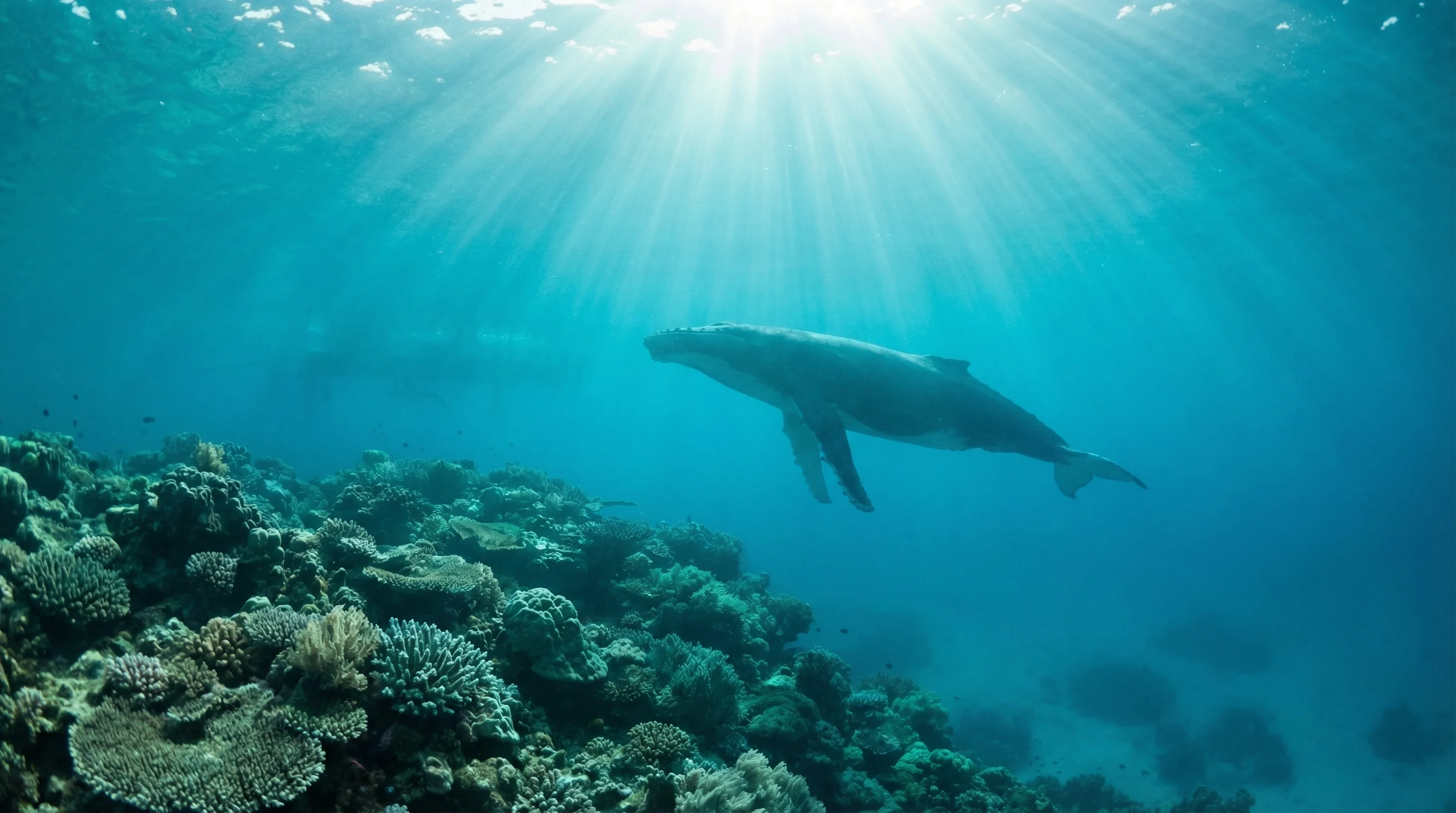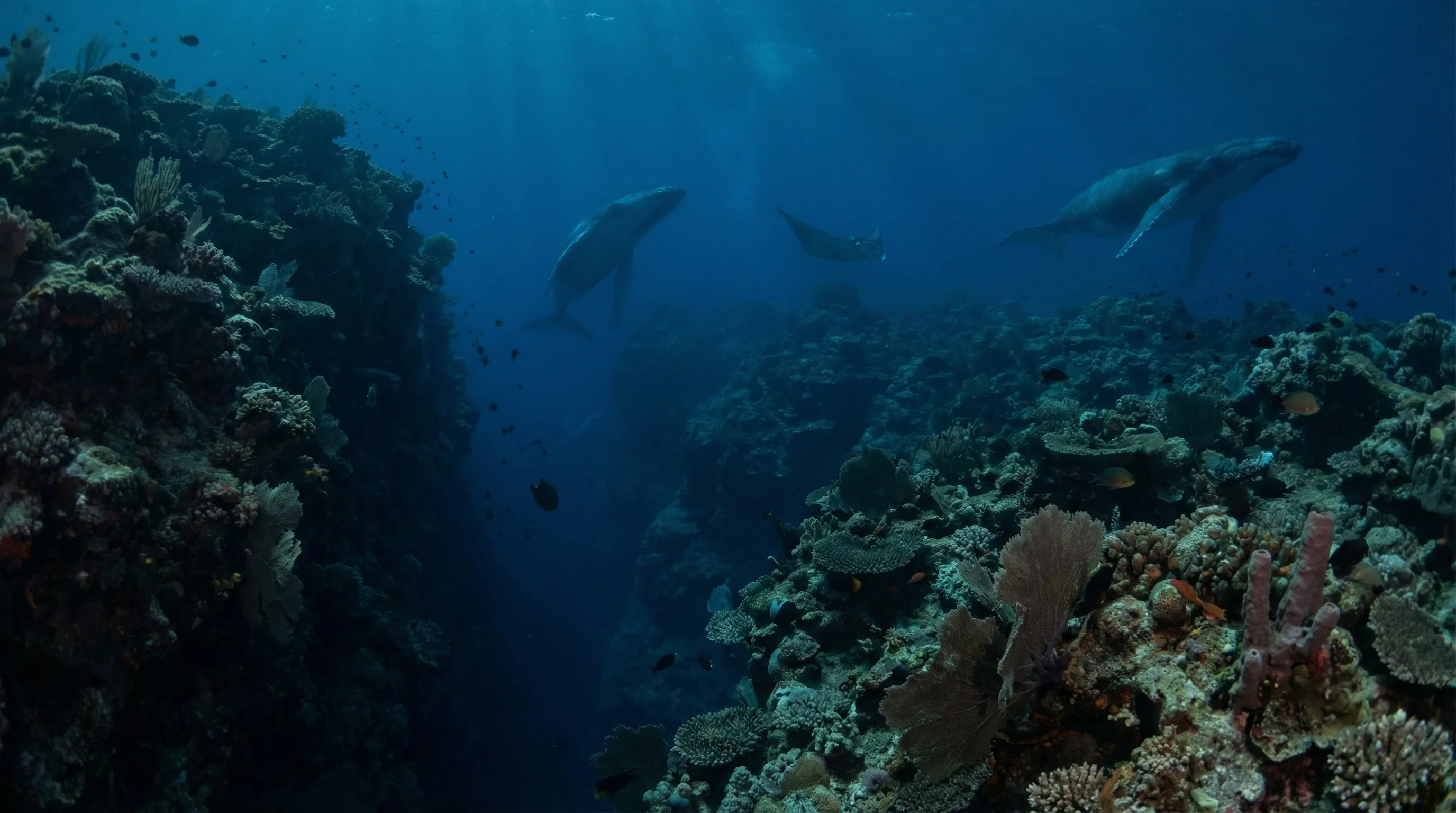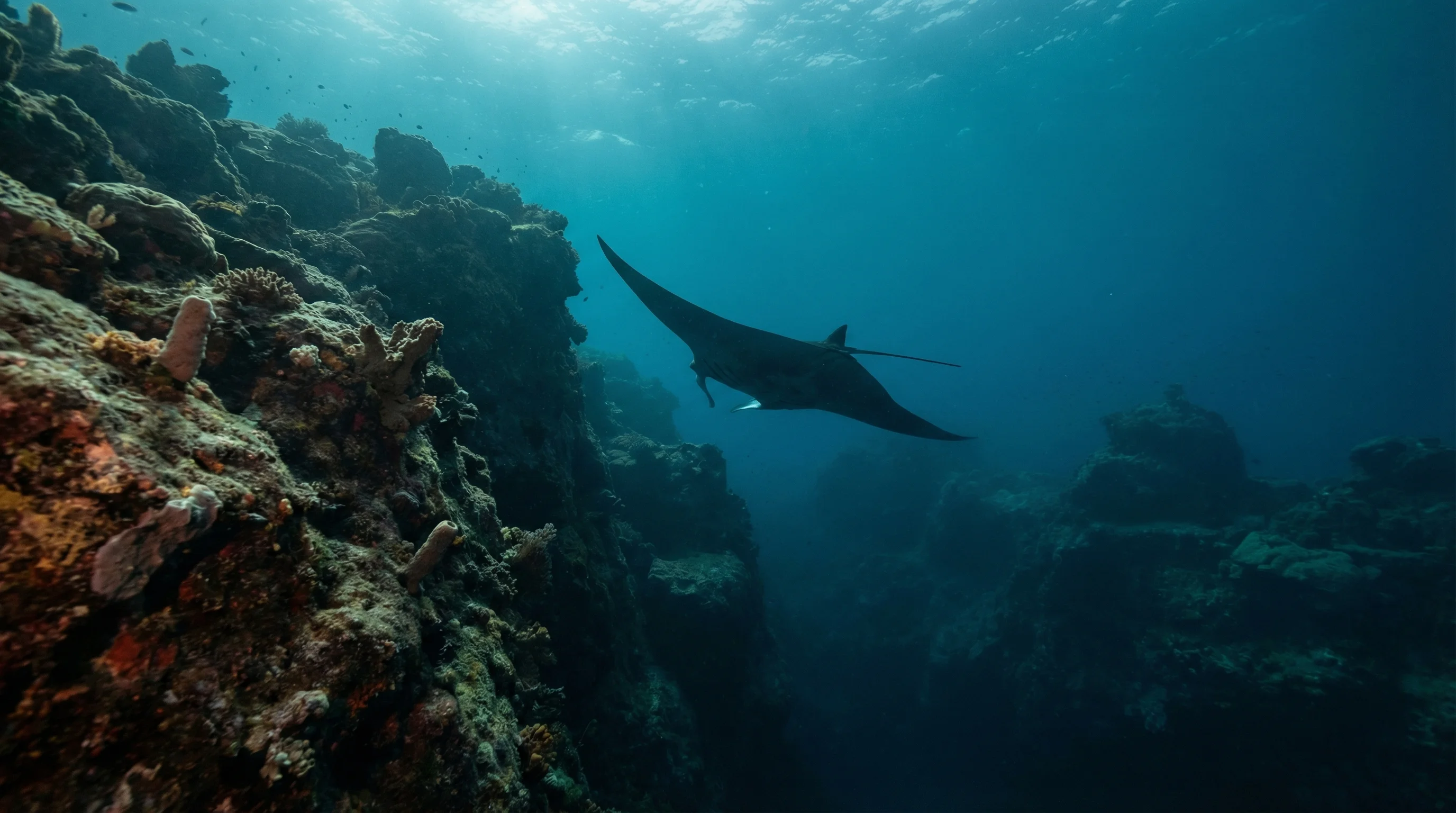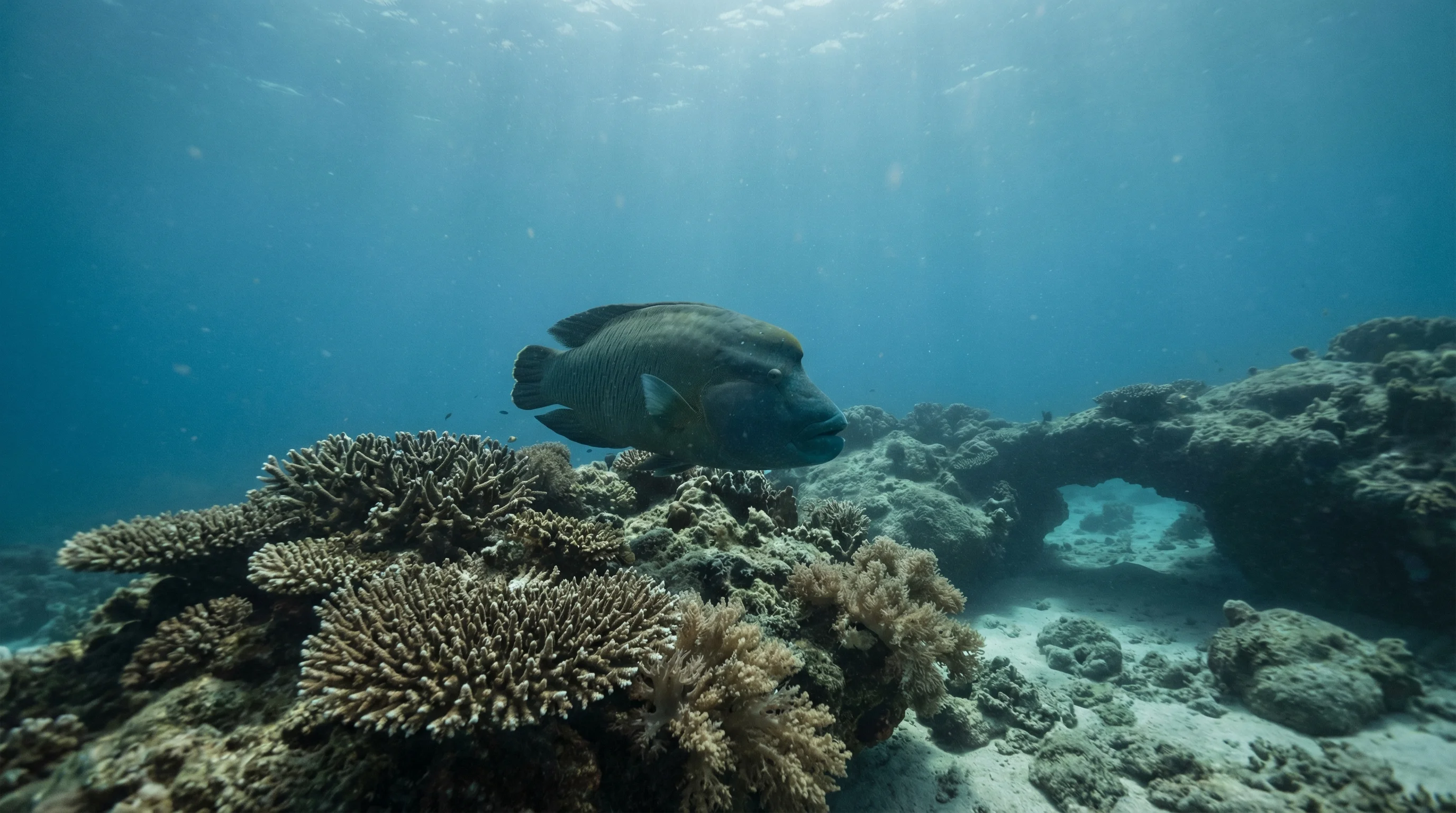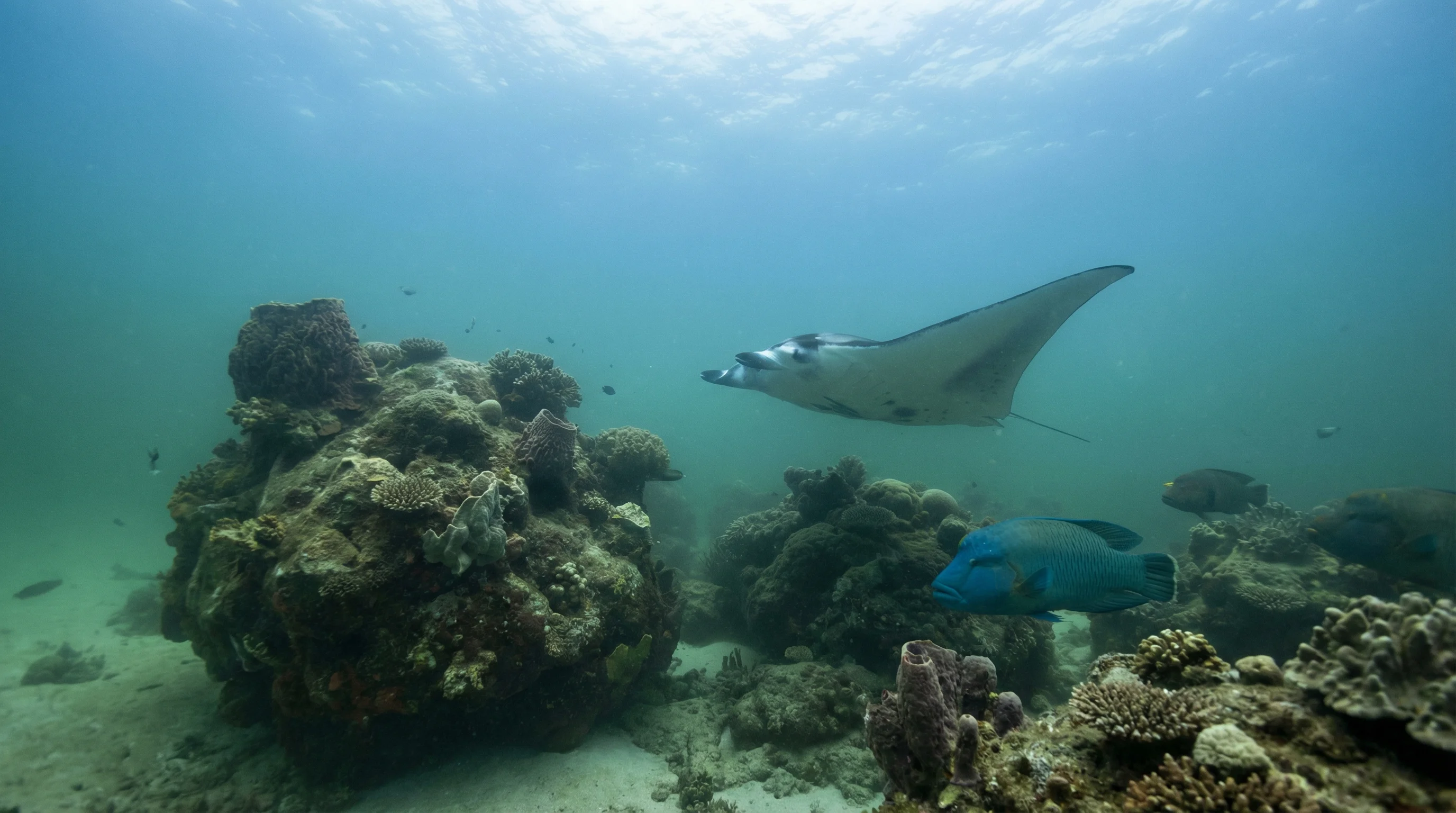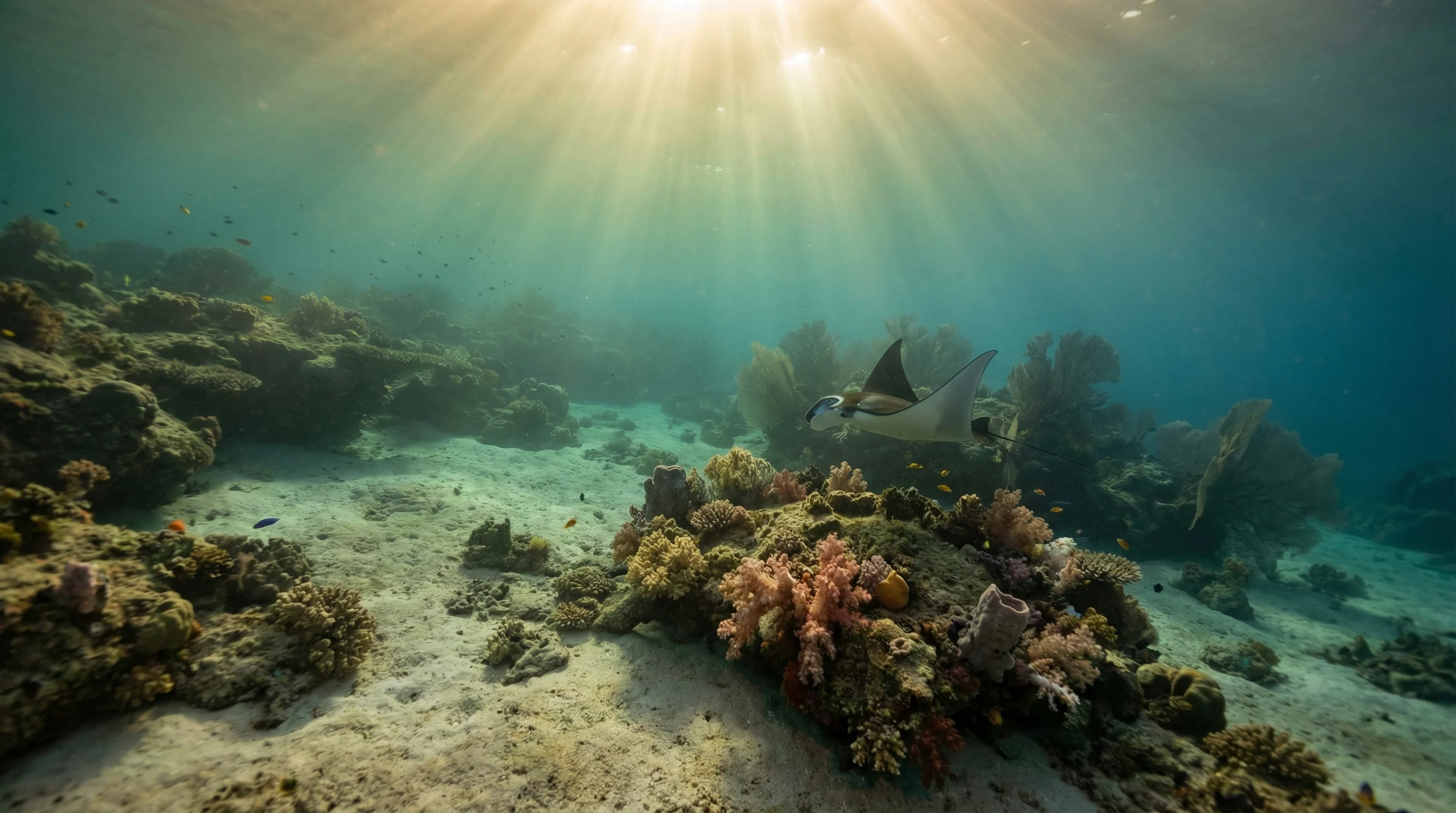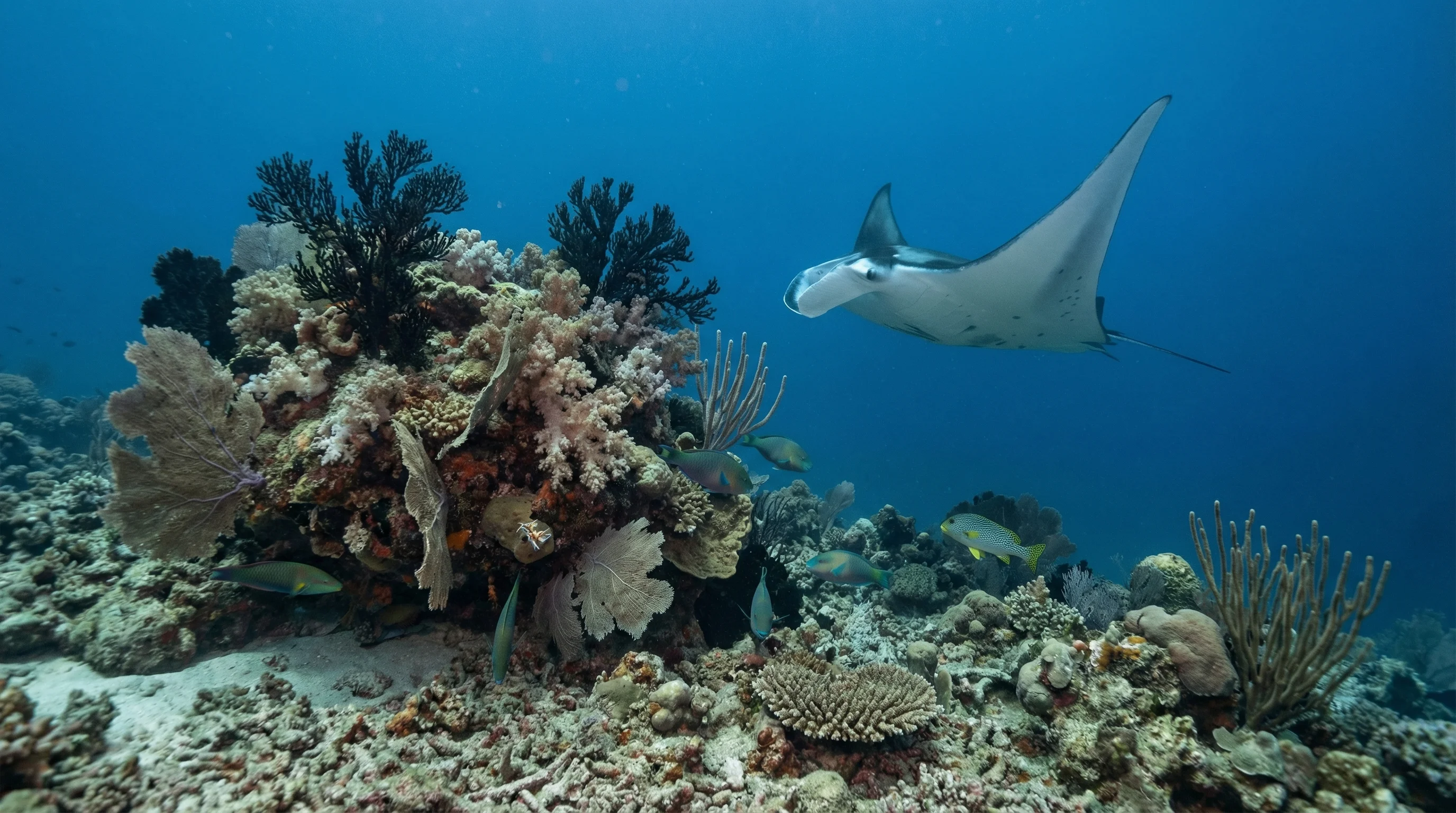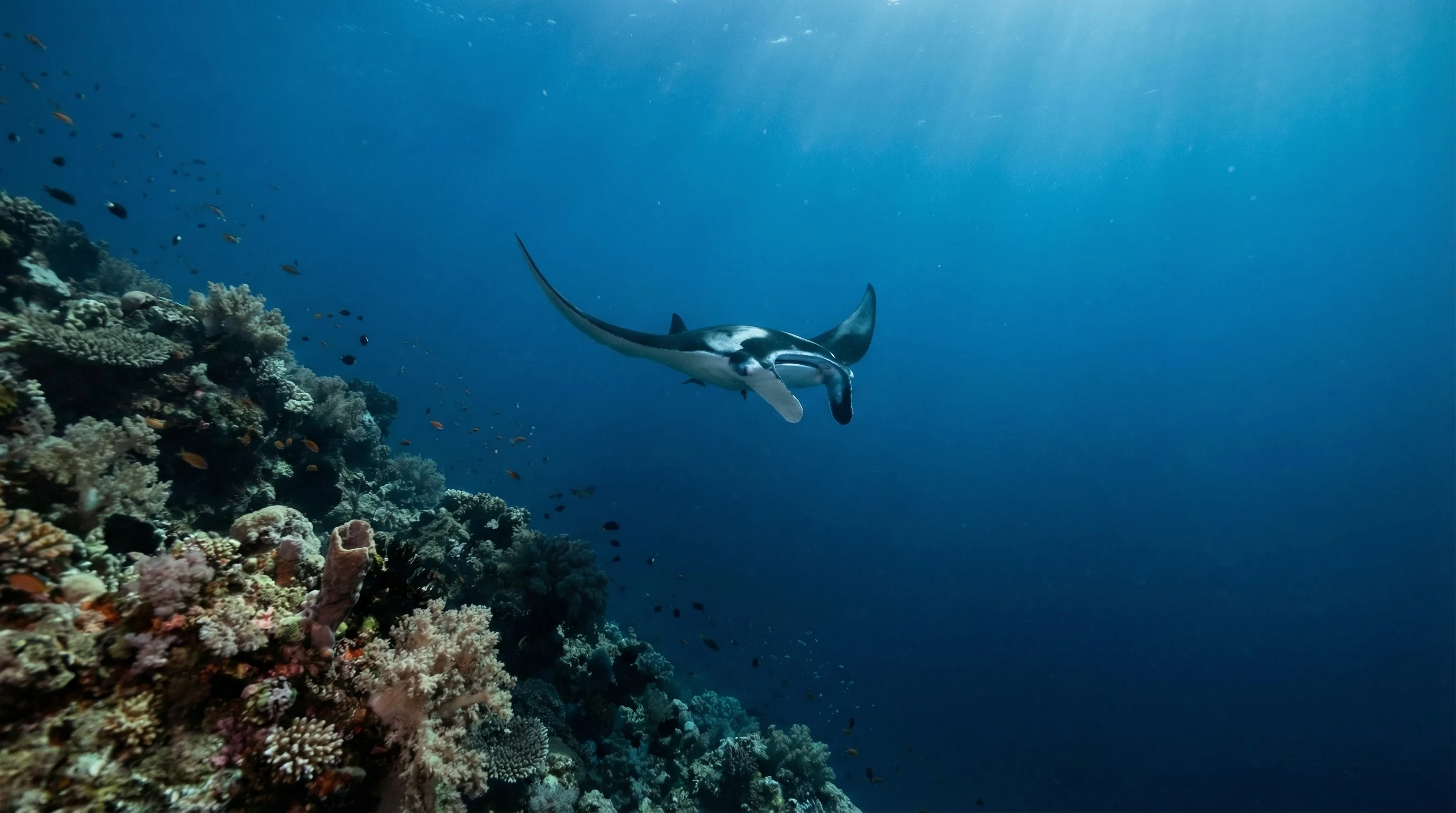
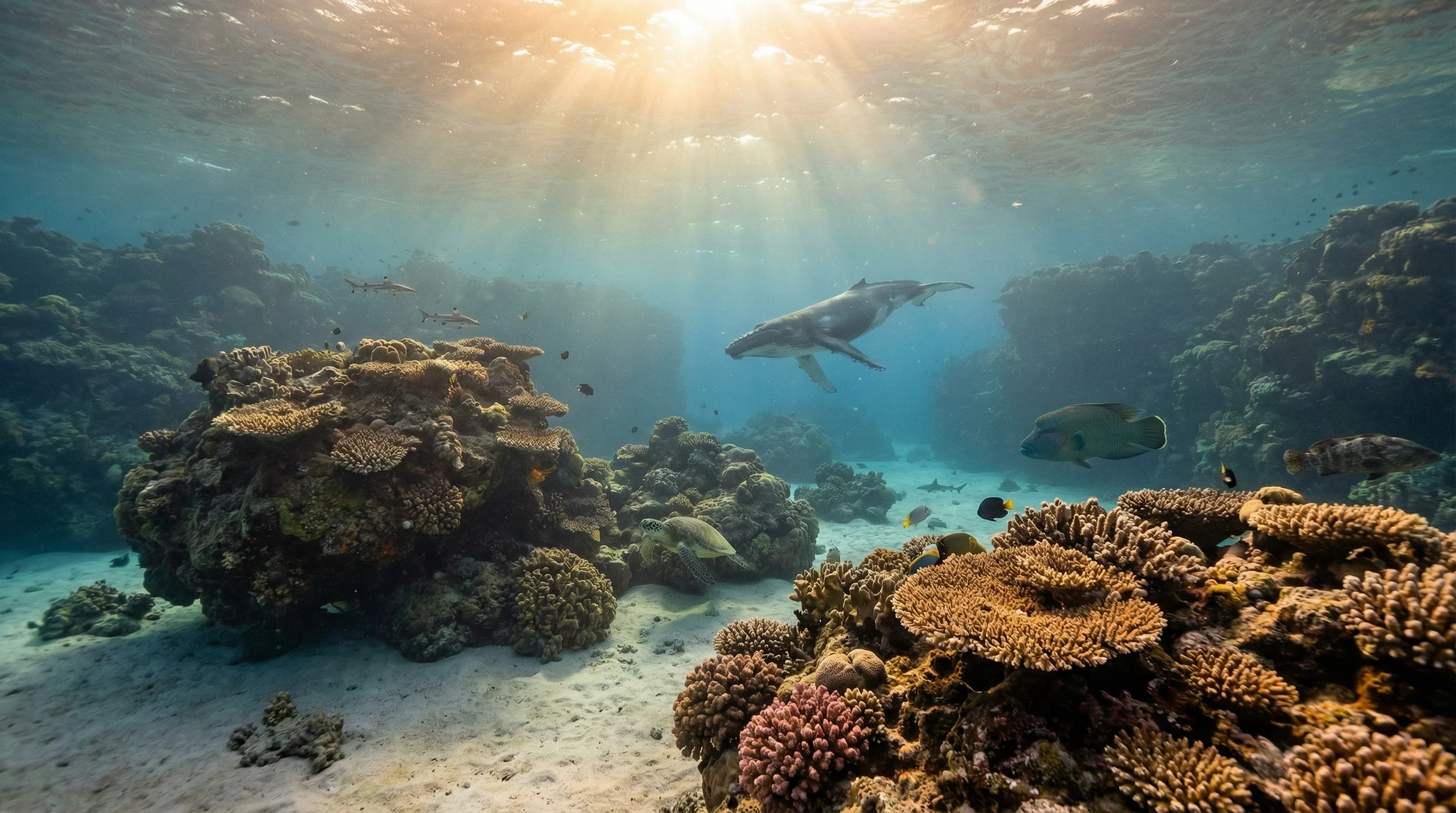
Hardy Reef sits on the outer Great Barrier Reef and offers a straightforward introduction to reef diving, with depths running from the surface down to 20 metres and visibility typically between 8 and 10 metres. The reef structure includes a drop-off, so beginners can explore the shallower sections while getting comfortable in the water. Sea turtles and Maori wrasse are regular visitors, and you can expect to see reef sharks, Queensland Groper, Trevally, Coral Trout, and Snapper moving through the water column. Smaller fish including clownfish, butterflyfish, and angelfish are common around the reef. Currents run at a moderate pace, so stay close to your guide if conditions pick up.
-19.75884, 149.23472
April through November gives you the most settled conditions and the best chance of clear water. Jellyfish can be present year-round, so wearing a full wetsuit or a stinger suit is a practical precaution rather than an optional extra.
Access to Hardy Reef is via boat or helicopter. Cruise Whitsundays operates day trips and overnight tours from Airlie Beach, Hamilton Island, and Daydream Island. Helicopter transfers are also available.
Marine stinger (jellyfish) season is from November to May. Stinger suits are required during this time. While reef sharks are present, they are generally not considered a significant threat.
Depth
0-20m
Visibility
8-20m
Skill Level
Beginner
Entry
Boat
Boat required
Water Temp
21-28°C
Current
Moderate
Typical Dive
60 min
Best Time
Apr, May, Jun, Jul, Aug, Sep, Oct, Nov
Hardy Reef in Queensland, Australia requires an Open Water certification as the minimum qualification for diving. The site reaches depths of up to 20 metres and features moderate currents, making it suitable for divers who have completed their basic certification. Beginner-level divers can comfortably explore the reef with proper Open Water training.
Hardy Reef is accessed exclusively by boat from Airlie Beach, the nearest town to this Great Barrier Reef dive site. Dive operators depart from Airlie Beach marina and travel to the reef, where the site features comprehensive facilities including toilets, showers, rinse stations, cafe, and gear storage. No entry fee is charged for diving Hardy Reef.
Hardy Reef hosts diverse marine life including sea turtles, reef sharks, Maori wrasse, and the impressive Queensland Groper. Divers regularly encounter schools of Trevally and Snapper, along with Coral Trout and clownfish amongst the coral formations. The reef's depth range of 0 to 20 metres allows encounters with both shallow reef species and larger pelagic visitors.
The best months to dive Hardy Reef are April through November, offering optimal conditions on the Great Barrier Reef. Water temperatures during this period range from 21 to 28 degrees Celsius, with visibility typically between 8 and 10 metres. These months provide the most stable weather and sea conditions for diving off Airlie Beach.
Hardy Reef is classified as a beginner-level dive site, making it ideal for newly certified divers exploring the Great Barrier Reef. The site offers depths from 0 to 20 metres with moderate currents, allowing divers to stay in shallower zones if preferred. Guided tours are available to support less experienced divers navigating the reef.
Hardy Reef features water temperatures ranging from 21 to 28 degrees Celsius throughout the diving season, with visibility typically between 8 and 10 metres. The site experiences moderate currents, which divers should account for during dive planning. Water conditions are generally most favourable between April and November.
Night diving is available at Hardy Reef, offering opportunities to observe nocturnal marine behaviour on the Great Barrier Reef. Divers with Open Water certification can participate in night dives, where reef sharks, sea turtles, and sleeping fish present different encounters than daytime dives. Boat operators departing from Airlie Beach provide guided night diving experiences at the site.
The primary hazards at Hardy Reef are jellyfish and sharks, though encounters are generally manageable with proper precautions. Divers should wear appropriate exposure protection against jellyfish, particularly during stinger season, and maintain respectful distances from reef sharks. The moderate currents also require attention to buoyancy control and dive planning.
A 3mm wetsuit is recommended for diving at Hardy Reef in Airlie Beach. Water temperatures range from 21°C to 28°C.