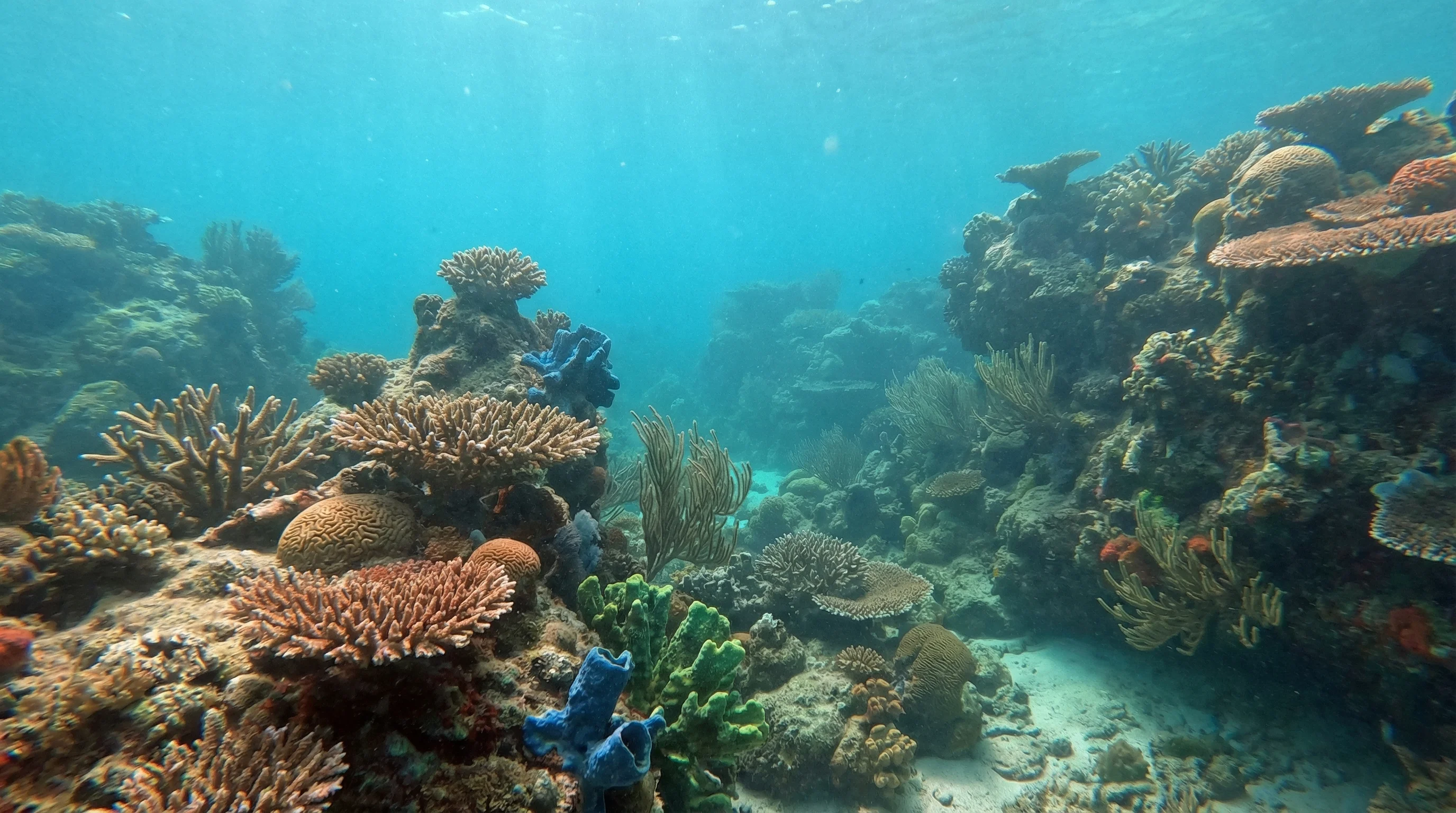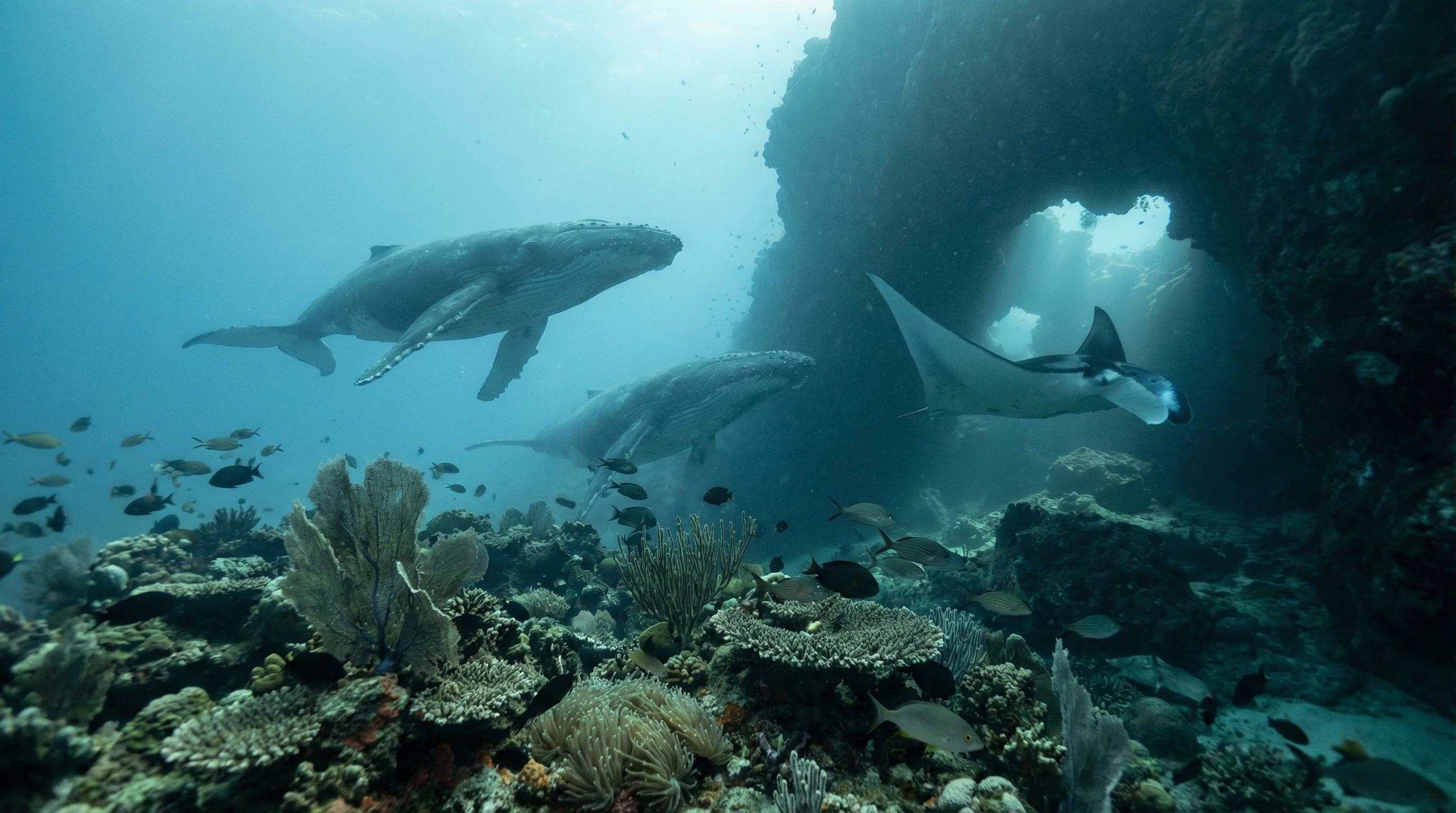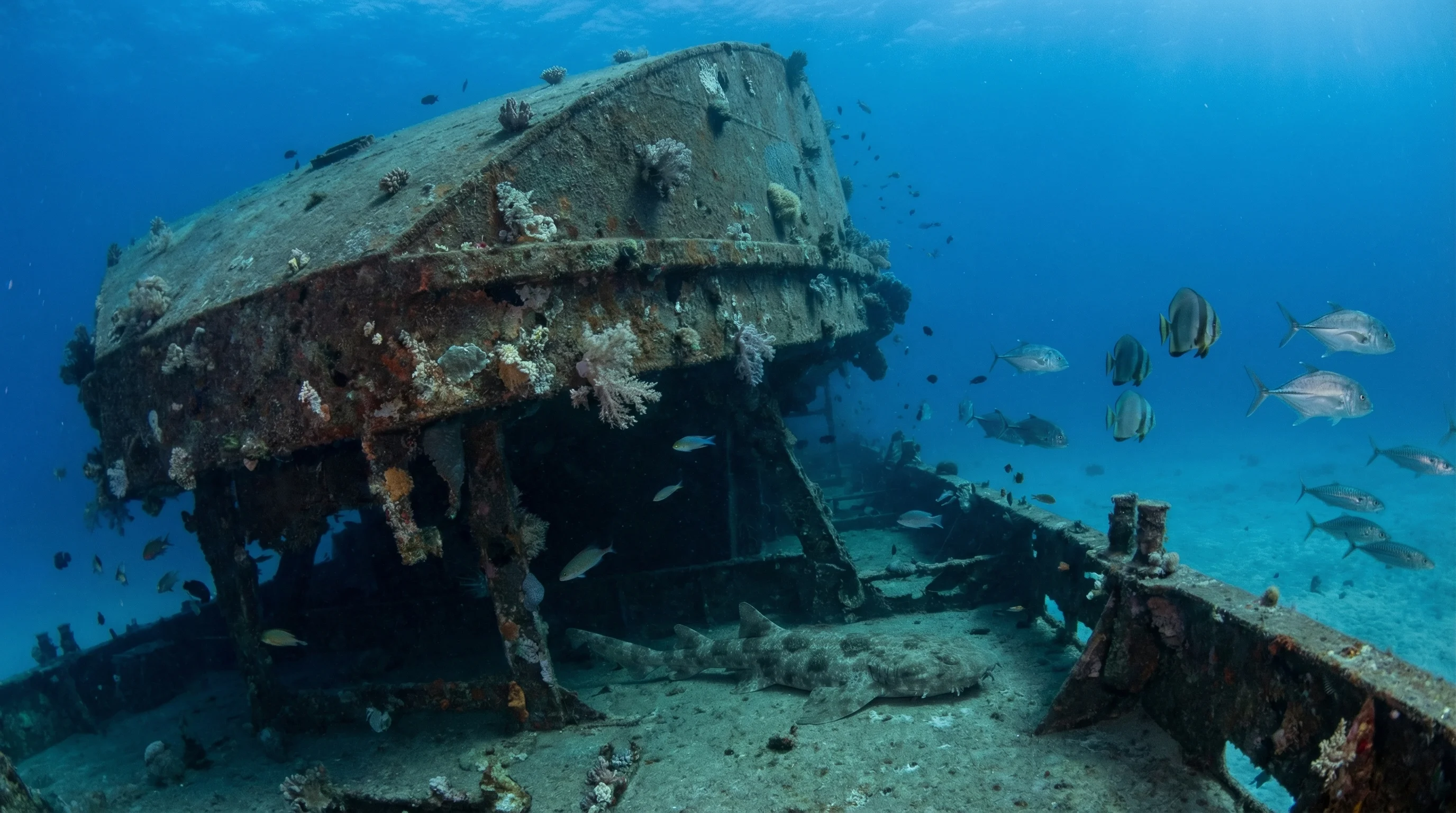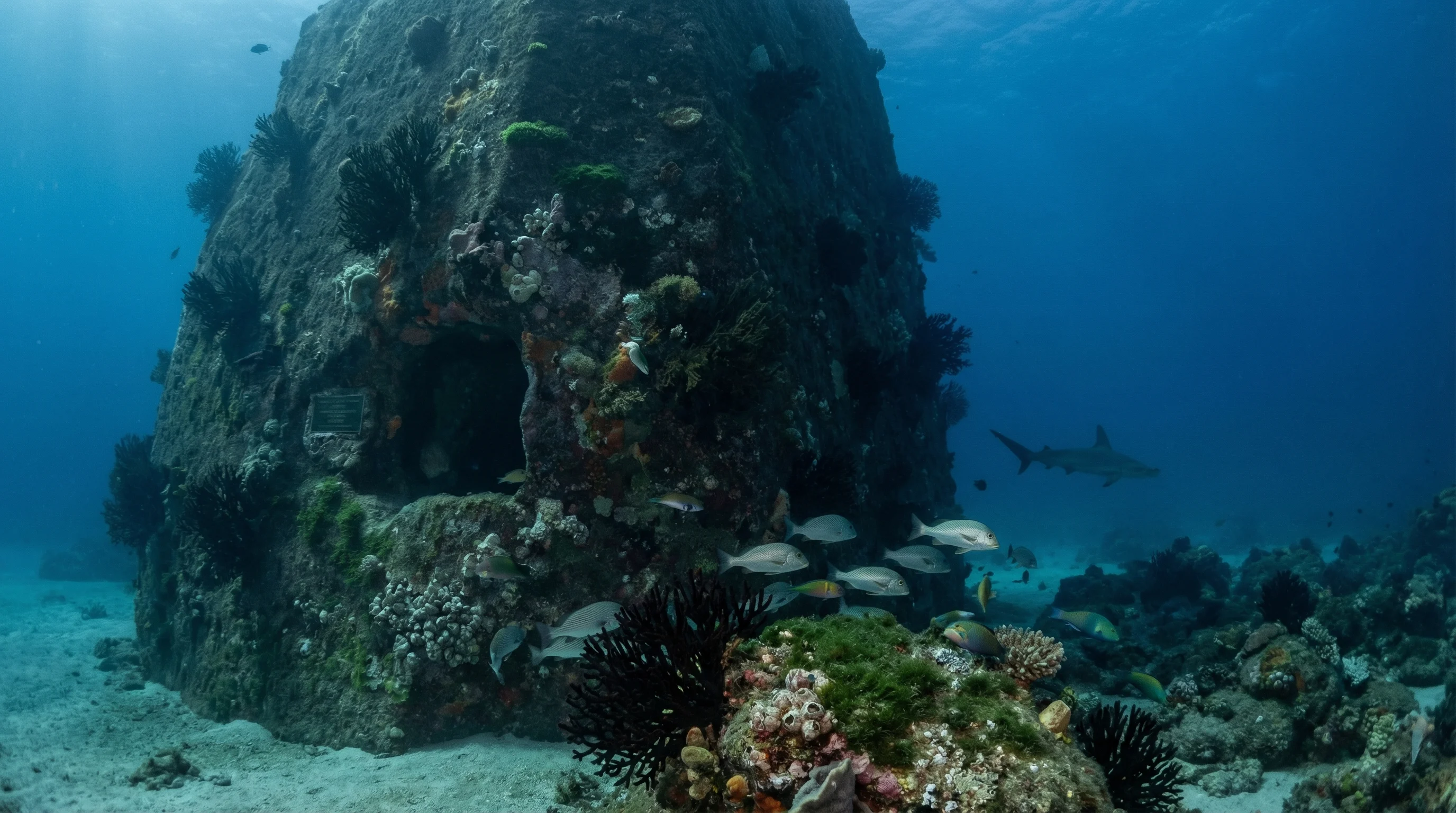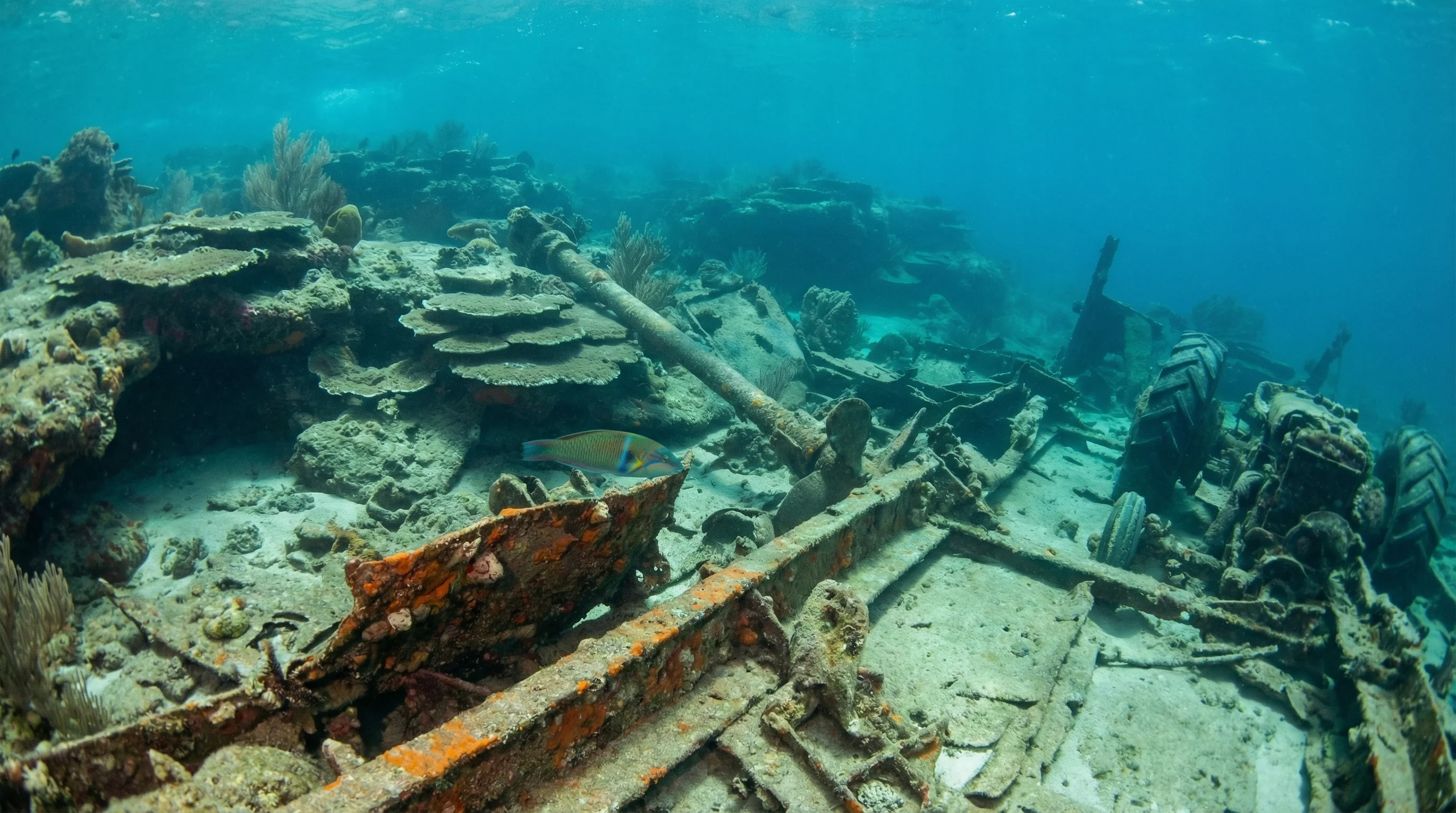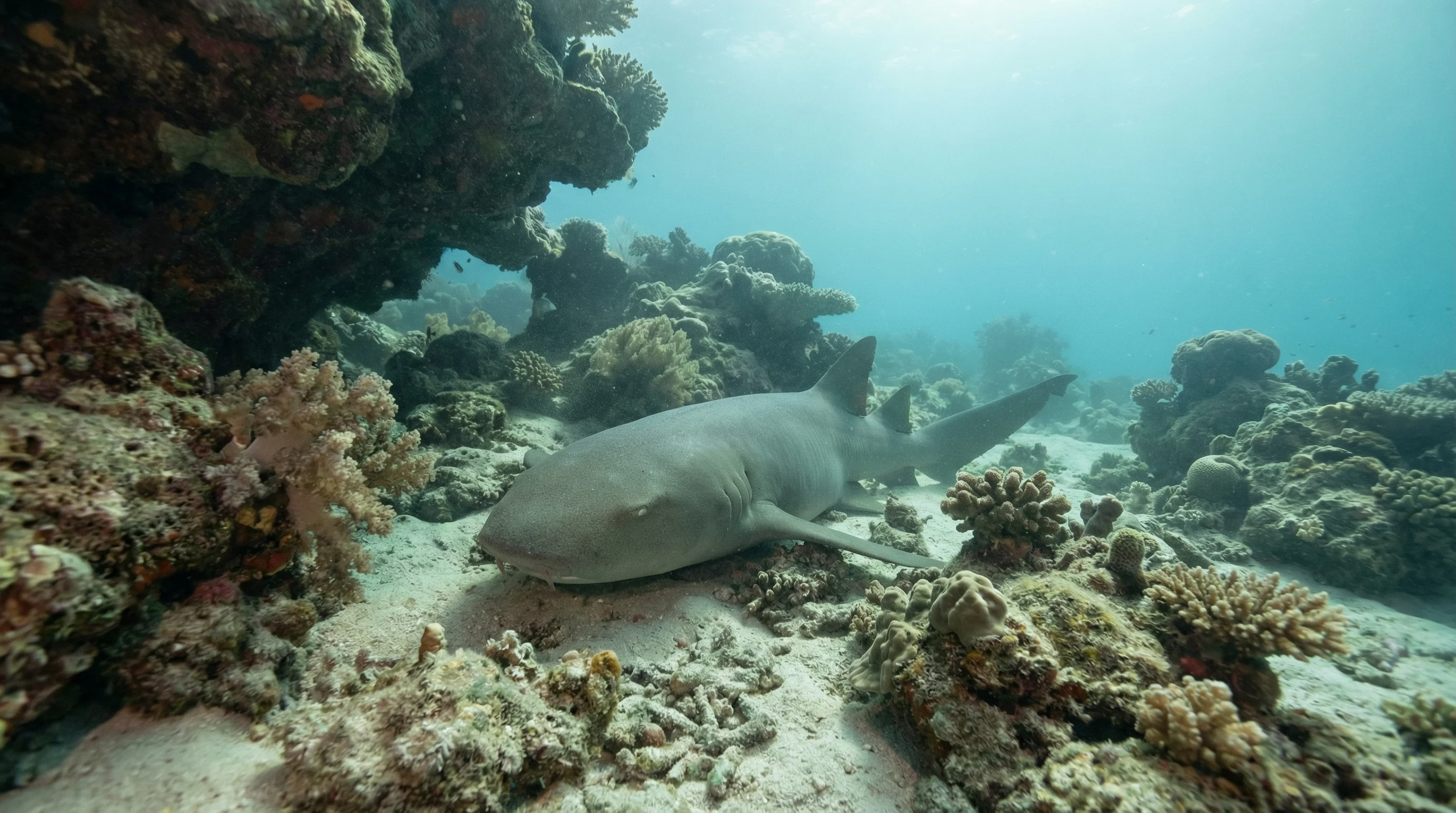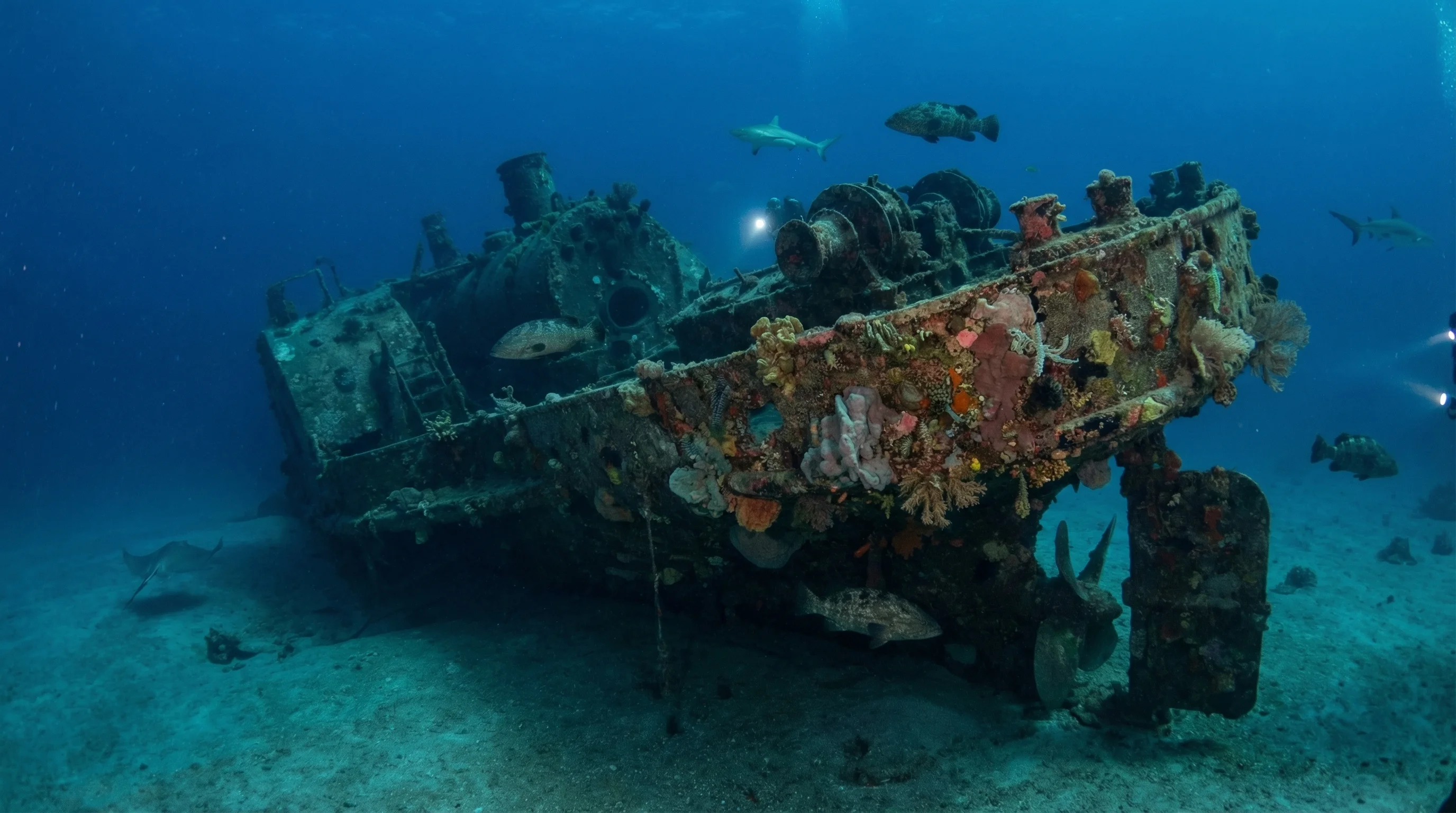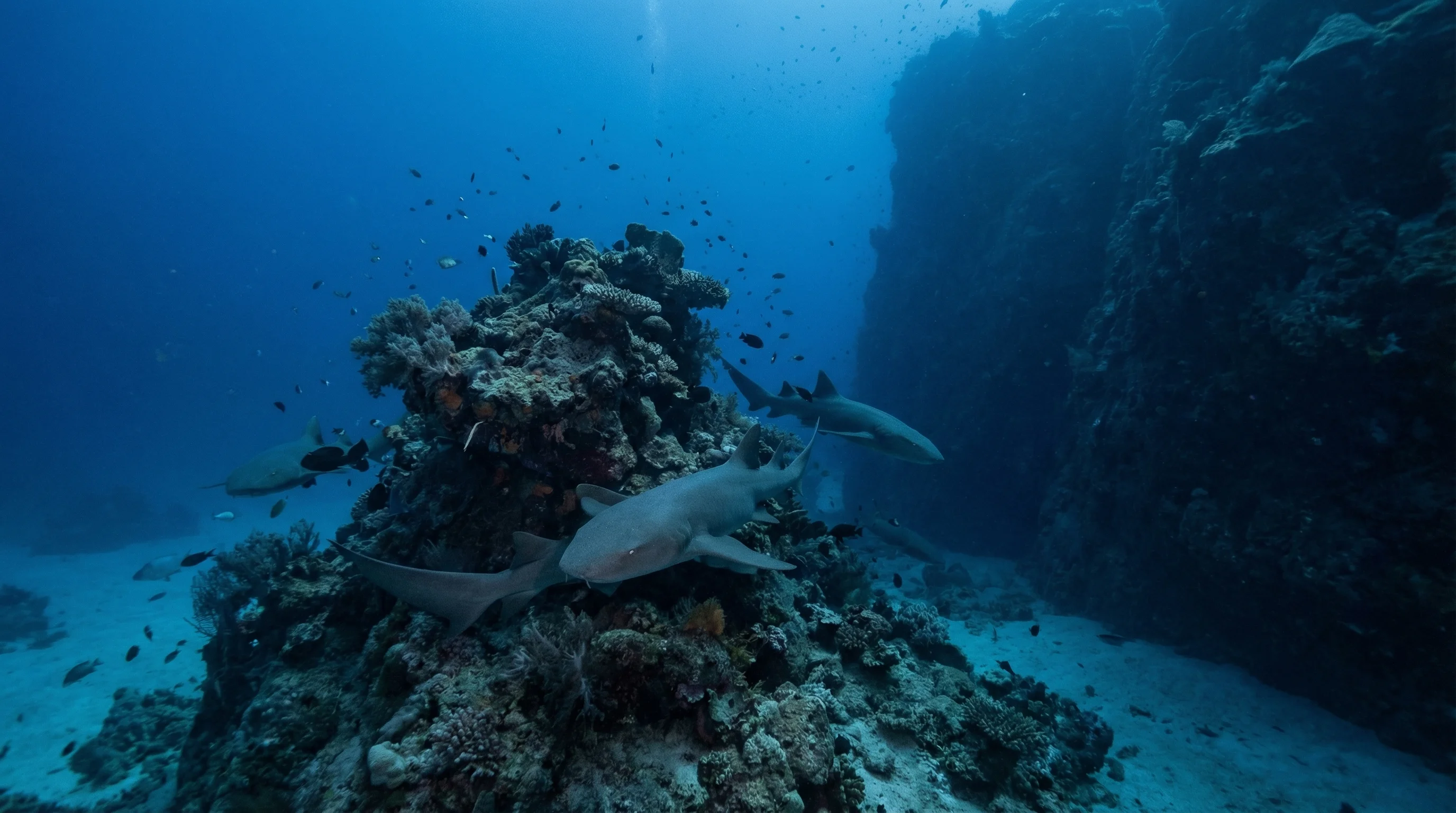
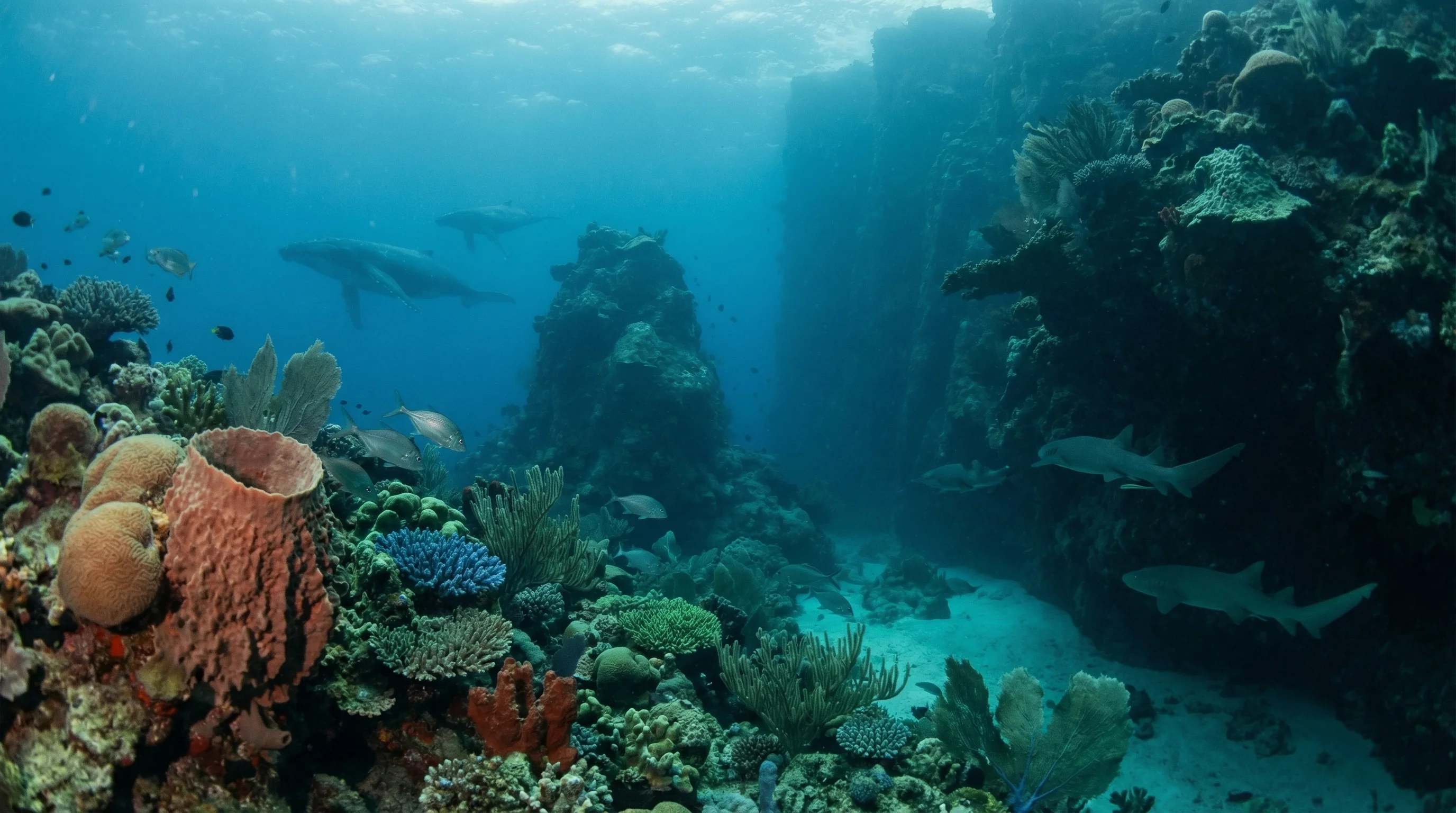
Flinders Reef offers a proper introduction to the diverse underwater world of the Great Barrier Reef without the challenges of deeper sites. This collection of pinnacles and walls sits in 5 to 20 metres of water, giving you plenty of time to explore without worrying about depth limits. The reef's structure creates sheltered areas where you can drift along walls or investigate small caves at your own pace. Visibility ranges from 7 to 24 metres, which means you'll usually spot marine life well before you reach it. Grey nurse sharks patrol the deeper sections, while wobbegong sharks rest on ledges and in cave entrances. Look up occasionally and you might see eagle rays or manta rays passing overhead. Turtles are common here, often found grazing on the reef or swimming past at eye level. The variable current works in your favour as a beginner. When it's gentle, you can focus on spotting leopard sharks resting on sandy patches or watching schools of trevally and sweetlip hunting around the pinnacles. When it picks up, you can drift along the wall and cover more ground with less effort. Between April and November, humpback whales migrate through these waters. While encounters aren't guaranteed, you might hear their songs echoing through the water. Parrotfish add constant activity and colour throughout your dive.
-26.98333, 153.50000
Current can pick up unexpectedly around the pinnacle, so stay close to your guide and signal early if you feel uncomfortable. The best visibility tends to come in the cooler winter months, roughly June to September.
The site is accessed via a 45-minute boat trip from Mooloolaba. Sunreef Mooloolaba at 123 Parkyn Parade is a primary operator.
Whaler sharks are sometimes sighted on the eastern side of the reef. Wobbegong and leopard sharks are also present.
Depth
5-20m
Visibility
7-25m
Skill Level
Beginner
Entry
Boat
Boat required
Water Temp
19-26°C
Current
Mild
Typical Dive
45 min
Best Time
Apr, May, Jun, Jul, Aug, Sep, Oct, Nov
Flinders Reef in Queensland supports diverse megafauna including grey nurse sharks, leopard sharks, wobbegong sharks, and manta rays throughout the year. Divers regularly encounter green turtles, eagle rays, and schools of sweetlip around the reef structures. During winter months from June to November, migrating humpback whales often pass close to the reef system.
Flinders Reef offers dive depths ranging from 5 metres to 20 metres, making it suitable for newer divers and those preferring shallower profiles. The varied depth range allows for multi-level diving across different sections of the reef. Most dive sites sit between 12 and 18 metres, providing good bottom times for recreational divers.
Flinders Reef is only accessible by boat, located offshore from Mooloolaba on Queensland's Sunshine Coast. Boat charters depart regularly from Mooloolaba with full facilities including dive shops, equipment rental, and guided tours. The journey typically takes 60 to 90 minutes depending on sea conditions and the specific reef site.
Flinders Reef requires a minimum Open Water diving certification due to boat access and offshore conditions. The site's depth range of 5 to 20 metres and generally mild currents make it accessible for recently certified divers. Beginner-friendly conditions and available guided tours support divers with limited experience beyond their initial certification.
Flinders Reef offers optimal diving conditions from April through November, covering the Australian autumn, winter, and spring months. Water temperatures range from 19°C in winter to 26°C in late spring, with visibility typically between 7 and 24 metres. The winter months from June to October provide the added attraction of humpback whale migrations along the Queensland coast.
Flinders Reef is classified as a beginner-level dive site with depths from 5 to 20 metres and typically mild currents. Open Water certified divers can comfortably explore the reef with guided tours available from Mooloolaba operators. The manageable conditions and abundant marine life make it an excellent site for building confidence and experience after initial certification.
Flinders Reef is home to several shark species including grey nurse sharks, leopard sharks, and wobbegong sharks that pose minimal threat to divers. Grey nurse sharks, despite their intimidating appearance, are docile and frequently encountered at established aggregation sites. Divers should maintain respectful distances and follow guide instructions, as sharks are listed among site hazards primarily for awareness rather than danger.
Yes, equipment rental is available at or near Flinders Reef in Mooloolaba. Contact local dive operators for specific gear availability and prices.
A 5mm wetsuit is recommended for diving at Flinders Reef in Mooloolaba. Water temperatures range from 19°C to 26°C.
Flinders Reef in Mooloolaba has depths ranging from 5 metres to 20 metres.
A typical dive at Flinders Reef in Mooloolaba lasts approximately 45 minutes. Actual dive time depends on depth, air consumption, and conditions.