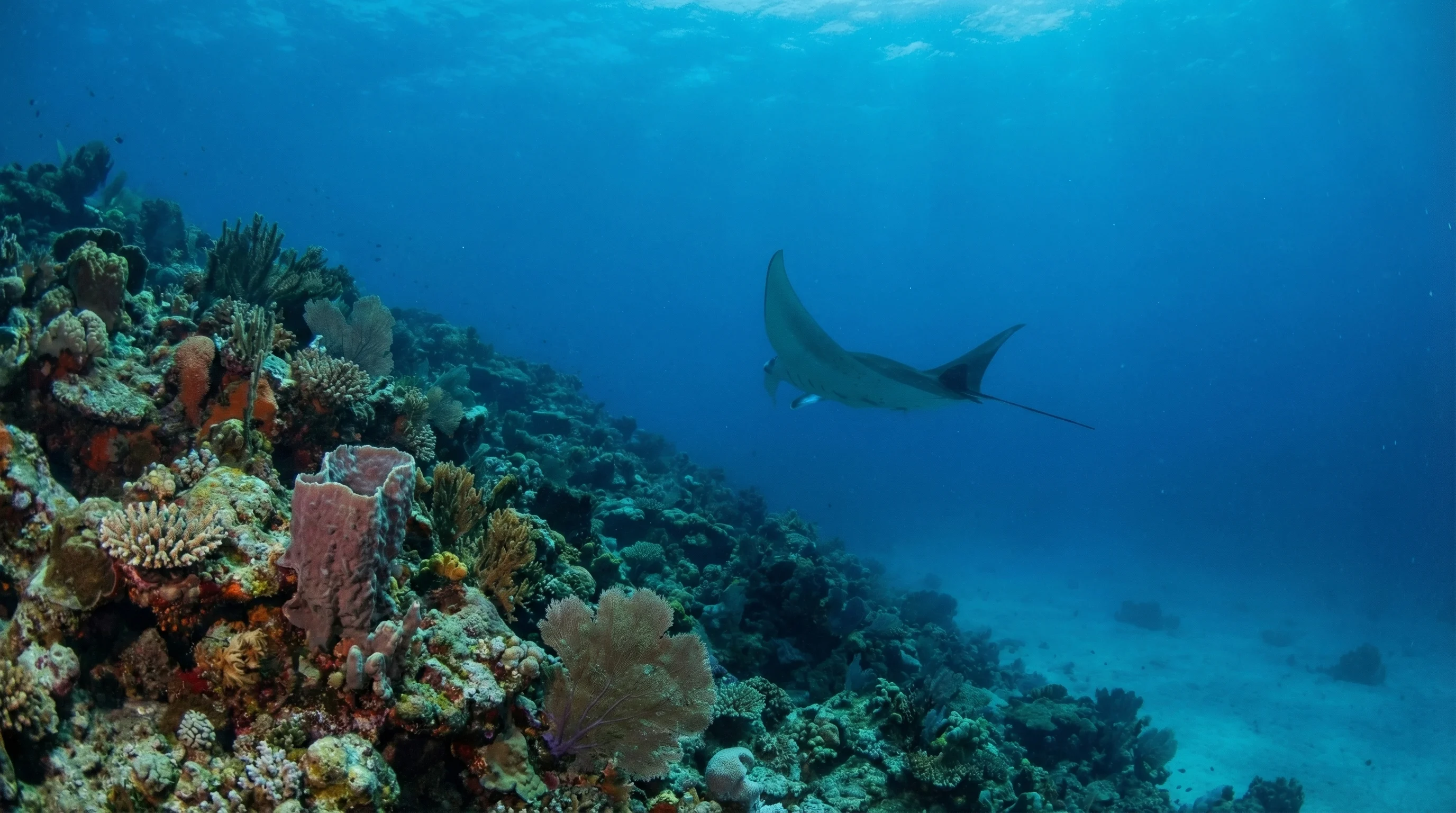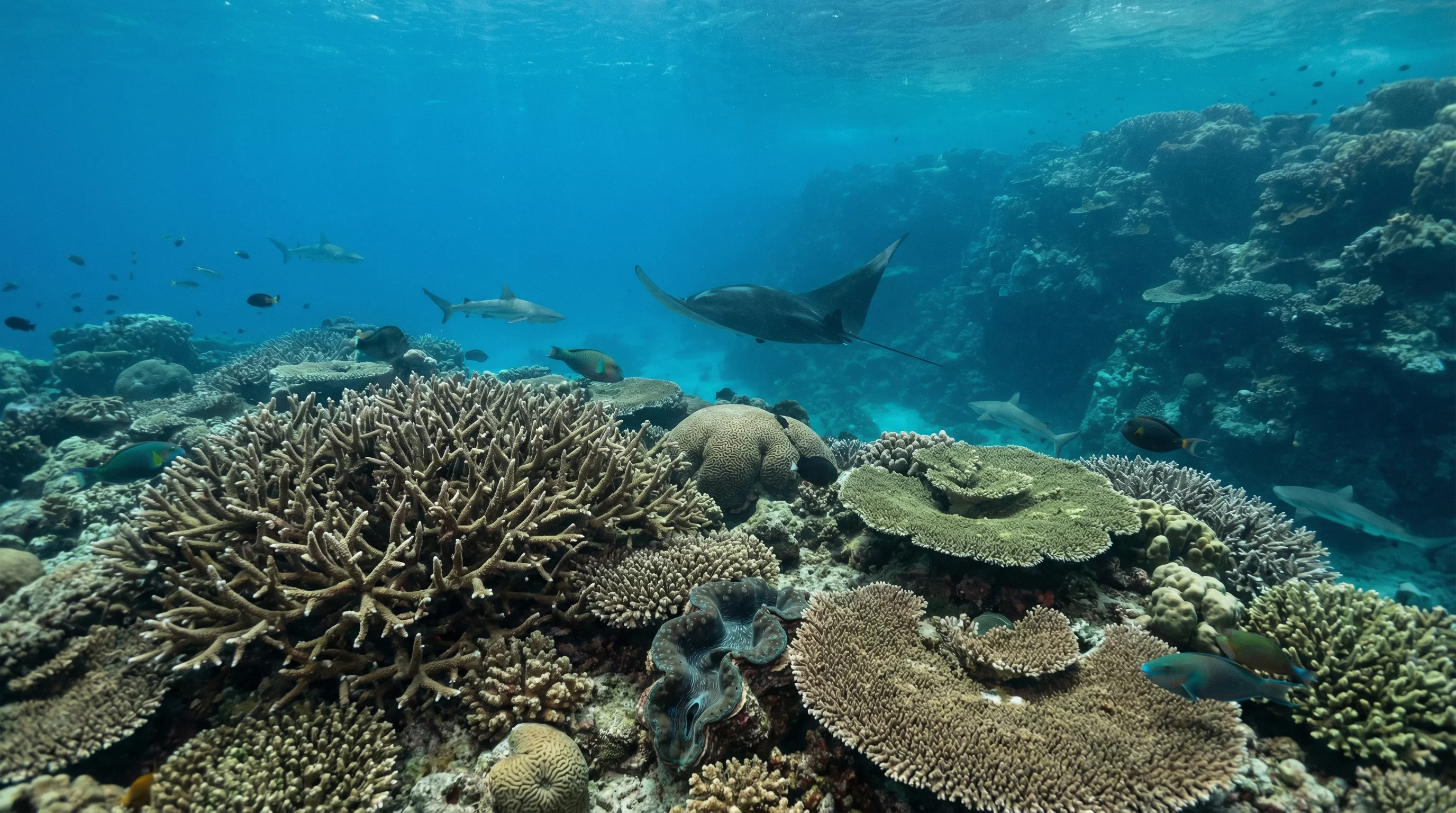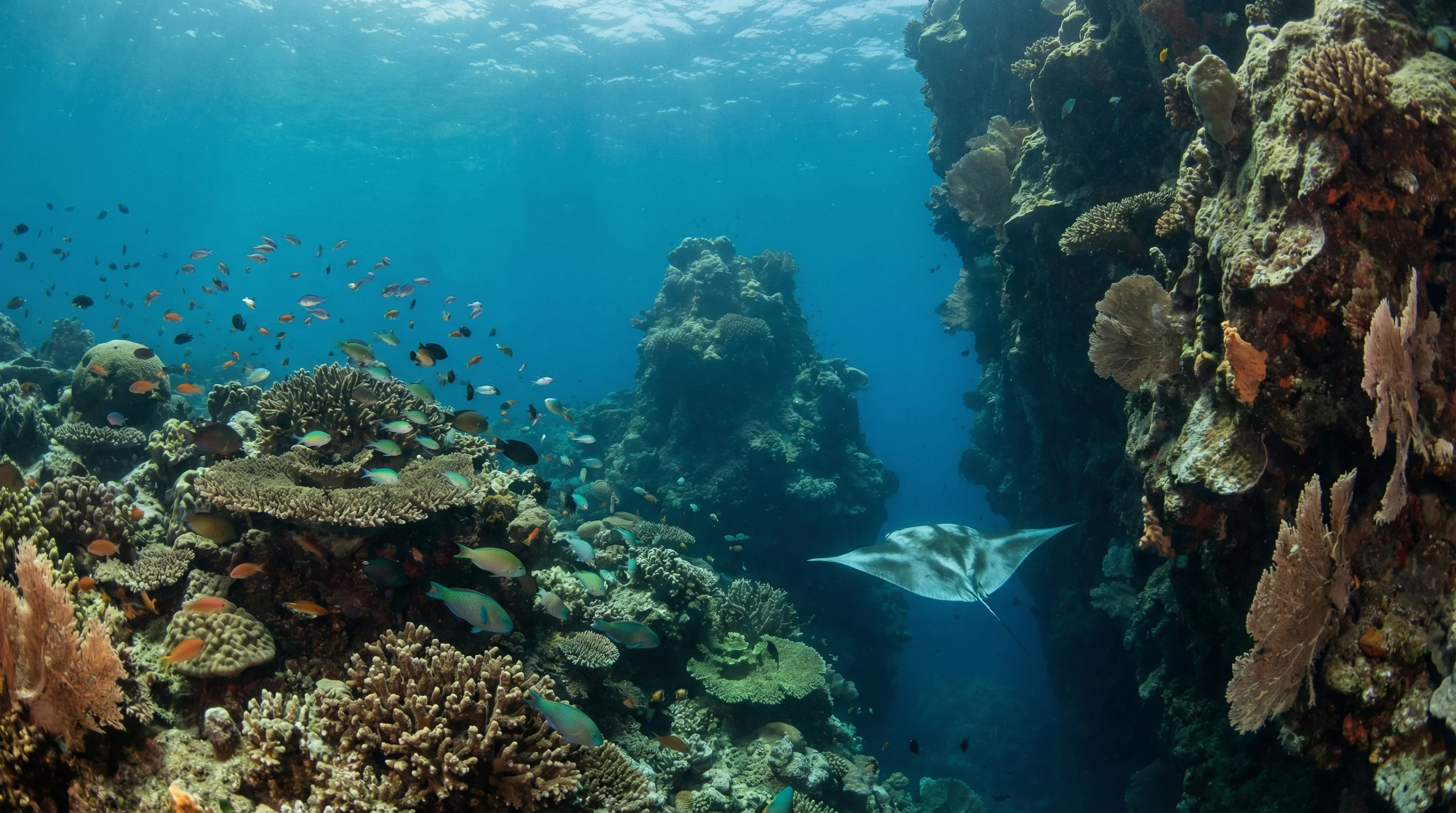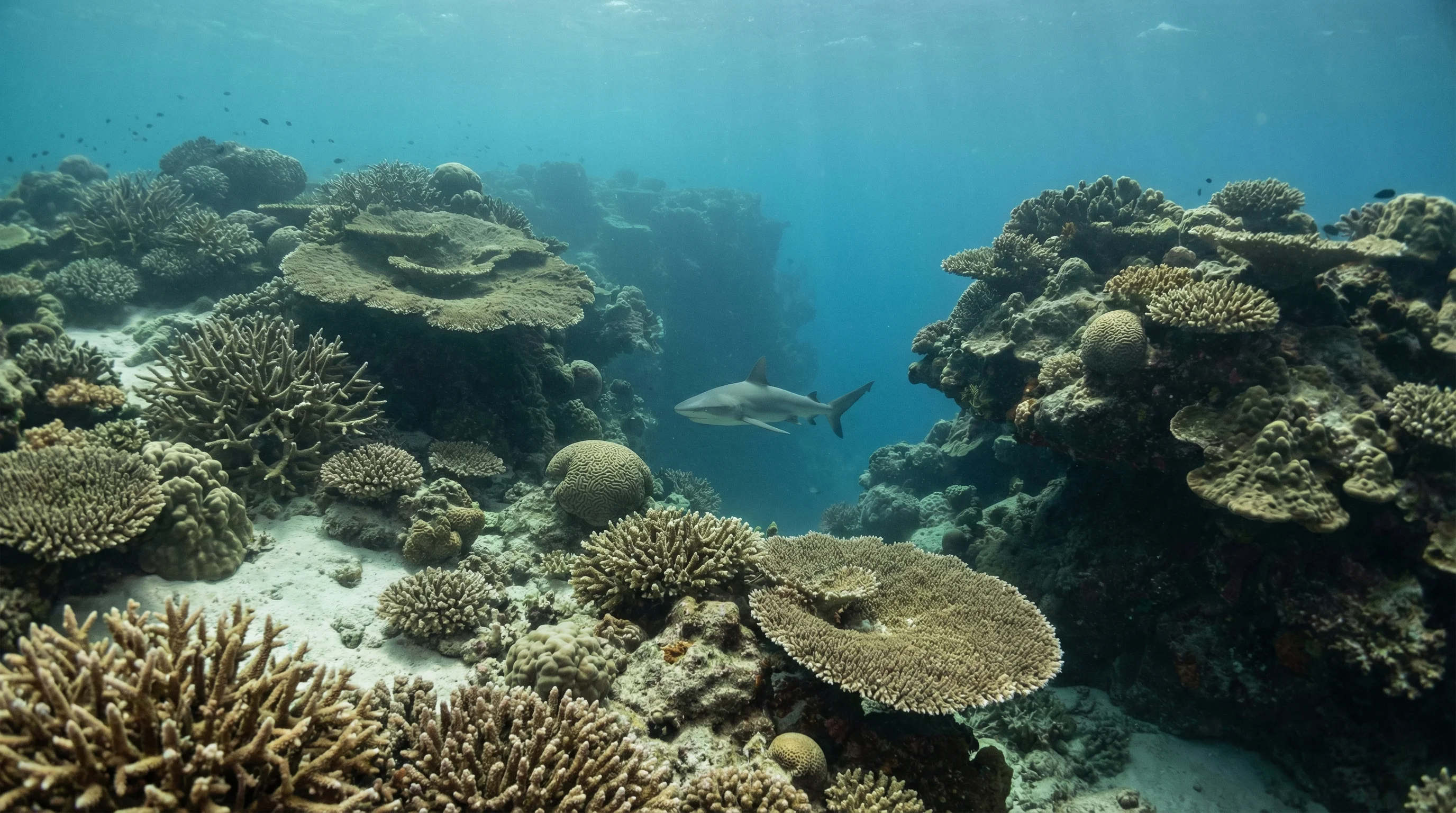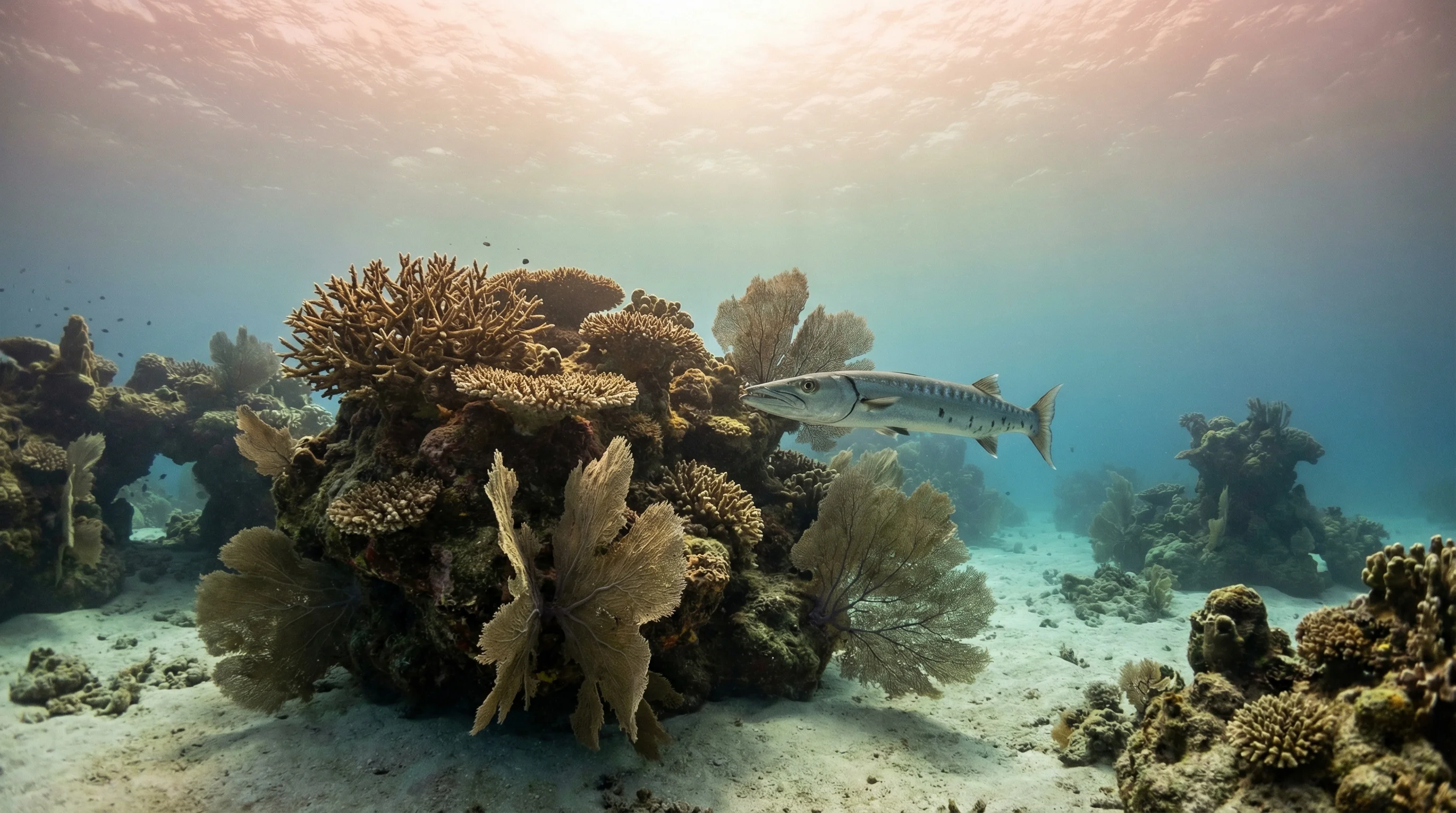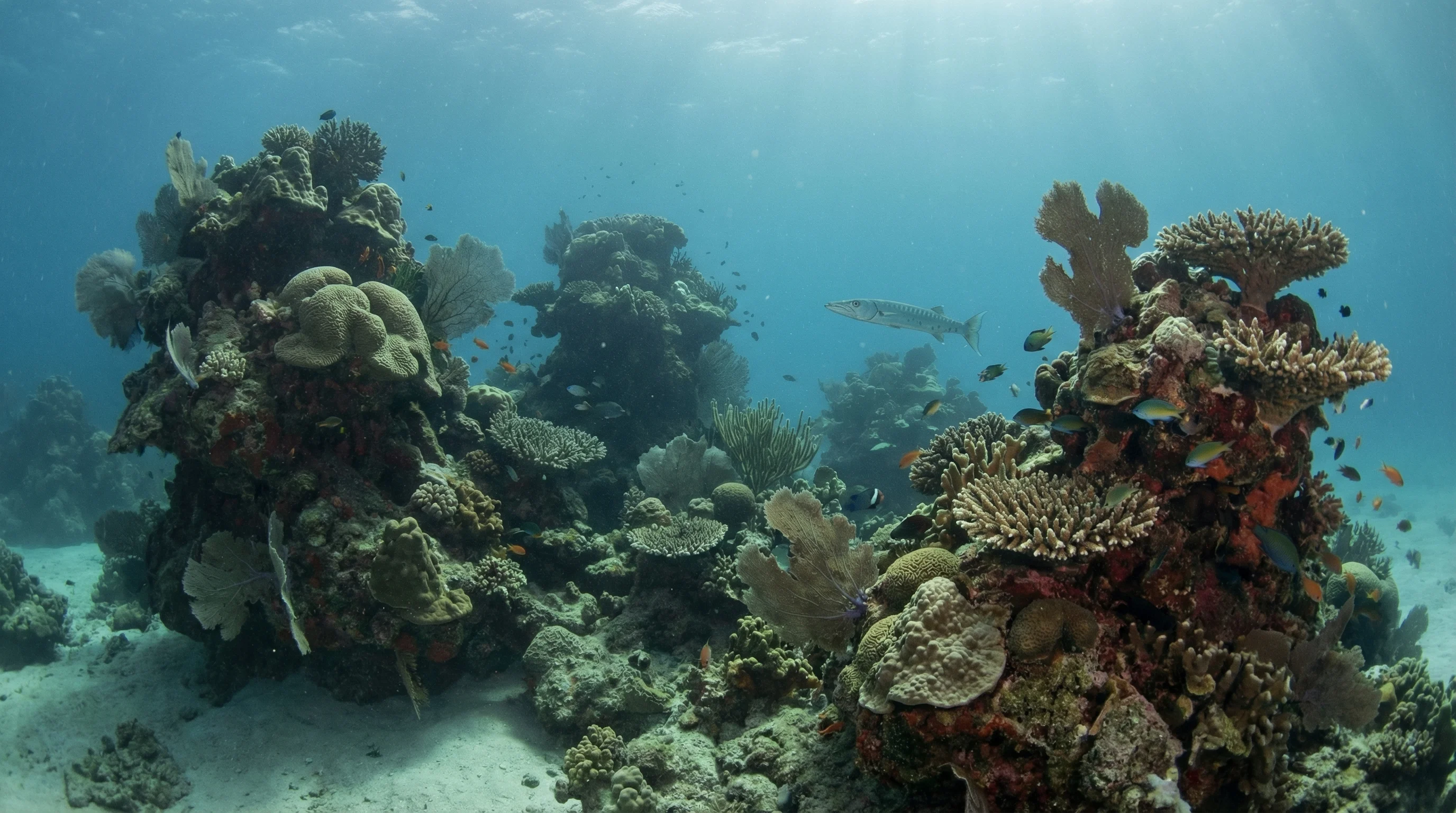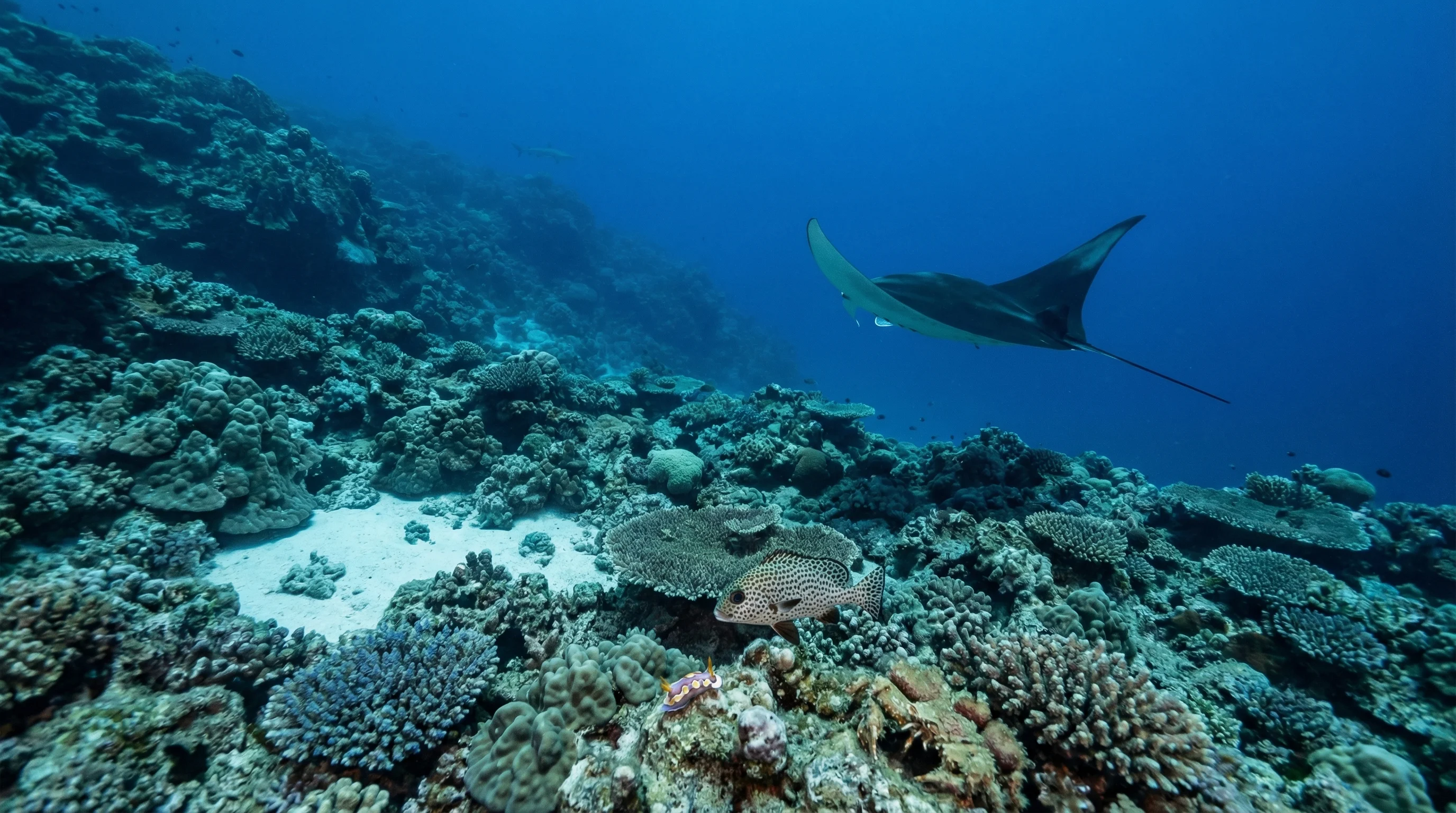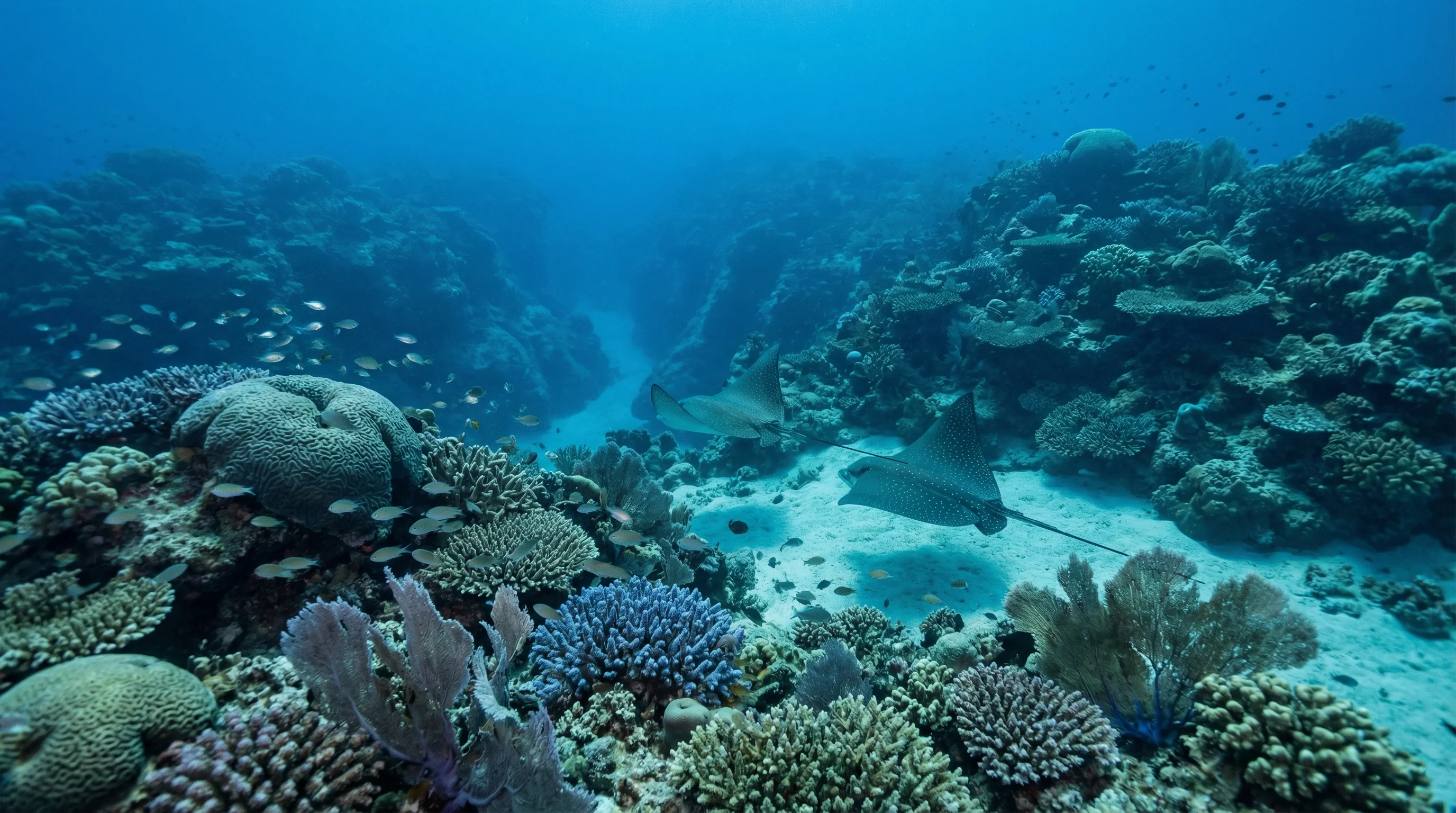
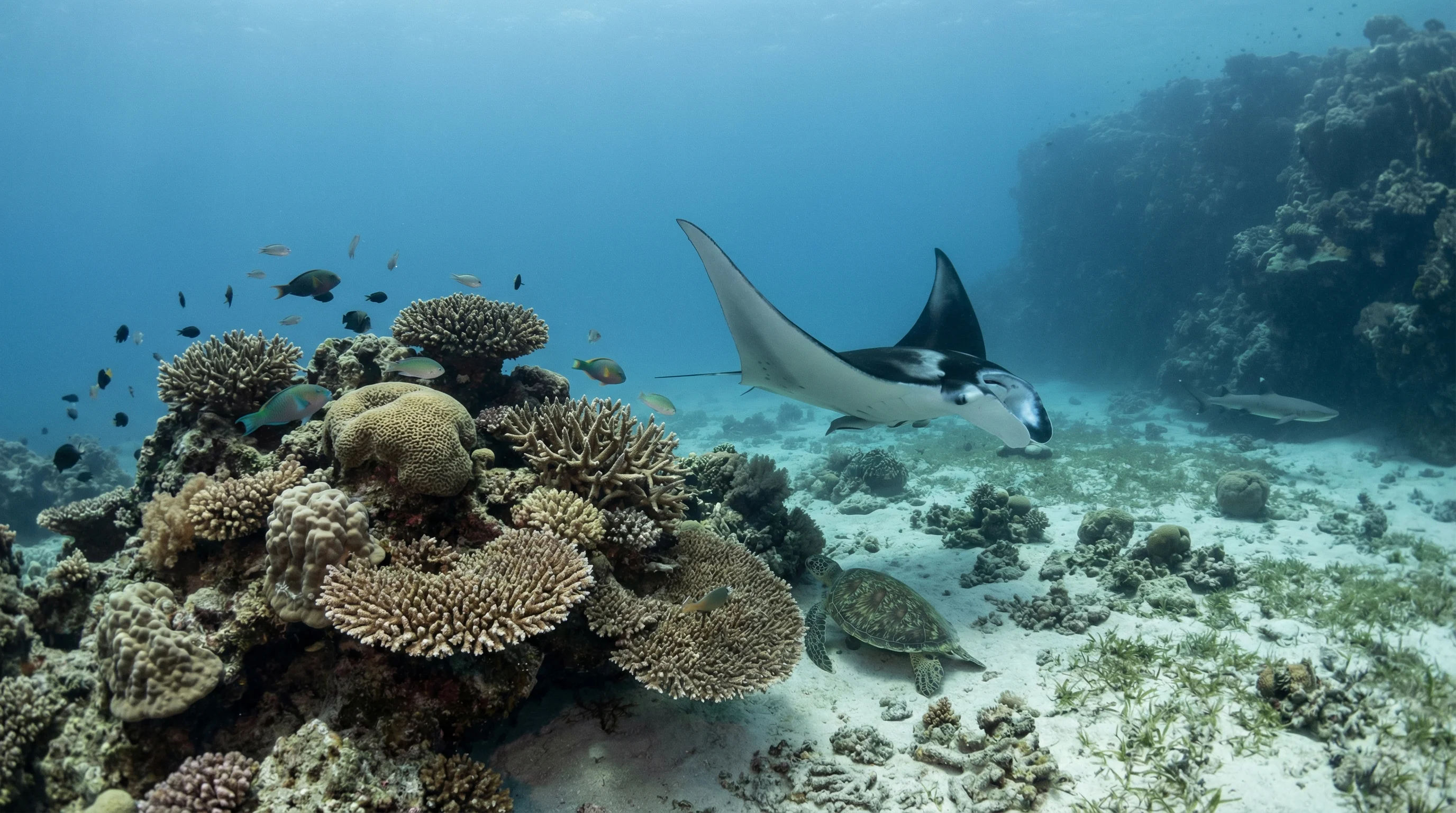
Moore Reef sits on the outer Great Barrier Reef, about 50 kilometres northeast of Cairns. This pontoon-based dive site works perfectly for first-time divers, with shallow coral gardens starting at just one metre and gradually sloping down to 25 metres at the drop-off. You'll reach the reef by boat, where professional guides lead groups through the site. The visibility here ranges from 20 to 30 metres, giving you clear views of the coral formations and marine life. The shallow areas host clownfish darting among anemones, colourful parrotfish grazing on coral, and giant clams embedded in the reef structure. Butterflyfish and angelfish flutter around the coral heads, while sea turtles often glide past at mid-depths. As you approach the drop-off, you might spot Maori wrasse cruising the reef edge. Reef sharks patrol the deeper sections, and manta rays occasionally sweep through. The current varies throughout the day, but guides time the dives to match the conditions. Be aware that jellyfish can appear seasonally, and your guide will brief you on keeping a respectful distance from marine life. The pontoon offers equipment rental, first aid facilities, and guided tours that help you navigate the site safely. The calmer winter months from April to November provide the most consistent conditions for diving.
-16.84578, 146.22734
April through November brings the most settled conditions and the clearest water, making it the most reliable window for first-time divers. Equipment rental and guided tours are available on-site, so you do not need to bring your own gear.
Moore Reef is accessible via boat or helicopter tours departing from Cairns. Several tour operators, such as Sunlover Cruises and Great Adventures, run day trips to floating pontoons moored at the reef. The boat trip takes approximately 90 minutes from Cairns.
Stinger season is from November to May, and box jellyfish and Irukandji can be present. Tour operators provide protective stinger suits.
Depth
1-25m
Visibility
12-30m
Skill Level
Beginner
Entry
Boat
Boat required
Water Temp
22-29°C
Typical Dive
45 min
Best Time
Apr, May, Jun, Jul, Aug, Sep, Oct, Nov
Yes, Moore Reef in Far North Queensland is a boat-access-only dive site. You will need to book with a local dive operator or charter a boat to reach it.
Moore Reef in Far North Queensland is well-suited for beginner divers and snorkellers. Conditions are typically calm with easy entry and shallow depths.
Diving at Moore Reef in Far North Queensland requires the following certifications: Open Water. Always dive within your training limits.
Yes, equipment rental is available at or near Moore Reef in Far North Queensland. Contact local dive operators for specific gear availability and prices.
A 3mm wetsuit is recommended for diving at Moore Reef in Far North Queensland. Water temperatures range from 22°C to 29°C.
Moore Reef in Far North Queensland is home to angelfish, reef sharks, giant clams, sea turtles, parrotfish, and butterflyfish. Marine life sightings vary by season and conditions.
The best months to visit Moore Reef in Far North Queensland are April, May, June, July, August, September, October, and November. Conditions outside these months can still be good but are less predictable.
Moore Reef in Far North Queensland has depths ranging from 1 metres to 25 metres.
Moore Reef in Far North Queensland offers snorkelling with a rating of 1 out of 5. Shallow areas start from 1 metres, making it accessible for snorkellers.
A typical dive at Moore Reef in Far North Queensland lasts approximately 45 minutes. Actual dive time depends on depth, air consumption, and conditions.
Yes, night diving is available at Moore Reef in Far North Queensland. Night dives often reveal different marine life including nocturnal creatures. Always dive with proper lighting and a buddy.
Divers at Moore Reef in Far North Queensland should be aware of jellyfish. These encounters are generally rare and avoidable with proper awareness. Follow local safety guidance and maintain a respectful distance from all marine life.
Visibility at Moore Reef in Far North Queensland typically ranges from 12 metres to 30 metres. Conditions vary with weather, tides, and seasons.