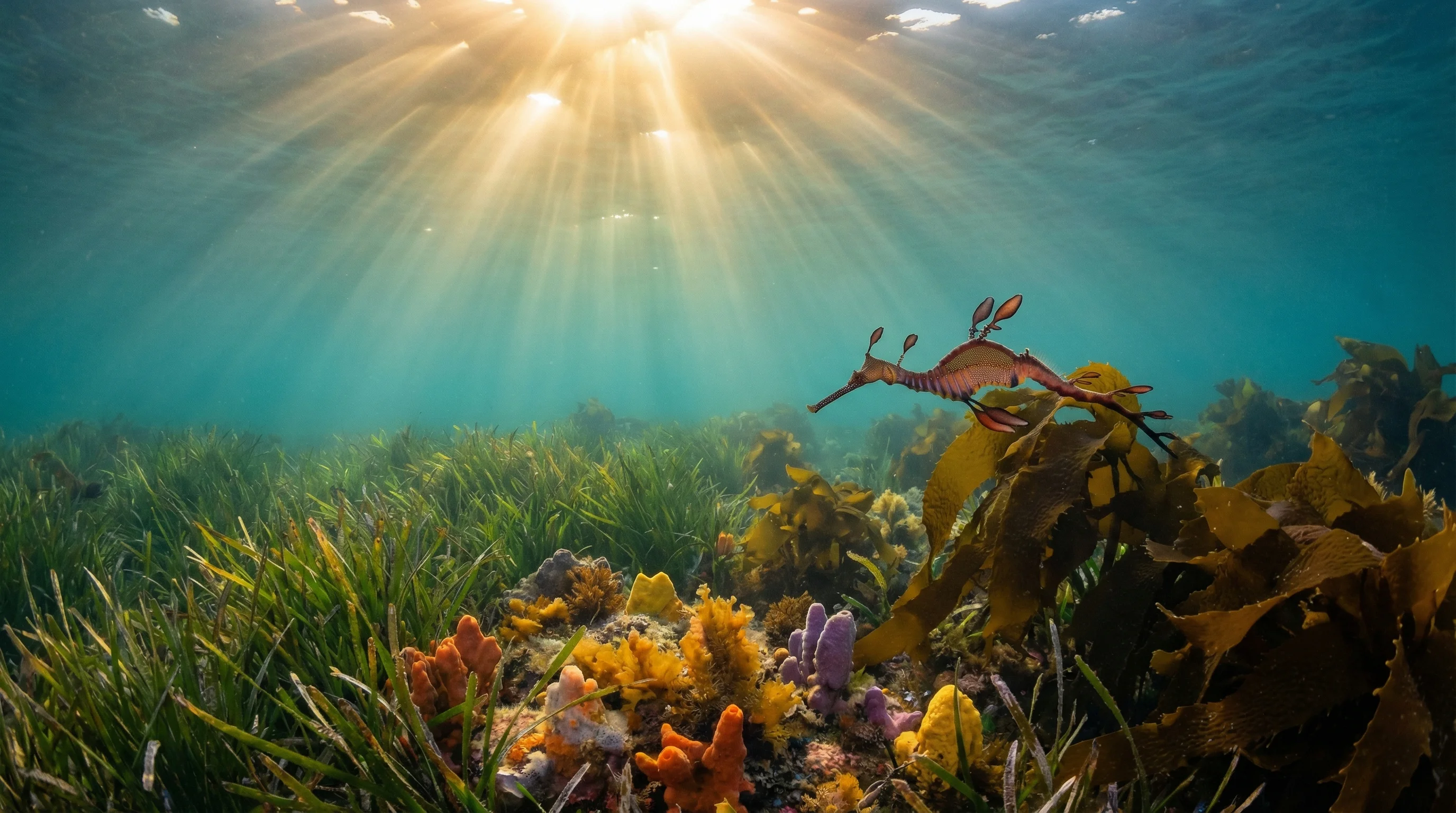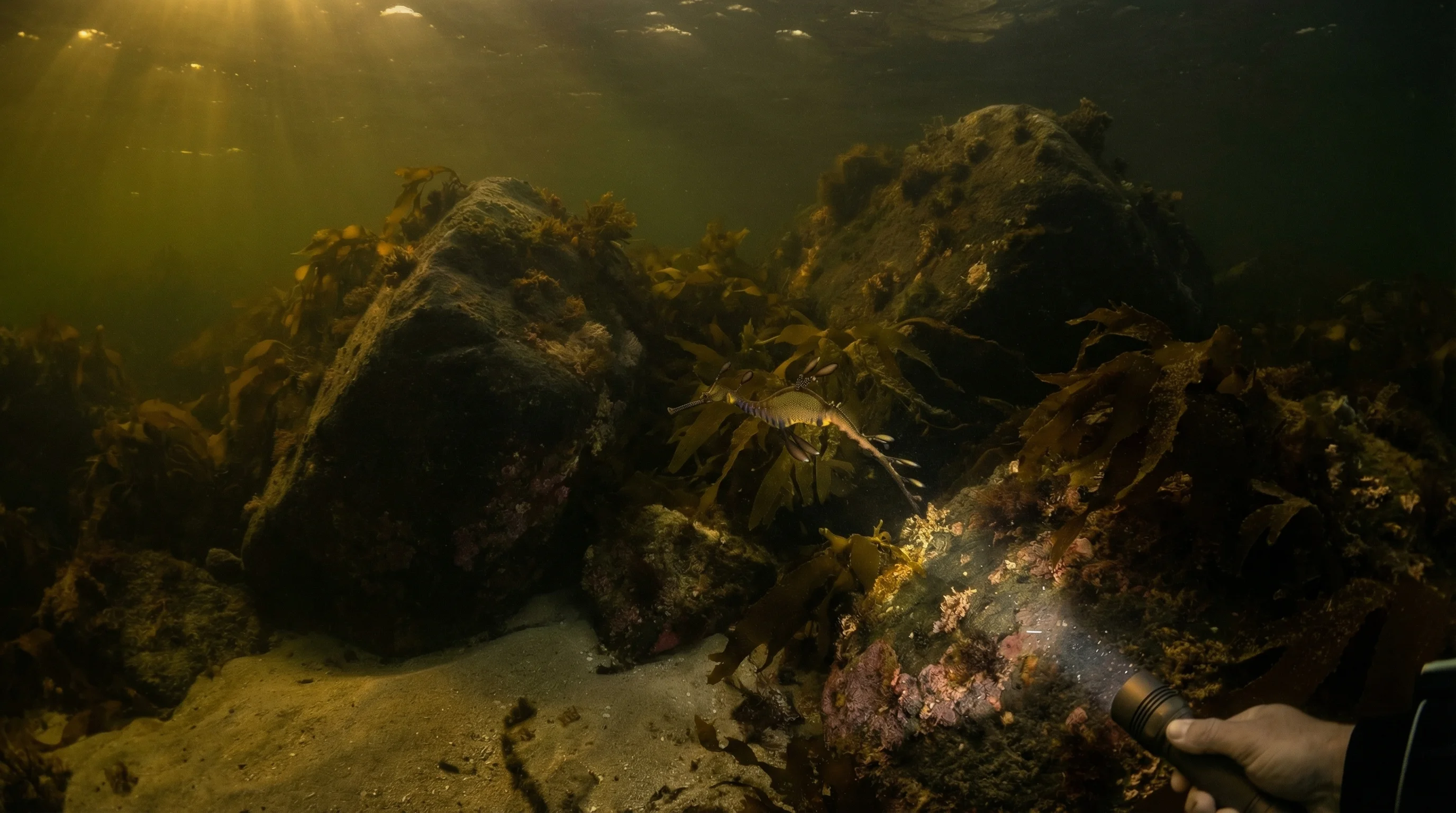
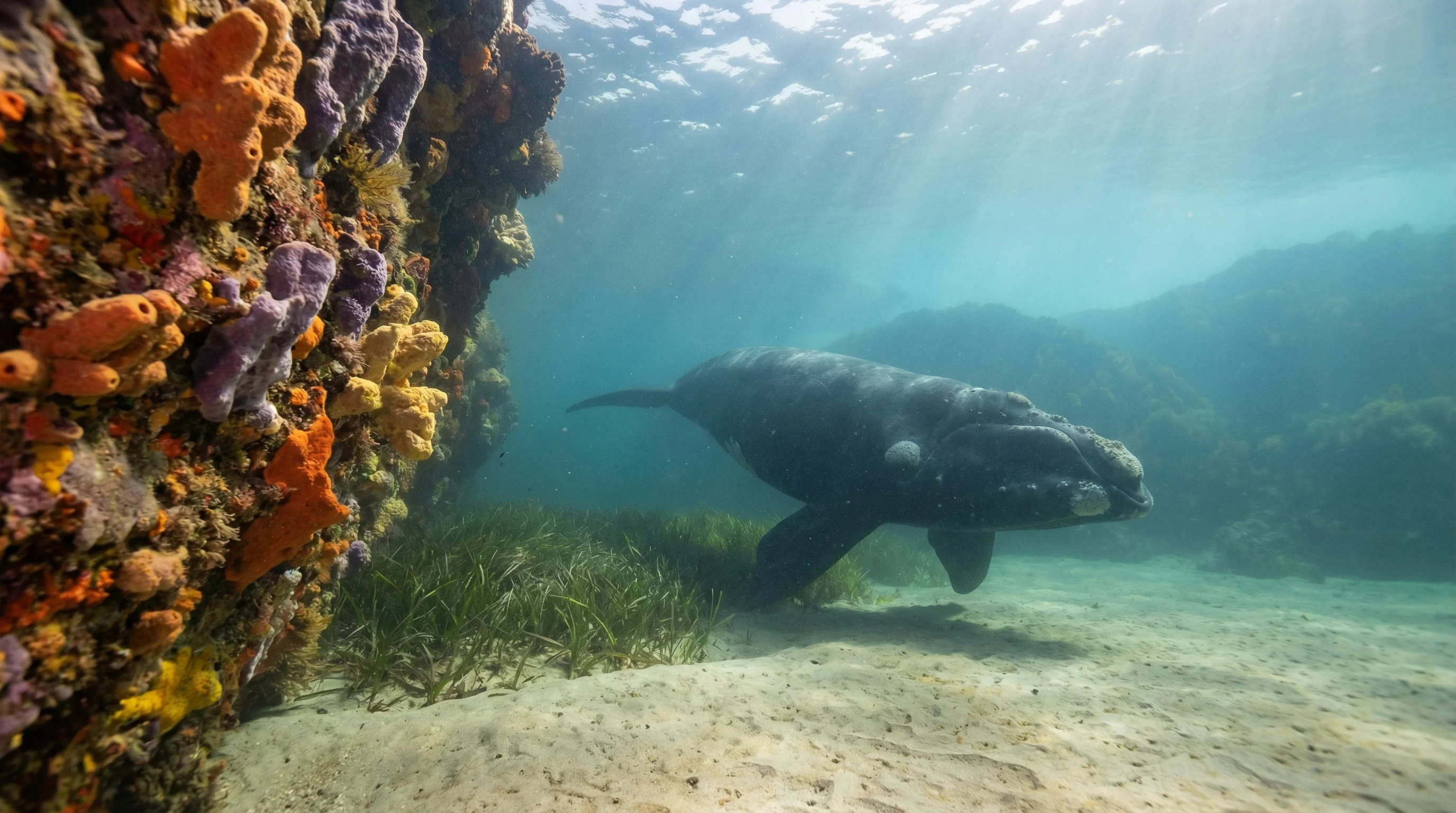
Cockle Creek sits at the end of the southernmost public road in Australia, offering shore access to calm, shallow waters that suit first-time snorkellers and new divers perfectly. Visibility ranges from 5 to 30 metres depending on conditions, with the clearest water typically found from summer through autumn (December to May). The reef and seagrass areas shelter weedy seadragons, wrasse, leatherjackets, abalone, and rock lobster. Seals and dolphins visit the area, and southern right whales pass through seasonally. Come prepared for cold water year-round and wear a wetsuit appropriate for Tasmanian conditions.
-43.57850, 146.89000
A thick wetsuit of at least 5mm is essential here regardless of the season, as the water stays cold even in the warmer months. Early morning visits during the summer months tend to offer the calmest surface conditions and the best visibility.
Cockle Creek is the farthest point south one can drive in Australia. Access is via the Huon Highway (A6) from Hobart, then the C635 and C636. The last section of the road is unsealed but suitable for 2WD vehicles. The site is accessible from the beach.
The water is cold year-round, requiring a thick wetsuit.
Visibility
5-25m
Skill Level
Beginner
Entry
Shore
Water Temp
12-17°C
Current
Mild
Best Time
Jan, Feb, Mar, Apr, May, Dec
Cockle Creek in Tasmania offers excellent opportunities to encounter weedy seadragons, one of Australia's most iconic marine species. Snorkellers regularly spot seals, dolphins, and a variety of fish including wrasse and leatherjackets. During winter months, southern right whales may be visible from the shore or whilst snorkelling in the bay.
Cockle Creek is ideal for beginner snorkellers with its easy shore entry and absence of currents. The sheltered bay provides calm conditions and visibility ranging from 5 to 30 metres. The main challenge is the cold water temperature of 12-17°C, which requires appropriate thermal protection.
Water temperatures at Cockle Creek range from 12°C in winter to 17°C during the warmer months of December through May. A wetsuit of at least 5mm thickness is essential, with many snorkellers preferring 7mm suits or drysuits. The cold water is classified as a hazard and proper thermal protection is critical for safe snorkelling.
The optimal months for snorkelling at Cockle Creek are December through May when water temperatures reach their warmest at 17°C. These summer and autumn months provide the most comfortable conditions whilst still offering excellent marine life encounters. Winter snorkelling is possible but requires advanced cold water gear.
Cockle Creek offers convenient shore access with parking and toilet facilities available on site. No boat is required as snorkellers can enter directly from the beach. The site is located on Tasmania's south coast, making it the southernmost point accessible by road in Australia.
Snorkelling at Cockle Creek requires standard mask, snorkel and fins plus substantial thermal protection. A wetsuit of 5-7mm thickness is essential due to water temperatures of 12-17°C, with gloves and a hood strongly recommended. Many experienced snorkellers opt for drysuits to extend their time in the water comfortably.
Entry to Cockle Creek is completely free with no fees charged for snorkelling or beach access. Basic facilities including parking and toilets are provided at no cost. The site operates as a public access location on Tasmania's south coast.
Diving at Cockle Creek in South Coast requires the following certifications: Open Water. Always dive within your training limits.