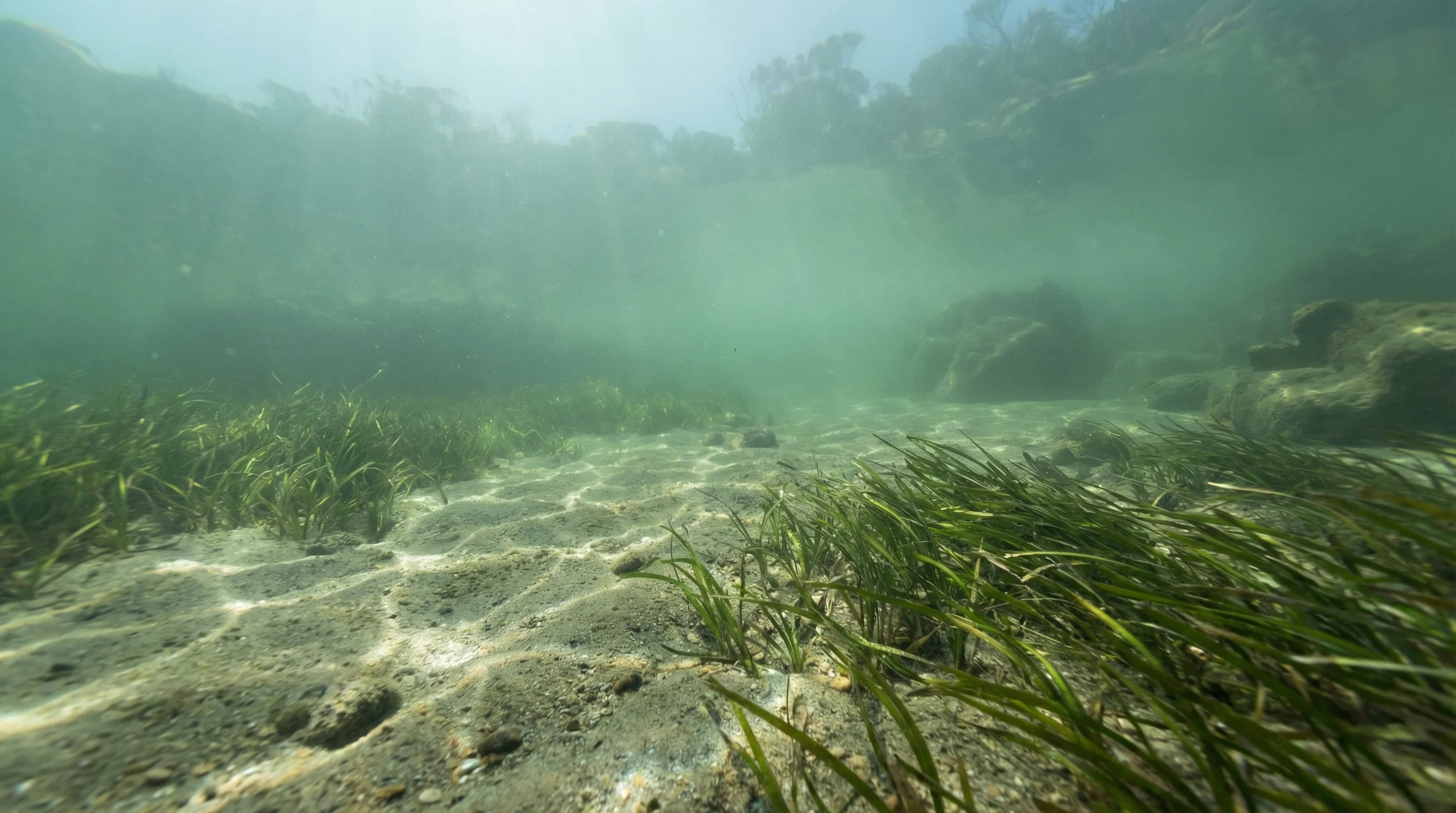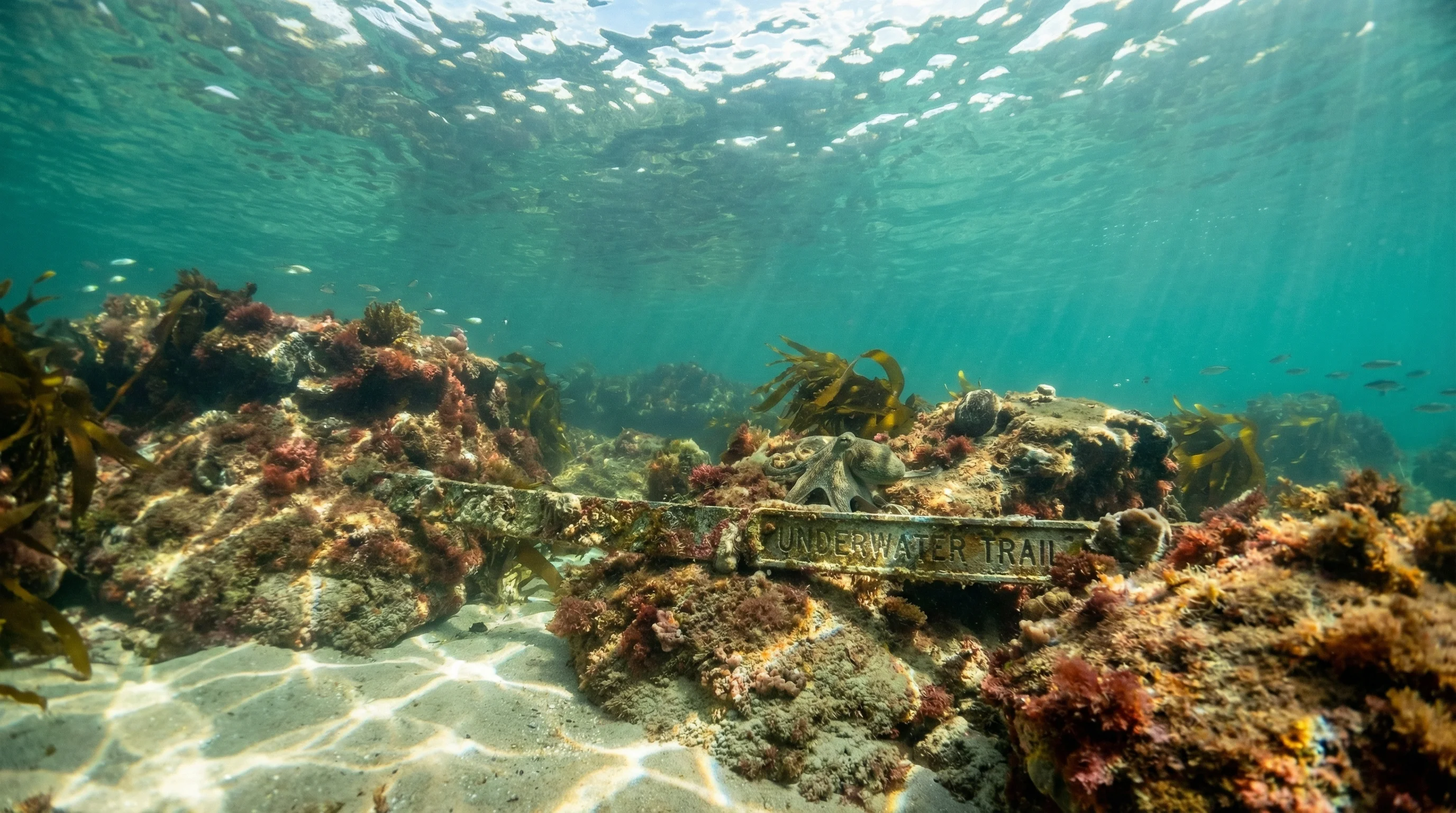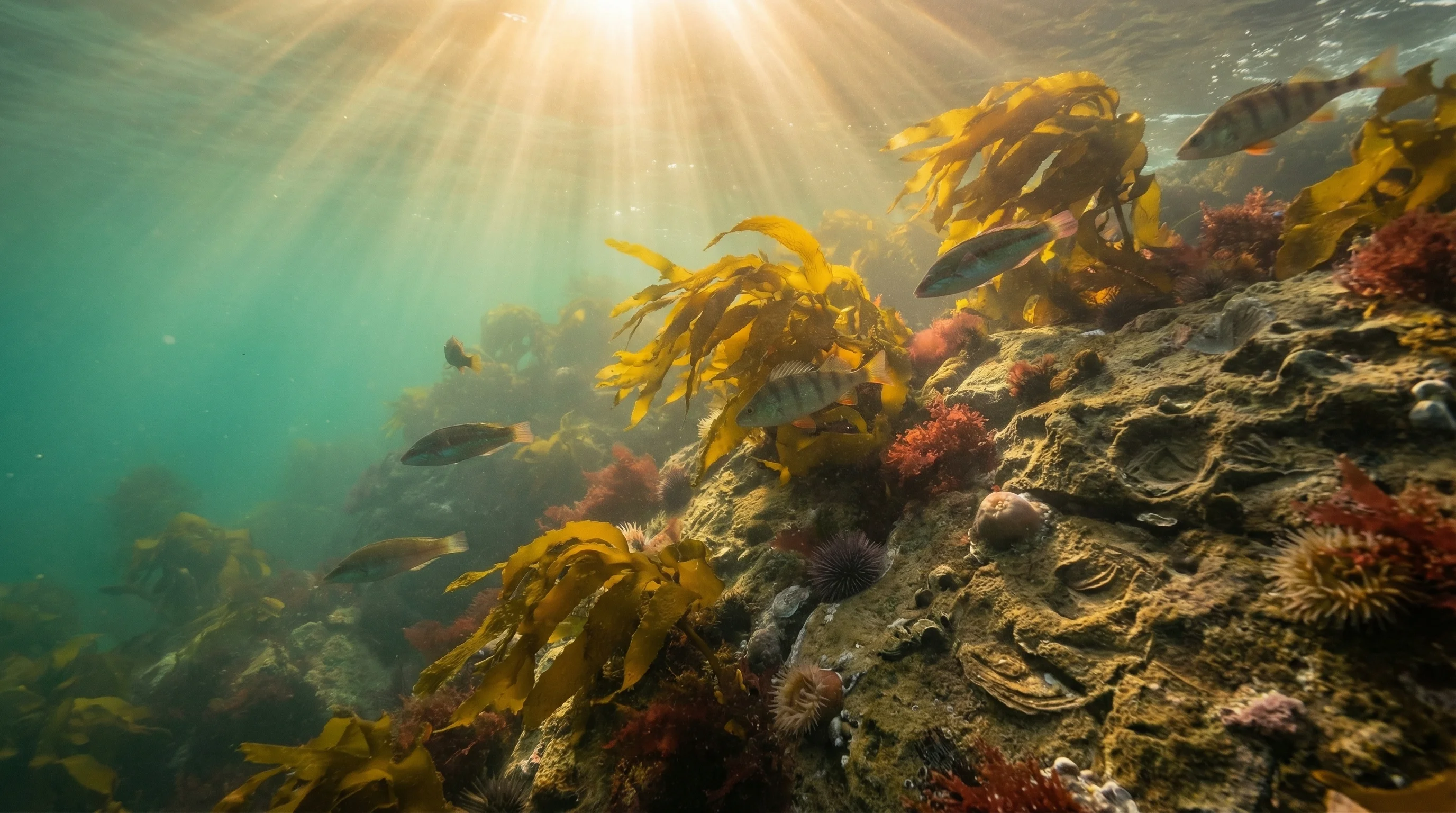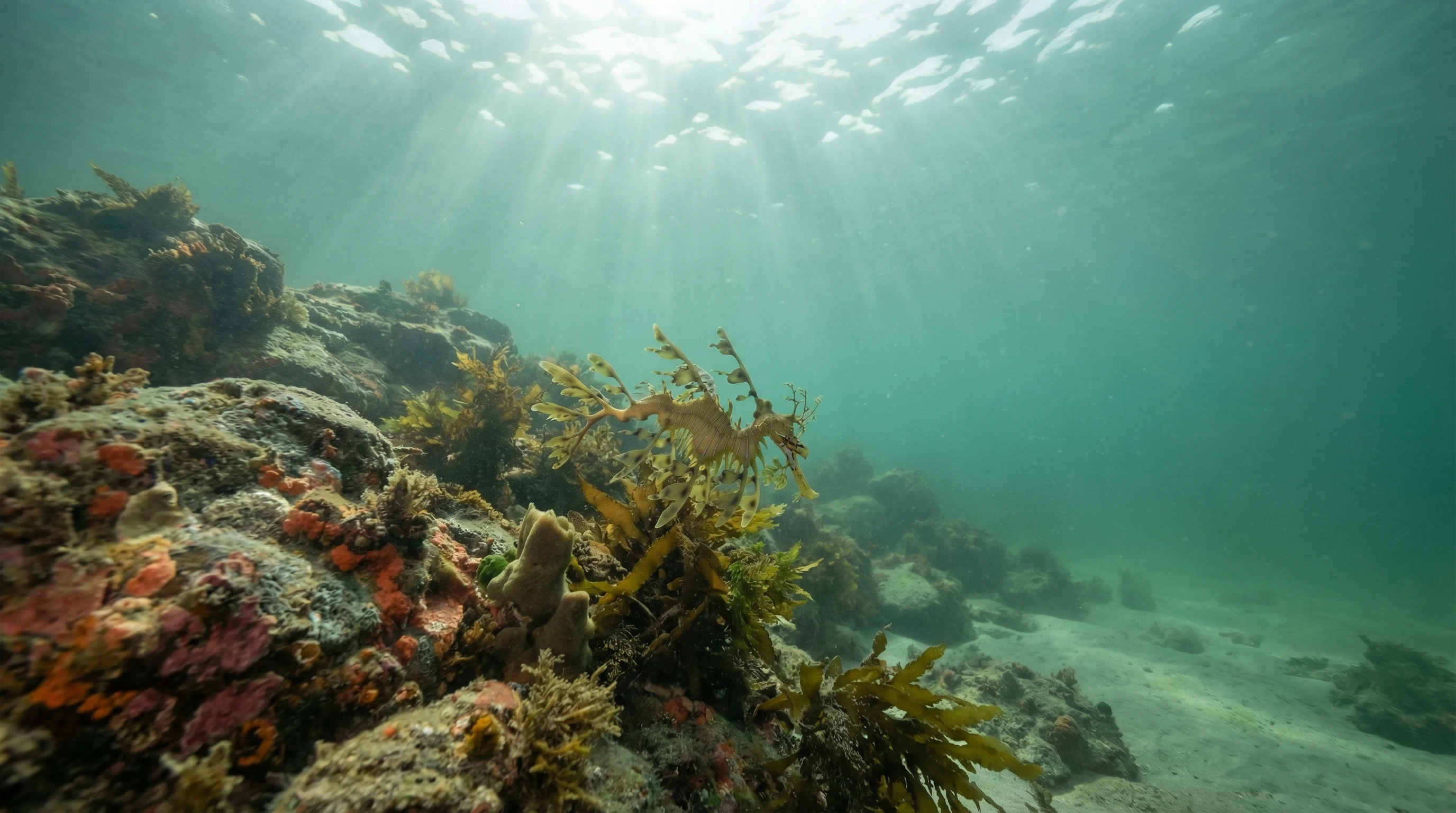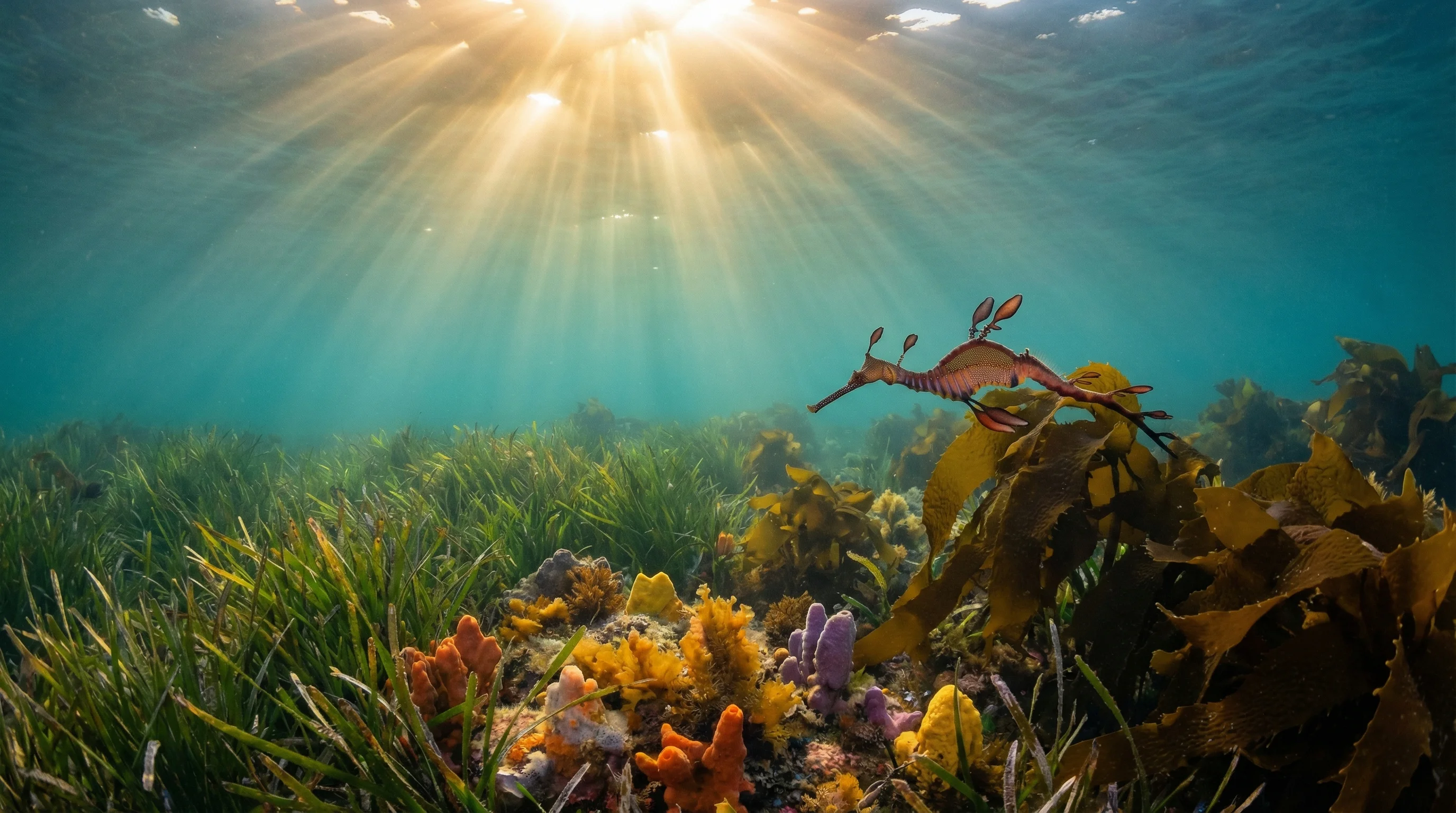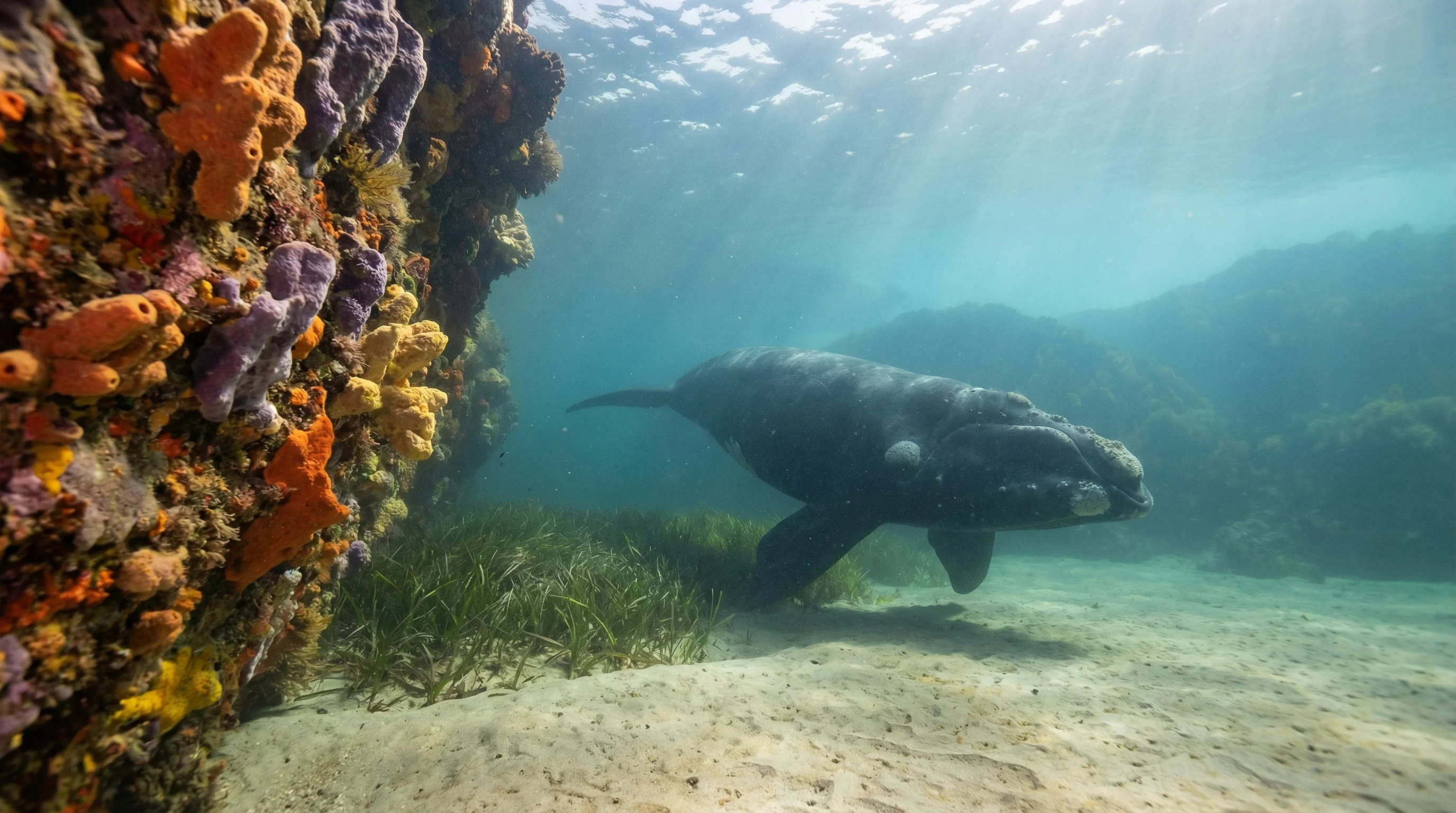
Ninepin Point Marine Reserve is a sheltered shore dive in southern Tasmania where shallow, clear water makes it a genuinely approachable site for beginners. Depths run from 3 to 10 metres, and visibility typically reaches 15 metres, so you can take your time and actually see what surrounds you. The reef is draped in kelp forest and red algae, with sea whips and sea fans adding structure throughout. Keep your eyes moving slowly and you have a good chance of spotting weedy seadragons, which blend into the kelp remarkably well. Bastard trumpeter and jackass morwong are also regular presences around the reef. Currents can vary, so check conditions before entering.
-43.28506, 147.19377
Summer through autumn (December to May) brings the most settled conditions and the best chance of spotting weedy seadragons, which are most active in calmer water. Come prepared for cold water regardless of the season, as a decent wetsuit makes a real difference to how long you can comfortably stay down.
The reserve is located about a one-hour drive south of Hobart. Access is from the Channel Highway, with a short track leading from a carpark at the headland of Ninepin Point down to the entry point.
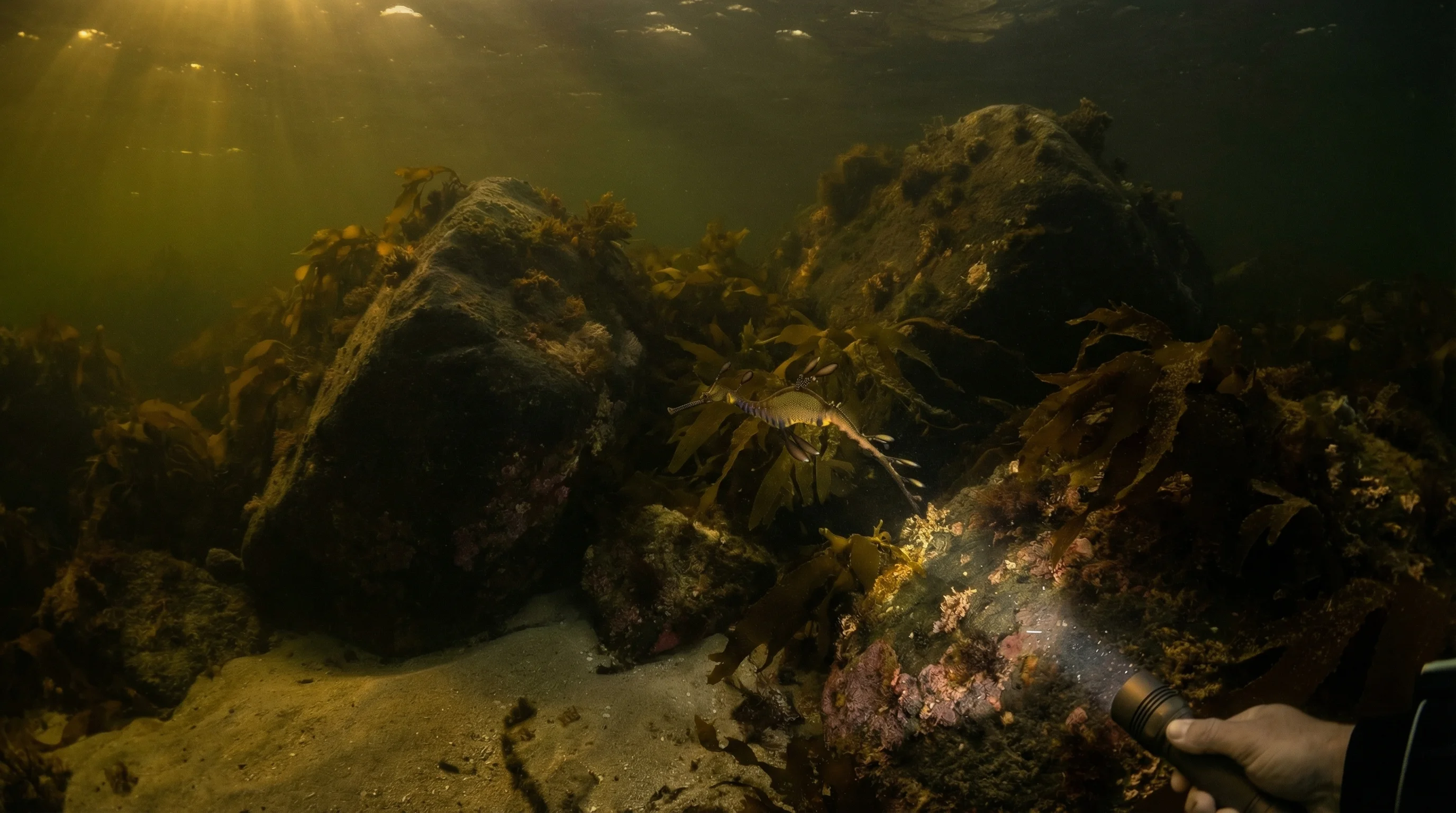
The primary hazard is the extremely low visibility caused by a surface layer of tannin-rich freshwater, creating conditions similar to a night dive even during the day. Strong winds can worsen visibility.
Depth
3-10m
Visibility
15m
Skill Level
Beginner
Entry
Shore
Water Temp
8-20°C
Best Time
Jan, Feb, Mar, Apr, May, Dec
Ninepin Point Marine Reserve in Tasmania hosts weedy seadragons, bastard trumpeter, and jackass morwong amongst colourful red algae forests. The shallow reef between 3 to 10 metres features striking sea whips and sea fans that create habitat for diverse temperate marine species. The reserve's protected status ensures healthy populations of these distinctive Tasmanian marine animals.
Ninepin Point Marine Reserve is classified as a beginner-level snorkelling site with shore access and shallow depths from 3 to 10 metres. The absence of strong currents and relatively calm conditions make it accessible for novice snorkellers, though the cold water temperatures of 8 to 20°C require appropriate thermal protection. Parking facilities at the site simplify access for first-time visitors to Tasmania's East Coast.
The optimal months for snorkelling Ninepin Point Marine Reserve are January through May and December, corresponding to Tasmania's warmer summer and early autumn period. Water temperatures reach their warmest at 20°C during these months, though visibility remains consistent at 15 metres year-round. Summer conditions provide the most comfortable experience for extended snorkelling sessions in this temperate marine environment.
Ninepin Point Marine Reserve offers shore-based entry without requiring a boat, with parking facilities available at the access point. Snorkellers can wade in from the beach to reach the reef system that extends from 3 to 10 metres depth. The straightforward shore access makes this East Coast Tasmania site particularly convenient for independent snorkelling trips.
Water temperatures at Ninepin Point Marine Reserve range from 8°C in winter to 20°C during summer months. The cold temperate conditions require at least a 5mm wetsuit year-round, with many snorkellers opting for 7mm suits or drysuits during winter months. Tasmania's East Coast waters remain cool even in peak summer, so adequate thermal protection is essential for comfortable snorkelling.
Ninepin Point Marine Reserve has no entry fee and is freely accessible to snorkellers and divers. The site provides parking facilities at no cost, making it an economical option for exploring Tasmania's protected marine environments. As a marine reserve, visitors must follow conservation regulations whilst enjoying free access to this East Coast underwater site.
The primary hazards at Ninepin Point Marine Reserve are cold water temperatures ranging from 8 to 20°C and potential low visibility conditions. Cold water increases the risk of hypothermia without proper thermal protection, whilst reduced visibility can disorientate snorkellers and make navigation challenging. Snorkellers should carry appropriate wetsuit thickness and maintain buddy contact in lower visibility conditions.
Diving at Ninepin Point in East Coast requires the following certifications: Open Water. Always dive within your training limits.
A drysuit recommended is recommended for diving at Ninepin Point in East Coast. Water temperatures range from 8°C to 20°C.
Ninepin Point in East Coast has depths ranging from 3 metres to 10 metres.
Yes, night diving is available at Ninepin Point in East Coast. Night dives often reveal different marine life including nocturnal creatures. Always dive with proper lighting and a buddy.