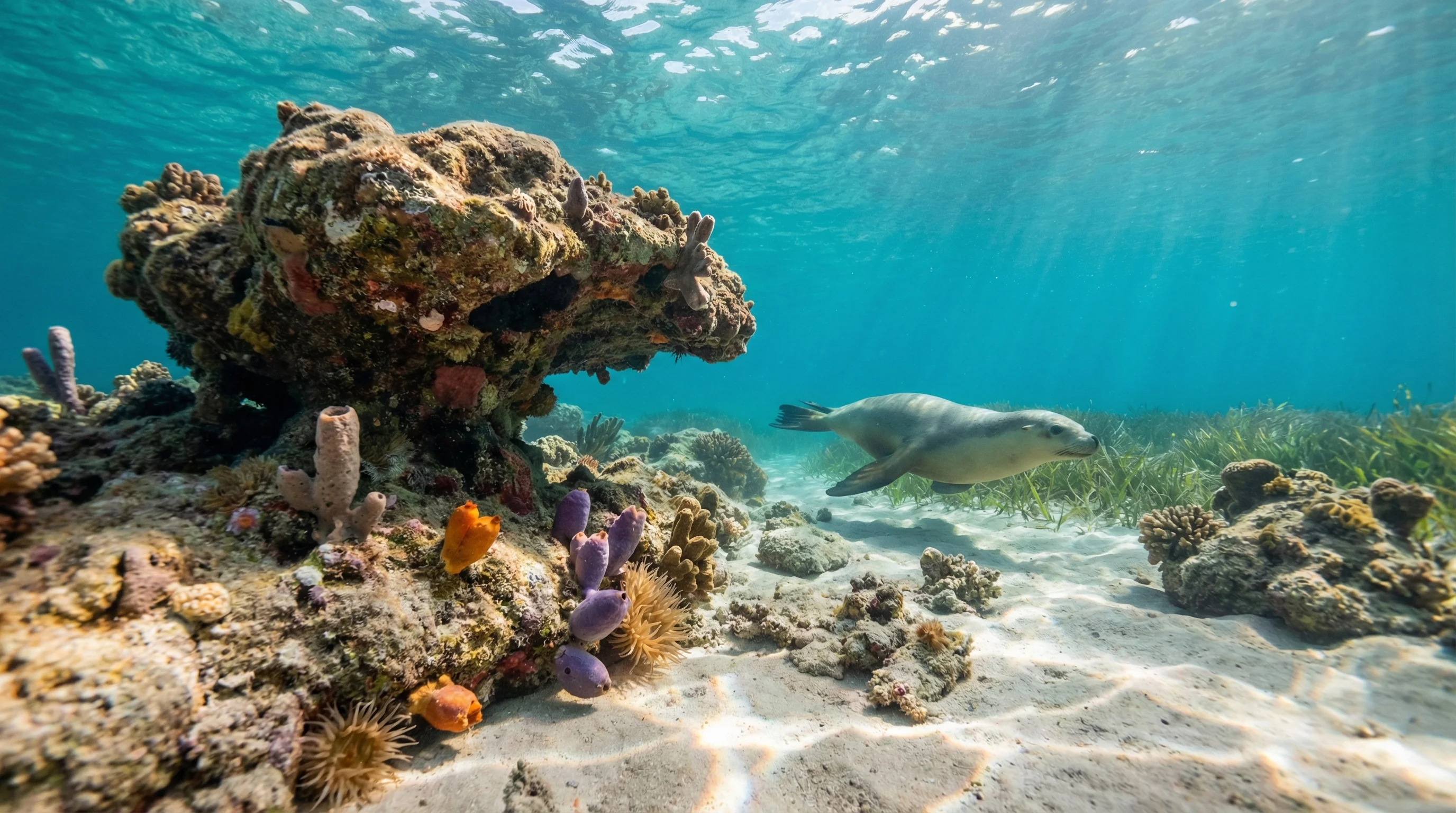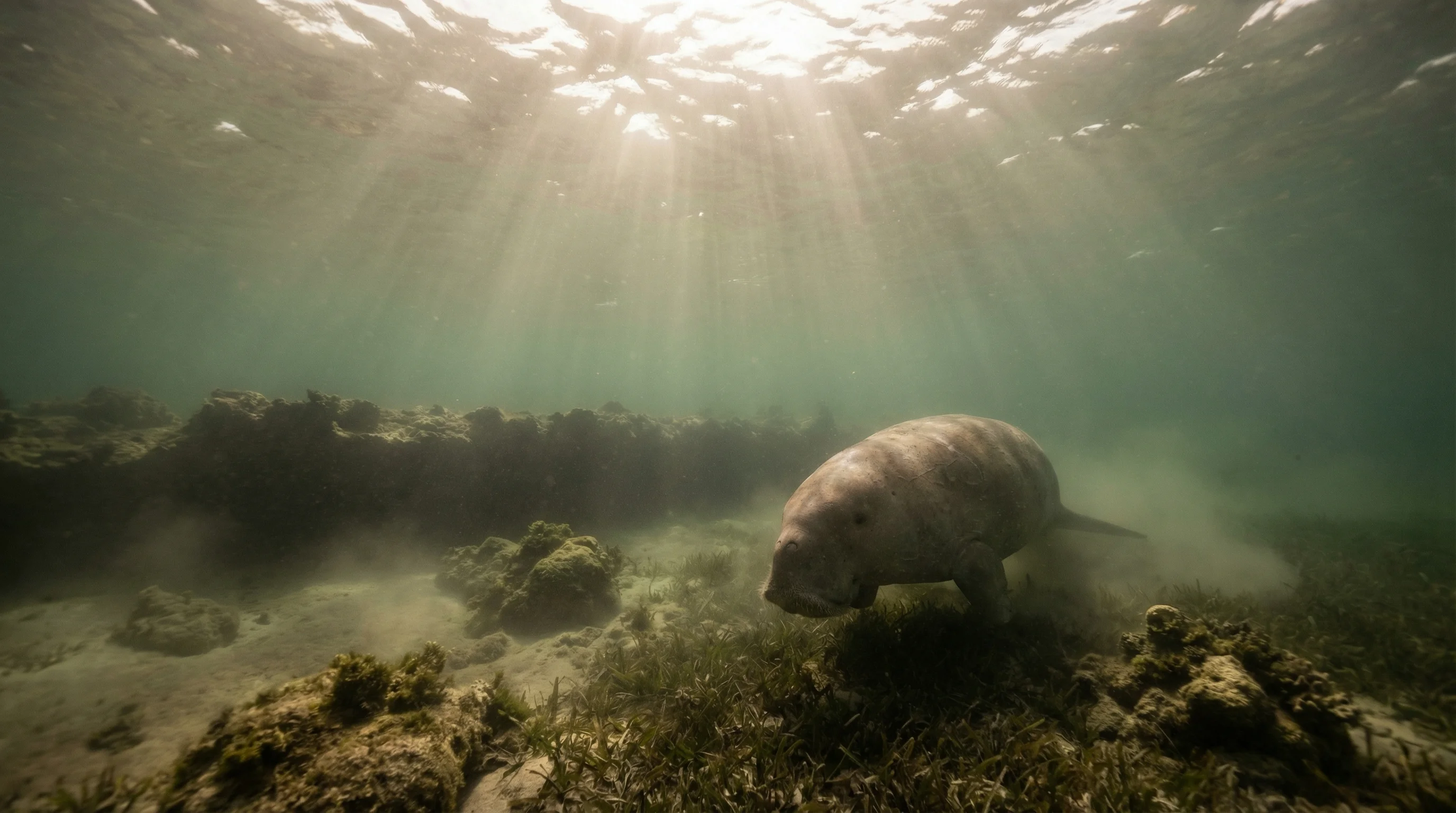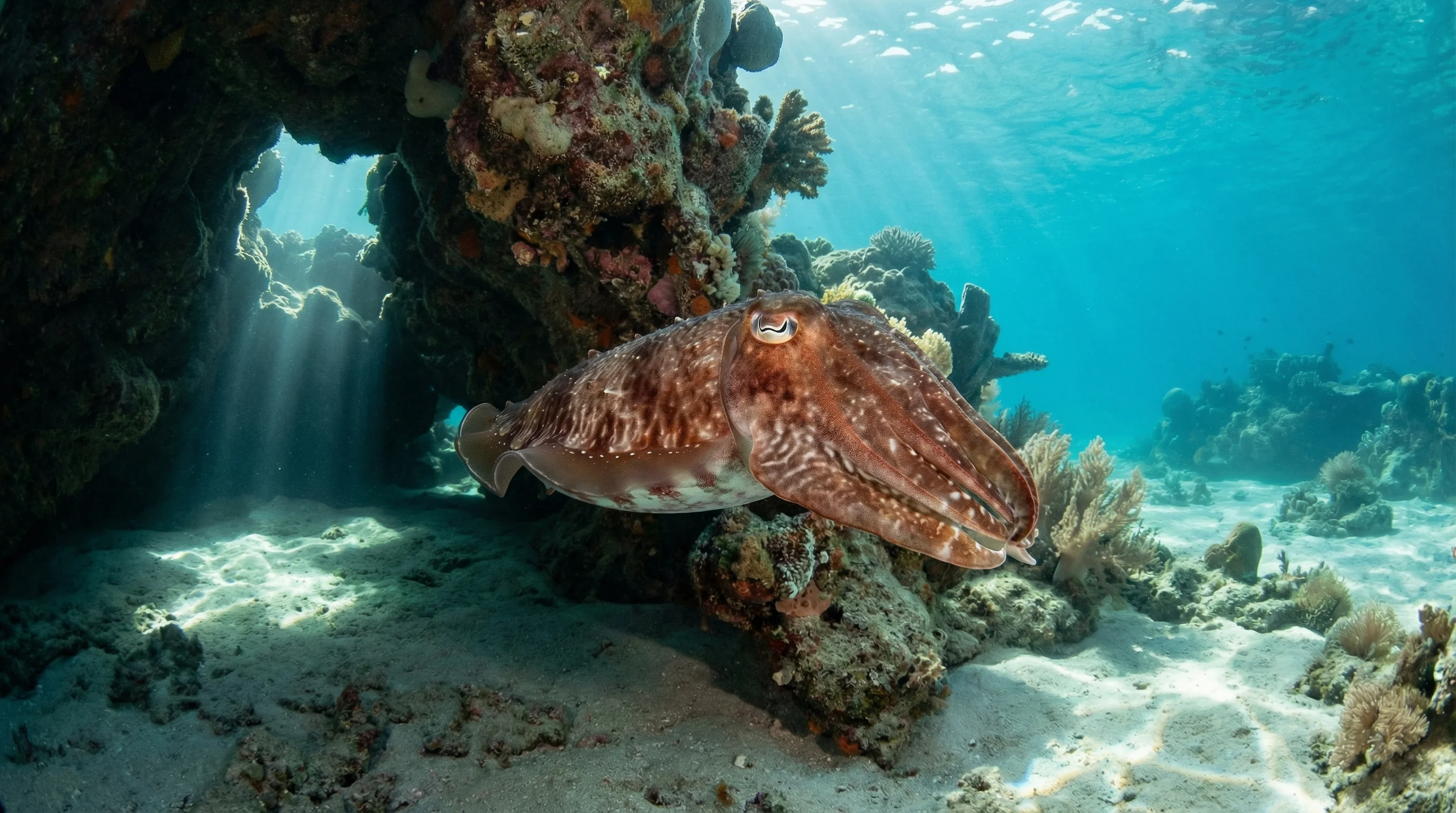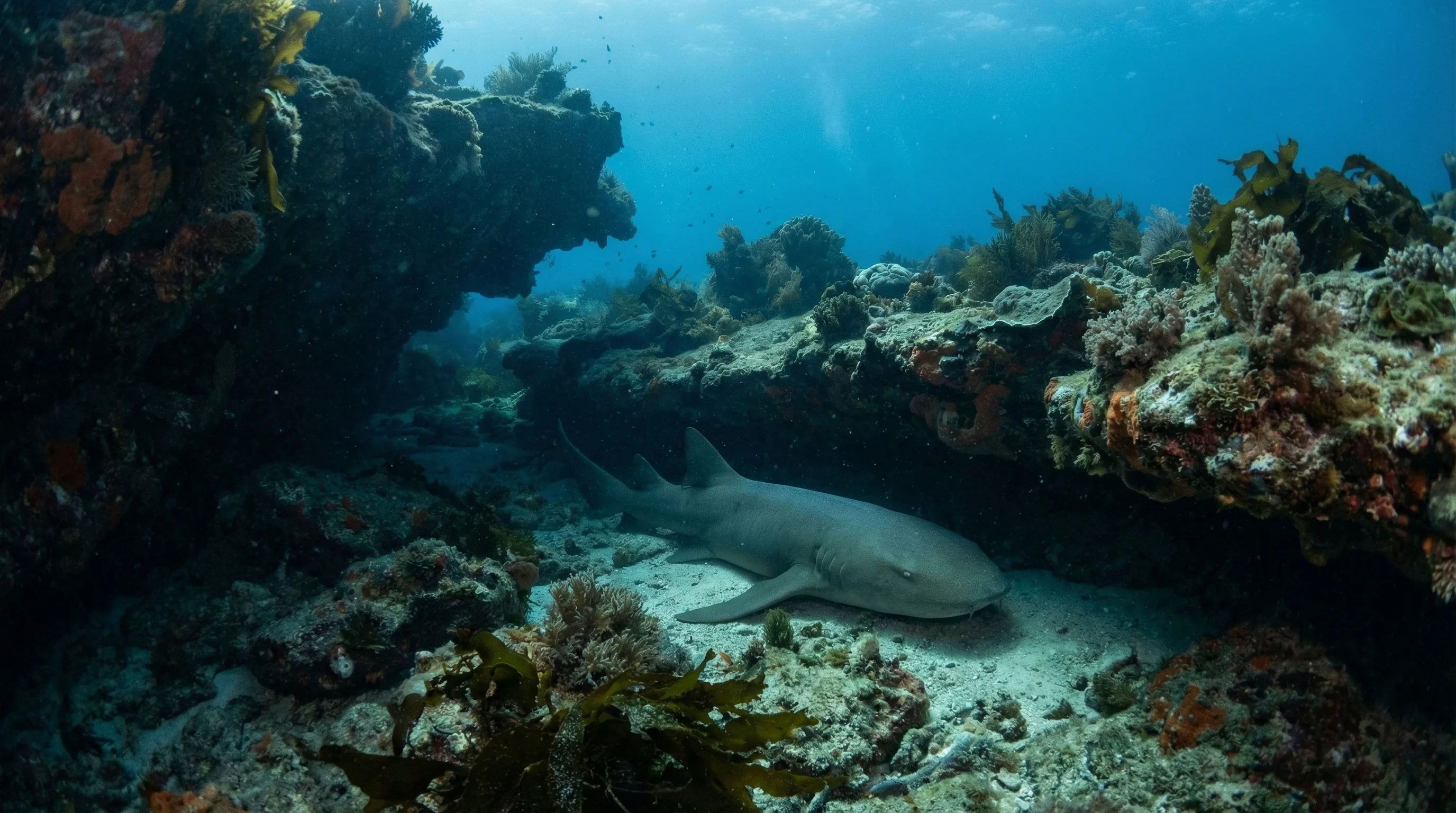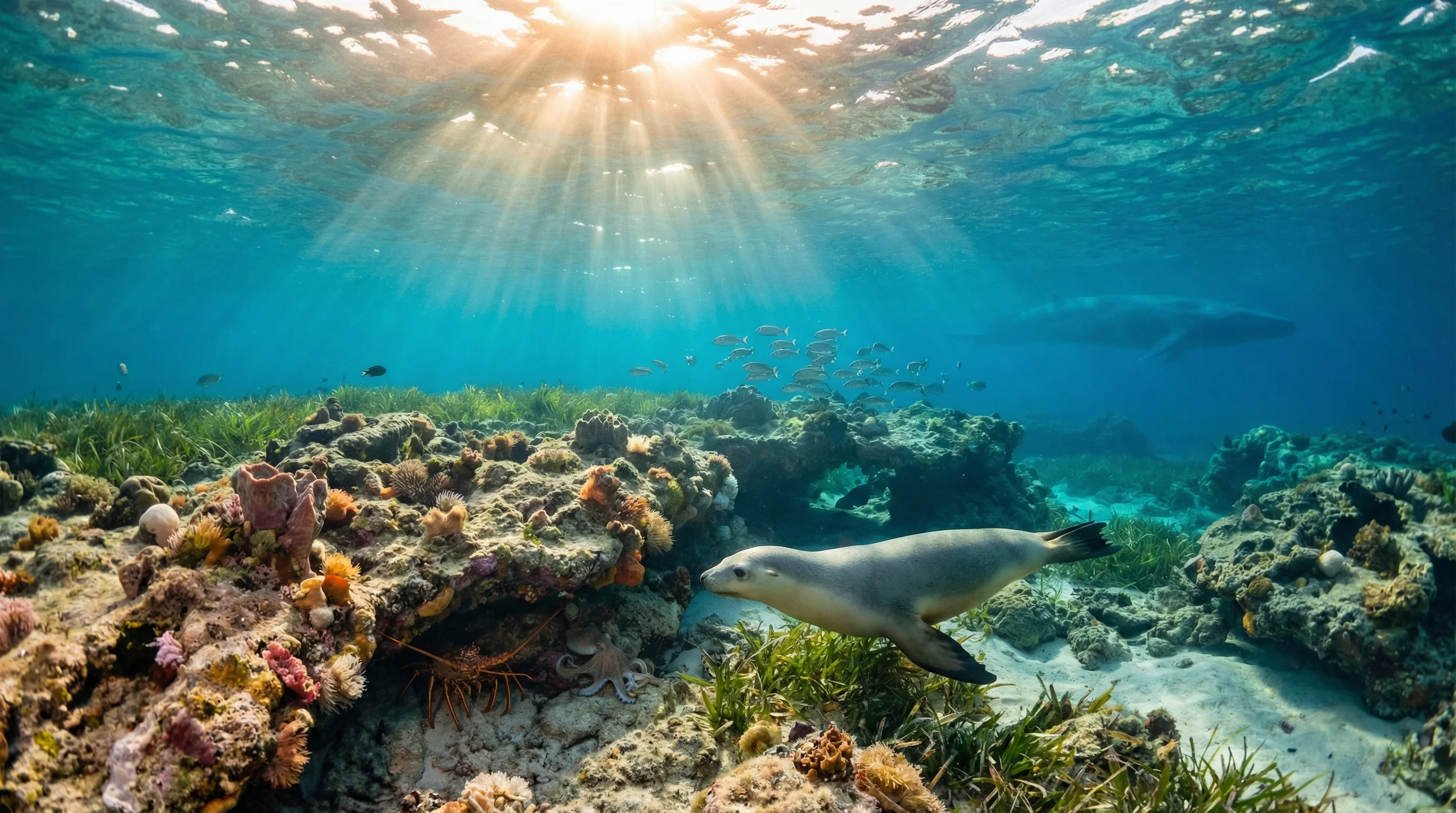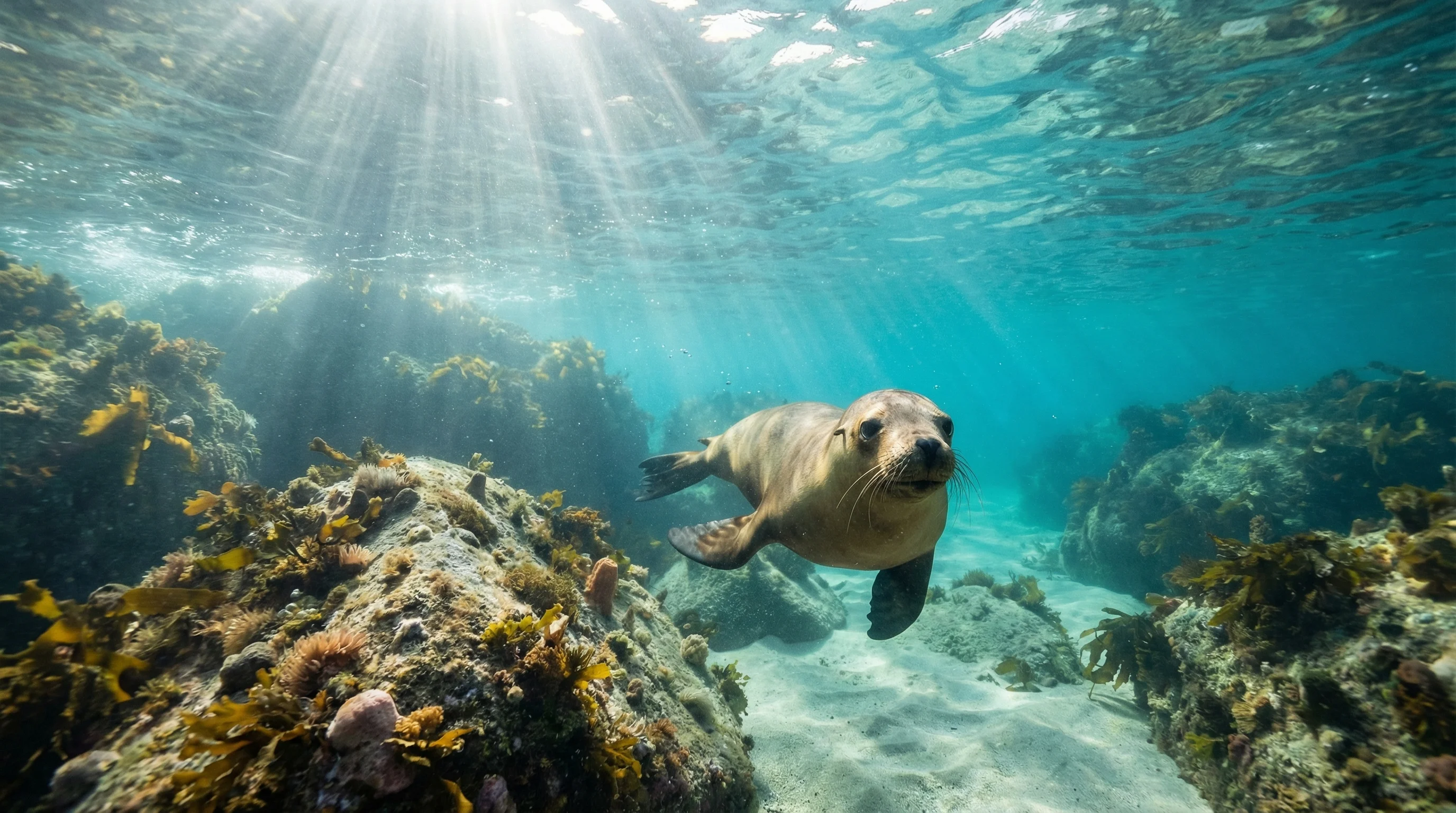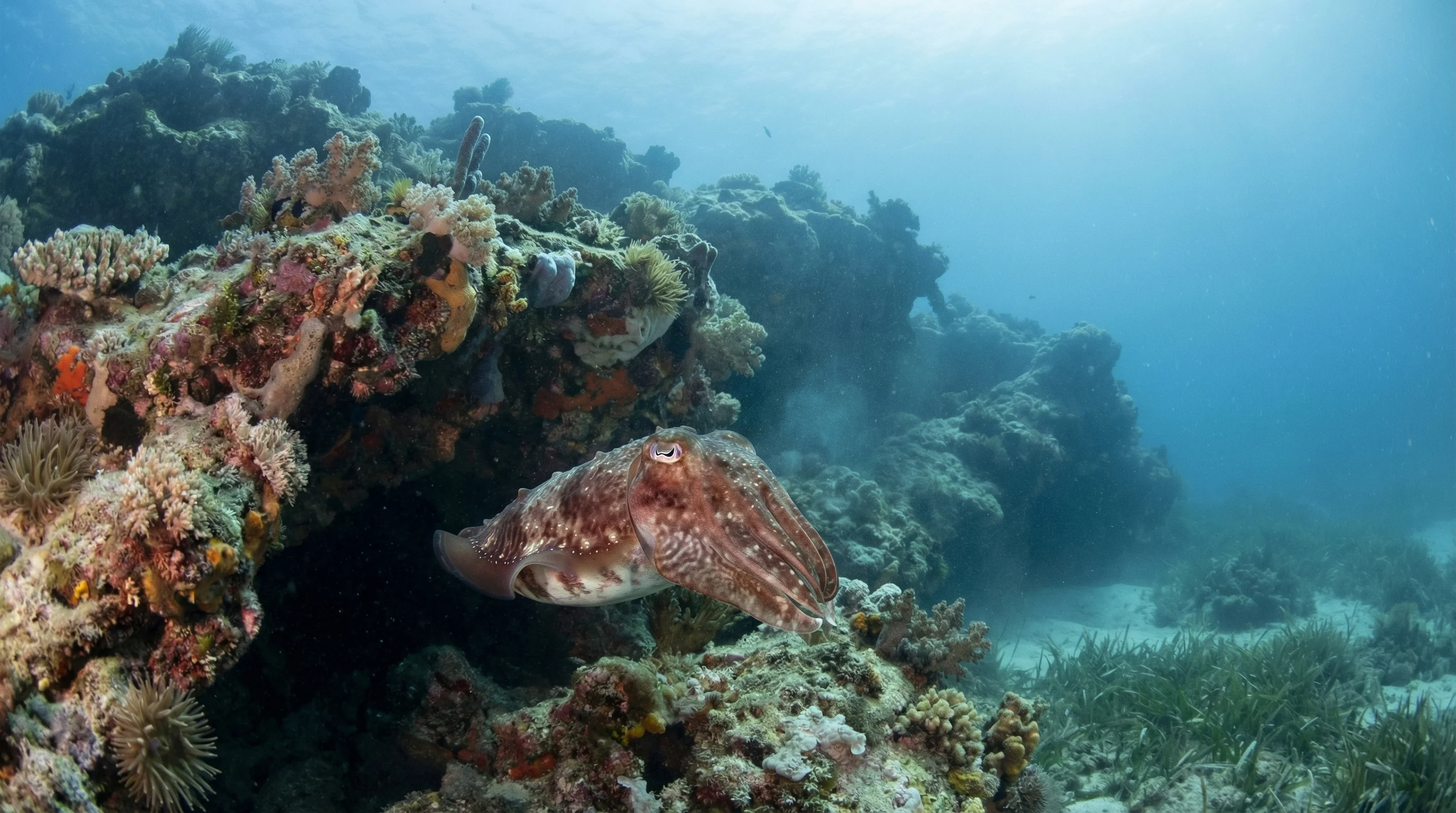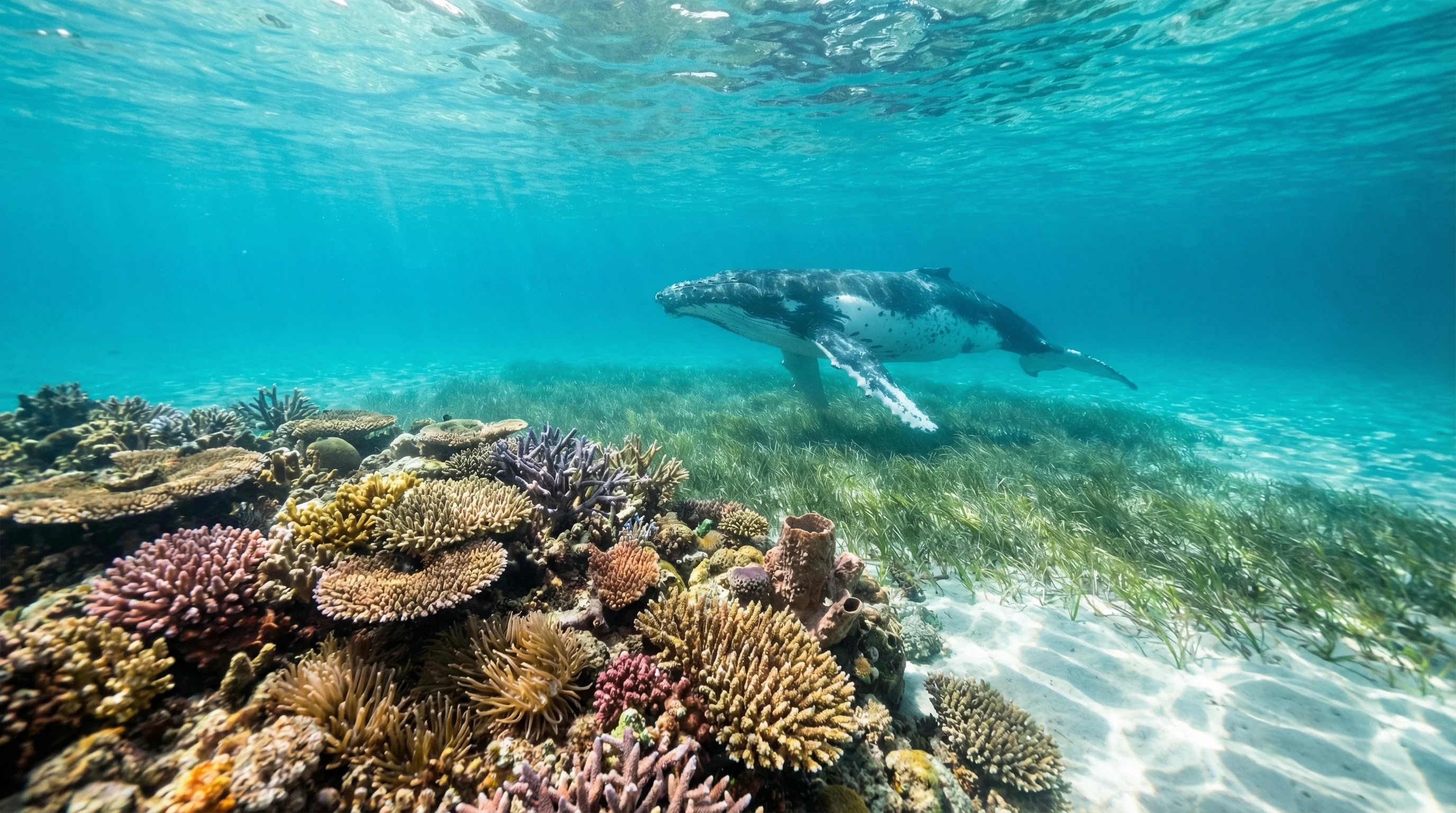
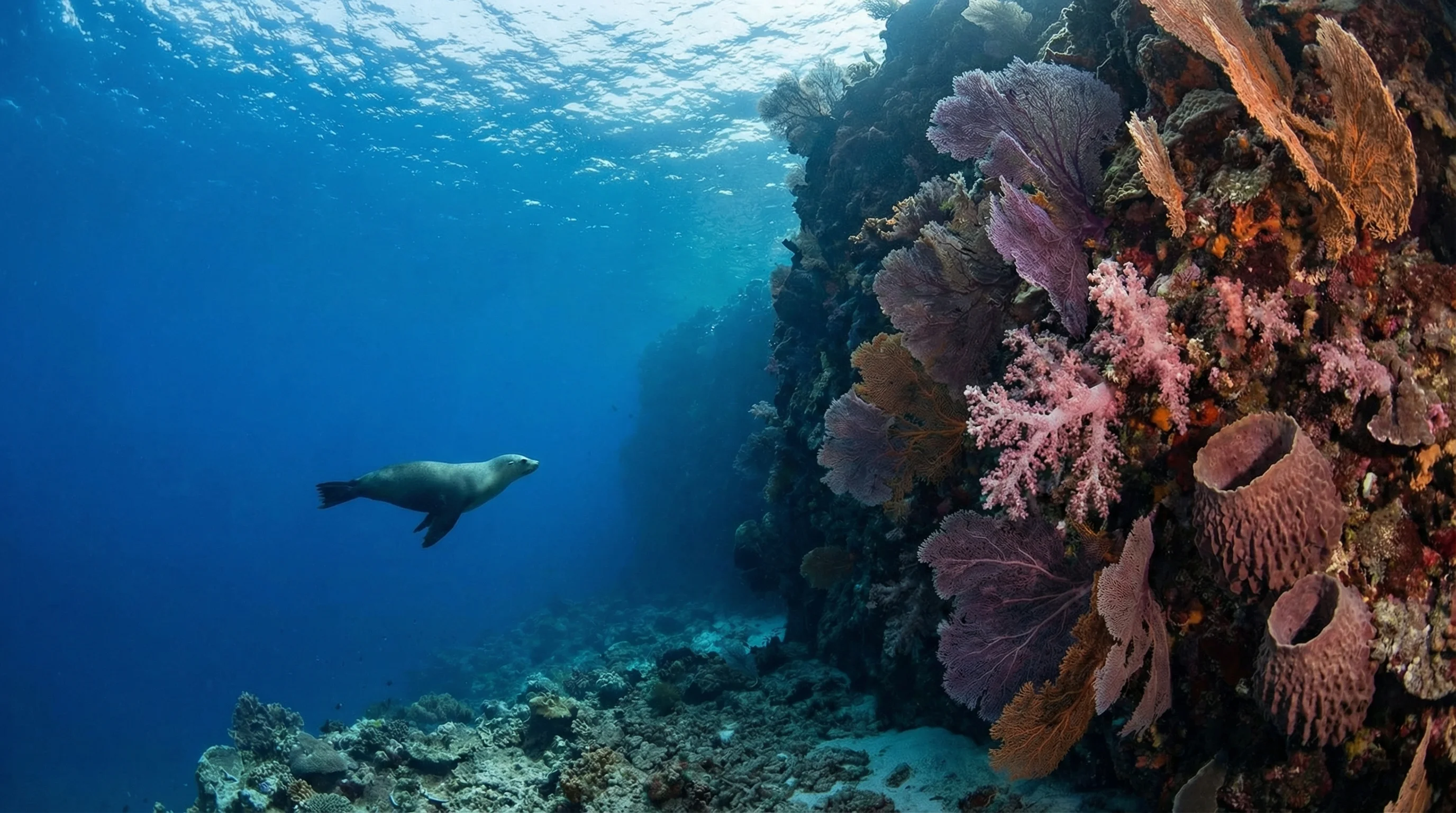
Osprey is a demanding wall and drop-off site in Western Australia where strong currents run along a reef face that plunges into deeper water. Visibility regularly reaches 30 to 60 metres, making the full scale of the wall immediately apparent on descent. Caves punctuate the structure and reward exploration with crayfish tucked into crevices and nudibranchs on the sponge-covered rock. Dhufish and Western Blue Groper patrol the reef in open water, and Australian Sea Lions occasionally pass through. The soft gingerbread hem stars are a distinctive find on this coast. Shark encounters are possible, and the current demands solid buoyancy control and dive planning.
-30.31550, 115.00050
May and December offer the most reliable conditions at Osprey, with calmer swells generally making the current more manageable for working the wall. Time your dive around slack water if you can, as the current here can make sustained work at depth genuinely taxing.
Access info coming soon
This boat entry site has strong currents, so hold on tight during entry and exit. Be aware of the significant depth and potential for sharks.
Depth
5-30m
Visibility
30-60m
Skill Level
Advanced
Entry
Boat
Boat required
Water Temp
12-19°C
Current
Strong
Typical Dive
60 min
Best Time
May, Dec
Yes, Osprey in Western Australia is a boat-access-only dive site. You will need to book with a local dive operator or charter a boat to reach it.
Yes, parking is available near Osprey. Arrive early during peak seasons as spaces can fill up quickly.
Osprey in Western Australia requires advanced diving skills. Expect deeper depths, currents, or challenging conditions that are not suitable for newly certified divers.
Diving at Osprey in Western Australia requires the following certifications: Open Water, Advanced. Always dive within your training limits.
A 7mm wetsuit or semi-dry is recommended for diving at Osprey in Western Australia. Water temperatures range from 12°C to 19°C.
Osprey in Western Australia is home to Dhufish, Sponge, Australian Sea Lion, Western Blue Groper, Crayfish, and Soft Gingerbread Hem Star. Marine life sightings vary by season and conditions.
The best months to visit Osprey in Western Australia are May and December. Conditions outside these months can still be good but are less predictable.
Osprey in Western Australia has depths ranging from 5 metres to 30 metres.
A typical dive at Osprey in Western Australia lasts approximately 60 minutes. Actual dive time depends on depth, air consumption, and conditions.
Yes, night diving is available at Osprey in Western Australia. Night dives often reveal different marine life including nocturnal creatures. Always dive with proper lighting and a buddy.
Divers at Osprey in Western Australia should be aware of sharks. These encounters are generally rare and avoidable with proper awareness. Follow local safety guidance and maintain a respectful distance from all marine life.
Osprey in Western Australia can have strong currents. Advanced experience with drift diving and current navigation is recommended.
Visibility at Osprey in Western Australia typically ranges from 30 metres to 60 metres. Conditions vary with weather, tides, and seasons.